UN Global Compact Leaders Summit calls on business leaders to turn sustainability ambition into action at scale
Image File
Original HTML

Global leaders gather in New York to advance practical action on business resilience, climate and nature, human rights, sustainable finance and more resilient global markets

NEW YORK, Sept. 23, 2026 /PRNewswire/ -- The UN Global Compact today concluded its 2026 Leaders Summit, bringing together more than 750 business leaders, investors, policymakers, United Nations representatives and sustainability experts for a two-day summit focused on turning corporate sustainability commitments into measurable action and building the systems needed to deliver long-term sustainable growth.

Held during the high-level week of the United Nations General Assembly, the Summit centred on Driving Sustainable Growth and Resilience, against a backdrop of geopolitical uncertainty, economic volatility, accelerating technological change and growing pressure on companies to demonstrate tangible progress on their sustainability commitments.

Across two days of plenaries, workshops and action-focused discussions, leaders examined how companies can strengthen resilience while continuing to advance responsible business practices and how greater collaboration between business, Governments, investors and other stakeholders can address barriers that no individual company can solve alone.

"Business leaders are operating under extraordinary pressure, but the answer cannot be to retreat into short-termism," said Sanda Ojiambo, CEO and Executive Director of the United Nations Global Compact. "Resilience is built when purpose is strong, relevant and embedded in the decisions that shape company strategy and business value. That means translating principles into how companies invest, operate, manage risk and build for the long term. Sustainability is not separate from business performance; it is part of how companies remain competitive and resilient in a changing world."

The Summit reflected the central ambition of the UN Global Compact 2026–2030 Strategy: to mobilize sustainable business from ambition to action at the scale required to deliver meaningful progress for business, people and the planet.

Discussions centred on six interconnected areas: Leadership and Integrity; Climate and Nature; Human Rights and Decent Work; Sustainable Finance and Capital; Collective Action and Systems Change; and Policy, Procurement and Supply Chains.

The first day focused on implementation inside companies, including how leaders can maintain trust and credibility under pressure, integrate sustainability into enterprise risk and business strategy, strengthen human rights due diligence, accelerate the clean energy transition and respond responsibly to the rapid adoption of artificial intelligence.

Speakers including Katharine Hayhoe of The Nature Conservancy, Erin Brockovich, David Kennedy of the Science Based Targets initiative, Phuthi Mahanyele-Dabengwa of Naspers, Subho Mukherjee of Nokia and business and policy leaders from around the world examined how sustainability can be translated from corporate commitments into decisions on capital, operations, governance and supply chains.

The second day moved beyond action by individual companies to examine the broader systems in which businesses operate, including the policies, market incentives, financial structures and supply chains that can either accelerate or constrain progress.

To drive systemic progress toward the 2030 Agenda, the UN Global Compact is expanding its focus beyond individual corporate commitments toward multi-stakeholder collaboration aimed at breaking down market, policy and financial barriers. Looking ahead to 2027, the Global Compact announced plans to establish a shared infrastructure across climate, living wages, gender equality and sustainable finance to aggregate demand, de-risk investments and scale long-term solutions across global value chains.

Sessions explored how companies and Governments can align corporate climate and nature transition plans, expand progress on gender equality and living wages, mobilize catalytic capital for emerging markets and use procurement as a driver of sustainability, resilience and competitive advantage.

Finance was a central focus throughout the Summit. Business leaders, investors and financial institutions examined how blended finance, catalytic capital, public-private partnerships and new approaches to risk can help mobilize investment into clean energy, resilient infrastructure and other areas where conventional financing remains insufficient.

The Summit also examined the growing strategic role of procurement as businesses respond to changing regulation, increasing Scope 3 accountability, trade fragmentation and technological disruption. Discussions highlighted the opportunity to use purchasing power and supply chain relationships not simply to manage compliance, but to strengthen resilience and accelerate responsible business practices across global value chains.

In a series of Action Tables, senior leaders focused on areas where collective action is essential to achieve progress at scale, from advancing living wages and gender equality to integrating climate and nature strategies, and mobilizing sustainable finance.

The Summit concluded with a focus on the role of business in helping to shape the markets and systems in which it operates. Mark Zandi of Moody's, Rutger Bregman of The School for Moral Ambition, Boyan Slat of The Ocean Cleanup and other leaders joined discussions examining how policy, capital, innovation and corporate leadership can combine to create stronger incentives for sustainable business.

About the United Nations Global Compact

As a special initiative of the United Nations Secretary-General, the UN Global Compact is a call to companies worldwide to align their operations and strategies with Ten Principles in the areas of human rights, labour, environment and anti-corruption. Our vision is clear: to mobilize business to transform sustainability ambition into action at the scale the world demands. With more than 25,000 participants and a presence in over 100 countries through 5 Regional Hubs and more than 70 Country Networks and expansion territories, the UN Global Compact is the world's largest corporate sustainability initiative.

For more information, follow @globalcompact on social media and visit the UN Global Compact website.

SOURCE United Nations Global Compact

Share this article
Class (B2B/B2C)
B2B
Ingest Status
Rewritten
Dedupe hash
prn_302888337
Press Eligible
Yes
Press Eligible Reason
Business-focused summit coverage on corporate sustainability, finance, resilience, supply chains, and strategy.
Source Name
Unknown Company
Original Summary

<p>Global leaders gather in New York to advance practical action on business resilience, climate and nature, human rights, sustainable finance and more resilient global markets NEW YORK, Sept. 23, 2026 /PRNewswire/ -- The UN Global Compact today concluded its 2026 Leaders Summit, bringing...</p>

Image URL
https://mmx.prnewswire.com/media/MS1637763/UNGC-Logo.jpg?id=OA2968168&p=facebook
Content Hash (SHA-256, erste 32 hex)
1b3f97c16a62d0b4b9fb494ac47655d1
Employment Law Attorneys, at Blumenthal Nordrehaug Bhowmik De Blouw LLP, Filed a Lawsuit Against Associated Students Inc., for Alleged Failure to Provide Required Meal Periods and Rest Periods
Image File
Original HTML

Associated Students Inc., which provides programs and services for college students in California, allegedly failed to provide employees with accurate wages due to missed meals and break breaks. This allegedly resulted in violations of various California Labor Codes.

**THIS IS AN ATTORNEY ADVERTISEMENT**

SAN LUIS OBISPO, Calif., Sept. 23, 2026 /PRNewswire/ -- The Los Angeles employment law attorneys, at Blumenthal Nordrehaug Bhowmik De Blouw LLP, filed a class action complaint alleging that Associated Students Inc, violated the California Labor Code. The Associated Students Inc., class action lawsuit, Case No. 26CV-0526, is currently pending in the San Luis Obispo Superior Court of the State of California. A copy of the Complaint can be read here.

According to the lawsuit filed, Associated Students Inc., allegedly (a) failed to provide meal and rest periods, (b) failed to pay employees minimum and overtime wages, (c) failed to provide accurate itemized wage statements, (d) failed to reimburse for required expenses, and (e) failed to pay sick wages, all in violation of the applicable Labor Code sections listed in California Labor Code Sections 201-203, 226, 226.7, 233, 246, 510, 512, 1194, 1197, 1197.1, 2802, and the applicable Wage Order(s), and thereby gives rise to civil penalties as a result of such alleged conduct.

Associated Students Inc, allegedly required employees to work on their meal breaks, which should have been employees' off-duty meal breaks. This allegedly resulted in Defendant rounding the meal period time to avoid paying penalties to employees. As a result of their rigorous work schedules, employees were required from time to time to perform work as ordered by Defendant for more than five (5) hours during some shifts without receiving a meal break. Defendant violated California Labor Codes §§ 1194, 1197, and 1197.1 .

For more information about the class action lawsuit against Associated Students Inc., call (800) 568-8020 to speak to an experienced California employment attorney today.

Blumenthal Nordrehaug Bhowmik De Blouw LLP is an employment law firm with offices located in San Diego, San Francisco, Sacramento, Los Angeles, Riverside and Chicago that dedicates its practice to helping employees, investors and consumers fight back against unfair business practices, including violations of the California Labor Code and Fair Labor Standards Act. If you need help in collecting unpaid overtime wages, unpaid commissions, being wrongfully terminated from work, and other employment law claims, contact one of their attorneys today.

**THIS IS AN ATTORNEY ADVERTISEMENT**

Media Contact

Nicholas De Blouw

Blumenthal Nordrehaug Bhowmik De Blouw LLP

(800) 568-8020

[email protected]

https://www.bamlawca.com/ 

SOURCE Blumenthal Nordrehaug Bhowmik De Blouw LLP

Share this article

Class (B2B/B2C)
Ignore
Ingest Status
Need Review
Dedupe hash
prn_302882863
Press Eligible
No
Press Eligible Reason
Irrelevant (need review): Law firm advertisement promoting a class action lawsuit against an employer.
Source Name
Unknown Company
Original Summary

<p>Associated Students Inc., which provides programs and services for college students in California, allegedly failed to provide employees with accurate wages due to missed meals and break breaks. This allegedly resulted in violations of various California Labor Codes. **THIS IS AN ATTORNEY...</p>

Image URL
https://mmx.prnewswire.com/media/MS1134179/Blumenthal-Nordrehaug-Bhowmik-De-Blouw-LLP-Logo.jpg?id=OA2956475&p=facebook
Content Hash (SHA-256, erste 32 hex)
a31eb00772d8fd72abbbf1ef9377fc31
Octane Rent Details SUV Fleet Expansion in Abu Dhabi to Support Regional Tourism and Business Operations
Image File
Original HTML

Octane Rent Details SUV Fleet Expansion in Abu Dhabi to Support Regional Tourism and Business Operations

ABU DHABI, UAE, Sept. 23, 2026 /PRNewswire/ -- Octane Rent, an international car rental company with established operations in Dubai and Miami, Florida, today announced the strategic expansion of its SUV fleet serving Abu Dhabi. The initiative is designed to address the growing demand for premium SUV rentals across the UAE capital's business and tourism sectors.

The Abu Dhabi SUV fleet includes models such as the Range Rover, Cadillac Escalade, Toyota Land Cruiser, Chevrolet Tahoe, and BMW X7. This expansion integrates into the company's broader operational network of over 400 vehicles spanning 31 brands across the UAE. The fleet is structurally categorized to offer mid-size SUV options—such as the Toyota Land Cruiser and Chevrolet Tahoe—starting from AED 218 to AED 370 per day. Full-size SUV models, including the Range Rover, Cadillac Escalade, and BMW X7, are available from AED 271 to AED 735 per day, while luxury SUV configurations, including the Mercedes G63 AMG and Bentley Bentayga, are offered from AED 442 per day.

The operational methodology relies entirely on company-owned vehicles rather than marketplace-brokered assets. The objective of this structure is to implement scheduled maintenance and inspection protocols uniformly across the network. A company spokesperson noted that maintaining standardized operational procedures across Dubai, Abu Dhabi, and Miami is central to the company's strategy. The goal is to provide consistent vehicle inspection protocols, insurance structures, and booking processes across all markets, targeting high reliability without claiming flawless or absolutely guaranteed operational outcomes. For comprehensive inventory availability, clients can explore the suv rental Abu Dhabi catalog at Octane Rent.

Reservations are processed online or via WhatsApp, with confirmations typically issued within minutes. Vehicles are staged for delivery across Abu Dhabi, including designated hotels and Abu Dhabi International Airport. The company reports that consistent booking and delivery standards are applied across its Dubai, Abu Dhabi, and Miami operations.

As of 2026, Octane Rent operates across the UAE and Miami, Florida, drawing on 27 years of combined industry experience. The company holds a 4.9/5 Google rating from over 1,760 verified reviews, a 4.7/5 Trustpilot rating, and received recognition as the Best Luxury Car Rental Company Dubai (MENA) at the 2025 World Luxury Travel Awards. The brand has also been referenced in business and regional publications including Forbes, Khaleej Times, and Gulf Today.

Media Contact

Email: [email protected] 

SOURCE Octane Rent

Share this article

Class (B2B/B2C)
B2B
Ingest Status
Rewritten
Dedupe hash
prn_302888287
Press Eligible
Yes
Press Eligible Reason
Company fleet expansion and operations announcement in the car rental and tourism industry.
Source Name
Unknown Company
Original Summary

<p>ABU DHABI, UAE, Sept. 23, 2026 /PRNewswire/ -- Octane Rent, an international car rental company with established operations in Dubai and Miami, Florida, today announced the strategic expansion of its SUV fleet serving Abu Dhabi. The initiative is designed to address the growing demand for...</p>

Image URL
https://mmx.prnewswire.com/media/MS1995279/image1.jpg?id=OA2968305&p=facebook
Content Hash (SHA-256, erste 32 hex)
da8bc88070b1fdf813b8a85664f336d7
GRAINGER'S FIFTH ANNUAL BUCKET BUILD HELPS COMMUNITIES PREPARE FOR DISASTER RECOVERY
Image File
Original HTML

More than 500 volunteers joined ToolBank USA and YouthBuild members to assemble 4,000 disaster relief kits for future disaster response and recovery efforts across North America.

CHICAGO, Sept. 23, 2026 /PRNewswire/ -- Grainger (NYSE: GWW), a leading broad line distributor of maintenance, repair and operating (MRO) products and services, hosted its fifth annual Grainger Bucket Build today. More than 500 Grainger team members, ToolBank USA partners and students from YouthBuild Lake County and YouthBuild Waukegan assembled more than 4,000 disaster relief kits at the company's headquarters in Lake Forest, Illinois.

Volunteers filled five-gallon buckets with essential cleaning supplies and hand tools donated by Grainger. The kits are designed to help families with clean up, repairs and initial recovery efforts after natural disasters.

"Seeing our team members come together with ToolBank USA and YouthBuild programs reminds us of what's possible when we invest in people and communities," said Melanie Tinto, Chief Human Resources Officer at Grainger. "The Bucket Build is more than assembling supplies; it's about working together to help communities recover when disaster strikes while creating pathways to meaningful work. We're proud to partner with organizations that share our commitment to keeping the world working."

The disaster relief kits will be distributed by ToolBank USA to communities impacted by future natural disasters across North America. Potential deployment locations include Chicago, Houston, Los Angeles, New Orleans, Panama City, Tampa, and San Juan, Puerto Rico. Previously, kits were deployed in the wake of hurricanes, wildfires, floods and other natural disasters.

"We're proud to continue our partnership with Grainger as we enter our fourth year as their disaster relief bucket distribution partner," said Trey Bearden, CEO of ToolBank USA. "Over the past few years, these buckets have been distributed to 97 communities across the continental U.S., Hawaii, and Puerto Rico, providing critical tools and supplies to families and communities when they are needed most. Each kit plays an important role in helping communities recover after devastating storms, and our Disaster Services team is committed to getting them into the hands of those navigating recovery today while also preparing for the challenges ahead."

In addition to supporting disaster preparedness, the event provided YouthBuild students with opportunities to volunteer alongside Grainger team members and learn more about careers in the skilled trades and supply chain industry, reinforcing Grainger's commitment to workforce development.

This marks the fourth consecutive year YouthBuild students have participated in Grainger's Bucket Build. "Young people have the talent and determination to rebuild communities while transforming their lives," said John Valverde, President and CEO of YouthBuild Global. "Grainger's support extends well beyond today's event — from volunteering alongside YouthBuild students at food banks to supporting energy infrastructure career training in Texas — and it's a model for how businesses can stand alongside young people as they work to realize their fullest potential."

About Grainger

W.W. Grainger, Inc. is a leading broad line distributor with operations primarily in North America and Japan. At Grainger, We Keep the World Working® by serving more than 4.6 million customers worldwide with maintenance, repair and operating (MRO) products and value-added solutions delivered through innovative technology and deep customer expertise. Known for its commitment to service and purpose-driven culture, the Company reported 2025 revenue of $17.9 billion. For more information, visit www.grainger.com.

About ToolBank USA

ToolBank USA is a national nonprofit organization that provides tools and equipment to support community organizations and volunteers. Through a network of local ToolBanks across the country, the organization helps nonprofits and schools tackle projects, reduce costs, and make a lasting impact in their communities. ToolBank USA's mission is to help others build stronger communities through access to tools and resources, including its vital Disaster Services program, which provides tools and staff to assist with disaster recovery efforts. For more information, visit www.toolbank.org. 

About YouthBuild

With love and respect, YouthBuild partners with opportunity youth to build the skillsets and mindsets that lead to lifelong learning, livelihood, and leadership. At more than 340 YouthBuild programs around the world, young people who are out of school and out of work reclaim their education, gain job skills and credentials, and become leaders in their communities. To date, YouthBuild has partnered with more than 220,000 young people to dedicate over 52.5 million hours of service benefitting rural, urban, suburban, and tribal communities. YouthBuild Global — the headquarters for the YouthBuild movement — unifies and partners with this expansive network of YouthBuild programs. From training, technical assistance, capacity building, and innovative program enhancements to leadership development, financial stability, and narrative change and public policy, YouthBuild Global serves as a convener, collaborator, and catalyst for the entire YouthBuild movement. YouthBuild strives to create a world where all young people are seen for their potential and power to transform themselves and their communities. For more information about YouthBuild Global and the YouthBuild movement, visit YouthBuild.org.

SOURCE W.W. Grainger, Inc.

Share this article

Class (B2B/B2C)
B2B
Ingest Status
Rewritten
Dedupe hash
prn_302888264
Press Eligible
Yes
Press Eligible Reason
Corporate community initiative by Grainger involving disaster preparedness, workforce development, and supply chain-related partnerships.
Source Name
Unknown Company
Original Summary

<p>More than 500 volunteers joined ToolBank USA and YouthBuild members to assemble 4,000 disaster relief kits for future disaster response and recovery efforts across North America. CHICAGO, Sept. 23, 2026 /PRNewswire/ -- Grainger (NYSE: GWW), a leading broad line distributor of maintenance,...</p>

Image URL
https://mmx.prnewswire.com/media/MS1995258/A9B00974.jpg?id=OA2967949&p=facebook
Content Hash (SHA-256, erste 32 hex)
0c75881a9b378fc69310fddb2b7cde4d
Global Spirulina Market to Reach USD 1612.91 Million by 2034 at 10.6% CAGR as Rising Demand for Sustainable Nutrition, Natural Colorants, and Functional Foods Accelerates Market Growth, Reports Maximize Market Research
Image File
Original HTML

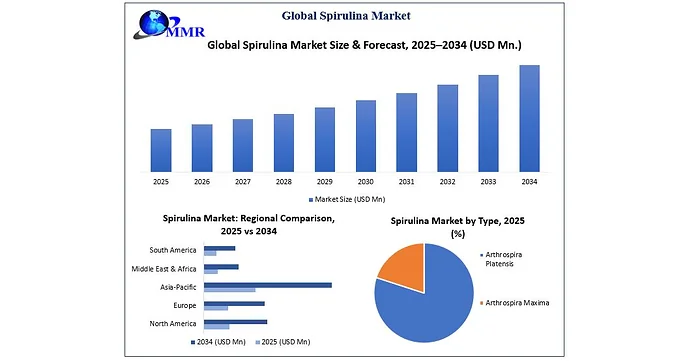
PUNE, India, Sept. 23, 2026 /PRNewswire/ -- Global Spirulina Market was valued at USD 651.35 Million in 2025 and is projected to expand at a 10.6% CAGR from 2026 to 2034, reaching USD 1612.91 Million by 2034, according to a new analysis by Maximize Market Research.

Global Spirulina Market

The Global Spirulina Market Report 2025 provides a detailed analysis of market trends, growth drivers, emerging cultivation technologies, product innovations, competitive developments, applications, and market forecasts through 2034. Spirulina is a nutrient-rich cyanobacteria and blue-green algae biomass widely used as a dietary supplement, functional food ingredient, plant-based protein source, natural food colorant, nutraceutical ingredient, animal feed, aquaculture feed, pharmaceutical ingredient, veterinary product, and cosmetic ingredient. The market covers Arthrospira Platensis and Arthrospira Maxima, along with spirulina powder, tablets and capsules, liquid formulations, granules, and gelling agents across food and beverages, nutraceuticals, animal and aquaculture feed, pharmaceutical, veterinary, cosmetic, and other applications.

The growing consumer focus on plant-based nutrition, sustainable protein, functional foods, clean-label ingredients, natural ingredients, and preventive wellness is supporting the increasing adoption of spirulina across food, beverage, nutraceutical, and dietary supplement applications. Spirulina's high protein content, nutritional profile, amino acids, minerals, antioxidants, and bioactive compounds are strengthening its position as a concentrated nutritional ingredient. At the same time, rising demand for natural blue food colorants and phycocyanin is creating additional commercial opportunities in beverages, confectionery, dairy, processed foods, and other clean-label product categories.

Advancements in spirulina cultivation, photobioreactor technology, controlled production systems, AI-enabled cultivation monitoring, automated biomass assessment, sustainable algae production, and high-value phycocyanin extraction are further transforming the industry. Increasing applications in aquaculture and animal nutrition, growing interest in spirulina-based functional foods and plant-based seafood alternatives, and expanding demand for organic and traceable algae ingredients are encouraging producers to diversify their product portfolios. These developments, combined with increasing R&D activity, advanced processing technologies, and investments in scalable spirulina production, are expected to strengthen the global spirulina market landscape.

Get Full PDF Sample Copy of Report: (Including Full TOC, List of Tables & Figures, Chart) @ https://www.maximizemarketresearch.com/request-sample/29894/

Global Spirulina Market gains momentum as plant-based nutrition, sustainable protein, natural food colorants, phycocyanin applications, and advanced algae cultivation accelerate industry innovation: Maximize Market Research unveils key insights.

Global Spirulina Market Size & Forecast

Global Spirulina Market Trends & Insights

- North America leads the Global Spirulina Market, driven by demand for dietary supplements, nutraceuticals, functional foods, and natural food colorants.

- Asia-Pacific is a high-growth region, supported by expanding spirulina cultivation, food processing, plant-based nutrition, and nutraceutical applications.

- Plant-based nutrition and sustainable protein demand are increasing spirulina adoption across functional foods, beverages, sports nutrition, and dietary supplements.

- Natural blue colorants and phycocyanin applications are expanding in beverages, confectionery, dairy, and clean-label food products.

- Advanced cultivation and photobioreactor technologies are improving spirulina production efficiency, quality control, scalability, and high-value extract production.

Rising Demand for Plant-Based Nutrition Drives Market Growth

The growing demand for plant-based protein, functional foods, dietary supplements, nutraceuticals, and clean-label ingredients is driving spirulina adoption. Its high protein content, amino acids, antioxidants, minerals, and nutritional value support applications across food and beverages, sports nutrition, and health products.

High Production and Processing Costs Restrain Market Growth

Controlled cultivation, harvesting, drying, quality testing, and contamination control increase spirulina production costs. Compared with conventional protein sources, these requirements can limit price competitiveness and wider adoption in cost-sensitive food and feed applications.

Natural Colorants and Aquaculture Applications Create Opportunities

Growing demand for natural blue food colorants, phycocyanin, sustainable protein, and nutrient-rich feed is creating new opportunities for spirulina producers. Expanding applications in beverages, confectionery, nutraceuticals, aquaculture, animal nutrition, cosmetics, and functional foods are supporting market diversification.

Quality Consistency and Contamination Risks Create Challenges

Variations in cultivation conditions, water quality, harvesting, drying, and processing can affect spirulina's nutritional composition and pigment concentration. Contamination risks and quality-control requirements remain important challenges for producers seeking consistent, scalable, and commercially reliable spirulina production.

Get Insightful Data on Regions, Market Segments, Customer Landscape, and Top Companies (Charts, Tables, Figures and More) https://www.maximizemarketresearch.com/request-sample/29894/

Global Spirulina Market Segmentation

The Global Spirulina Market is segmented by Type, Drug Formulation, Application, and Region. Increasing demand for plant-based nutrition, sustainable protein, functional foods, nutraceuticals, natural food colorants, phycocyanin, aquaculture feed, and clean-label ingredients, along with advances in spirulina cultivation and processing technologies, is supporting market development across these segments.

North America Leads the Spirulina Market While Asia Pacific Emerges as a High-Growth Region

North America held the largest share of the Global Spirulina Market in 2025, supported by strong demand for dietary supplements, nutraceuticals, functional foods, plant-based nutrition, natural food colorants, and clean-label ingredients. The United States represents a major market due to established health and wellness industries, increasing consumer awareness of sustainable protein, and growing applications of spirulina and phycocyanin in food, beverages, nutraceuticals, and natural color formulations. Canada and Mexico also contribute through expanding demand for natural nutritional ingredients and functional food products.

Europe represents an important market, supported by increasing demand for natural food colors, organic ingredients, clean-label products, functional foods, and nutraceuticals. The United Kingdom, France, Germany, Italy, Spain, and other European markets are witnessing growing interest in spirulina-based food and beverage products, dietary supplements, natural blue colorants, and high-value algae extracts. Growing consumer preference for minimally processed and naturally derived ingredients is further supporting market development.

Asia Pacific is expected to witness strong growth as spirulina cultivation, food processing, nutraceutical production, and plant-based nutrition continue to expand. China, South Korea, Japan, India, Indonesia, Taiwan, and other regional markets are important contributors, supported by established spirulina production, rising health awareness, increasing demand for protein-rich dietary supplements, and expanding applications in cosmetics, pharmaceuticals, animal nutrition, and aquaculture feed. Advances in photobioreactors, controlled cultivation, and automated algae production are also creating opportunities for scalable production.

Middle East & Africa is gradually developing as demand for nutritional supplements, functional foods, sustainable protein, and natural ingredients increases. South Africa, GCC countries, Egypt, Nigeria, and other regional markets are contributing to adoption as awareness of plant-based nutrition and health-focused products expands.

South America is supported by growing interest in nutraceuticals, functional foods, dietary supplements, natural ingredients, and sustainable nutrition. Brazil represents an important regional market, while Argentina and other South American countries are contributing as consumer awareness of spirulina-based nutritional products and plant-based ingredients continues to develop.

Leading Companies Strengthen the Spirulina Cultivation and Nutraceutical Landscape

Earthrise Nutritionals LLC, Cyanotech Corporation, DIC Corporation, Parry Nutraceuticals, Far East Bio-Tec Co., Ltd. (FEBICO), Fuqing King Dnarmsa Spirulina Co., Ltd., and Inner Mongolia Rejuve Biotech Co., Ltd. are among the prominent companies contributing to the global spirulina industry. Their activities across spirulina cultivation, biomass production, nutraceutical ingredients, dietary supplements, natural blue colorants, phycocyanin extraction, and algae-based applications are supporting product development and commercialization. Companies are also investing in advanced cultivation systems, sustainable production, high-value extracts, and expanded application areas.

Global Spirulina Market Competitive Landscape

The Global Spirulina Market is increasingly application-driven and technology-oriented, with companies focusing on spirulina cultivation, biomass processing, nutraceutical ingredients, dietary supplements, natural food colorants, phycocyanin, functional foods, animal and aquaculture feed, cosmetics, and pharmaceutical applications. Key players include Earthrise Nutritionals LLC, Cyanotech Corporation, DIC Corporation, Parry Nutraceuticals, Far East Bio-Tec Co., Ltd. (FEBICO), GNT Group, Roquette Frères, Givaudan, NOW Health Group, Inc.

Class (B2B/B2C)
B2B
Ingest Status
Need Review
Dedupe hash
prn_302887616
Press Eligible
Yes
Press Eligible Reason
QA FAIL (need review): TARGET incorrectly describes the market growth as 'nearly triple' (3x), but the SOURCE figures imply only about 2.5x growth (from USD 651.35 million to USD 1,612.91 million). This is a material factual inaccuracy.
Source Name
Unknown Company
Original Summary

<p>PUNE, India, Sept. 23, 2026 /PRNewswire/ -- Global Spirulina Market was valued at USD 651.35 Million in 2025 and is projected to expand at a 10.6% CAGR from 2026 to 2034, reaching USD 1612.91 Million by 2034, according to a new analysis by Maximize Market Research. Global Spirulina Market...</p>

Image URL
https://mmx.prnewswire.com/media/MS1994820/Spirulina-Market.jpg?id=OA2966578&p=facebook
Generated Article_json
{"target_audience": "b2b", "is_medical": false, "ai_generated_title": "Spirulina Market to Hit $1.61 Billion by 2034 on Protein Demand", "body_html": "<p><strong>Pune, India -- [CURRENT_DATE] --</strong> The global spirulina market is set to nearly triple to USD 1,612.91 million by 2034 from USD 651.35 million in 2025, expanding at a 10.6% compound annual growth rate over the 2026-2034 forecast period, according to a new report by Maximize Market Research.</p><h5>North America commands the largest share as supplement demand accelerates</h5><p>North America held the largest share of the market in 2025, driven by demand for dietary supplements, nutraceuticals, functional foods, and natural food colorants. The United States is the key growth engine, supported by established health and wellness industries and rising use of spirulina and phycocyanin in food, beverage, and natural color formulations. Canada and Mexico add further demand for functional food products.</p><h5>Asia-Pacific cultivation base positions the region for the fastest expansion</h5><p>China, South Korea, Japan, India, Indonesia, and Taiwan are cited as major contributors to Asia-Pacific growth, backed by established spirulina production infrastructure and rising demand from cosmetics, pharmaceuticals, animal nutrition, and aquaculture feed sectors. Advances in photobioreactors and automated algae production are enabling scalable output across the region.</p><h5>Phycocyanin and natural blue colorants open new revenue streams</h5><p>Rising demand for natural blue food colorants and phycocyanin is creating commercial opportunities in beverages, confectionery, dairy, and processed foods. Europe -- including the UK, France, Germany, Italy, and Spain -- is seeing growing uptake of spirulina-based products and high-value algae extracts as consumers shift toward minimally processed, naturally derived ingredients.</p><h5>High production costs remain the primary barrier to wider adoption</h5><p>Controlled cultivation, harvesting, drying, and quality-testing requirements raise spirulina production costs relative to conventional protein sources, limiting price competitiveness in cost-sensitive food and feed applications. Variations in cultivation conditions and contamination risks also pose challenges to maintaining consistent nutritional composition and pigment concentration at commercial scale.</p><h5>Producers expand cultivation technology and extraction capacity</h5><p>Companies active in the sector include Earthrise Nutritionals LLC, Cyanotech Corporation, DIC Corporation, Parry Nutraceuticals, Far East Bio-Tec Co., Ltd. (FEBICO), Fuqing King Dnarmsa Spirulina Co., Ltd., Inner Mongolia Rejuve Biotech Co., Ltd., GNT Group, Roquette Frères, Givaudan, and NOW Health Group, Inc. Firms are investing in photobioreactor technology, AI-enabled cultivation monitoring, automated biomass assessment, and high-value phycocyanin extraction to diversify product portfolios spanning powder, tablets, capsules, liquid formulations, and granules.</p><p>Middle East & Africa and South America markets are described as gradually developing, with South Africa, GCC countries, Egypt, Nigeria, and Brazil noted as contributing markets as awareness of plant-based nutrition expands.</p>", "meta_description": "Global spirulina market to grow from $651.35M in 2025 to $1.61B by 2034 at 10.6% CAGR, driven by plant-based protein and phycocyanin demand.", "seo_keywords": "spirulina market, phycocyanin, plant-based protein, natural food colorants, nutraceuticals, algae cultivation, aquaculture feed, dietary supplements", "companies": ["Earthrise Nutritionals LLC", "Cyanotech Corporation", "DIC Corporation"], "industries": ["Agriculture & Food Production"], "markets_regions": ["North America", "APAC", "Global"], "news_type": ["market_research"], "themes": ["sustainability", "supply_chain", "product_innovation"], "products": ["Spirulina"], "events": [], "cta_text": "Request a full report sample for detailed market segmentation and competitive analysis.", "learn_more": "https://www.maximizemarketresearch.com/request-sample/29894/", "fact_check": {"accuracy_score": 100, "legal_risk": "low", "corrections_made": [], "recommendation": "publish"}}
Content Hash (SHA-256, erste 32 hex)
72556b5de5c16e74e02f5f2dbef1811a
Global Vitiligo Treatment Market to Reach USD 2.97 Billion by 2034 at 5.8% CAGR as Rising Disease Prevalence, Growing Aesthetic Awareness, and Advances in Targeted Therapies Accelerate Market Growth, Reports Maximize Market Research
Image File
Original HTML

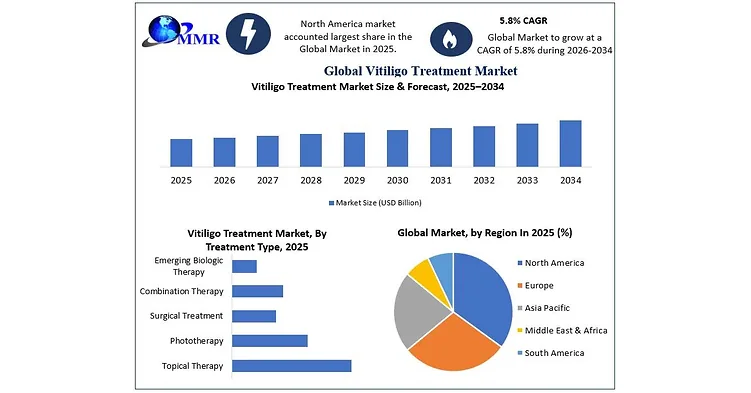
PUNE, India, Sept. 23, 2026 /PRNewswire/ -- Global Vitiligo Treatment Market was valued at USD 1.79 Billion in 2025 and is projected to expand at a 5.8% CAGR from 2026 to 2034, reaching USD 2.97 Billion by 2034, according to a new analysis by Maximize Market Research.

Global Vitiligo Treatment Market

The Global Vitiligo Treatment Market Report 2025 provides a detailed analysis of market trends, growth drivers, treatment innovations, clinical developments, R&D activities, emerging therapies, regulatory developments, competitive developments, applications, and market forecasts through 2034. The market covers Topical Therapy, Phototherapy, Surgical Treatment, Combination Therapy, and Emerging Biologic and Targeted Therapy, along with Corticosteroids, Calcineurin Inhibitors, Janus Kinase Inhibitors, Immunomodulators, and Other Dermatological Drugs across Non-Segmental Vitiligo and Segmental Vitiligo.

The growing prevalence of vitiligo, rising awareness of dermatological disorders, increasing aesthetic consciousness, demand for effective repigmentation therapies, and improved access to dermatology care are supporting the expansion of the global vitiligo treatment market. The increasing focus on early diagnosis, personalized treatment, combination therapies, topical treatments, phototherapy, and targeted therapies is strengthening treatment adoption among patients. The growing recognition of vitiligo and its impact on quality of life and self-esteem is also encouraging patients to seek professional treatment and long-term disease management.

Advancements in vitiligo drug development, JAK inhibitor therapies, topical immunomodulators, phototherapy technologies, excimer laser systems, clinical trials, and emerging biologic and targeted therapies are further transforming the treatment landscape. Increasing pharmaceutical R&D, expanding clinical pipelines, regulatory approvals for novel therapies, and investments in autoimmune dermatology and melanocyte-targeted treatment approaches are creating new opportunities for market participants. These developments, combined with rising healthcare expenditure, expanding dermatology infrastructure, increasing clinical research, and growing demand for improved repigmentation outcomes, are expected to strengthen the global vitiligo treatment market through 2034.

Get Full PDF Sample Copy of Report: (Including Full TOC, List of Tables & Figures, Chart) @ https://www.maximizemarketresearch.com/request-sample/168196/

Global Vitiligo Treatment Market gains momentum as rising disease prevalence, increasing aesthetic awareness, advanced topical therapies, JAK inhibitors, phototherapy, clinical research, and emerging targeted treatments accelerate innovation in vitiligo management: Maximize Market Research unveils key insights.

Global Vitiligo Treatment Market Size & Forecast

Global Vitiligo Treatment Market Trends & Insights

- North America leads the Global Vitiligo Treatment Market, driven by advanced healthcare infrastructure, high awareness of vitiligo, greater access to dermatologists, and the adoption of innovative targeted therapies.

- Asia-Pacific represents a high-growth region, supported by the rising prevalence of vitiligo, improving dermatology infrastructure, increasing healthcare awareness, and expanding access to modern treatment options.

- Rising prevalence of vitiligo and growing aesthetic consciousness are increasing demand for effective treatment, particularly among patients seeking improved repigmentation and long-term disease management.

- Topical therapies and targeted treatments are gaining importance, supported by the adoption of topical JAK inhibitors, immunomodulators, corticosteroids, and calcineurin inhibitors for localized and non-segmental vitiligo.

- Clinical research and advanced treatment development are accelerating market innovation, with increasing R&D activities, clinical trials, phototherapy technologies, emerging biologic therapies, and novel targeted approaches aimed at improving repigmentation outcomes.

Rising Prevalence of Vitiligo and Growing Aesthetic Awareness Drive Market Growth

The increasing prevalence of vitiligo, rising awareness of dermatological disorders, and growing aesthetic consciousness are driving demand for effective vitiligo treatment. Greater patient awareness, improved diagnosis, and increasing access to dermatologists are supporting the adoption of topical therapies, phototherapy, combination treatments, and targeted therapies for repigmentation and long-term disease management.

Limited Access to Skilled Dermatologists Restrains Market Growth

A shortage of trained dermatologists and specialized healthcare professionals can create challenges in timely diagnosis, treatment selection, and long-term management of vitiligo. Limited access to specialized dermatology services, particularly in developing and underserved regions, can delay treatment and restrict the wider adoption of advanced vitiligo therapies.

Advancements in Targeted Therapies and Clinical Research Create Opportunities

Growing R&D activities, clinical trials, regulatory approvals, and the development of novel targeted therapies are creating significant opportunities in the vitiligo treatment market. Increasing adoption of topical JAK inhibitors, immunomodulators, phototherapy, emerging biologic therapies, and combination treatment approaches is expanding therapeutic options and supporting improved repigmentation outcomes.

Treatment Recurrence and Variable Therapeutic Outcomes Create Challenges

Vitiligo treatment can produce variable outcomes, and repigmentation may not be consistent across all affected body areas. Disease recurrence following treatment, differences in patient response, and the difficulty of treating certain anatomical areas remain important challenges for healthcare providers and patients. These factors continue to create demand for more effective, durable, and targeted treatment approaches.

Get Insightful Data on Regions, Market Segments, Customer Landscape, and Top Companies (Charts, Tables, Figures and More) https://www.maximizemarketresearch.com/request-sample/168196/

Global Vitiligo Treatment Market Segmentation

The Global Vitiligo Treatment Market is segmented by Treatment Type, Drug Class, Disease Type, Route of Administration, End User, Distribution Channel, and Region. Increasing prevalence of vitiligo, rising aesthetic awareness, growing demand for effective repigmentation therapies, advances in targeted treatments, increasing clinical trials, and expanding R&D activities are supporting market development across these segments.

North America Leads the Vitiligo Treatment Market While Asia Pacific Emerges as a High-Growth Region

North America held the largest share of the Global Vitiligo Treatment Market in 2025, supported by advanced healthcare infrastructure, high awareness of vitiligo, widespread access to dermatologists, strong clinical research activities, and increasing adoption of innovative treatment options. The United States represents a major market due to higher healthcare expenditure, established dermatology services, increasing diagnosis rates, and the availability of advanced therapies, including topical JAK inhibitors. Canada and Mexico also contribute through improving dermatology care and growing awareness of vitiligo treatment.

Europe represents an important market, supported by increasing awareness of autoimmune and dermatological disorders, established healthcare systems, expanding access to specialized dermatology services, and growing adoption of topical therapies and phototherapy. The United Kingdom, France, Germany, Italy, Spain, Sweden, Austria, and other European markets are witnessing continued interest in advanced repigmentation therapies, clinical research, and targeted treatment approaches. Increasing patient awareness and healthcare accessibility are further supporting regional market development.

Asia Pacific is expected to witness strong growth as the prevalence and awareness of vitiligo increase alongside improvements in healthcare infrastructure and dermatology services. China, South Korea, Japan, India, Australia, Indonesia, Malaysia, Vietnam, Taiwan, and other regional markets are contributing to market development. Rising healthcare awareness, increasing aesthetic consciousness, expanding access to dermatologists, and growing adoption of topical therapies, phototherapy, and combination treatments are creating opportunities across the region.

Middle East & Africa is gradually developing as awareness of vitiligo and access to specialized dermatological treatment improve. South Africa, GCC countries, Egypt, Nigeria, and other regional markets are contributing to market development through expanding healthcare infrastructure, increasing awareness of skin disorders, and growing demand for advanced dermatology services and treatment options.

South America is supported by increasing awareness of vitiligo treatment, improving healthcare access, and growing demand for effective dermatological therapies. Brazil represents an important regional market, while Argentina and other South American countries are contributing as diagnosis, treatment awareness, and access to specialized healthcare services continue to develop.

Leading Companies Strengthen the Vitiligo Treatment and Dermatology Landscape

Incyte Corporation, Pfizer Inc., AbbVie Inc., Clinuvel Pharmaceuticals, STRATA Skin Sciences, Glenmark Pharmaceuticals Ltd., Novartis AG, LEO Pharma A/S, Astellas Pharma Inc., and Dr. Reddy's Laboratories Ltd. are among the prominent companies associated with the global vitiligo treatment landscape. Their activities across targeted therapies, topical treatments, JAK inhibitors, phototherapy systems, immunomodulators, dermatological drugs, and clinical research are supporting treatment innovation and commercialization.

Class (B2B/B2C)
B2B
Ingest Status
Need Review
Dedupe hash
prn_302887627
Press Eligible
Yes
Press Eligible Reason
QA FAIL (need review): TARGET claims Asia-Pacific is the 'fastest-growing region,' but SOURCE only says it is a 'high-growth region' expected to witness strong growth, without asserting it is the fastest-growing relative to other regions.
Source Name
Unknown Company
Original Summary

<p>PUNE, India, Sept. 23, 2026 /PRNewswire/ -- Global Vitiligo Treatment Market was valued at USD 1.79 Billion in 2025 and is projected to expand at a 5.8% CAGR from 2026 to 2034, reaching USD 2.97 Billion by 2034, according to a new analysis by Maximize Market Research. Global Vitiligo...</p>

Image URL
https://mmx.prnewswire.com/media/MS1994824/Vitiligo-Treatment-Market.jpg?id=OA2966593&p=facebook
Generated Article_json
{"target_audience": "b2b", "is_medical": true, "ai_generated_title": "Vitiligo Treatment Market to Hit $2.97B by 2034 on JAK Inhibitor Demand", "body_html": "<p><strong>Pune, India -- [CURRENT_DATE] --</strong> The global vitiligo treatment market reached $1.79 billion in 2025 and is forecast to grow at a 5.8% compound annual rate through 2034, reaching $2.97 billion, according to a new analysis from Maximize Market Research.</p><h5>Topical JAK inhibitors and immunomodulators gain ground in non-segmental vitiligo</h5><p>Adoption of topical Janus kinase inhibitors, corticosteroids, calcineurin inhibitors, and immunomodulators is expanding across non-segmental and segmental vitiligo cases. The report attributes this shift to increasing pharmaceutical R&D, expanded clinical pipelines, and regulatory approvals for novel dermatological therapies.</p><h5>North America holds the largest regional share on dermatology access and R&D density</h5><p>The United States drives regional demand through higher healthcare expenditure, established dermatology infrastructure, and availability of advanced therapies including topical JAK inhibitors. Canada and Mexico contribute additional volume as dermatology care and treatment awareness improve.</p><h5>Asia-Pacific emerges as the fastest-growing region amid rising diagnosis rates</h5><p>China, Japan, South Korea, India, and Southeast Asian markets including Indonesia, Malaysia, and Vietnam are expanding treatment adoption as healthcare infrastructure and dermatologist access improve. Growing aesthetic consciousness across the region is pushing patients toward phototherapy, topical treatments, and combination regimens.</p><h5>Europe and emerging markets add incremental demand through expanding dermatology access</h5><p>The UK, France, Germany, Italy, Spain, Sweden, and Austria show continued uptake of repigmentation therapies and clinical research activity. The Middle East & Africa and South America report gradual market development, with Brazil, South Africa, and GCC countries expanding dermatological service access.</p><h5>Shortage of trained dermatologists constrains treatment access in underserved regions</h5><p>Limited availability of specialized dermatology professionals delays diagnosis and treatment selection, particularly in developing markets. This gap restricts wider adoption of advanced therapies despite rising patient demand.</p><h5>Ten pharmaceutical and dermatology firms anchor competitive activity</h5><p>Incyte Corporation, Pfizer, AbbVie, Clinuvel Pharmaceuticals, STRATA Skin Sciences, Glenmark Pharmaceuticals, Novartis, LEO Pharma, Astellas Pharma, and Dr. Reddy's Laboratories are named as prominent participants shaping the vitiligo treatment landscape through targeted therapies, phototherapy systems, and clinical trial activity.</p><p>Treatment recurrence and variable repigmentation outcomes across different anatomical areas remain persistent clinical challenges, sustaining demand for more durable, targeted therapeutic approaches.</p>", "meta_description": "Global vitiligo treatment market to grow from $1.79B in 2025 to $2.97B by 2034 at 5.8% CAGR, driven by JAK inhibitors and phototherapy innovation.", "seo_keywords": "vitiligo treatment market, JAK inhibitors, phototherapy, dermatology, repigmentation therapy, Incyte, Pfizer, AbbVie, market forecast 2034", "companies": ["Incyte Corporation", "Pfizer Inc.", "AbbVie Inc."], "industries": ["Biopharmaceuticals"], "markets_regions": ["North America", "APAC", "Global"], "news_type": ["market_research", "general_news"], "themes": ["clinical_research", "regulatory_compliance"], "products": ["Vitiligo Treatment Market Report"], "events": [], "cta_text": "Full market segmentation and competitive analysis available via Maximize Market Research report request", "learn_more": "https://www.maximizemarketresearch.com/request-sample/168196/", "fact_check": {"accuracy_score": 100, "legal_risk": "low", "corrections_made": [], "recommendation": "publish"}}
Content Hash (SHA-256, erste 32 hex)
3e01087b88e62f0ad256c25f9cb97ca1
Global Flow Cytometry Market to Reach USD 11.14 Billion by 2034 at 9% CAGR as Rising Adoption in Clinical Diagnostics, Growing Multiparameter Cell Analysis, and Advances in High-Parameter Flow Cytometry Accelerate Market Growth, Reports Maximize Market Re
Image File
Original HTML

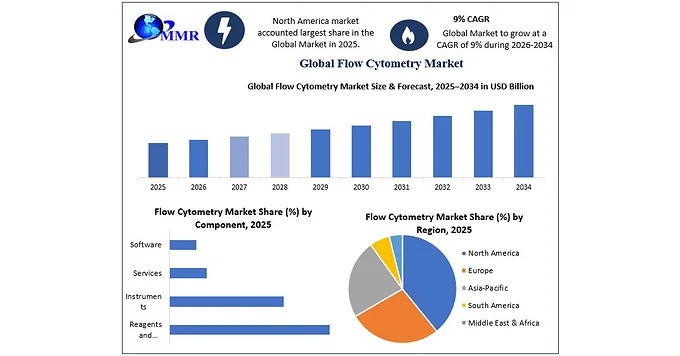
PUNE, India, Sept. 23, 2026 /PRNewswire/ -- The Global Flow Cytometry Market was valued at USD 5.13 Billion in 2025 and is projected to expand at a 9% CAGR from 2026 to 2034, reaching USD 11.14 Billion by 2034, according to a new analysis by Maximize Market Research.

Global Flow Cytometry Market

The Global Flow Cytometry Market Report 2025 provides a detailed analysis of market trends, growth drivers, technological advancements, clinical applications, research activities, product innovations, regulatory developments, competitive developments, applications, and market forecasts through 2034. The market covers Instruments, Reagents and Consumables, Software, and Services across Cell-based Flow Cytometry and Bead-based Flow Cytometry, with applications spanning academic and research institutes, hospitals and clinical testing laboratories, and pharmaceutical and biotechnology companies.

The growing adoption of flow cytometry in clinical diagnostics, oncology, immunology, cell biology, drug discovery, and life science research is supporting the expansion of the global flow cytometry market. Increasing demand for multiparameter cellular analysis, immunophenotyping, biomarker identification, cell-cycle analysis, and immune-cell characterization is strengthening the use of flow cytometry across research and clinical environments. Rising investments in biotechnology, pharmaceutical R&D, precision medicine, and cell-based research are further contributing to demand for advanced flow cytometry systems, reagents, consumables, and analytical software.

Advancements in spectral flow cytometry, high-parameter analysis, automated workflows, cell sorting, nanoscale particle analysis, and AI-enabled data interpretation are further transforming the flow cytometry landscape. Increasing research into cancer, immunotherapy, stem cells, cell and gene therapies, and single-cell analysis is creating new opportunities for market participants. Product launches, technological innovation, strategic collaborations, acquisitions, and expansion of clinical and research applications are expected to strengthen the global flow cytometry market through 2034.

Get Full PDF Sample Copy of Report: (Including Full TOC, List of Tables & Figures, Chart) @ https://www.maximizemarketresearch.com/request-sample/29653/

Global Flow Cytometry Market gains momentum as rising adoption in clinical diagnostics and life science research, increasing demand for multiparameter cell analysis, advances in spectral and high-parameter flow cytometry, automation, and expanding cell and gene therapy applications accelerate technological innovation: Maximize Market Research unveils key insights.

Global Flow Cytometry Market Size & Forecast

Global Flow Cytometry Market Trends & Insights

- North America leads the Global Flow Cytometry Market, supported by advanced healthcare infrastructure, strong biomedical research activity, established pharmaceutical and biotechnology industries, and extensive adoption of flow cytometry in clinical diagnostics and life science research.

- Asia-Pacific represents a high-growth region, driven by expanding pharmaceutical and biotechnology sectors, improving healthcare infrastructure, increasing biomedical research investments, and growing adoption of advanced cellular analysis technologies across China, Japan, India, and South Korea.

- Rising demand for multiparameter cellular analysis is increasing the adoption of flow cytometry across oncology, immunology, drug development, cell biology, and clinical diagnostics, particularly for immunophenotyping, biomarker identification, cell-cycle analysis, and immune-cell characterization.

- Spectral and high-parameter flow cytometry technologies are gaining importance, supported by the need for detailed analysis of complex and heterogeneous cell populations. Advances in automation, cell sorting, nanoscale particle analysis, and integrated data-analysis software are further expanding technology adoption.

- Clinical research and cell-based therapy development are accelerating market innovation, with increasing applications in cancer research, immunotherapy, stem-cell studies, and cell and gene therapy. Product launches, technological advancements, R&D investments, and development of automated analytical workflows are creating new opportunities for flow cytometry market participants.

Growing Adoption of Multiparameter Cellular Analysis Drives Market Growth

The increasing use of flow cytometry in clinical diagnostics, oncology, immunology, cancer research, drug discovery, cell biology, and life science research is driving market growth. Rising demand for immunophenotyping, biomarker identification, cell-cycle analysis, immune-cell characterization, and high-resolution cellular analysis is encouraging laboratories to adopt advanced flow cytometers. The expanding use of flow cytometry in pharmaceutical R&D, biotechnology research, immunotherapy, stem-cell studies, and cell-based research is further supporting demand for instruments, reagents, consumables, software, and services.

High Capital and Operating Costs Restrain Market Growth

The substantial investment required for advanced flow cytometry instruments, lasers, detectors, reagents, specialized software, maintenance, laboratory infrastructure, and technical support can restrict adoption, particularly among smaller hospitals, academic laboratories, and research facilities with limited budgets. The increasing complexity of high-parameter and spectral flow cytometry systems, together with recurring consumable and maintenance requirements, can further increase the overall cost of ownership and limit adoption in cost-sensitive markets.

Expansion of Spectral Flow Cytometry and Cell-Based Therapies Creates Opportunities

Advancements in spectral flow cytometry, high-parameter analysis, automated workflows, cell sorting, nanoscale particle analysis, and advanced data-analysis software are creating significant opportunities in the flow cytometry market. Growing applications in single-cell analysis, immunotherapy, cancer research, stem-cell studies, and cell and gene therapy are increasing demand for technologies capable of characterizing complex cell populations at greater resolution. The development of AI-enabled analysis, workflow automation, integrated software solutions, and application-specific platforms is further expanding opportunities for technology providers.

Shortage of Skilled Professionals and Complex Data Interpretation Create Challenges

The increasing complexity of multiparameter and high-dimensional flow cytometry datasets creates challenges related to panel design, compensation, quality control, instrument operation, data management, and interpretation. Laboratories require skilled professionals with expertise in flow cytometry instrumentation, fluorescence analysis, cell sorting, assay development, and computational data analysis. The shortage of trained personnel, together with the complexity of analyzing multidimensional cellular datasets and maintaining standardized workflows, can create operational challenges for clinical and research laboratories.

Get Insightful Data on Regions, Market Segments, Customer Landscape, and Top Companies (Charts, Tables, Figures and More) https://www.maximizemarketresearch.com/request-sample/29653/

Global Flow Cytometry Market Segmentation

The Global Flow Cytometry Market is segmented by Component, Technology, End Use, and Region. Increasing adoption of multiparameter cellular analysis, growing applications in clinical diagnostics and life science research, technological advancements in spectral and high-parameter flow cytometry, rising pharmaceutical and biotechnology R&D investments, and expanding applications in cell-based therapies are supporting market development across these segments.

North America Leads the Flow Cytometry Market While Asia Pacific Emerges as a High-Growth Region

North America held the largest share of the Global Flow Cytometry Market in 2025, supported by advanced healthcare infrastructure, strong biomedical research activity, established pharmaceutical and biotechnology industries, and widespread adoption of advanced cellular analysis technologies. The United States represents a major market due to substantial healthcare and life science investments, extensive clinical laboratory networks, strong oncology and immunology research, and increasing use of flow cytometry in clinical diagnostics, drug discovery, immunotherapy, and cell-based research. Canada and Mexico also contribute through improving laboratory infrastructure, expanding research capabilities, and growing adoption of advanced flow cytometry systems.

Europe represents an important market, supported by established healthcare systems, strong clinical and academic research networks, pharmaceutical and biotechnology activity, and increasing use of flow cytometry in diagnostic and research applications. The United Kingdom, France, Germany, Italy, Spain, Sweden, Austria, and other European markets are witnessing continued adoption of multiparameter flow cytometry, spectral flow cytometry, cell sorting, immunophenotyping, and advanced data-analysis technologies. Growing investments in precision medicine, immunology, cancer research, and cell-based therapies are further supporting regional market development.

Asia Pacific is expected to witness strong growth as pharmaceutical and biotechnology industries expand alongside improvements in healthcare infrastructure and biomedical research capabilities. China, South Korea, Japan, India, Australia, Indonesia, Malaysia, Vietnam, Taiwan, and other regional markets are contributing to market development. Rising investments in cancer research, drug development, immunology, cell biology, cell and gene therapies, and life science research, together with increasing adoption of high-parameter and automated flow cytometry systems, are creating opportunities across the region.

Class (B2B/B2C)
B2B
Ingest Status
Need Review
Dedupe hash
prn_302887666
Press Eligible
Yes
Press Eligible Reason
QA FAIL (need review): TARGET claims Asia-Pacific is 'the fastest-growing region,' but SOURCE only describes it as a 'high-growth region' with 'strong growth,' not explicitly the fastest. This is an unsupported factual claim.
Source Name
Unknown Company
Original Summary

<p>PUNE, India, Sept. 23, 2026 /PRNewswire/ -- The Global Flow Cytometry Market was valued at USD 5.13 Billion in 2025 and is projected to expand at a 9% CAGR from 2026 to 2034, reaching USD 11.14 Billion by 2034, according to a new analysis by Maximize Market Research. Global Flow Cytometry...</p>

Image URL
https://mmx.prnewswire.com/media/MS1994831/Global-Flow-Cytometry-Market.jpg?id=OA2966617&p=facebook
Generated Article_json
{"target_audience": "b2b", "is_medical": false, "ai_generated_title": "Flow Cytometry Market to Hit $11.14B by 2034 on 9% CAGR", "body_html": "<p><strong>Pune -- [CURRENT_DATE] --</strong> The global flow cytometry market reached USD 5.13 billion in 2025 and is forecast to grow at a 9% compound annual growth rate through 2034, hitting USD 11.14 billion, according to a new report from Maximize Market Research.</p><h5>Clinical diagnostics and oncology research drive demand for multiparameter cell analysis</h5><p>Laboratories are increasing adoption of flow cytometry for immunophenotyping, biomarker identification, cell-cycle analysis, and immune-cell characterization across oncology, immunology, and drug discovery. Rising investment in biotechnology, pharmaceutical R&D, and precision medicine is fueling demand for instruments, reagents, consumables, and analytical software.</p><h5>North America holds the largest market share in 2025</h5><p>The region's position rests on advanced healthcare infrastructure, established pharmaceutical and biotechnology industries, and extensive clinical laboratory networks in the United States. Canada and Mexico contribute through improving laboratory infrastructure and expanding research capabilities.</p><h5>Asia-Pacific emerges as the fastest-growing region</h5><p>China, Japan, India, South Korea, Australia, Indonesia, Malaysia, Vietnam, and Taiwan are expanding pharmaceutical and biotechnology sectors alongside improving healthcare infrastructure. Rising investment in cancer research, cell and gene therapy, and life science research is pushing adoption of high-parameter and automated flow cytometry systems across the region.</p><h5>Spectral flow cytometry and AI-enabled analysis create new technology opportunities</h5><p>Advancements in spectral flow cytometry, automated workflows, cell sorting, nanoscale particle analysis, and AI-enabled data interpretation are expanding applications in single-cell analysis, immunotherapy, stem-cell studies, and cell and gene therapy. Product launches, strategic collaborations, and acquisitions are expected to strengthen competitive positioning through 2034.</p><h5>High capital costs and a shortage of skilled personnel restrain wider adoption</h5><p>Substantial investment required for advanced instruments, lasers, detectors, reagents, and specialized software limits adoption among smaller hospitals and academic laboratories with constrained budgets. Increasing complexity of high-parameter and spectral systems, combined with recurring consumable and maintenance costs, raises total cost of ownership. Laboratories also face challenges in panel design, compensation, and interpretation of multidimensional datasets, requiring specialized expertise that remains in short supply.</p><h5>Europe maintains steady adoption across established research networks</h5><p>The United Kingdom, France, Germany, Italy, Spain, Sweden, and Austria continue adopting multiparameter and spectral flow cytometry, cell sorting, and immunophenotyping technologies. Growing investment in precision medicine, immunology, and cell-based therapies supports continued regional market development.</p>", "meta_description": "Global flow cytometry market to grow from $5.13B in 2025 to $11.14B by 2034 at 9% CAGR, driven by clinical diagnostics, oncology and spectral technology.", "seo_keywords": "flow cytometry market, spectral flow cytometry, immunophenotyping, cell and gene therapy, oncology diagnostics, biotechnology R&D, multiparameter cell analysis", "companies": ["Maximize Market Research"], "industries": ["Laboratory Equipment"], "markets_regions": ["North America", "APAC", "Europe"], "news_type": ["market_research", "general_news"], "themes": ["digital_transformation", "regulatory_compliance"], "products": ["Flow Cytometry Systems"], "events": [], "cta_text": "Access the full flow cytometry market report and forecast data through 2034", "learn_more": "https://www.maximizemarketresearch.com/request-sample/29653/", "fact_check": {"accuracy_score": 100, "legal_risk": "low", "corrections_made": [], "recommendation": "publish"}}
Content Hash (SHA-256, erste 32 hex)
7f1ba2c1cde3141dce45cae37f42abec
Corner Bakery Cafe Highlights Variety and Value with Choose 2 Meal Deal
Image File
Original HTML

Corner Bakery Cafe Highlights Variety and Value with Choose 2 Meal Deal

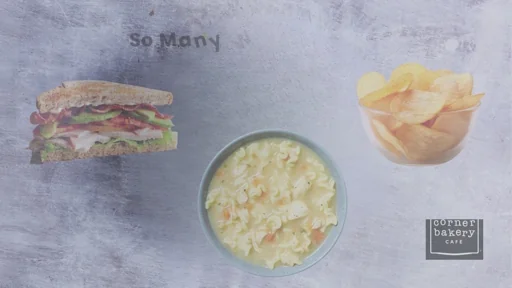
DALLAS, Sept. 23, 2026 /PRNewswire/ -- Corner Bakery Cafe is giving customers more ways to build a complete meal with its Choose 2 deal, available for $8.99 at participating corporate locations and $9.99 at participating corporate California locations. The limited-time offer includes two half-size or cafe-size menu items from soups, salads, sandwiches, hot sandwiches, paninis and cafe pastas, plus a side.

"Guests are looking for value, but they still want a meal that feels satisfying," said Erin Hasselgren, president of Corner Bakery Cafe. "That's what makes Choose 2 such a strong fit for Corner Bakery. We have not changed the portion size, so guests are still getting the same generous servings they expect, with the ability to pair two favorites and add a side in a way that works for their day."

The deal can be mixed and matched from a wide range of menu items, including half sandwiches and paninis such as the BBLT, Chicken Pesto, Chicken Pomodori and Classic Grilled Cheese; soups and salads like the guest-loved Berry Berry Crisp Salad and guest-favorite Broccoli Cheddar Soup; cafe pastas such as Mac & Cheese and Cavatappi Marinara; and sides like Mixed Greens Salad, Classic Caesar Salad and Seasonal Fruit Medley

Choose 2 gives customers the flexibility to build a complete meal around what they are craving, with two eligible menu items and a side that make it a satisfying option for lunch, dinner or any moment when one favorite is not quite enough.

To redeem the Choose 2 offer, guests can access the coupon here: https://cornerbakerycafe.com/p/202603031808/. California guests can access the California Choose 2 offer here: https://cornerbakerycafe.com/p/202606012280/.

*Offer valid through December 31, 2026, at participating locations. Pricing applies to participating corporate locations only. Pricing may vary at franchised locations. Participation, menu availability and coupon details may vary.

ABOUT CORNER BAKERY CAFE

Corner Bakery Cafe is a fast-casual restaurant serving kitchen-crafted breakfast, lunch, dinner and catering to guests in 18 states and Washington, D.C. Founded in 1991 as a small bakery in downtown Chicago, Corner Bakery Cafe has been a neighborhood favorite for more than 30 years. The brand features artisan-inspired menu options made with fresh ingredients and delivers a premier bakery experience in communities across the nation. To learn more, visit cornerbakerycafe.com.

SOURCE Corner Bakery Cafe

Share this article

Class (B2B/B2C)
Ignore
Ingest Status
Need Review
Dedupe hash
prn_302888257
Press Eligible
No
Press Eligible Reason
Irrelevant (need review): Pure promotional announcement for a limited-time restaurant meal deal with no substantive business news.
Source Name
Unknown Company
Original Summary

<p>DALLAS, Sept. 23, 2026 /PRNewswire/ -- Corner Bakery Cafe is giving customers more ways to build a complete meal with its Choose 2 deal, available for $8.99 at participating corporate locations and $9.99 at participating corporate California locations. The limited-time offer includes two...</p>

Image URL
https://mmx.prnewswire.com/media/MS1995340/CBC-Choose-2-Final-Video.mp4?id=OA2967701&p=thumbnail
Content Hash (SHA-256, erste 32 hex)
86062de2de28c958fe745603d7554033
BlueGreen Alliance Marks 20th Anniversary at Climate Week
Image File
Original HTML

WASHINGTON, Sept. 23, 2026 /PRNewswire/ -- Leaders and advocates gathered in New York for Climate Week heard the unique story of the BlueGreen Alliance (BGA) during a panel discussion on worker-powered climate action. BGA—celebrating the 20th anniversary of its founding—was joined by Sen. Brian Schatz (D-HI), United Steelworkers (USW) International President Roxanne Brown, and Natural Resources Defense Council (NRDC) Action Fund President Manish Bapna.

The panel discussion explored the lessons that can be learned from BGA's 20 years of proven success as the only national coalition of environmental and labor organizations in the world. The organization—founded in 2006 by former USW International President Leo Gerard and former Executive Director of the Sierra Club Carl Pope—is aligned on the shared belief that we don't have to choose between good jobs and a clean environment. We can and must have both.

"I have worked with BGA since its infancy, and I remain committed to the mission of this organization," said USW International President and BGA Co-Chair Roxanne Brown. "Working with our environmental partners to deepen understanding across our movements gives us the footing we need to enact real change that will build a better future for working families for generations to come."

The panelists discussed BGA's continued work to leverage the collective strength of its partners and their members to build consensus and advocate for shared solutions that fight the climate crisis, create good-paying union jobs, advance racial and economic justice, and protect the health and fundamental rights of working people.

"As a coalition, BGA has struck significant wins for the environmental and labor movements, but much of that progress has been under attack in recent years. That is why the enduring strength of our coalition is so important," said NRDC Action Fund President and BGA Board Member Manish Bapna. "We remain dedicated to working in partnership to build on our successes and grow a clean economy built with good union jobs."

"Economic change in recent decades has been driven by elites and working people have not seen the benefits. Unless working people are at the center of climate policy and energy transition, the solutions won't work for them, and they won't stick." said BlueGreen Alliance Executive Director Jason Walsh. "In the face of an escalating climate crisis and rising inequality, our work is more urgent than ever. These crises can only be confronted by worker-powered climate action, and that is the work BGA plans to carry forward over the next 20 years."

SOURCE BlueGreen Alliance

Share this article

Class (B2B/B2C)
B2B
Ingest Status
Need Review
Dedupe hash
prn_302888273
Press Eligible
Yes
Press Eligible Reason
QA FAIL (need review): TARGET inaccurately calls Roxanne Brown 'USW co-chair'; SOURCE identifies her as 'USW International President and BGA Co-Chair.'
Source Name
Unknown Company
Original Summary

<p>WASHINGTON, Sept. 23, 2026 /PRNewswire/ -- Leaders and advocates gathered in New York for Climate Week heard the unique story of the BlueGreen Alliance (BGA) during a panel discussion on worker-powered climate action. BGA—celebrating the 20th anniversary of its founding—was joined by Sen....</p>

Image URL
https://mmx.prnewswire.com/media/MS1781257/BlueGreen-Alliance-Logo.jpg?id=OA2968204&p=facebook
Generated Article_json
{"target_audience": "b2b", "is_medical": false, "ai_generated_title": "BlueGreen Alliance Marks 20 Years as Sole Labor-Environmental Coalition", "body_html": "<p><strong>Washington -- [CURRENT_DATE] --</strong> The BlueGreen Alliance (BGA) marked its 20th anniversary at a Climate Week panel in New York, positioning itself as the only national coalition uniting environmental and labor organizations worldwide.</p><h5>Senator and union leaders join anniversary panel on worker-powered climate action</h5><p>Sen. Brian Schatz (D-HI) joined United Steelworkers (USW) International President Roxanne Brown and Natural Resources Defense Council (NRDC) Action Fund President Manish Bapna to discuss lessons from BGA's two-decade track record. The organization was founded in 2006 by former USW International President Leo Gerard and former Sierra Club Executive Director Carl Pope on the premise that good jobs and a clean environment are not mutually exclusive.</p><h5>USW co-chair says coalition strengthens leverage for working families</h5><p>Roxanne Brown, who has worked with BGA since its founding, said deepening cross-movement understanding gives labor and environmental groups the footing needed to enact durable change for working families. Manish Bapna said BGA's wins for both movements have faced increasing attacks in recent years, underscoring the value of a sustained coalition structure.</p><h5>Executive director frames next 20 years around worker-centered climate policy</h5><p>BGA Executive Director Jason Walsh said economic change in recent decades has been driven by elites while working people have not shared in the benefits. He said climate and energy-transition policy will fail to stick unless workers are placed at its center, calling worker-powered climate action essential amid an escalating climate crisis and rising inequality.</p><p>The panel discussion centered on BGA's ongoing effort to mobilize its coalition partners and their members around shared solutions addressing climate change, union job creation, racial and economic justice, and worker health and rights.</p>", "meta_description": "BlueGreen Alliance marks 20th anniversary at Climate Week, with USW and NRDC leaders backing worker-powered climate action and union job growth.", "seo_keywords": "BlueGreen Alliance, United Steelworkers, NRDC Action Fund, Climate Week, worker-powered climate action, labor-environmental coalition, clean economy jobs", "companies": ["BlueGreen Alliance", "United Steelworkers", "NRDC Action Fund"], "industries": ["Energy & Environment"], "markets_regions": ["United States"], "news_type": ["general_news"], "products": [], "themes": ["climate_policy", "labor_rights", "coalition_building"], "events": ["Climate Week"], "cta_text": "Learn more about BlueGreen Alliance's 20-year coalition work on worker-powered climate action.", "learn_more": "", "fact_check": {"accuracy_score": 100, "legal_risk": "low", "corrections_made": [], "recommendation": "publish"}}
Content Hash (SHA-256, erste 32 hex)
50290a39be6786b9a368750780853995
KLX ENERGY SERVICES HOLDINGS, INC. ADOPTS LIMITED-DURATION STOCKHOLDER RIGHTS PLAN
Original HTML

KLX ENERGY SERVICES HOLDINGS, INC. ADOPTS LIMITED-DURATION STOCKHOLDER RIGHTS PLAN

After Careful Consideration, Company's Board Takes Action to Protect the Best Interests of All Stockholders Following New Investor's Rapid Accumulation of Stock

HOUSTON, Sept. 23, 2026 /PRNewswire/ -- KLX Energy Services Holdings, Inc. (NASDAQ: KLXE) ("KLX" or the "Company" or "we") today announced that its Board of Directors (the "Board") has adopted a limited-duration stockholder rights plan (the "Rights Plan") to protect the interests of all of the Company's stockholders.

The Rights Plan is effective immediately and will expire on September 23, 2027, unless the rights are earlier redeemed, exchanged, or terminated. The Board intends to submit any extension of the Rights Plan beyond its initial term to a vote of the Company's stockholders.

The Board adopted the Rights Plan in response to the rapid accumulation of the Company's common stock by a single investor, together with that investor's request to purchase shares in excess of the 9.995% ownership limitation set forth in the Company's recently expired $125 million partially backstopped rights offering ("Backstopped Equity Rights Offering") described in greater detail below under "Description of the Backstopped Equity Rights Offering." The investor has a well-documented history of acquiring significant equity positions in publicly traded companies and thereafter seeking to acquire those companies or their assets, including through unsolicited acquisition proposals and tender offers.

The Backstopped Equity Rights Offering was intended to allow existing stockholders to participate, pro rata and on equal terms, in a deleveraging transaction for the Company without being diluted. During the pendency of the rights offering, the Company's share price traded at or near the discounted rights offering price, which was deemed appropriate to incentivize a broad, pro-rata equity raise open to every stockholder. The Company instituted a 9.995% cap on participation in the rights offering to avoid the outcome of any one holder assembling a concentrated or potential control position at the offering's discounted subscription price. However, the cap would not prevent an investor from further accumulation of shares or the formation of a group after the expiration of the Backstopped Equity Rights Offering, which occurred as of 5:00 p.m., New York City time, today, September 23, 2026.

Following the expiration of the Backstopped Equity Rights Offering, the Rights Plan was adopted to protect all stockholders and to implement a 10% threshold to nearly match the prior 9.995% cap for participants under the Backstopped Equity Rights Offering. We expect to share more information about participation in the Backstopped Equity Rights Offering and the resulting changes to the composition of our stockholder base in the coming days as final subscription tabulations are processed.

The Board believes the Company has significant opportunities to create value for all stockholders following the completion of the Backstopped Equity Rights Offering. The Rights Plan is intended to enable all stockholders to realize the benefits of the deleveraging and to protect the long-term value of their investment by guarding against the acquisition of effective or actual control — whether through open-market purchases, the formation of an undisclosed group, or other tactics — without payment of an appropriate premium to all stockholders. The Rights Plan is intended to ensure that the Board has adequate time to reassess the business post-deleveraging, execute the Company's strategic plan, and make informed decisions in the best interests of all stockholders.

About the Rights Plan

The Board spent significant time discussing the appropriateness of a rights plan with a beneficial ownership cap of 10%. Considerations that were evaluated included:

- The rapid pace at which a single new investor accumulated a significant position in the Company's common stock and that investor's request to acquire as much as 30% of the Company through the Backstopped Equity Rights Offering, together with that investor's documented history of acquiring substantial equity positions in publicly traded companies and subsequently pursuing transactions to acquire those companies or their assets, including through unsolicited acquisition proposals and tender offers;

- The Company's responsibility to prevent any prospective bidder from depriving all other stockholders of premium value, in the event an investor has accumulated an equity stake and then bids for the remaining shares;

- The intended purpose of the Backstopped Equity Rights Offering, including that the Company permitted higher ownership levels for certain of the Backstop Parties (up to 30%) to the extent the Backstopped Equity Rights Offering was not sufficiently subscribed as part of a broader agreement to backstop the offering, exchange the Company's existing notes for equity, and reduce the Company's leverage, but the Backstopped Equity Rights Offering was not intended to permit the purchase of discounted shares to accumulate a stake;

- The Company's encouragement of broad participation in the Backstopped Equity Rights Offering, which is expected to reduce the amount of the backstop drawn upon and the size of any resulting Backstop Party equity positions; and

- The Company's related desire to preserve sufficient time for the Board to complete the deleveraging and execute the Company's strategic plan.

The Company intends to provide exemptions to the Rights Plan's beneficial ownership cap to passive stockholders. In addition, the Rights Plan exempts shares of common stock acquired by the Backstop Parties pursuant to the Backstop Agreement, up to and consistent with the ownership levels permitted under the Backstop Agreement, so that the Backstop Parties' fulfillment of their obligations under the Backstop Agreement and the related deleveraging will not cause the rights to become exercisable.

The Rights Plan is similar to plans adopted by other publicly traded companies and is not intended to deter acquisition offers or preclude the Board from considering acquisition offers that are fair and otherwise in the best interests of the Company and all of its stockholders.

Pursuant to the Rights Plan, the Company will issue, by means of a dividend, 1 preferred share purchase right for every outstanding share of common stock to stockholders of record as of the close of business on October 5, 2026. Under the Rights Plan, the rights generally become exercisable if a person or group acquires beneficial ownership of 10% or more of the outstanding common stock. Under the Rights Plan, the rights also generally become exercisable if a stockholder that already beneficially owns 10% or more of the outstanding common stock subsequently increases its ownership by one or more shares. In the event the rights become exercisable, each holder of a right (other than the person or group triggering the Rights Plan, whose rights will become void and will not be exercisable) will be entitled to purchase, at the exercise price, additional shares of common stock at a significant discount to the then-current market price.

Further details about the Rights Plan will be contained in a Form 8-K filed by the Company with the U.S. Securities and Exchange Commission (the "SEC").

Description of the Backstopped Equity Rights Offering

Our $125 million Backstopped Equity Rights Offering, pursuant to which we distributed to holders of our common stock, par value $0.01 per share ("Common Stock"), and holders of certain of the Company's outstanding warrants on August 21, 2026 (the "Record Date" and such holders, collectively, the "Eligible Holders") transferable basic subscription rights to purchase shares of our Common Stock, expired at 5:00 p.m., New York City time, on September 23, 2026. Each basic subscription right entitled such Eligible Holder to purchase 3.885 shares of our Common Stock at a subscription price equal to $1.49 per whole share (the "Subscription Price"); provided, however, that no Eligible Holder (other than the Backstop Parties (as defined below)) was entitled to exercise subscription rights (including any over-subscription privileges) to the extent that such exercise would result in such holder, together with its affiliates and any persons acting in concert with such Eligible Holder, beneficially owning more than 9.995% of the Company's outstanding common stock on a pro forma basis after giving effect to such exercise (the "9.995% Ownership Limitation").

The Backstopped Equity Rights Offering was backstopped by the existing holders (the "Backstop Parties") of the Company's Senior Secured Floating Rate Cash/PIK Notes due 2030 (the "2030 Notes") in an aggregate backstop commitment amount of $94.0 million pursuant to a rights offering backstop agreement (the "Backstop Agreement"), with each individual Backstop Party subject to an aggregate 30% ownership limitation on a pro forma fully diluted basis. The Backstop Parties have committed to purchase any shares that remain unsubscribed in the offering through an exchange of their 2030 Notes for shares of Common Stock at the Subscription Price (the "Backstop Exchange"). Upon completion of the Backstop Exchange, the outstanding principal amount of the 2030 Notes is expected to be reduced by $94.0 million as a result of the combination of par redemptions from any excess proceeds in the Backstopped Equity Rights Offering and the exchange of 2030 Notes for Common Stock in the Backstop Exchange.

About KLX Energy Services Holdings, Inc.

KLX is a growth-oriented provider of diversified oilfield services to leading onshore oil and natural gas exploration and production companies operating in both conventional and unconventional plays in all of the active major basins throughout the United States.

Class (B2B/B2C)
B2B
Ingest Status
Rewritten
Dedupe hash
prn_302888205
Press Eligible
Yes
Press Eligible Reason
Corporate announcement about a stockholder rights plan, equity offering, and company deleveraging strategy.
Source Name
Unknown Company
Original Summary

<p>After Careful Consideration, Company's Board Takes Action to Protect the Best Interests of All Stockholders Following New Investor's Rapid Accumulation of Stock HOUSTON, Sept. 23, 2026 /PRNewswire/ -- KLX Energy Services Holdings, Inc. (NASDAQ: KLXE) ("KLX" or the "Company" or "we") today...</p>

Content Hash (SHA-256, erste 32 hex)
9a79a881e09ff58d80cdd21a4945f70b