Toyota Kentucky Invests in Tomorrow’s Workforce
Original HTML

Awards $1.4 million in community grants in 2026

GEORGETOWN, Ky. (Oct. 27, 2026) – The next engineer. The next skilled technician. The next community leader. Across the Bluegrass, young people are building futures filled with possibility, and Toyota Kentucky is creating pathways to help them reach their goals.

Toyota Kentucky announced today that it has awarded $1.4 million in grants this year to nonprofit organizations across Central Kentucky.

Investing in Kentucky’s Future

The grants support hands-on STEM education, mentoring, workforce training and career placement programs that help to equip students and job seekers with the skills, experience and opportunities they need to succeed.

“When students can see a future for themselves, incredible things happen,” said David Fernandes, president of Toyota Kentucky. “We’ve seen young people progress from robotics competitions and mentoring programs to college classrooms and on to rewarding careers. That’s the kind of long-term impact these investments create.”

Recognizing Community Impact

As the automaker’s largest plant celebrates its 40th anniversary, the company recognized four organizations with special $40,000 grants – representing key priorities in the company’s community investment strategy: workforce readiness, STEM education and community resilience.

- Big Brothers Big Sisters of the Bluegrass helps empowers young people through transformative mentoring relationships.

- AMEN House addresses food insecurity and helps students and families navigate times of need.

- Jubilee Jobs of Lexington connects people with meaningful employment through workforce training and career support.

- Kentucky FIRST Robotics prepares students for future careers through hands-on STEM and robotics experiences.

Creating Opportunities That Last

Together, these organizations help young people build confidence, support families through challenging times and connect Kentuckians with educational and career opportunities that strengthen the region’s workforce.

“Every student deserves the opportunity to see themselves as an innovator and leader,” said Kelli Gowan, executive director of KY FIRST Robotics. “Toyota Kentucky’s support helps open doors for young people across Kentucky by giving them hands-on experiences that build the technical and teamwork skills that they need for the future.”

Since breaking ground in Georgetown in 1986, Toyota Kentucky has invested over $166 million in charitable causes throughout the Commonwealth.

About Toyota

Toyota (NYSE:TM) has been a part of the cultural fabric in the U.S. for nearly 70 years, and is committed to advancing sustainable, next-generation mobility through our Toyota and Lexus brands, plus our nearly 1,500 dealerships.

Toyota directly employs approximately 48,000 people in the U.S. who have contributed to the design, engineering, and assembly of more than 36 million cars and trucks at our 11 manufacturing plants. In 2025, Toyota’s plant in North Carolina began to assemble automotive batteries for electrified vehicles.

To help inspire the next generation for careers in advanced manufacturing, Toyota launched its in-person tour booking platform and virtual tour experience at www.TourToyota.com allowing guests to schedule a live tour to see several of our U.S. manufacturing facilities in action or visit all plants virtually from anywhere around the globe.

For more information about Toyota, visit www.ToyotaNewsroom.com.

Media Contacts

Kim Ogle

[email protected]

Class (B2B/B2C)
B2B
Ingest Status
Rewritten
Dedupe hash
2bdfbe52325c69616d581d30c95c8046
Press Eligible
Yes
Press Eligible Reason
Manuelle Prüfung nötig. Risiko: MEDIUM. Flags: ['finance', 'numbers']. Stichprobe: False
Source Name
Toyota Motor North America
Original Summary

<p>GEORGETOWN, Ky. (Oct. 27, 2026) – The next engineer. The next skilled technician. The next community leader. Across the Bluegrass, young people are building futures filled with possibility, and Toyota Kentucky is creating pathways to help them reach their goals. [&#8230;]</p>
<p>The post <a href="https://pressroom.toyota.com/toyota-kentucky-invests-in-tomorrows-workf… Kentucky Invests in Tomorrow&#8217;s Workforce</a> appeared first on <a href="https://pressroom.toyota.com">Toyota USA Newsroom</a>.</p>

Image URL
https://toyota-cms-media.s3.amazonaws.com/wp-content/uploads/2026/10/TKY-Grants_HERO-1000x600.jpg
Content Hash (SHA-256, erste 32 hex)
71b2cc63545d8c276148a0ad01299e19
Toyota Reimagines Crown Signia as GT-S Performance Concept for SEMA
Original HTML

PLANO, Texas (Oct. 28, 2026) – A vehicle with room for family, friends, and gear, which looks right at home carving up canyon roads. That’s the idea behind the Toyota Crown Signia GT-S Concept showcased at the 2026 SEMA show.

Built by the Toyota Motorsports Garage, the project reimagines the 2026 Toyota Crown Signia as a sleek grand touring machine that blends everyday space and comfort with the attitude and road feel of a true sports car.

Designed to reimagine the model in a new light, the Toyota Crown Signia GT-S Concept has a look that is subtle at first glance, with clean body lines and low-slung SUV proportions, but then reveals its true intent with an aggressive stance and a purpose-built wheel-and-tire package.

Its long roofline is complemented by fully integrated widebody fenders, reshaped headlight surrounds with red accents, a revised rear treatment, and a sporty aero package. Together, these elements transform the vehicle’s proportions while preserving the elegance of Crown Signia’s original design.

Finished in a custom-mixed dark gray metallic paint with added flake and coats of clear, the concept balances refinement with a performance-inspired presence. The custom exhaust features trapezoidal tips integrated into the rear aero package, giving the vehicle an expressive, grand touring character. Inside, the cabin carries the performance theme forward with highly bolstered front seats accented in red.

Underneath, the Crown Signia GT-S Concept rides on custom one-off MCS® coilovers, making it nearly five inches lower than the stock version for a road hugging car posture. Giant front and rear brake calipers adapted from the Lexus RX 500h F SPORT reinforce the concept’s performance intent, while special-built 21-inch HRE® wheels wrapped in 295-mm wide tires are designed to provide an estimated 20 percent more contact than the stock version.

Altogether, the Toyota Crown Signia GT-S concept envisions a touring version of the model that is built for drivers who know that head-turning style and practicality can go hand in hand.

Vehicle shown is a special project prototype vehicle, modified with parts and/or accessories not available from Toyota that may void the vehicle’s warranty, may negatively impact vehicle performance and safety, and may not be street legal.

About Toyota

Toyota (NYSE:TM) has been a part of the cultural fabric in the U.S. for nearly 70 years, and is committed to advancing sustainable, next-generation mobility through our Toyota and Lexus brands, plus our nearly 1,500 dealerships.

Toyota directly employs approximately 48,000 people in the U.S. who have contributed to the design, engineering, and assembly of more than 36 million cars and trucks at our 11 manufacturing plants. In 2025, Toyota’s plant in North Carolina began to assemble automotive batteries for electrified vehicles.

For more information about Toyota, visit www.ToyotaNewsroom.com.

Media Contacts

Adam Lovelady

[email protected]

Class (B2B/B2C)
B2C
Ingest Status
Rewritten
Dedupe hash
d958d75570028bf2a784910cd530d5ea
Press Eligible
Yes
Press Eligible Reason
Manuelle Prüfung nötig. Risiko: MEDIUM. Flags: ['numbers']. Stichprobe: False
Source Name
Toyota Motor North America
Original Summary

<p>PLANO, Texas (Oct. 28, 2026) – A vehicle with room for family, friends, and gear, which looks right at home carving up canyon roads. That’s the idea behind the Toyota Crown Signia GT-S Concept showcased at the 2026 SEMA show.</p>
<p>The post <a href="https://pressroom.toyota.com/toyota-reimagines-crown-signia-as-gt-s-per… Reimagines Crown Signia as GT-S Performance Concept for SEMA</a> appeared first on <a href="https://pressroom.toyota.com">Toyota USA Newsroom</a>.</p>

Image URL
https://toyota-cms-media.s3.amazonaws.com/wp-content/uploads/2026/10/Crown_Signia_GTS_2026-019-1000x600.jpg
Content Hash (SHA-256, erste 32 hex)
fb2e6b5a44178203fd60d21ea00afcba
Thanks A Million: Mazda Toyota Manufacturing Celebrates One Millionth Vehicle by Giving Back to Community
Original HTML

Thanks A Million: Mazda Toyota Manufacturing Celebrates One Millionth Vehicle by Giving Back to Community

Read More

MTM marks milestone with community event, $120,000 in donations

HUNTSVILLE, Ala. (Oct. 28, 2026) – Mazda Toyota Manufacturing (MTM) rolled its one millionth vehicle off the line, marking a major production milestone and an opportunity to reinforce the company’s commitment to North Alabama.

MTM celebrated the one millionth vehicle with both popular crossovers assembled at the plant, the Mazda CX-50 and the Toyota Corolla Cross, while highlighting the dedicated 4,500 team members and instrumental community partners that made the achievement possible.

“Reaching one million vehicles is an extraordinary accomplishment and a testament to the dedication, skill and teamwork demonstrated by our team members every day,” said Erik Skaggs, Senior Vice President for Mazda Toyota Manufacturing. “From the day we broke ground, our team has worked tirelessly to build not only world-class vehicles, but also a culture rooted in collaboration and teamwork.”

MTM announced $120,000 in grant funding to organizations that had supported the company with training and workforce development from start-up to present day. MTM highlighted the impact they have had on their team during the event. The organizations awarded include:

- Calhoun Community College

- Kids to Love

- Morgan County Schools

- Alabama Automotive Manufacturer’s Association

“Mazda Toyota Manufacturing has become an invaluable part of our community and regional economy,” said Chip Cherry, President and CEO of the Huntsville/Madison County Chamber. “Through their investment in local organizations, workforce development and regional partnerships, MTM continues to demonstrate what it means to be a great community partner. We are proud to celebrate this milestone alongside the entire MTM team and congratulate them on producing their one millionth vehicle.”

For more information about MTM, visit www.MazdaToyota.com.

About Mazda Toyota Manufacturing

Mazda Toyota Manufacturing is a joint venture between Mazda Motor Corporation and Toyota Motor Corporation located in Huntsville, Alabama. The $2.3 billion facility has created over 4,500 jobs and assembles the Toyota Corolla Cross and Corolla Cross HEV, as well as the Mazda CX-50 and CX-50 Hybrid.

Media Contacts

Mazda Toyota Manufacturing

Jessica Luther

256-278-8371

[email protected]

Class (B2B/B2C)
B2B
Ingest Status
Rewritten
Dedupe hash
99459fefedbae67575d4a29102832b2d
Press Eligible
Yes
Press Eligible Reason
Manuelle Prüfung nötig. Risiko: MEDIUM. Flags: ['finance', 'numbers']. Stichprobe: False
Source Name
Toyota Motor North America
Original Summary

<p>HUNTSVILLE, Ala. (Oct. 28, 2026) – Mazda Toyota Manufacturing (MTM) rolled its one millionth vehicle off the line, marking a major production milestone and an opportunity to reinforce the company’s commitment to North Alabama.</p>
<p>The post <a href="https://pressroom.toyota.com/thanks-a-million-mazda-toyota-manufacturin… A Million: Mazda Toyota Manufacturing Celebrates One Millionth Vehicle by Giving Back to Community</a> appeared first on <a href="https://pressroom.toyota.com">Toyota USA Newsroom</a>.</p>

Image URL
https://toyota-cms-media.s3.amazonaws.com/wp-content/uploads/2026/10/MTM_Millionth_Vehicle_HERO_Image-1000x600.png
Content Hash (SHA-256, erste 32 hex)
a69cbcbdf039d994e34aa6b006fda1d6
Toyota Texas Celebrates Workforce and Community Milestones
Original HTML

Plant reaches 4,000 team members and announces $250,000 in workforce development grants

SAN ANTONIO (Oct. 29, 2026) – October is Manufacturing Month, and Toyota Texas is closing it out with more than one reason to celebrate. Driven by the growth and development of team members and continued commitment to San Antonio, the plant is marking workforce milestones within its own campus and in the community.

This month, the San Antonio manufacturing facility surpassed 4,000 Toyota team members, highlighting an important chapter in the company’s continued growth and impact in the region. More than 20 on-site suppliers employ an additional 5,600 people on campus. The milestone follows the completion of hiring for the new Rear Axle Unit Plant, which has welcomed more than 400 employees to support the facility’s upcoming operations.

These achievements reflect Toyota Texas’ ongoing commitment to developing talent and creating opportunities for both new and existing team members. Through training, professional development and upskilling initiatives, employees continue to build the skills needed for evolving manufacturing technologies while advancing their careers.

“Manufacturing is ultimately about people,” said Frank Voss, group vice president of truck manufacturing, Toyota Motor North America, and president of Toyota Texas. “This Manufacturing Month, we’re proud to celebrate the team members whose dedication and commitment have helped us reach a new high point in our operations, including surpassing 4,000 employees and completing hiring for our new unit plant. Equally exciting, we are proud to support programs and organizations that create meaningful career opportunities for individuals and families throughout our community.”

Toyota’s commitment to giving back extends beyond the plant and into the communities where it has established roots. To further support education, skills training and economic mobility across South Texas, the company is announcing $250,000 in community workforce development grants to three organizations that are helping individuals and families build brighter futures. These philanthropic investments support programs that expand access to education, job training and workforce readiness, and create multiple career pathways to long-term financial stability across the region:

Goodwill San Antonio

Toyota Texas is providing $100,000 to support Goodwill’s Technical Career Pathways Program. The funding will allow eligible participants to access training through both the Reentry Pathway and Manufacturing Boot Camp Pathway, helping to create opportunities for justice-involved individuals and others seeking skills training, career preparation and long-term economic stability. Toyota is proud to support Goodwill San Antonio’s workforce readiness and second-chance opportunities for community members pursuing meaningful careers in manufacturing and beyond.

Southwest Independent School District

Toyota Texas is providing $100,000 to support career and technical education and workforce preparedness initiatives within Southwest ISD. Funding will expand welding and industry education programs by increasing access to equipment, instructional resources and hands-on learning experiences, allowing students to build practical skills and explore career pathways available after graduation. Southwest ISD serves children and families in the community surrounding Toyota Texas.

Project QUEST

Toyota Texas is providing $50,000 to support Project QUEST’s individualized workforce development program. Funding will help participants access career assessments, education and training opportunities, coaching and job placement support as they prepare for careers in advanced manufacturing, healthcare, skilled trades and other high-demand industries. The organization’s high-touch model supports participants throughout their workforce journey, helping them gain new skills and pursue long-term career success.

As Toyota Texas looks toward its future vehicle assembly plant expansion, hiring activities are expected to begin in 2029, creating new opportunities for the next generation of Toyota team members.

Quotes available for media use:

1. Carlos Contreras, CEO & President of Goodwill San Antonio

“We are deeply grateful to Toyota for its generous $100,000 investment in Goodwill San Antonio and our mission of changing lives through the power of work. This support will help us expand access to technical training in manufacturing, construction, and logistics, creating pathways to meaningful employment for individuals in our community, including those rebuilding their lives after incarceration. Toyota’s commitment goes beyond financial support, it represents an investment in people, second chances, and the skilled workforce our region needs to thrive. Together, we are helping individuals gain the skills and opportunities to build brighter futures for themselves and their families while strengthening our regional workforce and economy.”

2. Brandon Crisp, Acting Superintendent, Southwest Independent School District

“The Southside is growing, and Toyota’s expansion further strengthens our community as a place where families can build successful lives. Toyota’s investment in Southwest ISD’s welding program will provide more equipment and hands-on learning opportunities for students in Southwest Legacy High School’s P-TECH and traditional welding pathways. This expansion also brings jobs and career opportunities that can allow our students to build successful futures right here in their own community.”

3. Francisco Martinez, President & CEO of Project QUEST

“Toyota’s continued investment in San Antonio is about more than expanding manufacturing. It’s about investing in the people and families who make our community stronger. At Project QUEST, we see firsthand how access to education, training and the right career can change lives, not just for individuals, but for their families and generations to come. We are grateful for Toyota’s investment in our work and are proud to partner with them to create more opportunities for individuals to access in-demand, living-wage careers.”

About Toyota 

Toyota (NYSE:TM) has been a part of the cultural fabric in the U.S. for nearly 70 years, and is committed to advancing sustainable, next-generation mobility through our Toyota and Lexus brands, plus our nearly 1,500 dealerships.

Toyota directly employs approximately 48,000 people in the U.S. who have contributed to the design, engineering, and assembly of more than 36 million cars and trucks at our 11 manufacturing plants. In 2025, Toyota’s plant in North Carolina began to assemble automotive batteries for electrified vehicles.

To help inspire the next generation for careers in advanced manufacturing, Toyota launched its in-person tour booking platform and virtual tour experience at www.TourToyota.com allowing guests to schedule a live tour to see several of our U.S. manufacturing facilities in action or visit all plants virtually from anywhere around the globe.

For more information about Toyota, visit www.ToyotaNewsroom.com.

Media Contacts

Elissa Garza

210.232.9065

[email protected]

Class (B2B/B2C)
B2B
Ingest Status
Rewritten
Dedupe hash
7d02807ef9f5ec5b4a901f28c1e42e38
Press Eligible
Yes
Press Eligible Reason
Manuelle Prüfung nötig. Risiko: MEDIUM. Flags: ['finance', 'numbers']. Stichprobe: False
Source Name
Toyota Motor North America
Original Summary

<p>SAN ANTONIO (Oct. 29, 2026) – October is Manufacturing Month, and Toyota Texas is closing it out with more than one reason to celebrate. Driven by the growth and development of team members and continued commitment to San Antonio, the [&#8230;]</p>
<p>The post <a href="https://pressroom.toyota.com/toyota-texas-celebrates-workforce-and-comm… Texas Celebrates Workforce and Community Milestones</a> appeared first on <a href="https://pressroom.toyota.com">Toyota USA Newsroom</a>.</p>

Image URL
https://toyota-cms-media.s3.amazonaws.com/wp-content/uploads/2026/10/Toyota_Texas_One_Team_Hero_Image-1000x600.jpg
Content Hash (SHA-256, erste 32 hex)
e3b1e153b48dcc8f34fa7358107df7bb
Toyota Expands Its Woodland Vision with New Adventure-Ready Concepts at SEMA
Original HTML

PLANO, Texas (Oct. 30, 2026) – At the 2026 SEMA Show, Toyota is exploring a broader vision of everyday adventure with a new family of Woodland concepts that reimagine how a variety of electrified and family-focused vehicles can be equipped for life beyond the pavement.

With versions of the RAV4, Grand Highlander, Sienna, bZ, and Crown Signia in the showcase, the Woodland concept lineup is designed for drivers who see adventure not as a destination, but as a way of life. From city streets to trailheads and campsites, each concept reflects Toyota’s approach to blending utility, efficiency, comfort, and capability in ways that support getting out, staying longer, and carrying more of what matters.

Across the lineup, CALTY Design Research established a cohesive visual and functional identity for the Woodland concepts, built around exploration with everyday usability. Common design and equipment themes include lift kits, large over-fenders, rugged satin-black wheels, All-Terrain tires, two-tone paint on the roofs and hoods, roof racks, and cross bars.

Each model is adorned with Horizon Blue paint, inspired by Toyota’s color palette used in the 1960’s on models like the Stout, Crown, and Corona. Together, these elements create a consistent Woodland expression that emphasizes confidence, versatility, and a readiness to follow the route that looks a little more interesting.

The RAV4 Woodland Plug-in Hybrid Concept and Sienna Woodland Concept show how Toyota’s electrified and family-focused vehicles can take on a more adventurous role.

The Woodland bZ Concept extends the Woodland theme into Toyota’s battery-electric future. The Grand Highlander Woodland Concept and Toyota Crown Signia Woodland Concept bring two distinct interpretations of refinement and versatility to the lineup.

Together, the Woodland concept family broadens Toyota’s vision for modern adventure by showing how capability can take many forms—plug-in hybrid, hybrid, and battery electric; compact, spacious, and premium. United by a shared design language and a common spirit of exploration, the Woodland concepts imagine a future where more vehicles are ready to leave the pavement behind and make the journey itself part of the story.

Vehicles shown are special project prototype vehicles, modified with parts and/or accessories not available from Toyota that may void the vehicle’s warranty, may negatively impact vehicle performance and safety, and may not be street legal.

About Toyota

Toyota (NYSE:TM) has been a part of the cultural fabric in the U.S. for nearly 70 years, and is committed to advancing sustainable, next-generation mobility through our Toyota and Lexus brands, plus our nearly 1,500 dealerships. 

Toyota directly employs approximately 48,000 people in the U.S. who have contributed to the design, engineering, and assembly of more than 36 million cars and trucks at our 11 manufacturing plants. In 2025, Toyota’s plant in North Carolina began to assemble automotive batteries for electrified vehicles.

For more information about Toyota, visit www.ToyotaNewsroom.com.

Media Contacts

Marjorie Owens

[email protected]

Class (B2B/B2C)
B2C
Ingest Status
Rewritten
Dedupe hash
36c0b0198a071ee1757c102d70b5e18c
Press Eligible
Yes
Press Eligible Reason
Toyota showcases new adventure-focused vehicle concepts for consumers.
Source Name
Toyota Motor North America
Original Summary

<p>PLANO, Texas (Oct. 30, 2026) – At the 2026 SEMA Show, Toyota is exploring a broader vision of everyday adventure with a new family of Woodland concepts that reimagine how a variety of electrified and family-focused vehicles can be equipped for life beyond the pavement.  </p>
<p>The post <a href="https://pressroom.toyota.com/toyota-expands-its-woodland-vision-with-ne… Expands Its Woodland Vision with New Adventure-Ready Concepts at SEMA</a> appeared first on <a href="https://pressroom.toyota.com">Toyota USA Newsroom</a>.</p>

Image URL
https://toyota-cms-media.s3.amazonaws.com/wp-content/uploads/2026/10/Woodland_Family_Hero_2-2026-7-1000x600.jpg
Content Hash (SHA-256, erste 32 hex)
da434590f985395e05e853688cc2f060
Connecting the care journey: 10 actions for healthcare leaders
Image File
Original HTML

Healthcare has no shortage of digital solutions. The challenge is making them work together to improve care.

Healthcare organizations are investing in electronic health records, patient portals, cloud platforms, virtual care, artificial intelligence (AI) and data-driven services. Yet digital capabilities are often advancing faster than connected patient journeys.

Patients may still repeat their medical history, navigate different systems or encounter providers working from different versions of the same information. Healthcare professionals face the other side of this fragmentation, spending valuable time searching for information, duplicating documentation and moving between systems.

The next phase of digital health should focus less on adding another platform and more on connecting care around the patient journey. Here are 10 actions healthcare leaders can start taking today.

1. Capture information once and make it reusable

Healthcare still relies heavily on documents, PDFs and duplicated data entry. Organizations should move toward structured, machine-readable and reusable health information, supported by clear rules for data ownership, provenance, quality, versioning and access.

In Europe, the European Health Data Space adds urgency, with structured cross-border exchange of priority health information becoming a requirement from 2029 onward.

CGI helps clients put this principle into practice. We have transformed extensive patient records into structured, pseudonymized timelines covering medication and social-service activities, making information easier to retrieve and reuse while reducing duplicate documentation.

2. Integrate around the patient journey

Start by mapping the end-to-end care journey. Where is information entered more than once? Where do patients repeat their history? Where do clinicians wait for information?

Appointment booking, referrals, medical history, admission, treatment, discharge and follow-up should form one information chain. The goal is to reduce unnecessary steps while making relevant information available when and where it is needed.

3. Make interoperability a procurement requirement

Healthcare does not lack standards. The challenge is implementing them consistently.

FHIR interfaces, structured export, portability and documented application programming interfaces (APIs) should be standard procurement requirements alongside functionality, cost, usability and security.

This can give healthcare organizations greater control over information flows, reduce vendor lock-in and make it easier to introduce new services, AI or analytics. Interoperability should be treated as a long-term organizational capability, not an individual project requirement.

4. Integrate digital services into clinical workflows

A digital check-in creates little value if professionals must enter the same information into another system. The same principle applies to patient portals, virtual care and AI.

Digital services should integrate into clinical and administrative workflows with minimal manual intervention. Ask whether they eliminate manual steps, make information easier to find and reduce documentation or administrative work.

Measure success by improvements for patients and healthcare professionals, not simply by the number of digital services deployed.

5. Design cybersecurity into connected care

As care becomes more connected, electronic health records, medical devices, patient applications, cloud services, APIs, AI systems and external partners all require appropriate protection.

Organizations need controls reflecting the sensitivity of information and each system's role in care delivery, including access controls, segmentation, threat monitoring, resilient backup and recovery, auditable data access and incident-response procedures.

Security and interoperability need to be designed together so the right people can access the right information for the right purpose.

6. Match workloads to the right infrastructure

The choice is not simply cloud versus on-premises infrastructure. Different workloads and regulations have different requirements for availability, latency, data sensitivity and sovereignty, scalability and regulation.

A hybrid architecture can keep clinically critical workloads close to care delivery while using governed cloud capabilities for analytics, AI development, research and collaboration.

The better question is: Which data and workloads can be processed where, for which purpose and under which safeguards?

7. Start AI with measurable problems

Instead of asking where to deploy AI, ask which problem needs solving.

Clinical documentation, information retrieval, discharge summaries, coding support, prioritization and operational planning are areas where AI may reduce administrative burden or improve decision-making.

For example, CGI supported the Wellbeing Services County of North Ostroboth (Pohde) in integrating AI-powered speech recognition into clinical documentation. Doctors can dictate directly into the text field and immediately review and correct the result, reducing transcription queues and back-and-forth communication while freeing more time for patient care.

Effectively scaling AI depends on defining the desired outcomes before deployment and measuring whether professionals are spending less time documenting, retrieving information faster or improving process quality.

8. Create safe environments for innovation

Not every new technology should connect to production clinical systems immediately.

Healthcare organizations need governed environments where AI, analytics and digital services can be developed, tested and validated safely before moving into production.

Governance should define how innovations are evaluated for data quality, security, clinical relevance, performance, human oversight and accountability. This gives teams room to experiment while maintaining the safeguards healthcare requires.

9. Build today's foundation for more preventive and personalized care

Interoperable data, secure infrastructure and scalable computing can help healthcare organizations move beyond digitizing existing processes toward more preventive and personalized care.

One emerging example is the digital triplet, which connects complementary dimensions of an individual, such as clinical and phenotypic information, biological or genetic information, and physiological or sensor-derived data.

In cardiovascular disease, for example, combining clinical history and phenotype with genetic risk and longitudinal ECG or wearable data could help identify increased risk earlier and support more individualized monitoring, prevention and treatment.

Leaders today must build the interoperable data, governance, and secure infrastructure these emerging models will require.

10. Measure outcomes, not technology deployments

The number of applications, interfaces, cloud workloads or AI pilots says relatively little about transformation success.

Instead, measure what changes for patients, healthcare professionals and the organization. Are duplicate entries decreasing? Are professionals spending less time on documentation? Is relevant information available during transitions of care? Can patients navigate the system more easily?

These measures connect technology investment directly to the experience of delivering and receiving care.

The next step is organizational, not technological

Many of the technologies needed to connect care already exist. The harder challenge is creating the architecture, governance, security and accountability that allows them to work together around patients and healthcare professionals.

For healthcare leaders, this changes the question behind technology investment. Rather than asking what another digital solution can do, ask how the investment will improve continuity across the patient journey.

Will healthcare professionals have better access to the information they need? Will patients repeat fewer steps? Will teams spend less time on administration and more time delivering care?

Connected care ultimately depends on technology, data and people working together to improve care.

I welcome conversations with healthcare leaders about the practical steps their organizations are taking to move from disconnected digital services toward connected care.

This article draws on the July 2026 Interop Council paper “Patientenportale im Zusammenspiel mit Primärsystemen und ePA.”


Class (B2B/B2C)
B2B
Ingest Status
Rewritten
Dedupe hash
4524bc74efc5bffa0b95d5dd6abf373c
Press Eligible
Yes
Press Eligible Reason
Manuelle Prüfung nötig. Risiko: LOW. Flags: ['none']. Stichprobe: True
Source Name
CGI Inc.
Original Summary

<p>Explore 10 practical actions healthcare leaders can take to connect data, technology and workflows around the patient journey, and turn digital investments into better care.</p>

Image URL
https://www.cgi.com/sites/default/files/hero-physiotherapist-treating-patient.jpg
Source Node
Content Hash (SHA-256, erste 32 hex)
38f54217d353a6a93500643a54abdf75
PSD3 and PSR: Are you ready for Europe’s next payments reform?
Image File
Original HTML

Europe is preparing for its next major update to payments regulation. In June 2023, the European Commission proposed a new Payment Services Directive (PSD3) and Payment Services Regulation (PSR), building on the framework established by PSD2. The proposals address regulatory gaps that have emerged as payments have evolved since PSD2 took effect. They aim to harmonize how rules are applied across the EU, strengthen fraud prevention and consumer protection, and advance open banking.

The key PSD3 and PSR proposals

The first proposal, PSD3, updates licensing and authorization frameworks and supervision rules. This includes licensing, safeguarding requirements, enforcement, and sanctions. The core proposal, PSR, sets operational rules for payment services, including transparency, fraud prevention, definitions for strong customer authentication, liability, and open banking protocols.

The reform uses two types of EU legislative acts, and the distinction between the two matters. PSD3 is a directive, so each EU Member State must incorporate its requirements into national law. This can lead to differences in how the underlying rules are implemented. The PSR is a regulation, so its requirements apply, and are enforced, directly across the EU. By placing more of the rules in the PSR, the reform aims to reduce national differences and create a more consistent payments framework across Europe.

PSD3 and PSR evolution and timeline

PSD3 and PSR build on earlier versions of the EU payments framework. Looking at the framework’s development history helps put the proposed changes in context. The first Payment Services Directive (PSD1), introduced in 2007, established the original legal framework for payment services. PSD2 followed in 2013, introducing open banking and stronger customer authentication (SCA), while broadening competition and establishing open API protocol specifications.

The European Commission published its PSD3 and PSR proposals in June 2023. In April 2026, the Council’s Permanent Representatives Committee (COREPER) endorsed the trilogue texts, and the agreed compromise texts were published.

Formal adoption and publication of the final compromise texts in the Official Journal are expected in late 2026. Once published, the legislation is set to enter into force 20 days later.

Payment providers are expected to have an 18- to 24-month transition period before the rules become fully applicable, with implementation currently targeted for 2028.

Main reasons why payments reform is needed

PSD2 significantly changed Europe’s payments market and strengthened protections for payment users. Since its introduction, however, the way people and businesses pay has continued to evolve, making limitations in the framework more apparent. Some of these limitations include the following:

- Fragmentation: Because PSD2 was implemented through a directive, EU Member States adopted the rules in different ways. For organizations operating across borders, these differences can create legal uncertainty and add operational complexity.

- Open banking friction: PSD2 opened the door to open banking, but the experience has varied across the market. Differences in API quality, interface design, performance, and access standards have made it harder for third-party providers to deliver and scale services consistently.

- Changing fraud patterns: PSD2 helped address many types of unauthorized payment fraud, particularly through strong customer authentication (SCA). Fraud has since evolved. Scams, impersonation, and social engineering can persuade people to approve of a payment themselves, even when they have been manipulated into doing so.

- Consumer protection gaps: Payments have become faster, more digital, and more complex, yet much faster. The rules around liability, fraud handling, and payment transparency therefore need to reflect how customers use payment services today.

Key changes for fraud prevention and transaction monitoring

The reform takes a broader approach to payment fraud, covering how providers authenticate customers, verify recipients, detect suspicious activity, and share information. It also seeks to clarify how responsibility is shared when a scam results in a payment. Key fraud-related changes include the following:

- Strong customer authentication (SCA): SCA remains a cornerstone of the EU payments framework. The reform is expected to clarify how it’s applied across the market and reduce avoidable friction, while maintaining appropriate security.

- Liability: Liability is likely to be one of the most consequential areas of change. The reform is expected to clarify responsibility in scam-related cases and strengthen providers’ role in identifying suspicious transactions earlier. It’s also expected to clarify how liability is shared, including the responsibilities of the receiving payment provider.

- Payee verification: The proposals place greater emphasis on checking that payment details match the intended recipient before a transaction is completed. This is part of a broader effort to prevent fraud before money leaves a customer’s account.

- Fraud detection and monitoring: PSD3 and the PSR are not anti-money laundering legislation. They do, however, reinforce expectations for fraud prevention and transaction monitoring, including the use of appropriate controls to identify suspicious payment activity.

- Data sharing: The proposals also recognize that providers cannot prevent fraud in isolation. Sharing relevant information across payment providers is likely to become a more important part of the framework.

- Other key changes: greater consistency, accountability and control

The reform also includes broader changes, including more harmonized rules through the PSR, clearer compliance requirements for payment and e-money institutions, and improved access for non-bank providers to payment infrastructure and bank accounts. Providers can also expect stronger transparency requirements and increased supervisory scrutiny across the payments and fraud detection ecosystem.

Together, these measures point toward a more consistent framework, clearer accountability, and stronger controls across the market.

What PSD3 and the PSR mean for payment providers

PSD2 has been a significant reform. It helped strengthen payment protections, supported the growth of digital payments, and contributed to Europe’s leadership in open banking. Its influence has also reached beyond the EU, including the UK, Canada, and parts of Asia.

PSD3 and the PSR are intended to build on that foundation. Their focus is on strengthening fraud prevention, clarifying liability, improving how open banking works, and creating a more consistent regulatory framework across the EU.

For payment providers, the direction is clear: expectations for fraud prevention, transaction monitoring, and customer protection are continuing to rise. Preparing for the new framework means understanding how these requirements may affect operations, technology, and relationships across the payments ecosystem.

CGI works with financial institutions to modernize payment capabilities and strengthen fraud prevention and transaction monitoring as requirements evolve. Learn more about our payments and fraud detection solutions and expertise.

Back to top

Class (B2B/B2C)
B2B
Ingest Status
Rewritten
Dedupe hash
0e6072cfe04a5af43f5001feb69d6f42
Press Eligible
Yes
Press Eligible Reason
Explains upcoming EU payments reforms and their operational impact on payment providers.
Source Name
CGI Inc.
Original Summary

<p>Learn how PSD3 and the PSR could reshape payments in Europe, and how providers can prepare for stronger fraud controls, clearer liability, and consistent rules.</p>

Image URL
https://www.cgi.com/sites/default/files/woman-using-card-to-make-payment.jpg
Source Node
Content Hash (SHA-256, erste 32 hex)
4640581b1abfec99e5d422876a508bb9
Vertiv targets up to 30% more cumulative AI token output in first 12 months using NVIDIA DSX, Polar deploys approach at Norway site
Image File
Original HTML

Pre-engineered reference designs enable configuration and validation up to 10x faster, combined with factory-built infrastructure for faster deployment, integrated with Dassault Systèmes’ 3DEXPERIENCE agentic platform

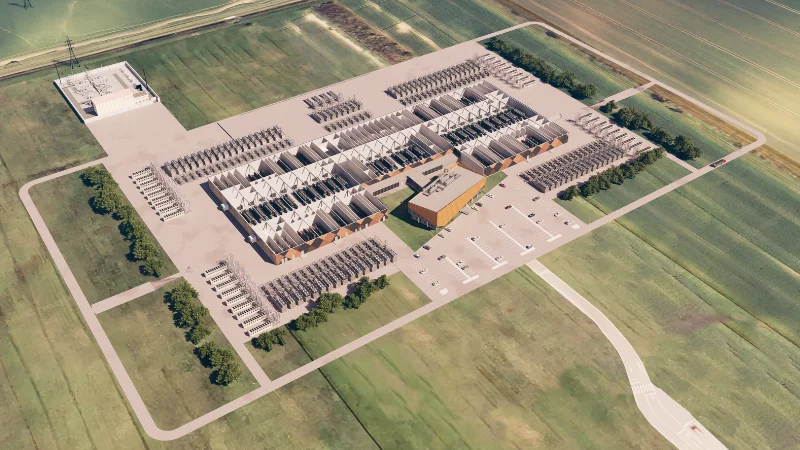
BERLIN, Germany [October 21, 2026] — At NVIDIA GTC Berlin, Vertiv Holdings Co. (NYSE: VRT) and NVIDIA today introduced an AI factory approach that combines rapid configuration and virtual validation of pre-engineered reference architectures with factory-built deployment. The approach is designed to move AI factories from project kickoff to productive capacity faster and, under defined assumptions, generate up to 30% more cumulative token output within the first 12 months with the same installed capacity1. Polar Data Centers is applying the factory-built deployment approach to the first 41 MW phase of its multiphase AI data center at Herøya, Norway.

For AI factory operators, securing compute is only part of the challenge. Traditional infrastructure development can require power, cooling and facility systems to be engineered and integrated through separate, sequential processes, creating complexity and potential delays. The Vertiv and NVIDIA approach starts instead with pre-engineered AI factory reference architectures that can be rapidly configured to customer and site requirements, virtually validated before deployment, and then translated into factory-built infrastructure.

Configure and Validate: Up to 10x Faster with Pre-Engineered Reference Designs2

Teams can start with pre-engineered AI factory reference designs and rapidly configure them for specific compute, power, cooling and facility requirements in a shared virtual environment. The approach combines the NVIDIA Vera Rubin DSX AI Factory reference design and NVIDIA Omniverse DSX Blueprint, with Vertiv SimReady power and cooling assets, integrated with Dassault Systèmes’ 3DEXPERIENCE agentic platform.

Rather than developing an integrated infrastructure design from scratch, teams can configure and virtually validate proven reference designs against project requirements, interfaces and constraints. In the modeled scenario, this reduces the time from requirements to a configured and validated AI factory solution from approximately 30 days to three days, a 10x improvement.

Vertiv is also contributing SimReady OpenUSD assets of its power and cooling equipment to SimReady Central Library on Hugging Face. The library helps engineering teams discover and reuse validated equipment assets in AI factory digital twins, reducing asset preparation and helping teams evaluate infrastructure options during design.

Deploy: Up to 50% Faster with Factory-Built Infrastructure3

Once the AI factory configuration is validated, Vertiv prefabricated solutions shift more assembly, integration and testing into the factory before equipment reaches the site. These solutions include Vertiv™ OneCore, a hybrid-built data center solution that integrates critical power, thermal management and supporting infrastructure, and Vertiv™ SmartRun, a prefabricated overhead infrastructure system for high-density power distribution, liquid cooling, networking and containment.

By moving more infrastructure work off-site, teams can reduce field complexity and on-site integration requirements. In the modeled scenario, the factory-built approach reduces the infrastructure deployment period from approximately 90 days to 45 days, a reduction of up to 50%.

Combined with the faster configuration and validation enabled by pre-engineered reference designs, the modeled approach reduces these stages from approximately 120 days to 48 days. That can make productive AI capacity available about 10 weeks sooner, generating up to 30% more cumulative token output within 12 months of project kickoff with the same installed capacity.

Field Deployment: Polar Data Centers at Herøya, Norway

At its Herøya campus in Norway, Polar is using Vertiv's factory-built deployment model for the first 41 MW phase of its multiphase AI data center, scalable to 100 MW. By shifting more infrastructure assembly, integration and testing into the factory before equipment reaches the site, the deployment model is designed to reduce on-site complexity and help make high-density, liquid-cooled capacity available to customers sooner. Vertiv is supplying prefabricated power and thermal modules, Vertiv™ SmartRun overhead infrastructure and Vertiv™ SmartMod, supported by Vertiv™ Unify software.

“An AI factory earns its return in tokens, and every day spent configuring infrastructure or integrating it on site is output that never comes back,” said Giordano Albertazzi, CEO of Vertiv. “Success depends on how quickly operators can move from requirements to productive AI capacity. By starting with pre-engineered reference designs that can be rapidly configured and validated, then extending that approach through factory-built deployment, we help customers reduce complexity, deploy infrastructure faster and bring AI capacity online sooner. Polar Data Centers is demonstrating how that approach can be applied at scale in a real-world AI factory deployment.”

“AI factories must be designed as one system, and the NVIDIA Vera Rubin DSX AI Factory reference design helps teams align compute, power and cooling requirements from the outset,” said Vladimir Troy, vice president of AI infrastructure at NVIDIA. “With the NVIDIA Omniverse DSX Blueprint, companies such as Vertiv and Dassault Systèmes can simulate these systems together and carry an integrated design into physical deployment, helping operators resolve conflicts earlier and bring productive AI capacity online sooner.”

"With Vertiv and NVIDIA, we're accelerating AI factory design and deployment by engineering the factory as one system – compute, networking, power and cooling co-designed and co-simulated in a virtual twin,” said Stéphane Sireau, Vice President, High-Tech Industry, at Dassault Systèmes. “Integration issues get resolved before construction, not on site, helping bring token-producing capacity online sooner.”

“Our customers measure us on how quickly capacity is ready for them,” said Andy Hayes, CEO of Polar Data Centers. “At Herøya, Vertiv’s factory-built infrastructure helps us manage the complexity of deploying power, cooling and white-space systems for high-density computing. It gives us a more disciplined, repeatable deployment model while preserving the flexibility to meet the requirements of our customers.”

Vertiv and NVIDIA plan to demonstrate elements of the approach at NVIDIA GTC Berlin, including how facility requirements inform infrastructure configuration, how teams can virtually validate power and cooling requirements, and how Vertiv applies factory-built infrastructure to accelerate physical deployment. The demonstration will feature technology from Dassault Systèmes, and Polar Data Centers will show how the deployment approach is being applied in a real-world AI factory.

Visitors can learn more at the Vertiv booth (#3055), and Scott Armul, Chief Product and Technology Officer at Vertiv, will present Building the AI Factory: Converting Megawatts into Intelligence during a sponsored expo-theater session on Oct. 22, 2026, from 4:00 to 4:15 p.m. CEST.

For more information about Vertiv’s portfolio of power and thermal management products, infrastructure solutions, IT systems and services for critical digital applications, visit www.Vertiv.com.

1. Modeled. First 12 months measured from design kickoff: 317 vs. 245 productive days at equal installed capacity (3 + 45 vs. 30 + 90 days). Actual results will vary.

2. Modeled. Time to an initial integrated design, configured and validated in the digital twin: 3 days vs. a 30-day conventional design process. Results vary by project.

3. Modeled. On-site power and cooling deployment with Vertiv factory-built infrastructure: 45 days vs. a 90-day conventional on-site baseline. Results vary by project.

About Vertiv Holdings Co.

Vertiv (NYSE: VRT) brings together hardware, software, analytics and ongoing services to enable its customers’ vital applications to run continuously, perform optimally and grow with their business needs. Vertiv solves the most important challenges facing today’s data centers, communication networks and commercial and industrial facilities with a portfolio of power, cooling and IT infrastructure solutions and services that extends from the cloud to the edge of the network. Headquartered in Westerville, Ohio, USA, Vertiv does business in more than 130 countries. For more information, and for the latest news and content from Vertiv, visit Vertiv.com.

About Polar Data Centers

Polar develops and operates high-performance data centers optimised for AI and high-density computing workloads. The company is building a growing European platform of AI-ready infrastructure, combining renewable power, resilient design, high-density cooling capability, and a customer-led approach to development and operations.

About Dassault Systèmes

Dassault Systèmes is a catalyst for human progress. Since 1981, the company has pioneered virtual worlds to improve real life for consumers, patients and citizens. Through the 3DEXPERIENCE platform, AI-powered, science-based virtual twins help 390,000 customers of all sizes, in all industries, collaborate, imagine and create sustainable innovations that drive meaningful impact. For more information, visit: www.3ds.com.

Forward-looking statements

This release contains forward-looking statements within the meaning of the Private Securities Litigation Reform Act of 1995, Section 27 of the Securities Act, and Section 21E of the Securities Exchange Act. These statements are only a prediction. Actual events or results may differ materially from those in the forward-looking statements set forth herein.

Class (B2B/B2C)
B2B
Ingest Status
Rewritten
Dedupe hash
ea3f593a3cfe6e4cd5348a2eeb78050d
Press Eligible
Yes
Press Eligible Reason
Manuelle Prüfung nötig. Risiko: MEDIUM. Flags: ['numbers']. Stichprobe: False
Source Name
Vertiv Holdings Co
Original Summary

At NVIDIA GTC Berlin, Vertiv Holdings Co. (NYSE: VRT) and NVIDIA today introduced an AI factory approach that combines rapid configuration and virtual validation of pre-engineered reference architectures with factory-built deployment.

Image URL
https://www.vertiv.com/4aa135/globalassets/images/on-page-image/800x450/vertiv-onecore-50_preview-image_800x450.png
Content Hash (SHA-256, erste 32 hex)
76367639348304d73ca35aaa43d7ea93
Vertiv completes acquisition of King Environmental Services Ltd., expanding global fluid management services
Image File
Original HTML

Acquisition expands Vertiv’s leadership in next-generation thermal services for high-density and AI-driven environments into Europe, Middle East and Africa

KES's fluid management, commissioning and load-testing expertise builds on Vertiv's North American capabilities established through its PurgeRite acquisition

COLUMBUS, Ohio [October 26, 2026] — Vertiv Holdings Co. (NYSE: VRT), a global leader in critical digital infrastructure, today announced it has completed its acquisition of King Environmental Services Ltd. (KES), a Europe-based provider of fluid management, commissioning and load-testing services for high-density, liquid-cooled data centers.

The acquisition expands Vertiv's global thermal management services capabilities into Europe, Middle East and Africa (EMEA) and advances its strategy to support customers across the thermal chain. The transaction builds on Vertiv's established North American fluid management presence, including its 2025 acquisition of PurgeRite, and represents the next step in expanding its global thermal and fluid management services platform.

"We are pleased to welcome the KES team to Vertiv," said Giordano Albertazzi, Chief Executive Officer of Vertiv. "As computing density increases, the performance of cooling infrastructure depends not only on engineering and system design but on execution in the field. KES builds on the Vertiv fluid management foundation, extending our specialized expertise and disciplined execution into EMEA as customers deploy increasingly complex infrastructure at scale."

The Vertiv and KES combination expands Vertiv’s end-to-end thermal management capabilities enabling our customers to:

- Reduce operational complexity through a single accountable partner for commissioning, testing, fluid management and ongoing operations,

- Improve cooling system performance with clean, balanced and validated fluid systems that support optimal heat transfer and equipment efficiency,

- Maintain compliance with regional fluid handling, treatment and disposal requirements, and

- Increase confidence in infrastructure readiness through thermal load testing before facilities enter operation.

KES is headquartered near Dublin, Ireland, and serves customers across the EMEA region. The financial terms were not disclosed and are not expected to be material to Vertiv's financial results.

For more information about Vertiv's portfolio of power and thermal management products, infrastructure solutions, IT systems and services for critical digital applications, visit Vertiv.com.

About Vertiv Holdings Co.

Vertiv Holdings Co. (NYSE: VRT) brings together hardware, software, analytics and ongoing services to enable its customers’ vital applications to run continuously, perform optimally and grow with their business needs. Vertiv solves the most important challenges facing today’s data centers, communication networks and commercial and industrial facilities with a portfolio of power, cooling and IT infrastructure solutions and services that extends from the cloud to the edge of the network. Headquartered in Westerville, Ohio, USA, Vertiv does business in more than 130 countries. For more information, and for the latest news and content from Vertiv, visit Vertiv.com.

About King Environmental Services

King Environmental Services Ltd. (KES) is a Europe-based specialist in fluid management, flushing, commissioning and operational validation for high-density, liquid-cooled data centers and other mission-critical facilities. Founded in 2002 and headquartered near Dublin, Ireland, KES serves customers across EMEA from key hubs in North Dublin and Frankfurt. KES provides an integrated service covering design review and feasibility studies, pipework flushing, filtration and water treatment, testing, adjusting and balancing (TAB), data logging and thermography, and large-scale thermal and electrical load testing. The company bridges construction and live operation, validating that cooling systems are clean, balanced, efficient, design-compliant and ready for high-density and AI workloads.

Category: Financial News

Forward-looking statements

This release contains forward-looking statements within the meaning of the Private Securities Litigation Reform Act of 1995, Section 27 of the Securities Act, and Section 21E of the Securities Exchange Act. These statements are only a prediction. Actual events or results may differ materially from those in the forward-looking statements set forth herein. Readers are referred to Vertiv’s filings with the Securities and Exchange Commission, including its most recent Annual Report on Form 10-K and any subsequent Quarterly Reports on Form 10-Q for a discussion of these and other important risk factors concerning Vertiv and its operations. Those risk factors and risks related to the transaction, among others, could cause actual results to differ materially from historical performance and include, but are not limited to: the successful integration of KES; expected expenses related to the transaction; the possible diversion of management time on issues related to integration; the ability of Vertiv to maintain relationships with customers and suppliers of KES; and the ability of Vertiv to retain management and key employees of KES; and whether Vertiv would realize anticipated synergies and accretion contemplated by the acquisition. Vertiv is under no obligation to, and expressly disclaims any obligation to, update or alter its forward-looking statements, whether as a result of new information, future events or otherwise.

SOURCE: Vertiv Holdings Co

For investor inquiries, please contact:

Lynne Maxeiner

Vice President, Global Treasury & Investor Relations

Vertiv

E lynne.maxeiner@vertiv.com

For media inquiries, please contact:

Ruder Finn for Vertiv

E Vertiv@RuderFinn.com

Class (B2B/B2C)
B2B
Ingest Status
Rewritten
Dedupe hash
bc677406e6ef0a4ca5617db8260b7258
Press Eligible
Yes
Press Eligible Reason
Manuelle Prüfung nötig. Risiko: MEDIUM. Flags: ['finance']. Stichprobe: False
Source Name
Vertiv Holdings Co
Original Summary

Vertiv Holdings Co. (NYSE: VRT), a global leader in critical digital infrastructure, today announced it has completed its acquisition of King Environmental Services Ltd. (KES), a Europe-based provider of fluid management, commissioning an...

Image URL
https://www.vertiv.com/4a74a4/contentassets/51e48fea45a94adf9e8840866ae31373/vertiv-king-lockup_preview-image_800x450.png
Content Hash (SHA-256, erste 32 hex)
6058ad48e0deb8069a96d1d9982283e8
Vertiv simplifies high-density AI infrastructure deployment across data center environments
Image File
Original HTML

The new Vertiv™ SmartIT platform is a pre-engineered AI infrastructure solution based on NVIDIA MGX™ and OCP ORV3 architecture

The scalable solution supports deployment in existing enterprise facilities, new builds, commercial spaces, colocation and hyperscale environments without redesign

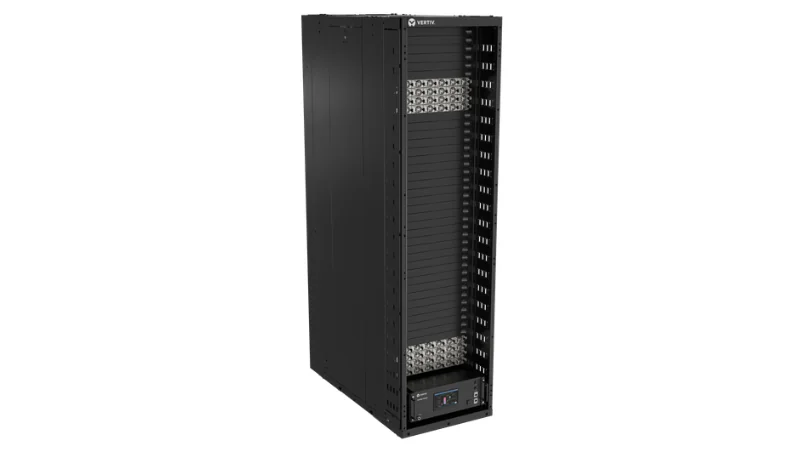
COLUMBUS, Ohio [October 26, 2026] — Vertiv Holdings Co. (NYSE: VRT), a global leader in critical digital infrastructure, today introduced the Vertiv™ SmartIT solution, a pre-engineered architecture designed to simplify high-density AI deployments for enterprises, research institutions and colocation providers across existing facilities and new data centers.

Previously deployed with NVIDIA to support the NVIDIA DGX™ GB300, the highest-performing, largest-scale AI system available for enterprises, the Vertiv™ SmartIT solution integrates rack infrastructure, DC power conversion and distribution, direct-to-chip liquid cooling, in-rack cooling distribution and monitoring in a factory-validated design. By integrating and validating these systems before shipment, Vertiv™ SmartIT helps reduce on-site integration complexity and connects to facility power and cooling infrastructure. The solution is available now for AI deployments globally.

“AI is fundamentally changing the demands placed on data center infrastructure, requiring closer coordination across power, cooling and IT systems to support increasingly complex workloads,” said Scott Armul, Chief Product and Technology Officer at Vertiv. “Vertiv™ SmartIT reflects our approach to solving that challenge by bringing these disciplines together in a factory-validated architecture. By combining Vertiv’s expertise across critical infrastructure, we’re helping customers simplify deployment, build greater consistency into their AI environments and establish a foundation that can evolve alongside their computing needs.”

Vertiv™ SmartIT helps customers address key deployment challenges, including:

- Deployment timelines compress: Factory validation replaces on-site integration, limiting the commissioning scope to facility connections.

- Multi-vendor coordination is reduced: Customers benefit from a single order, one partner and one architecture spanning rack, power, cooling and monitoring.

- Existing spaces become AI-ready: Brownfield enterprise facilities and Class A commercial buildings can support AI-class density without full reconstruction.

- Scalability becomes repeatable: The same building block supports growth from single rack to multi-rack deployments, without redesign between phases.

- Operational visibility increases: Integrated leak detection, automated response and continuous monitoring provide visibility from rack to site, with these capabilities built into the solution from day one rather than assembled from separate vendor tools.

Vertiv™ SmartIT is a scalable, pre-engineered infrastructure platform for high-density AI deployments, supporting NVIDIA GB300 NVL72, NVIDIA Vera Rubin NVL72, NVIDIA DGX™ Rubin NVL8 and NVIDIA HGX™ Rubin NVL8 on NVIDIA MGX™ and Open Compute Project (OCP) ORV3 architectures.

Designed to scale from a single rack to multi-rack deployments, it enables customers to deploy and expand AI infrastructure within a common architecture while integrating power, cooling, monitoring and controls. Built-in monitoring, leak detection and support for Redfish, SNMP and Modbus simplify operations, while Vertiv™ Global Services supports deployment, commissioning and lifecycle management.

Vertiv SmartIT can be deployed as part of a broader Vertiv infrastructure architecture, with complementary solutions extending integration and management capabilities beyond the rack. Vertiv™ SmartRun extends integration across the row, while Vertiv™ rack power distribution units (rPDU) provide power distribution and monitoring. Vertiv™ Unify provides integrated monitoring, analytics and controls across power and thermal infrastructure, including leak detection and coordinated response control. Together, these solutions help customers scale from individual Vertiv™ SmartIT deployments to larger AI environments.

Vertiv showcased a Vertiv™ SmartIT with a NVIDIA HGX™ Rubin NVL8 demo unit during NVIDIA GTC Berlin in October, demonstrating an integrated infrastructure architecture designed to support NVIDIA DGX Rubin NVL8 deployments, enabling customers to start at the right scale and expand within a common infrastructure architecture as AI demand grows.

For more information about the Vertiv™ SmartIT and Vertiv’s growing portfolio of power, cooling and IT infrastructure solutions and services, visit Vertiv.com.

About Vertiv Holdings Co.

Vertiv Holdings Co. (NYSE: VRT) brings together hardware, software, analytics and ongoing services to enable its customers’ vital applications to run continuously, perform optimally and grow with their business needs. Vertiv solves the most important challenges facing today’s data centers, communication networks and commercial and industrial facilities with a portfolio of power, cooling and IT infrastructure solutions and services that extends from the cloud to the edge of the network. Headquartered in Westerville, Ohio, USA, Vertiv does business in more than 130 countries. For more information, and for the latest news and content from Vertiv, visit Vertiv.com.

Forward-looking statements

This release contains forward-looking statements within the meaning of the Private Securities Litigation Reform Act of 1995, Section 27 of the Securities Act, and Section 21E of the Securities Exchange Act. These statements are only a prediction. Actual events or results may differ materially from those in the forward-looking statements set forth herein. Readers are referred to Vertiv’s filings with the Securities and Exchange Commission, including its most recent Annual Report on Form 10-K and any subsequent Quarterly Reports on Form 10-Q for a discussion of these and other important risk factors concerning Vertiv and its operations. Vertiv is under no obligation to, and expressly disclaims any obligation to, update or alter its forward-looking statements, whether as a result of new information, future events or otherwise.

CONTACT

Ruder Finn

E Vertiv@RuderFinn.com

Class (B2B/B2C)
B2B
Ingest Status
Rewritten
Dedupe hash
895aaf9b13d7bc30a809ca2badf4e927
Press Eligible
Yes
Press Eligible Reason
Manuelle Prüfung nötig. Risiko: MEDIUM. Flags: ['none']. Stichprobe: False
Source Name
Vertiv Holdings Co
Original Summary

Vertiv Holdings Co. (NYSE: VRT), a global leader in critical digital infrastructure, today introduced the Vertiv SmartIT solution, a pre-engineered architecture designed to simplify high-density AI deployments for enterprises, research i...

Image URL
https://www.vertiv.com/4aac73/globalassets/images/on-page-image/800x450/vertiv-smartit_preview-image_800x450.png
Content Hash (SHA-256, erste 32 hex)
28a5b32a555bc9689dab67bd3e3ebfc8