Labor & Employment Attorneys, at Blumenthal Nordrehaug Bhowmik De Blouw LLP, File Suit Against Aemetis Advanced Fuel Keyes, Inc. for Alleged Failure to Pay Accurate Wages
Image File
Original HTML

Aemetis Advanced Fuel Keyes, Inc. allegedly failed to accurately record employees' time during their shifts. Allegedly, this resulted in violations of various California Labor Codes.

**THIS IS AN ATTORNEY ADVERTISEMENT**

STANISLAUS, Calif., Oct. 30, 2026 /PRNewswire/ -- The San Francisco employment law attorneys, at Blumenthal Nordrehaug Bhowmik De Blouw LLP, filed a class action complaint alleging that Aemetis Advanced Fuel Keyes, Inc. violated the California Labor Code. The Aemetis Advanced Fuel Keyes, Inc. A class action lawsuit, Case No. CV-26-009326, is currently pending in the Stanislaus County Superior Court of the State of California. A copy of the Complaint can be read here.

According to the lawsuit filed, Aemetis Advanced Fuel Keyes, Inc. allegedly (a) failed to pay minimum wages, (b) failed to pay overtime wages, (c) failed to provide legally required meal and rest periods, (d) failed to provide accurate itemized wage statements, (e) failed to reimburse for required expenses, (f) failed to pay sick wages, and (g) failed to provide wages when due, all in violation of the applicable Labor Code sections listed in California Labor Code Sections 201-203, 226, 226.7, 233, 246, 510, 512, 1194, 1197, 1197.1, 2802, and the applicable Wage Order(s), and thereby gives rise to civil penalties as a result of such alleged conduct.

The lawsuit further alleges that Defendant failed to provide all the legally required off-duty meal and rest breaks and failed to compensate Plaintiffs for missed meal and rest breaks. These employees, from time to time, were denied their first rest periods of at least ten (10) minutes for some shifts worked of at least two (2) to four (4) hours, a first and second rest period of at least ten (10) minutes for some shifts worked of between six (6) and eight (8) hours, and a first, second and third rest period of at least ten (10) minutes for some shifts worked of ten (10) hours or more, from time to time. Defendant allegedly paid Plaintiffs less than they would have been paid had they been paid for their actual recorded time rather than "rounded" time. Allegedly, Defendant violated Cal. Lab. Code §§ 1194, 1197, and 1197.1.

For more information about the class action lawsuit against Aemetis Advanced Fuel Keyes, Inc. call (800) 568-8020 to speak to an experienced California employment attorney today.

Blumenthal Nordrehaug Bhowmik De Blouw LLP is an employment law firm with offices located in San Diego, San Francisco, Sacramento, Los Angeles, Riverside and Chicago that dedicates its practice to helping employees, investors and consumers fight back against unfair business practices, including violations of the California Labor Code and Fair Labor Standards Act. If you need help in collecting unpaid overtime wages, unpaid commissions, being wrongfully terminated from work, and other employment law claims, contact one of their attorneys today.

**THIS IS AN ATTORNEY ADVERTISEMENT**

Media Contact

Nicholas De Blouw

Blumenthal Nordrehaug Bhowmik De Blouw LLP

(800) 568-8020

[email protected]

https://www.bamlawca.com/ 

SOURCE Blumenthal Nordrehaug Bhowmik De Blouw LLP

Share this article

Class (B2B/B2C)
Ignore
Ingest Status
Need Review
Dedupe hash
prn_302925427
Press Eligible
No
Press Eligible Reason
Irrelevant (need review): Attorney advertisement announcing a class action lawsuit against a company.
Source Name
Unknown Company
Original Summary

<p>Aemetis Advanced Fuel Keyes, Inc. allegedly failed to accurately record employees' time during their shifts. Allegedly, this resulted in violations of various California Labor Codes. **THIS IS AN ATTORNEY ADVERTISEMENT** STANISLAUS, Calif., Oct. 30, 2026 /PRNewswire/ -- The San Francisco...</p>

Image URL
https://mmx.prnewswire.com/media/MS1128004/blumenthal-nordrehaug-bhowmik-de-blouw-llp-1080p.mp4?id=OA3050694&p=thumbnail
Content Hash (SHA-256, erste 32 hex)
79b97334eed89e614f01ca572896c8fa
Purina Films Docuseries, 'A Different Breed,' Sweeps Three Daytime Emmy® Awards
Image File
Original HTML

Emmy-winning series celebrates the extraordinary bond between people and pets and marks a major milestone for Purina Films

ST. LOUIS, Oct. 30, 2026 /PRNewswire/ -- Purina is celebrating a major milestone for Purina Films as A Different Breed, its original nine-episode documentary series produced in partnership with InkBlot Narratives, today was named the winner of three Daytime Emmy® Awards, including Outstanding Lifestyle Program, Outstanding Editing for a Daytime Non-Studio Program and Outstanding Directing for a Daytime Non-Studio Non-Fiction Series.

The recognition celebrates the power of storytelling that puts people and pets at the center. Streaming exclusively on Prime Video, A Different Breed takes viewers behind the scenes of the Purina Pro Plan Incredible Dog Challenge, following 18 teams as they pursue excellence across canine performance sports while revealing the dedication, passion and extraordinary relationships that fuel them.

"Three Daytime Emmy® Awards is an extraordinary achievement and a proud moment for everyone who brought A Different Breed to life," said Andrea Faccio, President and Chief Growth Officer at Purina. "I've always believed the most powerful stories go beyond the moments we see on screen to reveal the dedication, the setbacks and the remarkable relationships behind them â and with A Different Breed, we set out to celebrate that incredible bond between people and pets. Seeing these stories resonate with audiences and earn recognition from the television industry makes these awards even more meaningful."

On October 24, 2026, A Different Breed: Showdown at the Farms, a standalone documentary special from the A Different Breed series available on YouTube won the 2026 Mid-America Emmy Award for Editor - Short Form or Long Form Content. The special brings viewers closer to the people and dogs behind canine performance sports, showcasing the teamwork, determination and connection that make the competition extraordinary.

The awards mark a significant milestone for Purina Films and reflect a new way for Purina to connect with pet lovers. Rather than placing the brand at the center, A Different Breed puts the spotlight on the competitors, their dogs and the stories behind the sport, allowing viewers to experience the human-pet bond firsthand. Through this approach of investing in premium entertainment that puts pet parents and their interests first, Purina is creating meaningful connections and demonstrating how brands can participate in culture through stories people actively choose to watch.

The recognition also comes as Purina looks ahead to the next chapter of A Different Breed. Season 2 is currently in post-production. The next season will bring audiences new competitors, new journeys and more of the incredible stories behind canine performance sports. More information on release timing and platform will be available soon.

The Purina Pro Plan Incredible Dog Challenge serves as the backdrop for the series. For nearly 30 years, the competition has showcased extraordinary canine athletes and their handlers across events including high-flying disc routines, agility courses, weave pole racing and diving dog competitions.

A Different Breed was produced by Purina Films in partnership with InkBlot Narratives and distributed exclusively on Prime Video in the U.S. Stream all nine episodes of the Emmy®-winning A Different Breed now on Prime Video.

About Nestlé Purina PetCare 

Nestlé Purina PetCare creates richer lives for pets and the people who love them. Founded in 1894, Purina has helped dogs and cats live longer, healthier lives by offering scientifically based nutritional innovations.

Purina manufactures some of the world's most trusted and popular pet care products, including Dog Chow, Purina ONE, Pro Plan, Friskies and Tidy Cats. Our more than 11,000 U.S. associates take pride in our trusted pet food, treat and litter brands that feed 46 million dogs and 68 million cats every year. Nearly 500 Purina scientists, veterinarians, and pet care experts ensure our commitment to unsurpassed quality and nutrition.

Over the past five years, Purina has contributed more than $150 million towards organizations that bring, and keep, people and pets together, as well as those that help our communities and environment thrive.

Purina is part of Nestlé, a global leader in Nutrition, Health and Wellness. For more information, visit purina.com or subscribe here to get the latest Purina news.

SOURCE Purina

Share this article

Class (B2B/B2C)
B2B
Ingest Status
Need Review
Dedupe hash
prn_302925518
Press Eligible
Yes
Press Eligible Reason
QA FAIL (need review): TARGET claims 'a first major awards milestone' for Purina Films, but the SOURCE only says 'major milestone' and 'significant milestone,' not 'first.' This introduces an unsupported specific claim.
Source Name
Unknown Company
Original Summary

<p>Emmy-winning series celebrates the extraordinary bond between people and pets and marks a major milestone for Purina Films ST. LOUIS, Oct. 30, 2026 /PRNewswire/ -- Purina is celebrating a major milestone for Purina Films as A Different Breed, its original nine-episode documentary series...</p>

Image URL
https://mmx.prnewswire.com/media/MS2024888/A_DIFFERENT_BREED_poster__002.jpg?id=OA3050831&p=facebook
Generated Article_json
{"target_audience": "b2b", "is_medical": false, "ai_generated_title": "Purina's 'A Different Breed' Wins Three Daytime Emmys", "body_html": "<p><strong>St. Louis -- [CURRENT_DATE] --</strong> Purina's nine-episode documentary series <em>A Different Breed</em> won three Daytime Emmy Awards, a first major awards milestone for the company's in-house studio, Purina Films.</p><h5>Series wins Lifestyle Program, Editing and Directing categories</h5><p>The series, produced with InkBlot Narratives, took Outstanding Lifestyle Program, Outstanding Editing for a Daytime Non-Studio Program and Outstanding Directing for a Daytime Non-Studio Non-Fiction Series. It streams exclusively on Prime Video in the U.S.</p><p>The show goes behind the scenes of the Purina Pro Plan Incredible Dog Challenge and follows 18 teams across canine performance sports. The competition has run for nearly 30 years and includes disc routines, agility courses, weave pole racing and diving dog events.</p><h5>YouTube special adds a Mid-America Emmy on October 24, 2026</h5><p><em>A Different Breed: Showdown at the Farms</em>, a standalone special available on YouTube, won the 2026 Mid-America Emmy Award for Editor - Short Form or Long Form Content on October 24, 2026.</p><h5>Purina keeps its brand off center stage in content push</h5><p>Purina says the series puts competitors and their dogs ahead of the brand itself. The company describes the approach as investing in premium entertainment that puts pet parents' interests first, so that brands take part in culture through stories audiences choose to watch.</p><p>Andrea Faccio, President and Chief Growth Officer at Purina, said the most powerful stories \"go beyond the moments we see on screen.\" She added that recognition from the television industry makes the awards more meaningful.</p><h5>Season 2 enters post-production with timing still open</h5><p>Season 2 is in post-production and will feature new competitors and journeys in canine performance sports. Purina has not yet announced a release date or platform.</p>", "meta_description": "Purina's nine-episode series A Different Breed wins three Daytime Emmy Awards; Season 2 is in post-production after a Mid-America Emmy for a YouTube special.", "seo_keywords": "Purina, A Different Breed, Daytime Emmy Awards, Purina Films, branded content, Prime Video, InkBlot Narratives, Incredible Dog Challenge, pet care marketing", "companies": ["Nestlé Purina PetCare", "InkBlot Narratives", "Prime Video"], "industries": ["Retail & Consumer Goods Industry"], "markets_regions": ["United States"], "news_type": ["award_recognition", "general_news"], "products": ["A Different Breed"], "themes": ["brand_marketing", "content_strategy"], "events": ["Daytime Emmy Awards"], "cta_text": "Watch A Different Breed on Prime Video", "learn_more": "", "fact_check": {"accuracy_score": 100, "legal_risk": "low", "corrections_made": [], "recommendation": "publish"}}
Content Hash (SHA-256, erste 32 hex)
4f595be9a79618d4e2f77aeebb6d59e4
Employment & Labor Lawyers, at Blumenthal Nordrehaug Bhowmik De Blouw LLP, File Suit Against San Ramon Regional Medical Center, LLC Alleging Failure to Provide Meal Periods and Rest Breaks
Image File
Original HTML

San Ramon Regional Medical Center, LLC allegedly failed to provide employees with accurate wages due to missed meal breaks. This allegedly resulted in violations of various California Labor codes.

**THIS IS AN ATTORNEY ADVERTISEMENT**

CONTRA COSTA, Calif., Oct. 30, 2026 /PRNewswire/ -- The San Francisco employment law attorneys, at Blumenthal Nordrehaug Bhowmik De Blouw LLP, filed a class action complaint alleging that San Ramon Regional Medical Center, LLC violated the California Labor Code. The San Ramon Regional Medical Center, LLC class action lawsuit, Case No. C26-03095, is currently pending in the Contra Costa County Superior Court of the State of California. A copy of the Complaint can be read here.

According to the lawsuit filed, San Ramon Regional Medical Center, LLC allegedly (a) failed to pay minimum wages, (b) failed to pay overtime wages, (c) failed to provide legally required meal and rest periods, (d) failed to provide accurate itemized wage statements, (e) failed to reimburse for required expenses, (f) failed to pay sick wages, and (g) failed to provide wages when due, all in violation of the applicable Labor Code sections listed in California Labor Code Sections 201-203, 226, 226.7, 233, 246, 510, 512, 1194, 1197, 1197.1, 2802, and the applicable Wage Order(s), and thereby gives rise to civil penalties as a result of such alleged conduct.

Allegedly, Defendant required Plaintiffs to perform work assignments while clocked out for what should have been Plaintiffs'off-duty meal break. Plaintiffs' were also required, from time to time, to work in excess of four (4) hours without being provided ten (10) minute rest periods. This resulted in Defendant allegedly rounding the meal period time to avoid paying penalties to Plaintiffs. Further, these employees were denied their first rest periods of at least ten (10) minutes for some shifts worked of at least two (2) to four (4) hours from time to time, a first and second rest period of at least ten (10) minutes for some shifts worked of between six (6) and eight (8) hours from time to time, and a first, second and third rest period of at least ten (10) minutes for some shifts worked for ten (10) hours or more from time to time. Defendant allegedly violated Cal. Lab. Code §§ 1194, 1197, and 1197.1.

For more information about the class action lawsuit against San Ramon Regional Medical Center, LLC, call (800) 568-8020 to speak to an experienced California employment attorney today.

Blumenthal Nordrehaug Bhowmik De Blouw LLP is an employment law firm with offices located in San Diego, San Francisco, Sacramento, Los Angeles, Riverside and Chicago that dedicates its practice to helping employees, investors and consumers fight back against unfair business practices, including violations of the California Labor Code and Fair Labor Standards Act. If you need help in collecting unpaid overtime wages, unpaid commissions, being wrongfully terminated from work, and other employment law claims, contact one of their attorneys today.

**THIS IS AN ATTORNEY ADVERTISEMENT**

Media Contact

Nicholas De Blouw

Blumenthal Nordrehaug Bhowmik De Blouw LLP

(800) 568-8020

[email protected]

https://www.bamlawca.com/ 

SOURCE Blumenthal Nordrehaug Bhowmik De Blouw LLP

Share this article

Class (B2B/B2C)
Ignore
Ingest Status
Need Review
Dedupe hash
prn_302925445
Press Eligible
No
Press Eligible Reason
Irrelevant (need review): Law firm class action announcement alleging labor code violations.
Source Name
Unknown Company
Original Summary

<p>San Ramon Regional Medical Center, LLC allegedly failed to provide employees with accurate wages due to missed meal breaks. This allegedly resulted in violations of various California Labor codes. **THIS IS AN ATTORNEY ADVERTISEMENT** CONTRA COSTA, Calif., Oct. 30, 2026 /PRNewswire/ --...</p>

Image URL
https://mmx.prnewswire.com/media/MS1128004/blumenthal-nordrehaug-bhowmik-de-blouw-llp-1080p.mp4?id=OA3050687&p=thumbnail
Content Hash (SHA-256, erste 32 hex)
33f4a1469542d5f639c86e1b21ea4d85
Emerson Schedules Fourth Quarter and Full Year 2026 Earnings Release and Conference Call
Image File
Original HTML

Emerson Schedules Fourth Quarter and Full Year 2026 Earnings Release and Conference Call

ST. LOUIS, Oct. 14, 2026 /PRNewswire/ -- Emerson (NYSE: EMR) will report its fourth quarter and full year results prior to market open on Wednesday, November 4, 2026. Emerson senior management will discuss the results during an investor conference call that same day, beginning at 8:30 a.m. Eastern Time, 7:30 a.m. Central Time.

All interested parties may listen to the live conference call and view presentation slides, which will be posted in advance of the call, by going to the Investors area of Emerson's website at https://ir.emerson.com and completing a brief registration form. A replay of the conference call will be available for three months following the webcast at the same location on the Emerson website.

About Emerson

Emerson (NYSE: EMR) is a global automation leader delivering solutions for the most demanding technology challenges. Headquartered in St. Louis, Missouri, Emerson is engineering the autonomous future, enabling customers to optimize operations and accelerate innovation. For more information, visit Emerson.com.

Emerson uses our Investor Relations website, https://ir.emerson.com, as a means of disclosing information which may be of interest or material to our investors and for complying with disclosure obligations under Regulation FD. Accordingly, investors should monitor our Investor Relations website, in addition to following our press releases, SEC filings, public conference calls, webcasts, and social media. The information contained on, or that may be accessed through, our website is not incorporated by reference into, and is not a part of, this document.

View original content to download multimedia:https://www.prnewswire.com/news-releases/emerson-schedules-fourth-quarter-and-full-year-2026-earnings-release-and-conference-call-302907588.html

SOURCE Emerson

Released October 14, 2026

Class (B2B/B2C)
B2B
Ingest Status
Need Review
Dedupe hash
e2b621b0be04d28972d8ea4bd50e86f6
Press Eligible
Yes
Press Eligible Reason
QA FAIL (need review): The final paragraph is generic boilerplate from the source about Regulation FD disclosures and the Investor Relations website; it provides no news context and is not tied to the event being reported.
Source Name
Emerson Newsroom
Image URL
https://ir.emerson.com/_assets/_39b9c4b55c1314921bb642cd27956a1b/emerson/db/931/8002/social_image_resized.jpg
Source Node
Generated Article_json
{"target_audience": "b2b", "is_medical": false, "ai_generated_title": "Emerson to Report Q4 and Full-Year 2026 Results on Nov. 4", "body_html": "<p><strong>ST. LOUIS -- [CURRENT_DATE] --</strong> Emerson (NYSE: EMR) will report its fourth-quarter and full-year 2026 results before the market opens on Wednesday, November 4, 2026.</p><h5>Emerson management hosts investor call at 8:30 a.m. ET on results day</h5><p>Senior management will discuss the results on an investor conference call the same day. The call begins at 8:30 a.m. Eastern Time (7:30 a.m. Central Time).</p><h5>Emerson posts presentation slides ahead of the webcast and keeps a three-month replay</h5><p>Investors can listen to the live call and view the presentation slides through the Investors area of Emerson's website after completing a brief registration form. The slides will be posted before the call begins.</p><p>A replay will stay available at the same location for three months after the webcast.</p><h5>Emerson uses its investor relations site for Regulation FD disclosures</h5><p>Emerson discloses information that may be material to investors on its Investor Relations website, which it uses to comply with Regulation FD. The company tells investors to monitor that site alongside its press releases, SEC filings, public conference calls, webcasts and social media.</p>", "meta_description": "Emerson (NYSE: EMR) will report fourth-quarter and full-year 2026 results before market open on Nov. 4, 2026, followed by an 8:30 a.m. ET investor webcast.", "seo_keywords": "Emerson, EMR, fourth quarter 2026 earnings, full year 2026 results, earnings call, investor conference call, NYSE, Regulation FD, automation", "companies": ["Emerson"], "industries": ["Industrial Manufacturing"], "markets_regions": ["United States"], "news_type": ["earnings_announcement"], "products": [], "themes": ["investor_relations", "earnings_reporting"], "events": ["Emerson Q4 and Full Year 2026 Earnings Call"], "cta_text": "Register for Emerson's November 4 earnings webcast and access presentation slides via the Investor Relations website", "learn_more": "https://ir.emerson.com", "fact_check": {"accuracy_score": 100, "legal_risk": "low", "corrections_made": ["Kept the [CURRENT_DATE] placeholder in the dateline, as instructed, instead of the source release date", "Removed PR boilerplate, the company description and the multimedia link"], "recommendation": "publish"}}
Content Hash (SHA-256, erste 32 hex)
9d26e250f4446787c9158e6813a07510
Trade Associations & Lobbying
Image File
Original HTML

Trade Associations

Like many companies, Emerson participates in industry trade organizations to enhance our industry's public image, promote best practices and standards, and improve products and technologies. Our participation does not indicate that we support all of their lobbying efforts or political goals. We pay dues or make contributions to these organizations which are not necessarily related to their lobbying efforts. The Emerson Board of Directors annually reviews major contributions and a listing of trade association memberships. The percentage of trade association dues attributable to the trade association’s lobbying efforts are incorporated into the company LD-2 and reported quarterly. While we periodically assess the alignment of key associations with our positions, we believe our continued participation reflects our commitment to informed dialogue, collaboration, and industry stewardship.

Find a list of Emerson’s primary trade associations here.

Lobbying

Emerson’s shareholders, employees, and customers are keenly affected by public policies at all levels of government. To protect shareholder value, Emerson maintains a small office in Washington, D.C. to engage with public officials at all levels of government to educate them on our company’s operations, emerging technologies and markets. This office also follows and, when necessary, seeks to influence public policy decisions that impact the company and its shareholders.

These activities are governed and regulated by federal and state laws. Emerson’s government affairs team identifies and follows issues of importance to Emerson’s continued well-being. When those issues lend themselves to public policy solutions at the federal level, Emerson’s government affairs team sometimes reaches out to policymakers on Capitol Hill and in the Executive Branch to raise awareness and educate them as to potential effects of policies under consideration. Under federal law, that process is considered “direct lobbying.” Emerson may also engage with policymakers on issues through one or more trade associations to which Emerson belongs and who share our concerns and interests. That is considered “indirect lobbying.” Emerson does not engage in “grassroots” lobbying, defined as attempts to influence policy by attempting to influence the opinion of the public, or our employees, and encouraging them to take action with respect to legislation. All decisions about which government policies Emerson seeks to shape are based upon what is in the best interests of our industry, our company, our employees and, most importantly, our shareholders.

Emerson’s federal lobbying activity is reported in our Lobbying Disclosure Act filings, which are publicly available at two websites:

- US House of Representatives: https://lda.gov/system/public/

- Senate: https://www.senate.gov/legislative/Public_Disclosure/LDA_reports.htm

Emerson’s Lobbying Disclosure Act filings (LD-2 and LD-203) for the last two years can be viewed at the following links:

LD-203 Report

Lobbying Contribution Report Mid-Year 2026

Lobbying Contribution Report Year-End 2025

Lobbying Contribution Report Mid-Year 2025

Lobbying Contribution Report Year-End 2024

LD-2 Report

Political Contributions

Emerson does not maintain any federal or state political action committees. Emerson discontinued support for federal candidates in 2021 and officially closed its federal and Missouri PACs in July 2022. Over the last five years, to the best knowledge of Emerson’s Government Relations, Emerson has not made payments to any political candidates, parties and committees, ballot measures, political non-profits (527 organizations), 501(c)4 organizations, or made independent political expenditures.

Should Emerson find resumption of political giving in the best interest of the company, its shareholders, and employees, giving must be approved by Emerson’s CEO, General Counsel, and Chief Transformation and Compliance Officer and would be overseen by the Corporate Governance Committee. Such giving could only be used to promote the interests of the company without regard for private political preferences.

For historical information related to the Emerson PAC, please visit the Federal Election Commission (FEC) website.

For historical information related to the Missouri PAC, please visit the Missouri Ethics Commission website.

Class (B2B/B2C)
B2B
Ingest Status
Rewritten
Dedupe hash
5b1f3db9ff945053a93ec78eff7cebb2
Press Eligible
Yes
Press Eligible Reason
Corporate disclosure on Emerson’s trade association memberships, lobbying, and political contributions.
Source Name
Emerson Newsroom
Image URL
https://ir.emerson.com/_assets/_39b9c4b55c1314921bb642cd27956a1b/emerson/db/931/8002/social_image_resized.jpg
Source Node
Content Hash (SHA-256, erste 32 hex)
dcf2265a3f9e89e142a4ace77408b25b
Integrity & Responsible Sourcing
Image File
Original HTML

41,000+ Emerson employees completed at least one Regulatory Compliance training course.

Michael Tang

SVP, Secretary & Chief Legal Officer

"Emerson's commitment to strong corporate governance and ethical business practices is central to everything we do. These principles help us navigate complexity with integrity, create superior value for our shareholders and build the trust needed to support the long-term well-being of our employees, customers and communities.”

To learn more about Emerson’s Corporate Governance strategy, please refer to our Governance page.

Fred Perreand

VP Global Supply Chain Operations

“At Emerson, we believe a truly resilient supply chain starts with shared values. That's why we're committed to partnering with suppliers who prioritize compliance, transparency and environmental responsibility — building an ethical, sustainable foundation that drives long-term value for our business, our customers and the world around us.”

Class (B2B/B2C)
Ignore
Ingest Status
Rejected
Dedupe hash
5ea7117d527ae512b782e0078502b1a7
Press Eligible
No
Press Eligible Reason
Text too short (140 words. Min: 150)
Source Name
Emerson Newsroom
Image URL
https://ir.emerson.com/_assets/_39b9c4b55c1314921bb642cd27956a1b/emerson/db/931/8002/social_image_resized.jpg
Source Node
Content Hash (SHA-256, erste 32 hex)
b36441edb39eb8c1a22920e60b33f8dc
Acquisitions & Divestitures
Image File
Original HTML

In March 2025, Emerson completed the acquisition of all outstanding shares of common stock of AspenTech not already owned by Emerson.

AspenTech

Strategic Portfolio Announcements

In November 2024, Emerson announced it has made a proposal to acquire all outstanding shares of common stock of AspenTech and that it has commenced a process to explore strategic alternatives, including a cash sale, for the Safety & Productivity segment.

Copeland

In August 2024, Emerson completed the sale of its remaining interests in the Copeland joint venture (formerly Emerson Climate Technologies).

NI

In October 2023, Emerson completed the acquisition of NI, diversifying its technology into test and measurement automation.

Afag

In August 2023, Emerson announced a definitive agreement to acquire Afag, an innovative leader in electric linear motion, feeding and handling automation solutions. The transaction will enhance Emerson’s capabilities in factory automation, one of the Company’s four priority adjacencies, and create a leading motion portfolio combining Afag’s electric linear motion solutions with Emerson’s pneumatic motion technology.

Flexim

In August 2023, Emerson announced a definitive agreement to acquire Flexim, a global leader in clamp-on ultrasonic flow measurement for liquids, gases and steam. The transaction will expand Emerson’s automation portfolio and measurement capabilities, complementing its existing flow measurement offering with innovative and differentiated technology.

Climate Technologies

In May 2023, Emerson announced the successful closing of the sale of its majority stake in its Climate Technologies business to funds managed by Blackstone.

InSinkErator

In November 2022, Emerson announced it has completed the previously announced sale of its InSinkErator® business to Whirlpool Corporation.

Fluxa

In June 2022, Emerson acquired Fluxa, a leader in the life sciences industry that uses software and modern technology architectures to accelerate the speed to market for new therapies, drugs and vaccines. The acquisition builds on Emerson’s leading software and solutions portfolio and life sciences expertise.

New AspenTech

In May 2022, Emerson and AspenTech announced the successful closing of the combination of Emerson’s industrial software businesses – OSI Inc. and its Geological Simulation Software business – with AspenTech to create a global industrial software leader (“new AspenTech”). With the close of the transaction, Emerson owns 55% of new AspenTech on a fully diluted basis and AspenTech shareholders own the remaining 45%.

Therm-O-Disc

In March 2022, Emerson announced an agreement to sell its Therm-O-Disc sensing and protection technologies business to an affiliate of One Rock Capital Partners, LLC.

Mita-Teknik

In December 2021, Emerson acquired Mita-Teknik in an all-cash transaction. Founded in 1969, Mita-Teknik is a leader in the control automation business for wind power generation, equipping wind turbines and wind farms with technologies for optimal performance and unsurpassed reliability.

Daniel Measurement and Control

In July 2021, Emerson announced an agreement to sell Daniel Measurement and Control, a global leader providing fiscal flow and energy measurement to the oil and gas industry, to Turnspire Capital Partners. The sale demonstrates Emerson’s strategic priority to focus its portfolio and management attention on data-rich, software-enabled technologies in diversified and high growth end markets.

Progea Group

In October 2020, Emerson announced an agreement to acquire Progea Group, an industry-leading provider of industrial internet of things (IIoT), plant analytics, human machine interface (HMI) and supervisory control and data acquisition (SCADA) technologies.

Open Systems International, Inc. (OSI Inc.)

In August 2020, Emerson announced an agreement to acquire Open Systems International, Inc. (OSI Inc.) for $1.6 billion in an all-cash transaction. Open Systems International, Inc. (OSI Inc.) is a leading operations technology provider that broadens Emerson’s robust software portfolio and ability to help customers in the global power industry, as well as other end markets.

Class (B2B/B2C)
B2B
Ingest Status
Rewritten
Dedupe hash
a5070f9db3bef5b0bd7ec88d9e72a12f
Press Eligible
Yes
Press Eligible Reason
Manuelle Prüfung nötig. Risiko: HIGH. Flags: ['finance', 'numbers']. Stichprobe: False
Source Name
Emerson Newsroom
Image URL
https://ir.emerson.com/_assets/_39b9c4b55c1314921bb642cd27956a1b/emerson/db/931/8002/social_image_resized.jpg
Source Node
Content Hash (SHA-256, erste 32 hex)
d3fab0c115de8d01c641774b80590f08
Patch PHP2Shell now and prepare for the next AI-found CVE
Image File
Original HTML

Six months ago, I wrote that vulnerabilities were going to come in waves. I undersold it.

In April and May, Copy Fail, Dirty Frag, Fragnesia and CIFSwitch hit the Linux kernel. Researchers have kept finding kernel vulnerabilities with AI ever since. I predicted waves, each built around a different class of bug. What came was a steady cadence that hasn’t let up in six months. My kernel team has met every one of them, patching and shipping fixes in the kernels we release. Each CVE sharpened how we triage, backport and validate. Today’s response shows the result.

The two CVEs released today in PHP take this pattern from the kernel into user space. We’ve handled other AI-assisted CVEs, including remote ones. None of them came close to the scale or threat of PHP2Shell.

The kernel bugs required an attacker already on the system. PHP2Shell is unauthenticated remote code execution in the runtime under most of the web. It’s the clearest evidence yet that AI-assisted CVE discovery now reaches every layer of the stack.

Today, October 21, the PHP project shipped fixes for two vulnerabilities, CVE-2026-109618 and CVE-2026-109619. Both are rated 9.2 under CVSS v4.0, and both sit in the PHP language itself, so every application built on it inherits the exposure. The attack arrives over HTTP. Against Apache with mod_php, it works before any application code runs. Wiz, one of the groups that reported the bugs, says PHP powers 70% of the websites in the world and that every version back to 5.4 is affected.

The response was severe before anyone saw the details. Reuters reported that an EU agency warned websites might need to go offline while PHP prepared its patches. Many EU governments took affected sites offline, and attacks appeared before the patches were published.

How these bugs were found is what should concern every infrastructure leader. The bug behind CVE-2026-109618 was old. PHP’s own 2024 security audit surfaced the first signs of it. Nobody found a concrete way to exploit it, and without a proven path to remote code execution, the fix stalled. This summer, three separate groups got there on their own. Calif, auditing PHP through OpenAI’s Patch the Planet program, and OpenAI itself both reported it on August 11. Wiz followed on August 24 with more attack paths. In Wiz’s words, proving these bugs were exploitable “required an exceptionally complex chain of steps, at the edge of what human researchers could practically achieve. Frontier AI models substantially reduced that barrier, turning a longstanding flaw into an exploit.”

With AI, the researchers took a known problem, one that sat partly because nobody could show it was exploitable, and turned it into remote code execution across a large share of the internet. When three groups land on the same bugs within two weeks, others were almost certainly looking too. Details leaked ahead of the coordinated release, and Cloudflare has already reported attackers reshaping their payloads to get around its protections.

Yesterday, October 20, the PHP project announced a critical release for today. The announcement gave only the severity, and that was enough to set the media conversation in motion. We didn’t wait for details. We staffed up ahead of disclosure, so our engineers were ready to start the moment the fix landed. It went public just before 14:00 UTC on Wednesday. Within the hour, fixes were in review for RLC Pro LTS 9.6 and 9.2. We released both about three and a half hours after the upstream fix went public. Fixes for our other distros are rolling out now. We also work closely with the Rocky Linux community so that customers running Rocky Linux are protected.

That speed is no accident. It comes from six months of handling increasingly complex CVEs against production code, and from refining our process with every one. Our engineers read an upstream patch under pressure, judge where it touches code paths customers depend on, backport it into versions upstream has moved past, and validate it before it reaches a production system. Plenty of enterprise teams prefer to self-serve, and that model works best with expert engineers behind every update. When the threat is unauthenticated RCE across most of the web, that expertise decides whether production workloads stay protected within hours or stay exposed for days.

As with the kernel over the last six months, I don’t expect PHP2Shell to be the last critical user space CVE found with AI. If you run PHP, patch these two now. Then make sure you have the process and the engineering depth to patch the next CVE just as fast, because your business and your infrastructure depend on it.

I expect the pace to keep climbing. Last month, Google’s threat intelligence team reported that monthly CVE disclosures doubled this year. Half of the vulnerabilities it believes were found with AI lead to remote code execution, compared to about a quarter of the rest. The PHP Foundation put it plainly in its own write-up: “Tools now find bugs faster than ever, for defenders and attackers alike, and the number of reports will keep growing.”

That changes which bugs matter. Much of security triage still rests on “that one is theoretical, nobody can exploit it in practice.” PHP2Shell shows what happens when that assumption breaks. Every bug parked because it looked too hard to exploit is now a candidate, and these models are getting very good at the long, complicated exploit chains that used to keep those bugs safe. The kernel came first this year because it’s high-value and heavily studied. PHP came next because it’s everywhere. Next comes the long tail: other language runtimes, and the libraries every distribution ships but very few people read closely.

Finding bugs is getting cheaper. Fixing them at the same speed takes engineering depth. Someone still has to understand the patch, backport it to the versions running in production, test it and ship it. In Enterprise Linux, that’s usually a version upstream has already stopped supporting. Every AI-assisted disclosure adds to that work, and teams that only face it occasionally will struggle to keep up. Our engineers do it every day, and every CVE makes them faster and more precise on the next one. That’s the work production environments depend on now, and it’s what our team is built to do.

Six months ago I said the waves were coming. They became a steady stream that has moved past kernel space and now reaches the software that runs most of the web. Our team is ready for whatever comes next.

Check out our PHP2Shell KB article for current patch status, interim mitigations and update steps for each variant. To see how RLC Pro can protect your production workloads before the next critical CVE arrives, talk to our team.

Class (B2B/B2C)
B2B
Ingest Status
Need Review
Dedupe hash
665f3d3c1dc8139e42f6e9ded19a7886
Press Eligible
Yes
Press Eligible Reason
QA FAIL (need review): The target incorrectly attributes to Wiz the statement that every application built on PHP inherits the exposure. The source says only that Wiz reported the bugs and stated PHP powers 70% of websites and every version back to 5.4 is affected; the exposure-inheritance sentence is the author's own conclusion.
Source Name
CIQ
Original Summary

Six months ago, I wrote that vulnerabilities were going to come in waves. I undersold it. In April and May, Copy Fail, Dirty Frag, Fragnesia and CIFSwitch hit the Linux kernel. Researchers have kept…

Image URL
https://cdn.sanity.io/images/2fz41j18/production/09d198f8327043184d5c3181f64d6da4edb2e8b1-1366x854.png?w=1200&h=750&auto=format
Source Node
Generated Article_json
{"target_audience": "b2b", "is_medical": false, "ai_generated_title": "PHP2Shell: Two CVSS 9.2 PHP Flaws Enable Remote Code Execution", "body_html": "<p><strong>Global – [CURRENT_DATE] --</strong> The PHP project shipped fixes on October 21 for two vulnerabilities rated 9.2 under CVSS v4.0, CVE-2026-109618 and CVE-2026-109619. Together dubbed PHP2Shell, they allow unauthenticated remote code execution over HTTP in the runtime that Wiz says powers 70% of the world's websites.</p><h5>Both flaws sit in the PHP language itself and affect every version back to 5.4</h5><p>Every application built on PHP inherits the exposure, according to Wiz, one of the groups that reported the bugs. Against Apache with mod_php, the attack works before any application code runs.</p><h5>EU governments took sites offline before patches were published</h5><p>Reuters reported that an EU agency warned websites might need to go offline while PHP prepared its fixes. Many EU governments took affected sites offline, and attacks appeared before the patches were released.</p><p>Details leaked ahead of the coordinated release. Cloudflare has reported attackers reshaping their payloads to get around its protections.</p><h5>Three groups used AI to turn a 2024 audit finding into a working exploit</h5><p>The bug behind CVE-2026-109618 first surfaced in PHP's 2024 security audit. Nobody found a concrete route to remote code execution, so the fix stalled.</p><p>This summer, three groups reached that route independently. Calif, auditing PHP through OpenAI's Patch the Planet program, and OpenAI itself both reported the bug on August 11. Wiz followed on August 24 with more attack paths. Wiz said proving exploitability took a chain of steps \"at the edge of what human researchers could practically achieve,\" and that frontier AI models substantially lowered that barrier.</p><h5>RLC Pro patches shipped about 3.5 hours after the upstream fix</h5><p>The PHP project announced a critical release on October 20, disclosing only the severity. The vendor behind RLC Pro staffed up before the details were public. The upstream fix went live just before 14:00 UTC on Wednesday, and fixes for RLC Pro LTS 9.6 and 9.2 were in review within the hour. Both shipped about three and a half hours after the upstream release. Fixes for other distributions are rolling out, and the vendor is working with the Rocky Linux community to cover Rocky Linux users.</p><h5>Google reports monthly CVE disclosures doubled this year</h5><p>Google's threat intelligence team said last month that monthly CVE disclosures doubled this year. About half of the vulnerabilities it believes were found with AI lead to remote code execution, against roughly a quarter of the rest.</p><p>The Linux kernel took the first hits. In April and May, Copy Fail, Dirty Frag, Fragnesia and CIFSwitch landed, and AI-assisted kernel findings have continued since. Those bugs required an attacker already on the system. PHP2Shell does not.</p><p>The vendor expects the long tail to come next, meaning other language runtimes and libraries that every distribution ships. Bugs once shelved as theoretical because no one could show they were exploitable are now candidates for AI-built exploit chains. Fixing them still requires engineers to read the upstream patch, backport it to versions upstream has already stopped supporting, and validate it before production.</p>", "meta_description": "PHP2Shell: two CVSS 9.2 PHP flaws allow unauthenticated remote code execution, affect every version back to 5.4, and AI helped turn them into working exploits.", "seo_keywords": "PHP2Shell, CVE-2026-109618, CVE-2026-109619, PHP vulnerability, remote code execution, AI-assisted vulnerability discovery, Enterprise Linux, patch management, RLC Pro", "companies": ["Wiz", "Cloudflare", "OpenAI"], "industries": ["Information & Communication Technology (ICT)"], "markets_regions": ["Global", "European Union"], "news_type": ["vulnerability_disclosure", "product_update"], "products": ["RLC Pro"], "themes": ["cybersecurity", "ai_security", "patch_management"], "events": [], "cta_text": "Consult the PHP2Shell knowledge base article for current patch status, interim mitigations and update steps for each variant.", "learn_more": "", "fact_check": ["accurac"]}
Content Hash (SHA-256, erste 32 hex)
17be883089ad8e0c6fa329001ee34ad7
From Samba to post-quantum cryptography: Jeremy Allison’s open source journey
Image File
Original HTML

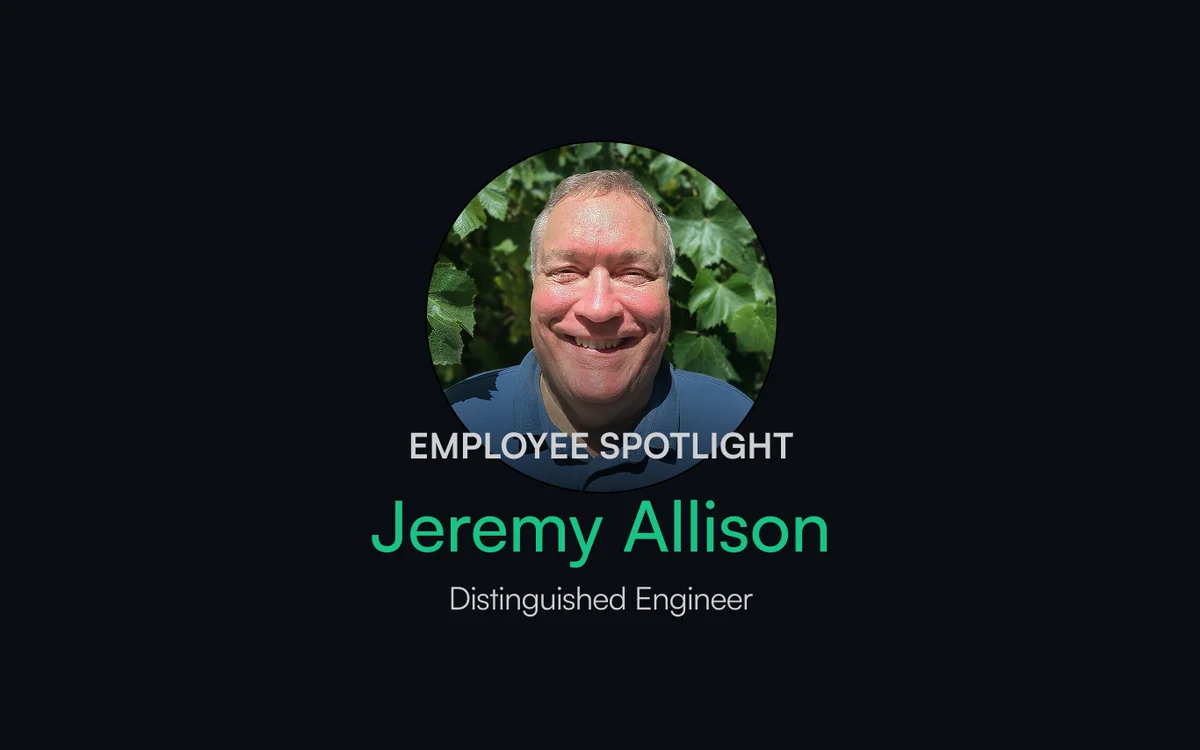
Jeremy Allison helped create Samba, wrote some of its early cryptographic code, and came away with a rule he thinks every programmer should follow. “Never write your own cryptography,” he says. “The only exceptions to this, you know who you are.” Today, as a Distinguished Engineer at CIQ, he works on the other side of that rule, making sure the standard cryptographic libraries Linux depends on, including the new post-quantum algorithms, hold up under FIPS 140-3 scrutiny.

At CIQ, Jeremy leads the work toward FIPS 140-3 validation and Common Criteria evaluation for Rocky Linux from CIQ Pro (RLC Pro) and other CIQ products. The work brings together cryptographic frameworks, testing strategies, software engineering, and detailed standards requirements.

“Working at CIQ is the most interesting challenge I’ve had for a very long time,” he says.

A career built on open source

Jeremy is best known as one of the co-creators of the Samba project. Samba enables file and print interoperability between Windows and Linux and UNIX systems, bridging platforms that were not originally designed to work together.

That work also provided Jeremy’s introduction to cryptography. He wrote some of Samba’s early cryptographic code with help from Bruce Schneier’s book Practical Cryptography. He later created transport-level encryption for a custom SMB1 and POSIX protocol variant.

By Jeremy’s own assessment, the implementation “wasn’t very good, or very secure.” But it demonstrated the need for encrypted SMB traffic and helped inspire Microsoft to implement transport encryption properly in SMB3.

Samba soon moved from custom encryption code to the standard cryptographic libraries available on Linux. Jeremy’s work today focuses in part on ensuring that those foundational libraries satisfy exacting compliance requirements.

The work behind cryptographic compliance

Supporting a cryptographic algorithm and delivering a compliant implementation are two very different accomplishments.

“It requires an insane amount of detailed programming and test work,” Jeremy explains. “The cryptography packages shipped on Rocky are close to FIPS compliance, but when the lab starts looking through them, you’d be surprised how many little changes are required to bring them completely into FIPS standardization.”

Those changes can involve entropy source selection, the secure zeroization of intermediate values, test conformance, and key generation testing.

One of Jeremy’s most challenging projects at CIQ involved preparing the ML-KEM and ML-DSA implementations in Network Security Services, or NSS, for FIPS 140-3 validation. These algorithms are designed to protect systems against attacks from both conventional and future quantum computers.

Part of the NSS implementation had originally been written in Rust and then transpiled into C. Although the generated code was functional, it was not ready for FIPS validation. Generated functions created copies of intermediate values on the stack, and those values needed to be securely erased before the functions returned.

Addressing the problem required AI-assisted hand-edits and careful reviews throughout the generated code. The challenge did not end with the first successful revision.

“Then the package gets updated, the Rust-to-C code is regenerated, and all the work has to be done again,” Jeremy says.

The repetitive nature of that process illustrates why cryptographic compliance is so demanding. The work does not stop once an algorithm functions correctly. Every implementation detail must continue to satisfy the standard each time the underlying software changes.

From post-quantum skepticism to urgency

Jeremy was initially skeptical that quantum computing would become a practical threat to current cryptographic systems. He was more concerned about the increasing complexity of protocols such as TLS and Kerberos, which can make correct, secure implementations extremely difficult.

He still considers that complexity a more immediate danger for many organizations. But two developments in 2026 changed his view of the longer-term risk.

In March, Google Quantum AI researchers published new estimates suggesting that breaking the elliptic curve cryptography used by cryptocurrencies and other systems could require approximately 20x fewer quantum resources than previously estimated. Google used a zero-knowledge proof so others could verify the result without receiving a roadmap for reproducing the attack.

“This got my attention,” Jeremy says. “If the result is theoretical, you don’t go to the expense of using a zero-knowledge proof.”

Then, in July, Anthropic reported that its Claude Mythos Preview model had helped researchers find improved attacks against HAWK, a candidate in NIST’s post-quantum signature competition, and against a reduced-round version of AES. The HAWK team withdrew the candidate the next day. The findings do not compromise production systems, but they demonstrate how AI can accelerate the discovery of weaknesses in the mathematics underlying cryptographic algorithms.

For Jeremy, the lesson extends beyond any single quantum threat or algorithm.

“This demonstrates the urgent need for agility in being able to transition to new cryptographic algorithms, both post-quantum and conventional, in an AI-assisted world,” he says.

Cryptographic migration is therefore not simply a matter of selecting today’s strongest algorithms. Organizations need systems and processes that allow them to replace algorithms as threats, standards, and knowledge evolve.

Applying the lessons of Samba

Jeremy’s experience with Samba shaped how he approaches that challenge.

“It drummed into me the need for test-driven development,” he says. “Interoperability with your own systems is easy. Interoperability with other systems is where the rubber meets the road.”

Samba began as an attempt to reimplement a proprietary protocol suite. Its success helped demonstrate the value of documented protocols and rigorous interoperability testing. Jeremy believes that work contributed to Microsoft opening the protocol and creating the interoperability tests developers now use for SMB3.

Cryptographic compliance presents a different engineering problem because the tests and expected outputs are already defined. The difficulty lies in passing those tests across increasingly complex configurations while also protecting against less visible weaknesses, including incomplete zeroization, leaked key material, and timing attacks.

In both cases, success depends on disciplined testing, careful implementation, and the ability to examine how software actually behaves.

Open source as a scientific method

CIQ publishes its FIPS compliance changes as open source, with separate patches and detailed explanations of what changed and why. The work is available through the CIQ Rocky Linux FIPS repositories, allowing other developers to inspect it, learn from it, and contribute improvements.

For Jeremy, sharing this work is a natural continuation of the principles that have guided his career.

“Open source runs like a shining thread through everything CIQ does,” he says. “It’s the scientific method applied to creating robust, reliable, and secure software.”

“The code changes needed for FIPS only make sense as open source, applied and contributed back to the open source projects we use to achieve FIPS certification,” Jeremy says.

He hopes CIQ’s contributions will help other organizations and developers undertake their own compliance and post-quantum initiatives.

“We all learn and inspire each other by sharing our code and ideas,” he says. “I hope we can help others gain the knowledge and experience to pursue their own certifications.”

Building the cryptographic foundation for what comes next

Jeremy’s work at CIQ brings together the defining themes of his career: difficult technical problems, rigorous testing, practical interoperability, and a commitment to developing essential technology in the open.

The immediate objective is concrete: help RLC Pro and other CIQ products meet demanding FIPS and Common Criteria requirements while preparing for the transition to post-quantum cryptography. The broader goal is to give the open source community code, documentation, and experience that others can use to strengthen their own systems.

That shared foundation will become increasingly important as quantum computing advances, AI accelerates cryptographic research, and organizations face pressure to adopt new algorithms without compromising security or compliance. The algorithms will continue to change, but the need for inspectable code, comprehensive testing, and open collaboration will remain.

At CIQ, that work gives the “shining thread” of Jeremy’s career a new direction: helping build the open, verifiable cryptographic foundation that Linux will need next.


Class (B2B/B2C)
B2B
Ingest Status
Rewritten
Dedupe hash
38c969e8efe2e9f9120fd155a262bdcc
Press Eligible
Yes
Press Eligible Reason
Manuelle Prüfung nötig. Risiko: MEDIUM. Flags: ['numbers']. Stichprobe: False
Source Name
CIQ
Original Summary

Meet CIQ Distinguished Engineer Jeremy Allison and explore his journey from Samba to FIPS compliance, open source security, and post-quantum cryptography.

Image URL
https://cdn.sanity.io/images/2fz41j18/production/2b3453e1baab0e768aad85f6cbb5cb7eea9a879c-1366x854.png?w=1200&h=750&auto=format
Source Node
Content Hash (SHA-256, erste 32 hex)
6fffd88cd027463f6ec99308c986f01b
One flag took Gemma 4 from 52% to 100% on a Strix Halo
Image File
Original HTML

Gemma 4 ships with reasoning turned on, and on short verifiable tasks that default cost me up to 48 accuracy points and 6x to 8x the money. One flag fixed it. The 12B and the 26B went from about 52% to 100% on my easy suite, and a right answer got up to 19x faster.

I measured 27 local models on a Strix Halo with a power meter running. Each one answered 190 small tasks with checkable answers, and I priced the electricity at my California summer rates: 34 cents per kilowatt-hour off-peak and 58 cents on-peak. I ran every task twice, under two different prompts.

Tell the model it can think

I ran every task once with the instruction to answer immediately with no explanation, and once with the instruction to work through the problem however it liked and put the answer on the last line.

The gain runs from 22 to 41 points, and the token counts stay in the low hundreds, so it barely moves the cost. qwen3-30b-a3b-instruct goes from a coin flip to 98% because I stopped telling it to be brief.

Letting a model think costs almost nothing. Running a model trained to think costs about 6x more per right answer. qwen3-30b-a3b-thinking costs 5.8x its own instruct sibling on the same tasks, and qwen3-4b-thinking costs 6.4x its sibling. On these tasks, that extra spend returned nine accuracy points at 4B and minus three at 30B.

One caution. Room to think pays off when a model uses the room and then stops. trinity-nano picked up nine points from the invitation but went from 61 tokens a task to 1,181 to get them, a 19x spend for a nine-point gain. phi-4-reasoning went down 26 points, because the free-form prompt let it spiral past the token cap on tasks it had answered correctly when forced to be brief.

Switch Gemma 4's reasoning off with one flag

Gemma 4 cannot be talked out of reasoning. Asked to answer in one line with no explanation, it emitted reasoning on 95 of 95 tasks in both prompt conditions. On my 4,096-token budget, the 12B and the 26B spent the whole thing thinking and handed back nothing on roughly half the questions.

You can switch it off. Use --reasoning off in llama.cpp, or enable_thinking: false through the chat template. Both worked on my build. An open upstream issue reports the opposite, though it is titled for Qwen3.5 and the Gemma 4 reports inside it contradict each other. Check yours rather than trusting any of us. If the flag took, tokens per answer fall off a cliff and you will see it in the first response.

One flag made Gemma 4 up to 48 accuracy points better, 6x to 8x cheaper, and up to 19x faster on short verifiable work. All three reach a perfect score. This is a lopsided gain: the 12B and 26B jump about 48 points each, and the 31B only 15, because it was less budget-starved to begin with. The prompting trick above was the best thing I'd found until this, and it tops out at 41 points.

Reasoning itself is worth having. Google publishes GPQA Diamond numbers for all three models, 78.8, 82.3, and 84.3, against the 61, 67, and 70 I measured with reasoning off. Some of that gap comes from my Q4_K_M weights and my 100-question subset rather than the flag, and I never ran GPQA with reasoning on to separate them.

The useful version isn’t "turn it off." The default suits one of two regimes. On short verifiable work, a model that reasons burns your budget solving something that wasn't hard. On genuinely hard work, you want it back on. Which side of that line your workload sits on decides the setting, so check it before you blame the model.

One trap sits next to this flag. --reasoning-budget 0 looks like it does the same job and doesn't. It empties the API's reasoning field while the model keeps reasoning in the ordinary content field, so anything counting reasoning tokens reports silence.

Also in this series: what a correct answer costs at each difficulty level, across all 27 models.

Check whether your model stops talking when told to

The terse prompt says to answer immediately, in one line, with no explanation. Twelve of the 27 models emitted reasoning anyway, and 11 of those did it on all 95 tasks without an exception. Here they are, sorted by what they spend:

Look at the top row. phi-4-reasoning is the loudest model on the box, and it is not one of the 12, because it streams its thinking as ordinary output instead of into the API's separate reasoning field. A reasoning-field check calls it obedient while it writes 2,811 tokens in reply to "one line, no explanation." If I had trusted that one signal, I would have called the worst offender clean.

The models that obey answer in 14 to 15 tokens: llama4-scout, granite4-h-small, phi-4, and qwen3-next-80b-a3b. That is 14 tokens against phi-4-reasoning’s 2,811, on identical prompts. A model you cannot quiet has a cost floor you cannot design around, and the gap between the quietest and loudest here is 200x. If you pay per token in an agent loop or hold a latency budget, check this before you build on a model.

The gpt-oss pair and nemotron barely have this problem. They emit reasoning but spend a couple of hundred tokens on it. The models where it hurts combine stubbornness with volume.

Three ways expensive models fail

The models at the bottom of the cost table in the first post fail in three ways.

Verbosity. Every model in the bottom third of the cost table emits over 1,000 tokens per correct answer, and several emit over 2,000. They are mostly models trained to reason, and the reasoning draws power for every token.

Truncation. I capped generations at 4,096 tokens. phi-4-reasoning hit that cap on 78% of the free-mode tasks. It computed 4,000 tokens, drew power for all of them, and produced no usable answer. Those tokens cost exactly as much as productive ones, which is most of why it sits at $5.57 per thousand answers.

Spiraling. The worst case is a model that gets stuck. trinity-nano scored zero out of 14 on the constraint puzzles when I let it reason freely, because 12 of the 14 ran to the token cap producing text like "Let me think about this differently. Let's see if there's a way to arrange them..." and never reached an answer. It averaged 3,574 tokens on those 14 for nothing. The same model, told to answer immediately, averaged 10 tokens and got three of them right. A model that spirals generates tokens the whole time, so every throughput metric says it's working.

Leave the token budget alone

The obvious objection to the truncation numbers is that I set the cap too low and measured my own configuration. I re-ran the worst offender in the set, plus both Arcee models, with 4x the room.

More room gained nothing and cost 2.5x to 9x as much. These models fill whatever space they are given. trinity-nano still hit a cap 4x larger on 22% of tasks instead of 25%, and picked up four tasks, which is the size of my run-to-run noise.

For trinity-mini, this is a tuning result. The tight budget was better on both axes: same accuracy for a third of the energy. If you run it, cap it. trinity-nano here is Trinity-Nano-Preview, a preview release measured against finished models, so weigh that before drawing conclusions about it. trinity-mini also scores the same whichever way you prompt it: 91.6% told to be brief against 90.5% told it could think. Nearly every conventional instruct model here swings 22 to 41 points on that one instruction, so if you can't control how every call gets phrased, that insensitivity is worth money. Both Arcee models also generate cheap tokens. trinity-nano has the lowest per-token cost I measured at 0.33 J, and trinity-mini is fifth of 27. What costs trinity-mini money is how many tokens it chooses to spend, and that is the configurable kind of problem.

The phi-4-reasoning row also exposed a llama.cpp trap that cost me a mistake. My first attempt at the larger budget asked for 16,384 tokens and got 7,903. The server's -c is the total context divided across --parallel slots, so a 32,768-token context with four slots gives each request 8,192, and the cap I asked for was never reachable. Every generation topped out at the same place, and I nearly published that as a measurement. If you set a generation cap, check it against your context divided by your slot count.

The next post in this series looks at why tokens per second tells you almost nothing about what an answer costs.

Class (B2B/B2C)
B2B
Ingest Status
Rewritten
Dedupe hash
0234316bc179af403fef83e00a3784ba
Press Eligible
Yes
Press Eligible Reason
Manuelle Prüfung nötig. Risiko: MEDIUM. Flags: ['numbers']. Stichprobe: False
Source Name
CIQ
Original Summary

Reasoning off took Gemma 4 from 52% to 100% on short tasks at one-eighth the cost. Plus a prompt change worth 41 points, and models that ignore both

Image URL
https://cdn.sanity.io/images/2fz41j18/production/485e6c43fa959edab1fd6f6bb6581f65f16ef503-1366x854.png?w=1200&h=750&auto=format
Source Node
Content Hash (SHA-256, erste 32 hex)
2ed3b3b7c8a7283474d685135bc89fda