Integris at AUSA in Washington
Image File
Original HTML

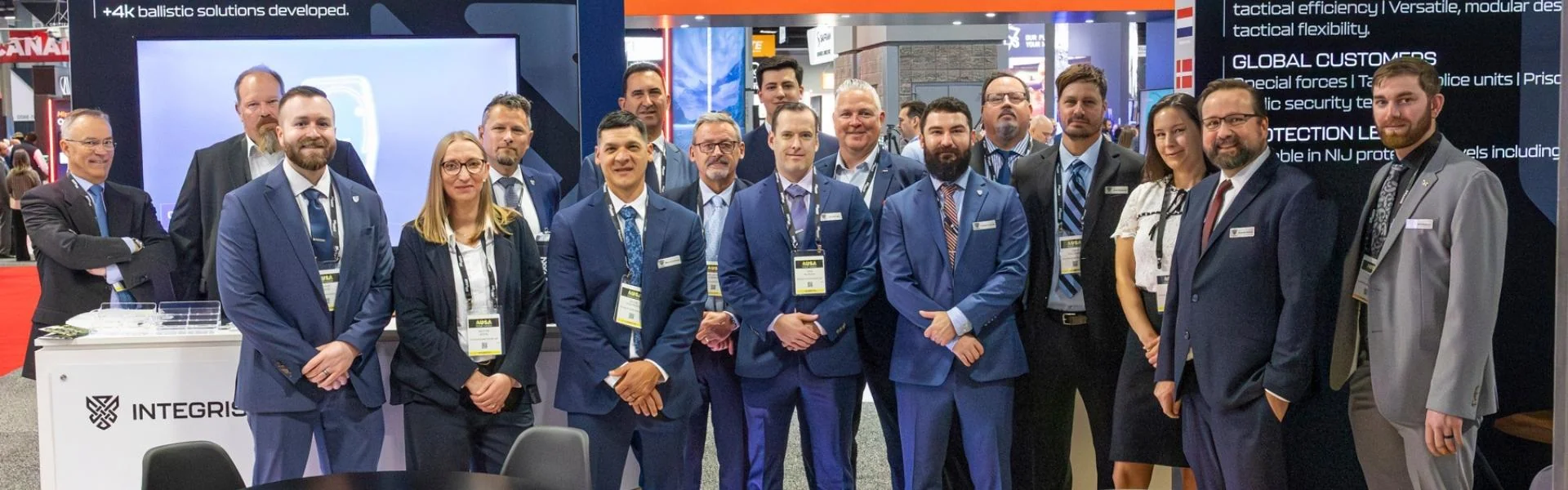
Integris advanced survivability solutions on display at AUSA

Integris is excited to attend the Association of the United States Army (AUSA) Annual Meeting in Washington, D.C., in 2026.

As one of the leading defense exhibitions in the United States, AUSA brings together military leaders, industry experts, decision-makers, and technology providers from across the global defense community. The event provides an important platform for Integris to showcase our latest lightweight ballistic protection solutions and demonstrate how our technologies support the evolving protection requirements of modern defense platforms.

Throughout the event, our team will be available to discuss advanced protection solutions for vehicle, personal, aerospace, and other defense applications, as well as opportunities for future collaboration. AUSA also provides an excellent opportunity to meet with customers and partners, strengthen existing relationships, and connect with new organizations across the defense sector.

We look forward to welcoming visitors, sharing our latest capabilities, and discussing how Integris Composites can support current and future defense programs.

What is AUSA and Why It Matters to Integris

The AUSA Annual Meeting is one of the most significant defense events of the year, focusing on U.S. Army modernization and national security. The event showcases the latest advancements in military technology, from weapon systems to cybersecurity solutions, while also providing strategic insights from military and government leaders on future combat strategies and defense challenges.

“We’re excited by the interest shown in our solutions and the conversations we had about advancing battlefield capabilities. This event continues to be a key driver for our growth and innovation,” said David Cordova, CCO of Integris USA.

For Integris, having a presence at AUSA is critical. The conference grants us direct access to key decision-makers in the U.S. Army and the wider defense sector, offering an unparalleled opportunity to demonstrate how our solutions can enhance mission effectiveness and soldier protection. The networking and relationship-building at AUSA are essential to fostering future partnerships and staying aligned with the evolving needs of the defense community.

Class (B2B/B2C)
B2B
Ingest Status
Rewritten
Dedupe hash
f362787825958d5fd0adc0c1362b881f
Press Eligible
Yes
Press Eligible Reason
Defense technology company showcasing its ballistic protection solutions and industry partnerships.
Source Name
Integris Composites, Inc.
Original Summary

<p>Showcasing our ballistic protective solutions.</p>
<p>The post <a href="https://integriscomposites.com/ausa-washington-dc/">Integris at AUSA in Washington</a> first appeared on <a href="https://integriscomposites.com">Integris</a>.</p&gt;

Image URL
https://integriscomposites.com/wp-content/uploads/2025/10/AUSA-2025-in-Washington-DC.jpg
Content Hash (SHA-256, erste 32 hex)
ed26b92634dd1688edc5112a90cc2b79
Healthcare AI Playbook: Real ROI from Deployments That Work
Image File
Original HTML

Key Takeaways

- AI solved call‑volume, scheduling, and no‑show challenges that staffing alone couldn’t address.

- Starting with measurable workflows like collections and confirmations delivered fast, proven ROI.

- Change management — early adopters, patient communication, and small wins — was essential to overcoming resistance.

- Integrated AI platforms outperformed point solutions by executing workflows directly inside the EHR/PMS and eliminating manual follow‑up.

Over 120,000 calls a month. Fewer than half answered. No-show rates eating 12–15% of scheduled visits. These aren’t projections or benchmarks from a whitepaper — they’re the numbers two healthcare executives were staring at before they deployed AI at scale.

At a recent Becker’s Healthcare webinar, Ajay Chadha, former CFO of 42 North Dental, and Clayton Lawrence, COO of UNIO Health Partners, shared what healthcare AI deployment actually looks like from the inside: the ROI, the resistance, and the decisions that made the difference.

The problem every operator recognizes

Ajay Chadha ran New England’s largest dental service organizations — 42 North Dental, with over 100 practices across nine states. The breaking point looked familiar.

“Not all inbound calls were being answered, the appointments were not being fully confirmed, therefore that was creating gaps or no-shows in our schedules.”

The reflex for most organizations is to hire. Build a call center. Add staff. Chadha ran the math.

“We’re going to have to hire more people, we’re going to have to train these people, there’s going to be turnover.”

Clayton Lawrence, COO of UNIO Health Partners — a 50-plus location multi-specialty practice across California covering gastroenterology, urology, and radiation oncology — reached the same wall. His organization was fielding over 120,000 calls a month and answering fewer than half.

“We knew that we just couldn’t throw more people at this and solve the problem by throwing more bodies at it.”

Both leaders made the same call: stop waiting for a better solution and deploy AI directly against the workflows bleeding the most revenue — starting now, with the tools that exist today.

Start with what’s measurable, not what’s exciting

The most important insight from both leaders runs counter to how most organizations approach healthcare AI for the first time.

Don’t start with the most ambitious use case. Start with the most provable one.

For 42 North Dental, that meant outbound collections first — not AI scheduling, not automated intake. Collections, because if AI could recover aging patient receivables the front desk never had time to chase, the ROI would be clear and fast.

It was.

“In the first nine months, just the outbound calls, we collected about $8 million of receivables. Almost $2 million of that was from amounts over six months old. In the dental business, once the balance gets to be more than six months old, it is highly unlikely that you’re going to collect it. So, this is likely bad debt that I’ve just collected.”

The downstream math was equally compelling.

“For every 1% reduction in the no-show rate, that 1% has a seven-figure impact in terms of the bottom line, even after all other costs.”

At UNIO Health Partners, Lawrence focused first on appointment confirmation and no-show reduction, directly improving access for the 11,000 to 12,000 patients his organization sees each week.

“We saw a no-show rate drop from 12 to 15% on average down to three to 3.5%, and it sustained that on a go-forward basis.”

Schedule utilization at UNIO climbed from 67% to consistently above 82%. Their AI-powered waitlist management is now tracking toward $100,000 a month in recaptured revenue.

Neither organization waited for a perfect deployment plan. Both started narrow, proved it fast, and scaled from there.

Want to hear it directly from Ajay and Clayton? Access the full webinar recording here →

The resistance is real — here’s how they beat it

Neither leader pretended the rollout was smooth. Change management is where most healthcare AI deployments succeed or fail — not in the technology itself.

Lawrence was candid about his biggest early miss.

“The biggest lesson I learned was engaging with the patients. Let them know what’s happening, why it’s happening, and what it means to them.”

His advice for organizations facing internal resistance from physicians and staff: find your early adopters, prove the value in a small cohort, then bring your skeptics into the process — rather than trying to overpower them.

“Find ways to engage them frequently and often in the discussion about what we are trying to accomplish as an organization.”

Chadha reinforced the point that waiting for full organizational buy-in before starting is itself a form of costly delay.

“If you’re able to get that early-stage buy-in through the return on that investment, it is far easier to build on that and snowball it — because you’ve converted the naysayers.”

He was also direct on the fear that most often stalls healthcare organizations before they even begin.

“We did not lay off a single individual as a result of this. What we were focused on is if I can enhance my utilization of my existing providers, that is actually going to provide additional buffer.”

This is the reframe that unlocks internal momentum: AI-powered digital staff in healthcare is not about reducing the workforce. It is about redirecting it — freeing clinical and administrative staff from high-volume, repetitive tasks so they can focus on the work that genuinely requires a human.

Platform or point solution: the decision that defines your ceiling

As both organizations scaled, one strategic question emerged as the most consequential: are you building on a platform, or accumulating disconnected tools?

Lawrence was direct.

“You’ve got to decide what your AI strategy is and decide if your AI strategy requires a platform partner versus a narrow-scope vendor. For me, deciding to be with a platform partner is the right course for our organization.”

Dr. Stephanie Lahr, IntelePeer’s CMIO and former CIO and CMIO at Monument Health, pressed both leaders on where they were heading next. The answer pointed in the same direction: the era of accumulating disconnected point solutions is ending.

Miguel Barsenas, IntelePeer’s Director of Healthcare Product Management, offered the framework for pressure-testing that decision.

“If the AI can’t read from and write back to an EHR or PMS system, you built fancy automation that somebody has to act on manually. Always start with the workflow, not with the technology.”

The reason comes down to workflow integration. AI that can’t read from and write back to your EHR or practice management system doesn’t execute workflows — it creates manual follow-up work. The right question when evaluating any vendor is: does this AI act inside my existing systems, or does it produce outputs someone still has to act on?

IntelePeer’s SmartAgent is built to answer that question correctly. It executes patient communication workflows natively inside EHR and practice management systems — scheduling, collections, confirmation, and waitlist management — with full performance visibility through SmartAnalytics. The organizations realizing outcomes fastest are those who identified one high-volume, measurable workflow, proved ROI, and expanded from there.

Why waiting is the riskiest choice you can make

Lawrence left no ambiguity.

“Agentic AI is here to stay. It will be the new internet for us. Jump in the AI pool. If you don’t, you’re going to be left behind.”

The data is in. The playbook has been written by operators who have run it inside real health systems, with real patients, real staff, and real financial stakes. The only thing waiting accomplishes now is handing competitors a longer head start.

Start with one workflow. Prove it. Then scale. Watch the full Becker’s Healthcare webinar on demand →

FAQ’s

What is Agentic AI in healthcare?

Agentic AI in healthcare autonomously executes multi-step workflows — scheduling appointments, sending patient reminders, processing collections calls, managing waitlists — without requiring human intervention at each step. Unlike basic chatbots that answer questions, Agentic AI takes action inside real clinical and administrative systems like EHRs and practice management platforms. IntelePeer’s SmartAgent is purpose-built for this type of workflow execution across the patient communication journey.

How long does it take to see ROI from healthcare AI deployment?

Most organizations see measurable ROI within 45 to 90 days when starting with a focused, high-volume workflow like collections or appointment confirmation. 42 North Dental collected $8 million in patient receivables within nine months. UNIO Health Partners saw no-show rates drop from 12–15% to 3–3.5% within a few months of going live. Starting narrow and proving fast is the consistent pattern among organizations realizing outcomes quickly.

Will AI replace healthcare front desk staff?

No. Organizations that have deployed AI at scale consistently report that staff are redirected to higher-value work, not eliminated. As Ajay Chadha of 42 North Dental stated directly, his organization did not cut a single position as a result of AI deployment. AI handles repetitive, high-volume communication tasks so that front desk and clinical teams can focus on in-person patient interactions and care coordination.

What is the difference between conversational AI and Agentic AI in healthcare?

Conversational AI handles dialogue — answering questions, gathering information, routing calls, and communicating with patients in real time. Agentic AI goes further by acting on that conversation: scheduling the appointment, updating the EHR, sending a confirmation, processing a payment, or filling a cancellation slot from the waitlist. The most effective healthcare AI platforms combine both layers so that conversation and action happen in a single, seamless patient interaction.

Class (B2B/B2C)
B2B
Ingest Status
Need Review
Dedupe hash
d563d34066a7e8d1d5e7284d891fbb58
Press Eligible
Yes
Press Eligible Reason
QA FAIL (need review): TARGET introduces two unsupported factual claims: IntelePeer described as 'the webinar sponsor' and Dr. Stephanie Lahr as having 'moderated the discussion.' The SOURCE does not explicitly state that IntelePeer sponsored the webinar or that Lahr moderated it.
Source Name
IntelePeer
Original Summary

<p>Multi-location specialty healthcare practices are increasingly adopting Agentic AI automation to address urgent operational challenges that drive revenue loss and patient dissatisfaction.</p>
<p>The post <a href="https://intelepeer.ai/blog/healthcare-ai-playbook">Healthcare AI Playbook: Real ROI from Deployments That Work</a> appeared first on <a href="https://intelepeer.ai">IntelePeer</a>.</p&gt;

Image URL
https://intelepeer.ai/wp-content/uploads/beckers-blog-041526.jpg
Source Node
Generated Article_json
{"target_audience": "b2b", "is_medical": true, "ai_generated_title": "AI Cuts Healthcare No-Shows to 3% and Recovers $8M in Receivables", "body_html": "<p><strong>United States -- [CURRENT_DATE] --</strong> UNIO Health Partners cut its appointment no-show rate from 12–15% to 3–3.5%, while 42 North Dental collected about $8 million in receivables in nine months, using AI workflows, the two operators told a Becker's Healthcare webinar.</p><h5>Call volumes and no-shows exposed the limits of hiring</h5><p>UNIO, a 50-plus location multi-specialty practice in California covering gastroenterology, urology and radiation oncology, fielded more than 120,000 calls a month and answered fewer than half. COO Clayton Lawrence said adding staff could not solve the problem.</p><p>Ajay Chadha, former CFO of 42 North Dental, ran the same calculation for a group of more than 100 practices across nine states. Unanswered inbound calls and unconfirmed appointments were opening gaps in schedules. Hiring a call center meant recruiting, training and turnover, he said.</p><h5>42 North Dental recovered $8M in receivables in nine months</h5><p>The dental group began with outbound collections because the return would be easy to measure. Outbound calls alone collected about $8 million in the first nine months. Almost $2 million of that was more than six months old, a category Chadha described as unlikely to be collected and effectively bad debt.</p><p>Chadha said each 1% reduction in the no-show rate has a seven-figure bottom-line impact after all other costs.</p><h5>UNIO lifted schedule utilization from 67% to above 82%</h5><p>UNIO started with appointment confirmation and no-show reduction across the 11,000 to 12,000 patients it sees each week. The no-show rate fell to 3–3.5% and held there. Schedule utilization rose from 67% to consistently above 82%. AI-powered waitlist management is tracking toward $100,000 a month in recaptured revenue.</p><h5>Early adopters and patient communication drove adoption</h5><p>Lawrence said his biggest early miss was not telling patients what was changing and why. For physician and staff resistance, he advised finding early adopters, proving value in a small cohort, then involving skeptics in the process.</p><p>Chadha said early returns convert skeptics. On workforce fears, he said: \"We did not lay off a single individual as a result of this.\" His focus was raising utilization of existing providers.</p><h5>EHR write-back separates platforms from point solutions</h5><p>Lawrence said UNIO chose a platform partner over narrow-scope vendors. Miguel Barsenas, Director of Healthcare Product Management at IntelePeer, said AI that cannot read from and write back to an EHR or practice management system leaves staff acting on its outputs manually.</p><p>IntelePeer, the webinar sponsor, markets its SmartAgent as executing scheduling, collections, confirmation and waitlist workflows natively inside those systems, with performance tracked through SmartAnalytics. Dr. Stephanie Lahr, IntelePeer's CMIO, moderated the discussion with both executives.</p>", "meta_description": "UNIO Health Partners cut no-shows from 12–15% to 3–3.5% while 42 North Dental collected $8M in receivables using AI, executives told a Becker's webinar.", "seo_keywords": "healthcare AI, agentic AI, no-show reduction, patient receivables, EHR integration, UNIO Health Partners, 42 North Dental, IntelePeer SmartAgent, appointment confirmation, schedule utilization", "companies": ["IntelePeer", "UNIO Health Partners", "42 North Dental"], "industries": ["Healthcare"], "markets_regions": ["United States"], "news_type": ["case_study", "financial_disclosure"], "products": ["SmartAgent"], "themes": ["digital_transformation", "workflow_automation", "change_management"], "events": ["Becker's Healthcare webinar"], "cta_text": "Watch the on-demand Becker's Healthcare webinar with UNIO Health Partners and 42 North Dental executives", "learn_more": "", "fact_check": {"accuracy_score": 100, "legal_risk": "low", "corrections_made": ["Dateline city set to United States as the source names no city; [CURRENT_DATE] placeholder retained", "Omitted the unverified vendor FAQ claim of ROI within 45 to 90 days", "Paraphrased all but one executive quote"], "recommendation": "publish"}}
Content Hash (SHA-256, erste 32 hex)
087792bbd30ec0e8957adaf2003e9b7b
Training tomorrow’s dentists can’t run on yesterday’s workflows
Image File
Original HTML

Key Takeaways

- The administrative burden on dental school clinics is a strategic issue, not just an operational one.

- Students internalize the operational norms they experience during training — and those norms shape how they practice after graduation.

- AI‑powered patient engagement helps close revenue gaps while reinforcing the modern standards students will encounter in contemporary dental organizations.

- Safety‑first automation can be implemented without disrupting existing systems or requiring additional faculty oversight.

- The practices where graduates are most likely to work — DSOs — are already operating with AI‑driven patient engagement at scale, setting the expectations for modern clinical workflows.

Reducing operational friction to support revenue, patients, and student learning

University dental schools occupy a role unlike any other healthcare setting. They are simultaneously care delivery organizations, academic institutions, and professional training environments — and they’re expected to perform at a high level on all three fronts at the same time.

That balance is sustainable when operations run smoothly. But when scheduling relies heavily on manual processes, billing follow-up stretches thin, or recalls take longer than intended, the impact tends to accumulate. Over time, this can show up in revenue delays, missed opportunities to re-engage patients, and subtle but meaningful effects on the learning environment for students observing how clinical operations function day to day.

It doesn’t have to be this way.

The dual burden dental schools carry

Most dental school administrators understand the operational challenges. Appointment no-shows in student clinics run higher than in private practice because the patient population skews toward price-sensitive individuals who may be less anchored to a relationship. Revenue recovery is complicated by delayed billing cycles and the complexity of student-driven charting. Post-visit follow-up and recalls often depend on whoever has time — which is never reliable.

But there’s a second dimension that gets less attention: what students are learning about clinical operations through direct observation.

When a patient calls and no one answers, when a balance goes unpursued because staff bandwidth ran out, when a recall reminder never goes out — students see this. Not as a failure, but as the norm. The assumption becomes: this is how dental practices run. The gap between what’s clinically possible and what’s operationally supported gets treated as inevitable.

Closing the gap: what AI actually changes

It’s easy to frame AI in clinical settings as a productivity play. Fewer hours on the phone. Fewer manual reminders. That’s real, but it understates what’s actually changing.

The more important shift is from reactive administration to proactive patient engagement — systems that don’t wait for patients to call, but reach out at the right moment, through the right channel, with the right message. For dental school clinics, that shift addresses three distinct problems at once.

- Scheduling and no-show reduction 

The patient population served by university dental clinics is often time-sensitive and price-conscious. Automated outbound reminders via voice and SMS — delivered with the warmth and clarity that reflects your institution reduce no-shows in ways that static appointment cards and manual callbacks cannot. More filled chairs mean more clinical hours for students, more completed cases, and more consistent revenue.

- Revenue recovery without the friction

Patient balances at dental schools are often perceived as modest, yet these are fully dental and surgical clinics where costs can accumulate quickly. When outreach is manual, smaller balances go unpursued because the cost-to-collect looks unfavorable. AI-powered outbound engagement changes that calculus entirely: the same governed, empathetic patient contact that drives outcomes at enterprise scale becomes accessible to clinics that lack a dedicated revenue cycle team.

- Post-visit engagement and recalls 

The patient who leaves a dental school clinic without a scheduled recall appointment is at high risk of not returning. Automated recall reminders don’t require a staff member to remember — they run on schedule, across every patient, every time. Post-visit surveys create a feedback loop that’s valuable for patient experience and for faculty supervision of student performance.

Where your graduates are going

Dental schools have every reason to strengthen their own clinical operations. These are fully functional dental and surgical environments responsible for generating revenue, managing complex patient care, and supporting student education.

As modern patient engagement tools become standard across healthcare, bringing capabilities like automated reminders, digital billing outreach, and 24/7 voice coverage into school‑run clinics reduces administrative strain, improves patient follow‑through, and strengthens the program’s financial health.

This isn’t technology for its own sake. It’s alignment, ensuring that the clinical excellence dental schools already deliver is matched by an operational foundation built for a contemporary, revenue‑generating academic clinic.

Safety-first by design

Regulated care environments can’t treat AI adoption as a feature race. Every automated patient interaction carries trust implications — and in an academic setting, those implications extend to your institution’s reputation, your accreditation standards, and your patients’ confidence in care that is partially delivered by students.

IntelePeer’s approach to Agentic AI is built around this reality. Human escalation isn’t an edge case — it’s a design principle. Guardrails, auditability, and consistent disclosures are built into every workflow, not bolted on. The system knows when to hand off, and it does.

That means dental school administrators don’t have to choose between operational efficiency and institutional accountability. The right AI implementation delivers both.

Getting started

Download the SmartAgent for University Dental Schools datasheet to see the full use case breakdown, integration approach, and deployment model. The first step is a discussion to pinpoint the highest‑impact workflow — scheduling, revenue recovery, or recalls — and define the right starting point. Programs that begin with a focused, jointly defined use case and scale from demonstrated success move faster and more confidently than those that attempt broad transformation upfront.

What kind of results should we expect?

Results vary by workflow and starting baseline, but organizations deploying SmartAgent for revenue recovery and scheduling have seen measurable reductions in no-show rates, improvements in A/R recovery, and significant staff hours recovered within the first 90 days.

Conclusion

University dental schools don’t need to choose between excellent clinical training and efficient patient operations. Strengthening workflows with modern engagement tools directly supports revenue, reduces administrative burden, and creates a smoother experience for both patients and staff.

The operational standard you set today shapes the financial health of your program — and the environment your students learn in. It’s worth ensuring that standard reflects the direction dentistry is moving.

FAQ’s

Is AI-powered patient engagement appropriate for an academic clinical setting?

Yes — and it’s specifically well-suited to it. Automated scheduling, reminders, and revenue recovery outreach reduce administrative burden on faculty and staff without interfering with clinical supervision. Human escalation is built in for any interaction that requires judgment.

How does this integrate with existing practice management systems?

Effective automation requires integration with phone systems, messaging platforms, EHRs, scheduling tools, and revenue-cycle and billing systems.

How does integration impact staff adoption and trust?

SmartAgent includes pre-built integrations with leading PMS and EHR platforms. The Managed Services team handles configuration and deployment, so IT lift on the school side is minimal.

What does deployment actually look like?

Most organizations start with a single workflow — scheduling reminders or outbound revenue recovery outreach — establish a performance baseline, and expand from there.

How is patient data handled in a HIPAA-compliant way?

IntelePeer’s platform is built for regulated environments. All patient interactions are governed by configurable guardrails, audit trails, and clear disclosure protocols that meet HIPAA requirements.

Class (B2B/B2C)
B2B
Ingest Status
Rewritten
Dedupe hash
aac379ee87380d935b056a5e292e81e8
Press Eligible
Yes
Press Eligible Reason
Business-focused article on AI patient engagement workflows for dental schools, with product promotion.
Source Name
IntelePeer
Original Summary

<p>Multi-location specialty healthcare practices are increasingly adopting Agentic AI automation to address urgent operational challenges that drive revenue loss and patient dissatisfaction.</p>
<p>The post <a href="https://intelepeer.ai/blog/training-tomorrows-dentists">Training tomorrow&#8217;s dentists can&#8217;t run on yesterday&#8217;s workflows </a> appeared first on <a href="https://intelepeer.ai">IntelePeer</a>.</p&gt;

Image URL
https://intelepeer.ai/wp-content/uploads/uds-featured-post.jpg
Source Node
Content Hash (SHA-256, erste 32 hex)
83013c35df8ad2c4c30d0840ca79af7a
The End of “Tools for Humans” | IntelePeer Agentic AI Blog
Image File
Original HTML

Key Takeaways

- The old SaaS model — tools that make humans faster — is collapsing as labor becomes the bottleneck.

- Healthcare’s staffing shortage makes “per‑seat” software useless when there aren’t enough seats to fill.

- Agentic AI shifts from assisting humans to autonomously completing work and delivering outcomes.

- Competitive advantage moves from the AI model itself to the governance, trust, and integration layer that makes autonomous work safe and scalable.

You’ve been buying the wrong thing

For twenty years, enterprise software sold a simple promise: give your people better tools and they’ll work faster. CRMs made salespeople more efficient. EHR systems helped doctors document more thoroughly. Contact center platforms helped agents handle calls quicker. The entire SaaS economy was built on a single, unchallenged assumption — the human is the engine, and software just gives the engine better fuel.

That assumption is now collapsing. Not slowly. Not theoretically. Economically.

“We are at an inflection point that only comes around once or twice in a generation. The question for healthcare leaders is no longer whether AI will change how care gets administered — it’s whether your organization will lead that change or be forced to catch up to it. Those that act now are quietly building operational advantages that will shape performance for years to come.”

— Mark Langanki, Chief AI Officer, IntelePeer

The seat is the constraint

Think about how enterprise software has been priced for the last two decades. Per seat. Per user. Per license. The fundamental unit of value was the person using the tool, and the fundamental constraint was how many of those people you could hire, train, and retain.

In healthcare, that constraint has become a crisis. You can’t hire enough qualified staff to answer every phone call. You can’t fill enough front-desk positions to schedule every appointment. You can’t retain enough billing specialists to chase every unpaid balance. Wage inflation is compressing margins. Burnout is hollowing out the workforce. And the software you bought to make those people faster doesn’t help when the people aren’t there.

The old model assumed an infinite supply of humans. The labor market just proved that assumption wrong. Healthcare currently faces a projected shortage of up to 3.2 million workers by 2026, with administrative roles among the hardest to fill and retain. [1] The cost of that shortage — in unanswered calls, missed appointments, and uncollected balances — is quantified in Post 3: Healthcare’s $175K-Per-Doctor Phone Problem.

From buying tools to buying outcomes

Here’s the shift that matters: the market is no longer demanding better tools for humans to use. It’s demanding that the work simply gets done.

We’re moving from buying “scheduling software” to buying “scheduled appointments.” From “revenue cycle management platforms” to “processed claims.” From “contact center solutions” to “resolved patient inquiries.” The output is what’s being purchased — not the instrument.

Venture capital has a name for this: Service-as-Software. And the economic math behind it is staggering. The total addressable market for enterprise software sits around $900 billion. But the global labor spend on the services that software supports — sales, support, administration, billing — runs into the tens of trillions. When software can deliver the service itself, it taps into the labor budget, not the IT budget. That’s not an incremental expansion. It’s a category shift. [2] The full economic and technical implications of this shift are laid out in the whitepaper The Agentic Advantage.

What “Agentic” actually means (and doesn’t)

You’ve probably heard the term “agentic AI” in every pitch deck and keynote this year. Most of those pitches obscure more than they clarify, so let’s be precise.

The first generation of generative AI gave us co-pilots. They could draft an email, but a human had to send it. They could summarize a medical record, but a doctor had to sign off. Useful, but still tethered to the old model — the human is the engine, the AI is a faster set of tools.

Agentic AI is different in one critical way: autonomy. Instead of defining the steps for the system to follow, you define the goal. “Fill this doctor’s schedule for next Tuesday.” “Collect the outstanding balance on this account.” “Reschedule this patient and send them updated prep instructions.” The AI determines the steps, selects the right tools, executes the actions, and handles the exceptions.

That distinction — defined steps versus defined goals — is what separates a workflow tool from a digital worker. But autonomy introduces its own risks, which is why getting from promising demo to production system is harder than most organizations expect. That’s the subject of Post 2: Pilot Purgatory Is Real.

The commodity trap and where value actually lives

Foundation models — the GPT-4s and Claudes of the world — are rapidly commoditizing. One prominent tech CEO recently called them “the new disk drives.” If the intelligence layer is becoming infrastructure, where does the value go?

It migrates upward. To the application layer. Specifically, to the trust and governance infrastructure that surrounds the model — compliance-ready guardrails, deep integration with systems of record, analytics that make performance visible and auditable, and clear escalation paths when risk rises. In regulated environments, that surrounding infrastructure is what makes AI deployable. The model is the intelligence. The governance layer is what makes that intelligence trustworthy.

For healthcare organizations and their investors, this means the competitive question isn’t “which AI model is best?” It’s “which system can actually execute work inside our operational reality — reliably, compliantly, and at scale?”

That question turns out to be much harder to answer than the AI hype cycle suggests. And the gap between a demo that impresses and a system that performs in production is where most organizations are stuck right now. In Post 4: The Four Pillars, we give you a practical evaluation framework to tell the difference.

IntelePeer in practice

IntelePeer was built for exactly this shift. SmartAgent doesn’t give your staff a better tool to answer the phone — it answers the phone, schedules the appointment, collects the balance, and documents the interaction without anyone touching it. SmartOffice extends that execution capability across enterprise workflows, and SmartAnalytics provides the governance and visibility layer that makes performance measurable and auditable. The result isn’t faster software — it’s measurable capacity and accountability your organization didn’t have before.

See how SmartAgent delivers outcomes, not just conversations → Book a Demo

FAQ’s

What is Service-as-Software and how is it different from SaaS?

Traditional SaaS gives people better tools and charges per seat — the value depends on humans doing the work. Service-as-Software means the AI completes the work itself: scheduling appointments, collecting payments, resolving inquiries. You buy the outcome, not the instrument. For healthcare, this means tapping into the labor budget rather than the IT budget — a fundamentally larger economic opportunity. For the full economic framework, download The Agentic Advantage whitepaper.

What makes AI “agentic” versus a standard AI assistant or chatbot?

A standard AI assistant requires a human to define every step. Agentic AI operates from a defined goal — “schedule this patient” — and determines the steps itself, selects the right tools, executes the required actions, and handles exceptions without human intervention. The shift from defined steps to defined goals is what separates a workflow tool from a digital worker. Post 2 in this series explores why that autonomy also requires a specific architectural approach to be safe in production.

Why is the labor shortage accelerating the shift to agentic AI in healthcare?

Healthcare faces a projected shortage of up to 3.2 million workers by 2026, with administrative roles among the most difficult to fill. Front-desk staff, billing specialists, and patient services teams are overwhelmed, turning over frequently, and increasingly expensive to replace. Agentic AI doesn’t supplement this workforce — it restores the capacity these roles were meant to provide. Post 3 in this series quantifies the revenue cost of that capacity gap, specialty by specialty.

What should healthcare leaders evaluate in enterprise AI beyond the underlying model?

Foundation models are rapidly becoming commodity infrastructure. The competitive differentiator in enterprise AI is the trust and governance layer that surrounds the model: compliance-ready guardrails, bidirectional integration with systems of record, and analytics that make AI performance visible and auditable. In healthcare, this means the AI must operate within your EHR, scheduling policies, and compliance requirements — and produce a record that stands up to executive, board, and regulatory scrutiny. The Agentic Advantage whitepaper details the evaluation framework for healthcare and regulated-industry leaders.

Citations

[1] Mercer / Oliver Wyman, “Healthcare 2026: Closing the Talent Gap,” 2021. Projected shortage of up to 3.2 million healthcare workers in the United States by 2026.

[2] Andreessen Horowitz, “The New Business of AI,” 2023. Analysis of Service-as-Software as an emerging economic model in which AI captures labor spend rather than software spend.

Class (B2B/B2C)
B2B
Ingest Status
Rewritten
Dedupe hash
4bf0047935252148aaf38529829bebdd
Press Eligible
Yes
Press Eligible Reason
Manuelle Prüfung nötig. Risiko: MEDIUM. Flags: ['finance', 'numbers']. Stichprobe: False
Source Name
IntelePeer
Original Summary

<p>Multi-location specialty healthcare practices are increasingly adopting Agentic AI automation to address urgent operational challenges that drive revenue loss and patient dissatisfaction.</p>
<p>The post <a href="https://intelepeer.ai/blog/end-of-tools-for-humans">The End of &#8220;Tools for Humans&#8221; | IntelePeer Agentic AI Blog</a> appeared first on <a href="https://intelepeer.ai">IntelePeer</a>.</p&gt;

Image URL
https://intelepeer.ai/wp-content/uploads/feat-er-agentic-advantage.jpg
Source Node
Content Hash (SHA-256, erste 32 hex)
1c5b7aa97410446eb3fd9fd62f3bb42c
Partnership is a two-way street: What great healthcare AI alliances actually look like
Image File
Original HTML

Key Takeaways

- What most partnership programs get wrong

- What the street actually requires — from both sides

- Where this is going

- A conversation worth having

I’ve spent most of my career on both sides of the partnership table — as the person evaluating vendors, and as the person asking to be trusted with someone else’s business. What I know from both sides is this: the technology almost never fails on its own. The partnership fails.

This happens more than most organizations want to admit, and it happens in a predictable way. A promising alignment is identified, a program is launched, and everyone involved moves on to the next priority — assuming the momentum will sustain itself. It doesn’t. Without clear ownership, defined metrics, and real cross-functional investment from both sides, even the most promising relationships stall. In healthcare AI specifically, where the stakes of getting implementation wrong are high and trust is hard-won, that stall is expensive for everyone.

The distinction that matters — the one I’ve come back to repeatedly throughout my career — is the difference between a transactional relationship and a strategic one.

“In a transactional relationship, one party benefits when a deal closes. In a strategic one, both organizations are actively shaping what comes next and measured by the impact they create together.”

What most partnership programs get wrong

Most companies treat alliances as a distribution strategy — a way to extend reach without building direct sales capacity. They launch a program with a partner portal, a co-branded slide deck, and a joint press release. Then they measure it by pipeline generated in the first 90 days.

The problem isn’t the ambition. The problem is the structure. Or the lack of it.

“Most companies underestimate the focus and structure required to make partnerships work. Strong partnerships don’t emerge passively. They require intentional design, consistent engagement, and a value proposition that’s compelling for both the partner and the end customer.”

In healthcare, the bar is even higher. Healthcare organizations are not buying software — they’re changing how their staff works, how their patients experience care, and how their revenue flows. A technology partner that isn’t deeply embedded in how those systems operate, how clinicians think about workflow, and how administrators measure success is not going to generate the outcomes that sustain the relationship. They’re going to generate demos.

What the street actually requires — from both sides

When I talk about partnership being a two-way street, I mean it specifically. There is something IntelePeer brings to every alliance, and there is something we need partners to bring. Neither side can carry the relationship alone.

On our side, what we bring is domain depth. Healthcare AI is not a horizontal technology play with a healthcare skin on top. It is purpose-built workflow automation across appointment management, outbound patient engagement, and revenue cycle — integrated into EHR and practice management systems that each have their own data models, compliance requirements, and operational constraints. That integration muscle is not easy to build, and it’s what makes IntelePeer genuinely valuable in the contexts where healthcare organizations actually operate.

“IntelePeer’s ability to operationalize AI in ways that are practical, scalable, and immediately valuable — around appointment management, outbound engagement, and revenue cycle workflows — is what makes this platform genuinely different for partners.”

We also bring a commitment to treating partner outcomes as our own KPIs. When a partner deploys IntelePeer in one of their customer accounts, we are invested in that deployment succeeding — not because of what it means for the next deal, but because that is the only version of partnership that earns the long-term relationship we’re trying to build.

“We don’t replace existing systems. We enhance them. That’s a powerful starting point for any partnership conversation.”

What we ask of partners is equally specific. We need executive sponsorship — not a champion two levels below the decision, but a leader who has made a strategic bet on AI and is accountable for the outcome. We need honest feedback loops, including the conversations that are uncomfortable. We need willingness to share real use cases and outcome data — because that’s the raw material of a partnership that keeps getting better. And most importantly, we need partners who understand that healthcare AI is a long game. Organizations that approach it as a quick-fix technology purchase will not build the outcomes that justify the investment. Organizations that approach it as a strategic capability get there.

Where this is going

The healthcare AI ecosystem is still young. The category is not yet defined by a clear winner — it is defined by the quality of the outcomes being generated and the relationships being built to sustain them. That’s actually good news for organizations paying attention right now, because the window to choose partners carefully and build with intentional design is still open.

The organizations that will lead in three to five years are not the ones that evaluated the most vendors. They’re the ones that chose one or two partners thoughtfully, invested in building the relationship with the same discipline they applied to the technology, and committed to shaping what comes next together rather than waiting to see what the market produces.

That is the kind of partner IntelePeer is looking to work with. And it’s the kind of partner we are committed to being.

A conversation worth having

Over the next several weeks, I’ll be hosting a three-part webinar series with partners and practice leaders who are building the kind of alliances I’ve described here — strategic, structured, and built on shared outcomes. Each episode will be direct and specific: what’s working, what’s harder than expected, and what it takes to make AI partnerships perform in real healthcare environments.

If you’re evaluating AI partnerships in healthcare, building a channel strategy, or trying to move an existing vendor relationship from transactional to strategic, this series is for you. The first episode launches soon.

FAQ’s

What is the difference between a transactional and a strategic healthcare AI partnership?

In a transactional relationship, one party benefits when a deal closes. In a strategic one, both organizations are actively shaping what comes next and measured by the impact they create together. In healthcare AI, that distinction determines whether a deployment produces a demo or a documented outcome.

What makes a healthcare AI vendor a true strategic partner?

A strategic healthcare AI partner brings domain-specific depth — not generic software with a healthcare label. That means integration expertise across EHRs and practice management systems, ongoing enablement after go-live, and a team that treats your outcomes as their own KPI. The right partner doesn’t replace existing systems. They enhance them.

What should healthcare organizations look for when evaluating AI partnerships?

Look for three things: proven integration capability across the systems you actually use, a structured approach to onboarding and enablement that goes beyond the initial launch, and reference customers in your segment who can speak to real outcomes — not just implementation completion. Executive sponsorship on the vendor side matters too. If you can’t reach a decision-maker when something goes wrong, the relationship won’t hold.

How long does it take to see ROI from a healthcare AI partnership?

Most healthcare organizations deploying AI for patient access, outbound engagement, or revenue cycle workflows see measurable ROI within 90 days of go-live on their first workflow. The fastest results come from practices that define their success metrics before the engagement begins and start with a single high-volume, high-value workflow rather than trying to deploy everything at once.

What does IntelePeer’s approach to healthcare AI partnerships look like in practice?

IntelePeer’s alliance model is built on integration depth, shared accountability, and ongoing enablement. Through SmartAgent and SmartAnalytics, the platform handles patient access, outbound campaigns, and revenue cycle workflows across 200+ EHR and practice management integrations. With integrations across 200+ EMRs, PMS, and CRM systems, ROI in under 90 days, and enterprise scalability without IT lift, IntelePeer transforms how regulated organizations communicate at scale.

Class (B2B/B2C)
B2B
Ingest Status
Rewritten
Dedupe hash
1f466f2b24861f4b3efe88ad3a5dc882
Press Eligible
Yes
Press Eligible Reason
Manuelle Prüfung nötig. Risiko: MEDIUM. Flags: ['numbers']. Stichprobe: False
Source Name
IntelePeer
Original Summary

<p>Multi-location specialty healthcare practices are increasingly adopting Agentic AI automation to address urgent operational challenges that drive revenue loss and patient dissatisfaction.</p>
<p>The post <a href="https://intelepeer.ai/blog/healthcare-ai-partnership-strategy">Partners… is a two-way street: What great healthcare AI alliances actually look like</a> appeared first on <a href="https://intelepeer.ai">IntelePeer</a>.</p&gt;

Image URL
https://intelepeer.ai/wp-content/uploads/two-way-partnership.jpg
Source Node
Content Hash (SHA-256, erste 32 hex)
ad31aff683f4c5dfd6237a58d0c9e4f3
Pilot Purgatory Is Real — And Architecture Is the Way Out
Image File
Original HTML

Key Takeaways

- Pilot Purgatory — Most healthcare AI fails not in the demo, but in the building; only 6% of organizations ever scale AI to real financial impact.

- Trust Paradox — Autonomy requires engineered safety; without built-in trust, “human‑in‑the‑loop” becomes digital overhead instead of digital labor.

- Four‑Layer Architecture — Reliability, real‑time performance, integration, and governance are the non-negotiable stack that separates production‑ready AI from stalled pilots.

- LLM Wrapper Limitations — Thin interfaces over generic models can converse but not execute; only deeply integrated, governed systems escape Pilot Purgatory and compound value over time.

Here’s a pattern that should worry anyone investing in AI for their healthcare organization:

The team demos an AI voice agent. It handles a scheduling request flawlessly. Everyone in the room is impressed. A pilot gets approved. Three months later, the pilot is still a pilot. Six months later, it’s quietly shelved. The AI worked in the demo. It didn’t work in the building.

This isn’t a hypothetical. McKinsey’s most recent data shows that while AI adoption is widespread, only about 6% of organizations have successfully scaled their AI initiatives to the point where they’re driving meaningful financial impact. [1] That leaves 94% of organizations somewhere between “we’re experimenting” and “we gave up.”

The industry has a name for this gap: Pilot Purgatory. And the way out isn’t a better algorithm. It’s better architecture. For broader context on why the economics of AI are shifting in the first place, start with Post 1: The End of Tools for Humans.

That assumption is now collapsing. Not slowly. Not theoretically. Economically.

“In healthcare, AI has massive potential for automation of many manual, but critical, tasks, but moving from pilot to production means some change in process, but small steps make these changes manageable and allow for measurement of success and where to tune. Taking too long trying to do too much as the first step usually is the culprit to fatigue and cancelled pilots. Not moving to production is the worst outcome as the value is never realized.”

— Mark Langanki, Chief AI Officer, IntelePeer

The trust paradox

Agentic AI asks us to accept a genuinely uncomfortable trade-off. The more autonomy we give a system — the more we allow it to act on its own, without a human reviewing every decision — the more evidence we need that it will behave safely, consistently, and predictably.

This is the Trust Paradox. And it’s especially acute in regulated industries like healthcare, where the consequences of a wrong action aren’t just embarrassing. They can be harmful, non-compliant, or financially devastating.

The paradox creates a failure mode that’s almost worse than not deploying AI at all. Organizations put a human in the loop to verify every AI action. But if every interaction requires a human to audit the output, you haven’t created digital labor. You’ve created digital overhead — a more expensive version of what you already had.

So the question becomes: how do you build trust into the system itself, rather than layering it on after the fact? The answer is a four-layer architecture — and in Post 4: The Four Pillars Evaluation Framework, we turn those four layers into a practical vendor scorecard.

Trust is not a feeling. It’s a stack

The organizations that escape Pilot Purgatory don’t get there by telling their AI to “be careful.” They get there by designing an environment where the AI cannot be reckless. That means engineering four layers, each of which has to hold under production pressure.

Reliability comes first. Large language models are probabilistic engines — they generate the most likely next response, not the verified correct one. In creative applications, that flexibility is a feature. In healthcare scheduling, billing, or policy guidance, it’s a liability. Production reliability requires bounding what the model can know (grounding it in approved data), what it can do (executing only through validated, permissioned tool calls), what it can say (refusing clinical advice, routing to humans when appropriate), and how it fails (graceful degradation with full context, not a dead end).

Real-time performance is the second layer, and it’s where voice becomes uniquely unforgiving. In a chat interface, a two-second delay is a mild annoyance. On a phone call, a two-second pause after a patient says “I need to reschedule my appointment” feels like confusion. Human conversation runs on tight timing, with gaps between turns often just a few hundred milliseconds. [2] Voice AI systems that route audio through multiple vendors accumulate latency at every hop. The revenue cost of that latency — through abandoned calls and patient churn — is quantified in Post 3: Healthcare’s $175K-Per-Doctor Phone Problem.

Integration is the third layer, and it’s the one that separates a conversational AI from a productive one. If the AI can look up a patient’s appointment but can’t write a change back to the practice management system, the workflow collapses back into a human task. Read-only intelligence creates deflection. Write-back integration creates capacity.

Governance is the fourth layer, and it’s the one that makes the other three defensible under audit. Who did the AI talk to? What did it say? What actions did it take, and why? Without structured answers to these questions, autonomy is indistinguishable from risk.

Why “LLM Wrappers” won’t get you there

This is also why the current wave of lightweight AI products — thin user interfaces layered over commodity models — struggle the moment they hit enterprise reality. They might nail the conversational experience. But conversation without execution is just a more pleasant hold message.

The systems that will define the next era of healthcare operations aren’t the ones with the most impressive language model. They’re the ones built on the most complete operational foundation: safety-first guardrails, reliable infrastructure, deep integration, and analytics-backed governance working together. A complete set of pillars — not a point solution.

The good news is that this stack can be built. The better news is that the organizations who build it first will have a compounding advantage, because every interaction generates data that makes the system smarter, faster, and more reliable over time. The complete architectural blueprint is available in the whitepaper The Agentic Advantage.

IntelePeer in practice

IntelePeer’s SmartAgent™ platform was architected to address all four pillars of enterprise-grade AI. Reliability is enforced through grounded knowledge bases tied to your specific policies and system-of-record data. Infrastructure control is delivered through a purpose-built, carrier-grade voice architecture designed for low latency and high availability under production load. Integration is bidirectional: SmartAgent™ reads from and writes back to your HER and practice management systems. And governance is operationalized through SmartAnalytics™ — providing complete interaction visibility, outcome tracking, and the auditability that compliance and continuous improvement require.

See the evaluation framework in action → Book a SmartAgent Demo

FAQ’s

What is Pilot Purgatory and why does it happen to AI projects?

Pilot Purgatory describes the gap between a successful AI demo and a production system that delivers value at scale. It happens because integration with existing systems is harder than vendors suggest, governance and compliance requirements weren’t addressed upfront, and organizations resort to putting humans in the loop to verify every AI action — defeating the purpose of automation. The way out is architecture, not a better algorithm. Post 1 in this series explains why the underlying economics are forcing healthcare to solve this now.

What are the four pillars of enterprise-grade AI for healthcare?

The four pillars are: (1) Trust and governance — compliance-ready guardrails, audit trails, and clear escalation when risk or uncertainty rises; (2) Infrastructure control — low-latency, reliable voice performance that holds under production load; (3) Integration — bidirectional connection to systems of record that completes work end-to-end; and (4) Analytics — the visibility layer that makes AI governable, measurable, and continuously improvable. Post 4 in this series turns these four pillars into a practical vendor evaluation framework with specific questions to ask at each stage.

Why isn’t a large language model alone sufficient for production healthcare AI?

Large language models are probabilistic — they generate the most likely next response, not the verified correct one. In healthcare, where scheduling errors or inappropriate guidance can have real consequences, probabilistic improvisation is a liability. A production-ready system needs to be bounded: grounded in your specific data, acting only through validated tool calls, and refusing to engage in domains where errors are high-stakes. The Agentic Advantage whitepaper details how this bounding architecture is built and validated.

How long does it typically take to move from AI pilot to production in healthcare?

Organizations that retrofit governance, integration, and reliability onto a demo-grade system often spend 12–18 months in pilot. Organizations that start with a purpose-built platform with these pillars already in place typically go live within weeks. The difference is whether the architecture was designed for production from day one. See Post 4 for the evaluation questions that separate production-ready vendors from those still building toward it.

Citations

[1] McKinsey & Company, “The State of AI in 2024,” 2024. Survey data indicating approximately 6% of organizations have scaled AI to the point of meaningful financial impact.

[2] Levitan, C.A. et al., “Timing in conversational AI interfaces,” Journal of Human-Computer Interaction, 2022.

Class (B2B/B2C)
B2B
Ingest Status
Rewritten
Dedupe hash
cf00b1cb350916fcb34c7ef86d6424fe
Press Eligible
Yes
Press Eligible Reason
Manuelle Prüfung nötig. Risiko: MEDIUM. Flags: ['numbers']. Stichprobe: False
Source Name
IntelePeer
Original Summary

<p>Multi-location specialty healthcare practices are increasingly adopting Agentic AI automation to address urgent operational challenges that drive revenue loss and patient dissatisfaction.</p>
<p>The post <a href="https://intelepeer.ai/blog/pilot-purgatory">Pilot Purgatory Is Real — And Architecture Is the Way Out</a> appeared first on <a href="https://intelepeer.ai">IntelePeer</a>.</p&gt;

Image URL
https://intelepeer.ai/wp-content/uploads/blog-feat-2_pilot-purgatory.jpg
Source Node
Content Hash (SHA-256, erste 32 hex)
72e887d8dac74c6bca621ba141d5aeb3
From Frustration to Innovation: How One Orthopedic Surgeon Closed the AI Care Gap in His Practice
Image File
Original HTML

Key Takeaways

- Orthopedic communication is structurally broken — Post‑op questions pile up, callbacks stretch across days, and patients often consider the ER for issues that don’t require it.

- Administrative burden fuels burnout — High‑volume post‑surgical calls, constant retraining, and unresolved queues create unsustainable pressure on staff and surgeons.

- AI triage improves safety without giving medical advice — The agent gathers structured clinical info, prioritizes urgency, and delivers complete handoffs so emergent cases surface immediately.

- Staff‑neutral deployment drives buy‑in — The goal isn’t headcount reduction; it’s reducing frustration, turnover, and multi‑day callback loops so teams can work at the top of their license.

- ED utilization and cognitive load are the real metrics — AI reduces unnecessary ER visits and lowers physician mental burden by organizing queues and delivering complete, actionable summaries.

What is AI clinical triage for orthopedic practices? 

AI clinical triage for orthopedic practices uses agentic AI to answer inbound patient calls 24/7, gather structured symptom information, assign urgency tiers (emergent, urgent, or routine), and route cases to the care team — reducing missed calls, unnecessary ER visits, and staff burnout without replacing clinical judgment. 

Every orthopedic practice has a version of this story. A patient calls with a post-op question. She leaves a message. Three days later, someone calls back — not with an answer, but with a clarifying question. She misses it. She calls again. Same voicemail. She’s frustrated enough to consider the ER, over something that didn’t require it.

That’s not a staffing failure. It is a structural one, built into the way most orthopedic and spine practices handle post-surgical patient communication, and it’s costing patients, staff, and providers every single day.

We heard this story from Dr. Clay Dorenkamp, an orthopedic spine surgeon at Michigan Orthopedic Center in Lansing, Michigan. His catalyst was an elderly patient who loved the clinical care but told him plainly: “You’re impossible to get ahold of.” That conversation sent him toward AI — not for the headlines, but because the problem was real and every standard solution had failed. What we built together is what this post is about.

The administrative burden driving orthopedic burnout

Post-surgical call volume in orthopedics does not plateau. It scales with every case — wound questions, activity restrictions, PT timing, medication concerns. And unlike most specialties, a missed call in spine or orthopedic surgery isn’t just an inconvenience. It can be the difference between catching a complication early and an unnecessary emergency department visit.

Practices are also burning through the staff who handle that volume. These roles see high turnover by nature, with talented people using them as a stepping stone. You’re constantly retraining on a job with no formal curriculum and an enormous clinical knowledge requirement. The burden travels up too — unresolved queues and multi-day callback loops create cognitive load for the physicians who ultimately make the calls. That persistent pressure is one of the quieter drivers of burnout in surgical specialties, and burnout has a cost that doesn’t appear on a balance sheet until a provider leaves.

“The amount of burden we’re placing on our clinical staff is unsustainable. We can’t keep adding back-office headcount to handle the same volume we managed five years ago. The economics don’t support it.”

— Dr. Clay Dorenkamp, Orthopedic Spine Surgeon, Michigan Orthopedic Center

How does AI reduce physician burnout in orthopedic practices? 

AI reduces orthopedic physician burnout by automating inbound call handling, organizing patient queues by urgency, and delivering structured intake summaries to providers — eliminating the cognitive load of managing unresolved callbacks and repeated information-gathering loops.

How AI clinical triage works — and what it will never do

When we designed the agentic AI triage workflow with Michigan Orthopedic Center, the first question wasn’t what the AI agent could do. It was what it would never do.

The non-negotiable guardrails:

- No medical advice. No treatment direction. No opinion on whether symptoms were serious or benign.

- Every clinical decision stays with the licensed care team.

What the AI agent does is closer to what a skilled intake coordinator does at their best: ask the right questions, gather structured clinical information, and pass it to the care team in a form that enables a fast, confident decision. Dr. Dorenkamp calls it a high-level resident doing an intake — thorough, organized, and designed to give the physician everything needed in one handoff.

The agent captures symptom onset, surgical date, current status, and relevant history, then applies confidence scoring to assign an urgency tier: emergent, urgent, or routine. Before this system, 50 simultaneous calls got returned in the order received. A potential wound infection sat in the same queue as a question about returning to golf. Now the emergent case surfaces immediately. One loop instead of four.

Key capabilities: IntelePeer Agentic AI triage

- Structured symptom capture — Collects onset, surgical date, current status, and history in a single interaction.

- Urgency tiering — Assigns emergent, urgent, or routine classification using confidence scoring.

- Care team handoff — Delivers a complete intake summary so the physician can act on the first callback.

- 24/7 availability — No hold times, no voicemail loops, no next-day callback required.

Staff buy-in: Why “staff-neutral deployment” changes the conversation

The staff resistance question comes up in every AI conversation in healthcare. Dr. Dorenkamp’s answer was to make the goal one the team could actually get behind: staff-neutral deployment. Not headcount reduction, not replacing roles, but lifting the administrative weight that makes the roles unsustainable.

When a patient has been trying to reach the office for three days and finally gets through, they’re not in a good mood. That frustration lands on your MAs and front desk staff. It drives the turnover that forces constant retraining. If the AI agent resolves 30 to 50 percent of that inbound call volume — or collects what’s needed to close it in one callback — the staff member’s day gets materially better.

“It’s not just about letting people go or about saving money. It’s about doing more with what you have. AI enables growth by removing the day-to-day inefficiencies that keep your team from focusing on what actually moves the practice forward.”

— Mark Langanki, Chief AI Officer, IntelePeer

From our perspective at IntelePeer, this change management piece determines whether an AI deployment sticks. Technology is never the hard part.

The metrics that actually matter in orthopedic AI deployment

Standard operational metrics — handle time, call dropout rate, first-call resolution — are useful proxies. But the metric that matters most in a surgical specialty is ED utilization. A well-functioning AI triage system intervenes before a patient decides to go to the emergency room. Faster contact, more accurate routing, fewer unnecessary visits. Better for the patient, better for the health system, and it registers directly in quality improvement and value-based care initiatives.

The harder-to-quantify metric is physician cognitive load. Dr. Dorenkamp draws the parallel to ambient scribe technology: it consistently reduces mental burden regardless of whether documented hours change. An organized queue, surfaced priorities, and a complete intake summary means less time managing information, more time making decisions, and providers who stay in practice longer.

“We find things nobody ever knew, like 20% of calls just never get answered. SmartAnalytics™ gives us a baseline, and then we can show real incremental value as automation takes hold.”

— Mark Langanki, Chief AI Officer, IntelePeer

IntelePeer deploys SmartAnalytics™ at the start of every engagement for exactly this reason: establish the baseline before any AI goes live. In orthopedic and spine practices across the country, we routinely find 15 to 20 percent of calls go unanswered and repeat caller rates are significantly elevated. That data shapes where automation delivers the fastest, most measurable return.

What metrics should orthopedic practices track for AI triage success?

Key metrics include: ED utilization rate (unnecessary ER visits avoided), first-call resolution rate, repeat caller rate, unanswered call percentage (baseline typically 15–20% in orthopedic practices), and physician cognitive load. SmartAnalytics™ establishes the baseline before AI deployment so ROI is measurable from day one.

Closing the care gap: From triage to the full patient journey

AI-powered clinical triage for orthopedic practices is the starting point, not the ceiling. The same agentic AI infrastructure that handles inbound triage also supports:

- Post-op check-in calls

- Appointment recall outreach

- Waitlist management

- Patient-reported outcome collection

In spine surgery, where capturing consistent outcome data has historically been one of the hardest operational challenges to solve, conversational AI outreach can close the data gap without adding burden to the patient or the care team.

Dr. Dorenkamp’s vision is AI deployed across the full back office of a private orthopedic practice — from first referral through end of treatment — so the clinical team spends more time on the work they trained for. It’s a vision IntelePeer is actively building toward with practices like Michigan Orthopedic Center.

The care gap between a great clinical outcome and a frustrating patient communication experience is not inevitable. It is a structural problem with a structural solution, and the practices closing it today are the ones that will define the standard tomorrow.

Class (B2B/B2C)
B2B
Ingest Status
Rewritten
Dedupe hash
eee886f7e37e3cce84177d385f923bfb
Press Eligible
Yes
Press Eligible Reason
Manuelle Prüfung nötig. Risiko: MEDIUM. Flags: ['numbers']. Stichprobe: False
Source Name
IntelePeer
Original Summary

<p>Multi-location specialty healthcare practices are increasingly adopting Agentic AI automation to address urgent operational challenges that drive revenue loss and patient dissatisfaction.</p>
<p>The post <a href="https://intelepeer.ai/blog/from-frustration-to-innovation">From Frustration to Innovation: How One Orthopedic Surgeon Closed the AI Care Gap in His Practice</a> appeared first on <a href="https://intelepeer.ai">IntelePeer</a>.</p&gt;

Image URL
https://intelepeer.ai/wp-content/uploads/blog-feat_pt-ortho.jpg
Source Node
Content Hash (SHA-256, erste 32 hex)
9a63987ecc1e485cb2ab3f65068d5526
Healthcare’s $175K-Per-Doctor Phone Problem
Image File
Original HTML

Key Takeaways

- Missed calls bleed revenue — A 12% abandonment rate costs small practices $175K–$500K+ a year.

- The phone is still the front door — 29% of calls go unanswered; 85% of hang‑ups never call back.

- Admin overload fuels burnout — With 40% of hospital costs tied to admin work, staffing gaps widen fast.

- Capacity restoration > deflection — AI must complete the work (booking, write‑back, confirmations), not just answer questions.

- Automation hits hardest at the front door — Scheduling, changes, eligibility, and collections are the fastest path to measurable ROI.

A three-doctor dermatology practice with a 12% call abandonment rate loses roughly $175,000 in revenue per year. A three-doctor orthopedic practice with the same abandonment rate? Over $500,000.

These aren’t patients leaving because of a bad clinical experience. They’re patients leaving because nobody picked up the phone.

Healthcare is not short on software. It’s short on capacity. And nowhere is that capacity gap more visible — or more expensive — than the telephone. This is the downstream consequence of the labor market shift described in Post 1: The End of Tools for Humans.

“The phone isn’t a legacy channel — it’s still the front door to healthcare for most patients. When that front door is broken, it impacts many aspects of the experience. Patient access is one of the main complaints we hear from both patients and healthcare professionals. More people isn’t an option; that is where AI fills the gap with empathetic, human-like conversation.”

— Mark Langanki, Chief AI Officer, IntelePeer

The front door is broken

Despite two decades of investment in patient portals, online scheduling, and mobile apps, voice remains the dominant interface for the interactions that matter most. Half of all patients still prefer to book appointments by phone. [1] For urgent questions, billing disputes, and anything that requires nuance, the phone isn’t just preferred — it’s expected.

The problem is that the people who answer those phones are overwhelmed, understaffed, and increasingly hard to replace.

The numbers paint a stark picture. Across healthcare, the average unanswered call rate is 29%. [2] In high-volume specialties like dental, it climbs to 37%. When patients are placed on hold, 60% hang up within a minute. And 85% of those patients won’t call back. They’ll call a competitor, book elsewhere, or simply defer care.

That’s not a service quality issue. It’s a revenue and outcomes crisis hiding in plain sight. The Agentic Advantage whitepaper maps the operational response — including day-one workflow priorities, measurement baselines, and a phased adoption roadmap for proving impact quickly and scaling safely. Download the full report at The Agentic Advantage.

The administrative cost multiplier

The phone problem is a symptom of a much larger disease. In the U.S., administrative costs account for more than 40% of total hospital expenses. [3] Prior authorization, eligibility verification, documentation, patient billing, and collections — each of these requires time-consuming, multi-step interactions across disconnected systems.

The result is what healthcare workers grimly call the burnout loop. Clinicians and staff spend hours each day on non-clinical tasks. Attrition rises. Hiring becomes harder and more expensive. Remaining teams inherit even more administrative load. The cycle accelerates.

In this context, automation isn’t a technology initiative. It’s an operational continuity strategy.

Why PE-backed groups feel this pressure first

If you’re a private equity operating partner or a platform CEO in a healthcare vertical, you already know this math intimately. Consolidation has turned operational efficiency into a board-level priority. Platform DSOs and MSOs are acquiring locations faster than they can scale centralized services like scheduling, intake, and billing.

In a high-interest-rate environment, the traditional PE playbook — financial engineering and basic economies of scale — is no longer sufficient. The new requirement is non-linear scaling: expanding service capacity without expanding labor proportionally.

That’s exactly what agentic voice AI makes possible. But only if it’s done right — and most organizations underestimate the gap between a promising AI demo and a production system. Post 2: Pilot Purgatory Is Real explains why, and what architecture is required to cross that gap.

Deflection vs. capacity restoration

Here’s a distinction that separates genuine operational impact from marketing noise: the difference between call deflection and capacity restoration.

Call deflection means the AI handles a call that would have gone to a human. That sounds useful — and it is, to a point. But if the AI can answer a patient’s question about office hours without actually booking their appointment, updating their record, or triggering a follow-up, you’ve deflected a call without completing the work. The front desk still has to close the loop.

Capacity restoration means the AI completes the work end-to-end. The patient calls to reschedule. The AI verifies identity, captures constraints, checks real-time availability, books the new appointment, cancels the old one, sends a confirmation with updated prep instructions, and documents the interaction. No human touched it. The work is done.

That distinction is the operational boundary that determines whether voice AI actually reduces workload or just reorganizes it. It also maps directly to the Integration pillar of enterprise-grade AI — the third of four pillars covered in Post 4: The Four Pillars Evaluation Framework.

What to automate first

The fastest path to measurable value focuses on work that’s high-frequency, repetitive, time-sensitive, and governed by policies that can be made explicit.

The front door — scheduling requests, appointment changes, prep instructions, basic eligibility questions — is where capacity constraints hit first. These are ideal automation candidates, provided the AI can execute the booking end-to-end with write-back to the system of record.

The back office — payment plans, statement questions, balance reminders, collections outreach — is where labor cost compounds. An AI that can handle routine collection calls, place proactive outreach, and process payments turns revenue cycle follow-up from a staffing problem into a software capability.

Neither of these is a technology moonshot. They’re operational basics that most organizations can’t execute consistently because they don’t have enough people. The phone rings. Nobody answers. Revenue walks out the door.

IntelePeer in practice

IntelePeer SmartAgent was built specifically to close the capacity gap that the healthcare phone problem creates. For front-office teams, SmartAgent answers 100% of inbound calls on the first ring, executes appointment scheduling with real-time write-back to leading EHR and practice management systems, and sends automated confirmations and reminders — without adding headcount. For revenue cycle, SmartAgent Collections delivers proactive multichannel outreach for outstanding balances, PCI-compliant payment capture, and prior authorization follow-up. Organizations deploying SmartAgent report 60–80% reductions in inbound call volume to human agents and measurable improvements in collection rates within the first 90 days. This is capacity restoration — not deflection.

Calculate your revenue leakage → See SmartAgent ROI

FAQ’s

How much revenue does a typical healthcare practice lose from missed calls?

A three-doctor dermatology practice with a 12% call abandonment rate loses approximately $175,000 per year in missed appointment revenue. A three-doctor orthopedic practice with the same rate loses over $500,000. These figures don’t account for the lifetime value implications of patients who switch providers after a failed call. The Agentic Advantage whitepaper provides the full revenue leakage model with benchmarks across specialties.

What percentage of healthcare calls go unanswered? 

Across healthcare, the average unanswered call rate is approximately 29%. In dental practices, it climbs to 37% or higher during peak periods. When patients are placed on hold, 60% hang up within one minute — and 85% of those patients don’t call back. Post 1 in this series connects this capacity gap to the broader labor market forces driving it.

What is the difference between call deflection and capacity restoration? 

Call deflection means the AI answers a call without completing the underlying work — the appointment still isn’t booked, the balance still isn’t collected. Capacity restoration means the AI completes the work end-to-end, including write-back to the system of record. The difference maps directly to the Integration pillar of enterprise-grade AI covered in Post 4 of this series: read-only AI creates deflection; bidirectional AI creates capacity. 

Why do PE-backed healthcare groups face more pressure around scheduling and billing automation? 

Platform DSOs, MSOs, and PE-backed groups are acquiring locations faster than they can scale centralized administrative services. Each acquired location adds scheduling volume and front-office headcount requirements. In a high-interest-rate environment, non-linear scaling — expanding capacity without proportional headcount growth — has become a board-level priority. Post 2 explains why the standard AI pilot approach fails to deliver this, and what architecture is required.

Citations

[1] Kyruus Health, “Patient Access Journey Report,” 2023. Survey data indicating approximately 50% of patients still prefer to schedule appointments by phone.

[2] Accenture / Dental Intelligence, “The State of Practice Communication,” 2023. Unanswered call rates: 29% average across healthcare; 37% in dental practices.

[3] Tseng, P. et al., “Administrative Costs Associated With Physician Billing and Insurance-Related Activities at an Academic Health Care System,” JAMA, 2018.

Class (B2B/B2C)
B2B
Ingest Status
Rewritten
Dedupe hash
617473bf7d17e5e835336f6f5302c59d
Press Eligible
Yes
Press Eligible Reason
Manuelle Prüfung nötig. Risiko: MEDIUM. Flags: ['finance', 'numbers']. Stichprobe: False
Source Name
IntelePeer
Original Summary

<p>A three-doctor dermatology practice with a 12% call abandonment rate loses $175,000 per year. A three-doctor orthopedic practice loses over $500,000. These aren’t clinical failures — they’re phone failures. Here’s the revenue math, and the fix.</p>
<p>The post <a href="https://intelepeer.ai/blog/healthcare-phone-problem">Healthcare’s $175K-Per-Doctor Phone Problem </a> appeared first on <a href="https://intelepeer.ai">IntelePeer</a>.</p&gt;

Image URL
https://intelepeer.ai/wp-content/uploads/blog-feat-3_phone-problem.jpg
Source Node
Content Hash (SHA-256, erste 32 hex)
8b7a48dd30cfaf405cf54703cd0ef1f0
Your DSO Has a Revenue Problem. It’s Probably Not Where You Think.
Image File
Original HTML

Key Takeaways

- Revenue leaks before the chair — Missed calls, failed follow‑ups, and 30–40% no‑shows drain millions long before billing ever begins.

- Fragmented tools hide performance gaps — Disconnected scheduling, reminders, and collections systems make it impossible to see where patients fall out of the funnel.

- Aging A/R becomes unrecoverable fast — After 90 days, collection odds drop 20–30%, while AI agents recover millions by working every account consistently.

- Front‑desk instability breaks scale — With 91.7% of practices struggling to hire, DSOs need AI‑supported operations to deliver consistent patient experience across 20–200 locations.

The revenue gap that does not show up on your P&L

You have optimized clinical workflows, invested in billing systems, and hired front desk staff across dozens or hundreds of locations. And yet, revenue is still leaking. Not from a clinical problem or a billing error. From the space between a patient’s intent to schedule and their successful appointment: unanswered calls, failed follow-ups, no-shows, and collections that age out before anyone reaches them.

Based on IntelePeer’s work across enterprise dental groups including Jefferson Dental, Benevis, and 42 North Dental, here are five operational gaps quietly costing DSOs millions. None show up cleanly on a P&L. All are addressable.

“The revenue problem at most DSOs does not start in the billing department. It starts the moment a patient cannot reach you.“

Most production leakage happens before the patient ever reaches the chair

No-show rates of 30 to 40% for new patient appointments are the leading driver of lost production in multi-site dental groups. 85% of patients who cannot reach a practice do not call back. They call a competitor. Inbound calls go unanswered at peak hours, during lunch, and every time the front desk turns over. Multiply that across 50, 100, or 200 locations and the math compounds quickly.

IntelePeer in practice

Jefferson Dental (73 Texas locations) faced a 40% no-show rate and inbound volume their staff could not absorb. They deployed 25 SmartAgents branded as Sofia, a bilingual AI receptionist available 24/7, to handle scheduling, reminders, and patient intake across all locations.

Result: $210,000 or more in appointments booked through AI outreach alone in six months, with measurable reduction in no-shows and front desk call load.

The point solution trap

Many DSOs have responded by layering in point solutions: a scheduling platform here, a reminder tool there, a separate collections vendor somewhere else. Each solves a narrow problem. None talk to each other. The result is operational fragmentation that makes it nearly impossible to see what is actually happening across the portfolio. When a VP of Operations asks what the no-show rate is this month, the answer should come in seconds, not from a manual reconciliation across four disconnected systems. IntelePeer works with DSOs that were running three or more separate patient communication vendors before consolidating onto a single platform, and the reporting clarity alone changed how their operations teams identified and responded to location-level performance gaps.

Aging patient A/R becomes exponentially harder to recover

Once an account hits 90 days in A/R, the probability of collecting drops 20 to 30%. AI collections agents can work every account from current balances to 180 or more days, negotiating payment plans in-call at a volume no manual workflow can match. 42 North Dental recovered more than $7 million in total patient A/R in seven months of deployment, including $1.8 million from accounts over 180 days old. Another top 10 DSO recovered more than $20 million in outstanding patient A/R, with approximately one-third tied to balances over 120 days old.

Front-office staffing instability creates operational inconsistency

91.7% of dental practices say recruiting front desk staff is very or extremely challenging (ADA Health Policy Institute, Q3 2024). Staffing models that work at 20 locations break at 80. Growth at scale requires a model that handles volume without adding headcount linearly and delivers a consistent patient experience whether a practice has been open for 10 years or 10 days.

IntelePeer in practice

Benevis (120 locations) reached break-even ROI within six months of deploying SmartAgent and cut Q4 headcount needs by approximately 50%, building a scalable human and AI operating model that does not depend on full staffing at every site.

From reactive engagement to proactive patient intelligence

The DSOs gaining the most ground right now are not just automating individual workflows. They are connecting patient interactions across voice, SMS, digital channels, and live staff engagement into a single operating picture. That visibility lets leadership teams spot where patients are falling out of the funnel, which locations are underperforming on scheduling conversion, and where A/R is aging before it becomes unrecoverable. For platforms scaling through acquisition, this matters as much as the automation itself. When a new location comes online, the infrastructure, the reporting, and the performance benchmarks are already in place.

What this means for DSO decision-makers

These five gaps are not edge cases. They are structural features of how most enterprise dental groups operate, and they are costing organizations real revenue every month. The DSOs closing them are not doing it by hiring more people. They are building patient engagement infrastructure that scales with the organization rather than against it.

“In the seven months we have been live with IntelePeer, our total collections have been over $7 million, including $1.8 million over 180 days.”

Ajay Chadha, CFO, 42 North Dental

Find out what your DSO is leaving on the table. Download our DSO whitepaper

FAQ’s

Why do DSOs lose revenue at the front desk rather than the billing department?

Most DSO revenue leakage occurs before a patient reaches the chair. Missed calls, no-shows, and inconsistent follow-up mean potential production never gets captured. IntelePeer’s work across enterprise dental groups shows that patient access friction, including 30 to 40% no-show rates for new appointments, is one of the largest hidden drivers of lost production.

How much patient A/R can a DSO recover through automated outreach?

Results vary, but IntelePeer’s DSO deployments show significant recovery potential. One top 10 DSO recovered more than $20 million in outstanding patient A/R, with approximately one-third tied to balances over 120 days old. AI collections agents work every account in the queue at a volume manual workflows cannot match.

What is agentic AI and how is it different from a chatbot or IVR?

Agentic AI autonomously executes multi-step workflows, not just single questions. Unlike a chatbot or IVR, it can schedule an appointment, send a reminder, add a patient to a waitlist, and escalate to a human when needed, all within one interaction. For DSOs, it functions as digital staff handling end-to-end patient access workflows.

What is a realistic ROI timeline for DSOs deploying AI patient scheduling?

Based on IntelePeer customer data, DSOs have achieved break-even or positive ROI within six months of deployment. Benevis, a 120-location DSO, reached break-even ROI within six months and cut Q4 headcount needs by approximately 50%. ROI is driven by incremental appointment revenue, staffing cost avoidance, and A/R recovery.

How does IntelePeer’s SmartAgent integrate with dental practice management systems?

SmartAgent integrates directly with leading dental practice management systems including Dentrix, Eaglesoft, and Open Dental without requiring replacement of existing infrastructure. It reads and writes appointment data directly into the practice management system, supporting scheduling, reminders, and patient intake workflows.

Citations

- American Dental Association Health Policy Institute. Dentists’ Perspectives on Workforce Challenges in Dentistry. Q3 2024. ada.org/resources/research/health-policy-institute

- IntelePeer customer data: Jefferson Dental & Orthodontics. Results based on deployment of 25 SmartAgents across 73 Texas locations.

- IntelePeer customer data: Benevis. Results reflect 120-location deployment.

- IntelePeer customer data: 42 North Dental. Collections results reflect seven months of live SmartAgent deployment. Source: Ajay Chadha, CFO, 42 North Dental.

Class (B2B/B2C)
B2B
Ingest Status
Rewritten
Dedupe hash
cd87c74a2955a3007570df8610cfd70a
Press Eligible
Yes
Press Eligible Reason
Manuelle Prüfung nötig. Risiko: MEDIUM. Flags: ['finance', 'numbers']. Stichprobe: False
Source Name
IntelePeer
Original Summary

<p>Enterprise DSOs are losing millions from five operational gaps that rarely show up on a P&#038;L: missed calls, no-shows, aging A/R, staffing strain, and fragmented systems. Learn how leading DSOs are closing them with AI-powered patient engagement.</p>
<p>The post <a href="https://intelepeer.ai/blog/dso-ai-patient-scheduling-revenue-gap">Your DSO Has a Revenue Problem. It&#8217;s Probably Not Where You Think.</a> appeared first on <a href="https://intelepeer.ai">IntelePeer</a>.</p&gt;

Image URL
https://intelepeer.ai/wp-content/uploads/blog-feat_dso-revenue-prob_060226.jpg
Source Node
Content Hash (SHA-256, erste 32 hex)
50c10337a9b6a109cbf91b1d506405d5
7 Healthcare AI Misconceptions That Are Costing You Revenue Right Now
Image File
Original HTML

Key Takeaways

- The status quo has a cost- $220B in medical debt, 48% collection rates, and 1-in-3 missed calls after hours are not arguments for caution. They’re the cost of inaction.

- The window is now- Enterprise AI buying decisions in healthcare are being made in the next 12 to 18 months. Category leaders are forming today.

- The misconceptions are specific and beatable- Each of the seven follows a pattern: sounds reasonable, doesn’t hold up to evidence, has a documented cheat code from a real deployment.

- The organizations closing the gap aren’t special- They’re better informed. The whitepaper is how you get there.

- The right partner matters more than the right technology- Compliance by design, integration-first architecture, and proven outcomes at scale separate deployments that compound from ones that stall.

Why does healthcare AI adoption keep stalling — and what fixes it?

Healthcare AI adoption stalls not because of technology limitations, but because of seven widely held misconceptions about safety, workflow complexity, patient preference, EHR integration, and staff resistance. Each misconception has a documented cheat code — drawn from real deployments — that healthcare organizations are using right now to move past the debate and into measurable results.

The cost of waiting isn’t zero

Here’s what the wait-and-see strategy is actually costing healthcare right now.

U.S. medical debt exceeds $220 billion. Patient collection rates sit at 48%. Health systems lose 1 in 3 calls after hours — during the exact moments patients are most likely to disengage permanently.

The status quo isn’t a safe harbor. It’s a slow bleed with a very readable price tag. And AI adoption keeps stalling anyway — not because the technology isn’t ready, but because of a set of persistent, understandable, and ultimately expensive misconceptions about what healthcare AI can and can’t do.

Enterprise AI buying decisions in healthcare are being made in the next 12 to 18 months. Category leaders are forming now — and the organizations getting ahead aren’t braver or better resourced. They’re better informed. They’ve seen the misconceptions named, the evidence laid out, and the cheat codes proven in real deployments. That’s exactly what our new whitepaper does.

The seven misconceptions holding AI back

We identified seven specific points where healthcare AI conversations go sideways — each one a misconception that sounds reasonable, holds up under casual scrutiny, and costs organizations real money when left unchallenged.

We’re not giving them all away here. That’s what the whitepaper is for. But here’s a taste of what’s at stake.

The safety trade-off that isn’t

The most common reason AI conversations stall is the assumption that deploying AI at scale means trading away the guardrails that protect patients. It’s an understandable concern — and it’s wrong in a very specific, demonstrable way. The organizations that have gotten this right aren’t moving fast and cutting corners. They’re moving fast because they got the compliance architecture right from the start.

The numbers are striking. We share them in the whitepaper.

“Compliance wasn’t the constraint. It was the competitive advantage.”

The workflow complexity argument that backfires

Multiple locations. Layered billing rules. Diverse payer mixes. The assumption is that AI handles clean, linear tasks but breaks down when the environment gets genuinely messy. One of our deployments directly contradicts this — at a scale that changes the argument entirely. We’ll let the numbers speak when you get to the whitepaper, but: complexity isn’t a ceiling. It’s where the ROI compounds.

What patients actually prefer (it’s not what you’ve been told)

There’s a version of this conversation that goes: “Patients want humans. AI will frustrate them.” It’s stated as fact in leadership conversations across healthcare. And the research doesn’t support it — not for the interactions where AI is actually being deployed.

The gap isn’t between patients and AI. It’s between what health systems assume patients want and what patients have been signaling for years. The whitepaper has the data.

Get the Full Playbook

All seven misconceptions. All seven cheat codes. Real deployment data from health systems that have already moved. The whitepaper is free — it just takes a minute to download.

Result: $210,000 or more in appointments booked through AI outreach alone in six months, with measurable reduction in no-shows and front desk call load.

Four more misconceptions you probably recognize

The remaining four cover sensitive conversation handling, EHR and scheduling integration, staff resistance, and one more that we’ve found consistently surprises even the most AI-skeptical leaders in the room.

Each one follows the same structure: the misconception, why it sounds reasonable, what the evidence actually shows, and a real deployment that proves the cheat code works.

What the organizations closing the gap have in common

After working through real deployments, patterns emerge. The organizations getting healthcare AI right aren’t all large. They’re not all well-funded. They don’t all start from the same place.

But they do share a few things.

They evaluate AI partners on a specific set of criteria — not just capability demos, but compliance architecture, integration proof, and reference deployments at scale. They establish a baseline before they deploy anything, so they can measure what actually changed. And they frame AI to their teams as capacity restoration, not replacement.

That last one tends to determine whether a deployment sticks.

The whitepaper goes into each of these in detail, including a practical checklist for evaluating any healthcare AI partner you’re considering. Every week you evaluate without it is a week a competitor might be using it.

FAQ’s

Is healthcare AI actually ready for production deployment?

Yes — and it’s been ready longer than most organizations realize. The gap is misconceptions, not technology. Health systems are managing hundreds of thousands of patient calls and recovering millions in A/R using agentic AI right now. The whitepaper documents specific deployments with real numbers.

How does agentic AI differ from the IVR systems we already have?

An IVR routes calls based on keypad inputs. Agentic AI conducts full natural-language conversations, executes multi-step workflows, integrates with EHR and billing systems in real time, and escalates intelligently when a human is needed. IVR routes. Agentic AI resolves. The operational impact is categorically different.

What if our staff resists AI adoption?

Staff resistance is almost always a positioning problem, not a technology problem. When AI is framed as capacity restoration — absorbing the calls that go unanswered after hours, the billing inquiries that interrupt clinical workflows — the response is different than when it arrives as a threat to headcount. The whitepaper covers the change management patterns that actually work.

What results should we realistically expect?

The financial model is buildable before deployment — and should be, so you have a real baseline to measure against rather than industry benchmarks. The specific outcomes depend on deployment design and your starting point. The whitepaper includes a framework for building your financial case before you go to leadership — with real deployment data to anchor it.

See It Running Live

Our weekly demo shows IntelePeer’s agentic AI handling a real patient call from first contact through resolution — with live Q&A for your specific questions about your environment.

Class (B2B/B2C)
B2B
Ingest Status
Rewritten
Dedupe hash
e78bb7eb415f5ba14c621ede494fe7e2
Press Eligible
Yes
Press Eligible Reason
Manuelle Prüfung nötig. Risiko: MEDIUM. Flags: ['finance', 'numbers']. Stichprobe: False
Source Name
IntelePeer
Original Summary

<p>A three-doctor dermatology practice with a 12% call abandonment rate loses $175,000 per year. A three-doctor orthopedic practice loses over $500,000. These aren’t clinical failures — they’re phone failures. Here’s the revenue math, and the fix.</p>
<p>The post <a href="https://intelepeer.ai/blog/7-healthcare-ai-misconceptions">7 Healthcare AI Misconceptions That Are Costing You Revenue Right Now</a> appeared first on <a href="https://intelepeer.ai">IntelePeer</a>.</p&gt;

Image URL
https://intelepeer.ai/wp-content/uploads/blog-feat_7-pitfalls_052726.jpg
Source Node
Content Hash (SHA-256, erste 32 hex)
ac7f1108990ef724d605e30139cd280a