Identity Theft Resource Center 2026 Consumer Impact Report: Scams inflict significant trauma compared to traditional identity theft
Image File
Original HTML

General consumer scam victims report thoughts of suicide at more than triple the rate of traditional identity theft victims (80.5% vs. 24.5%).

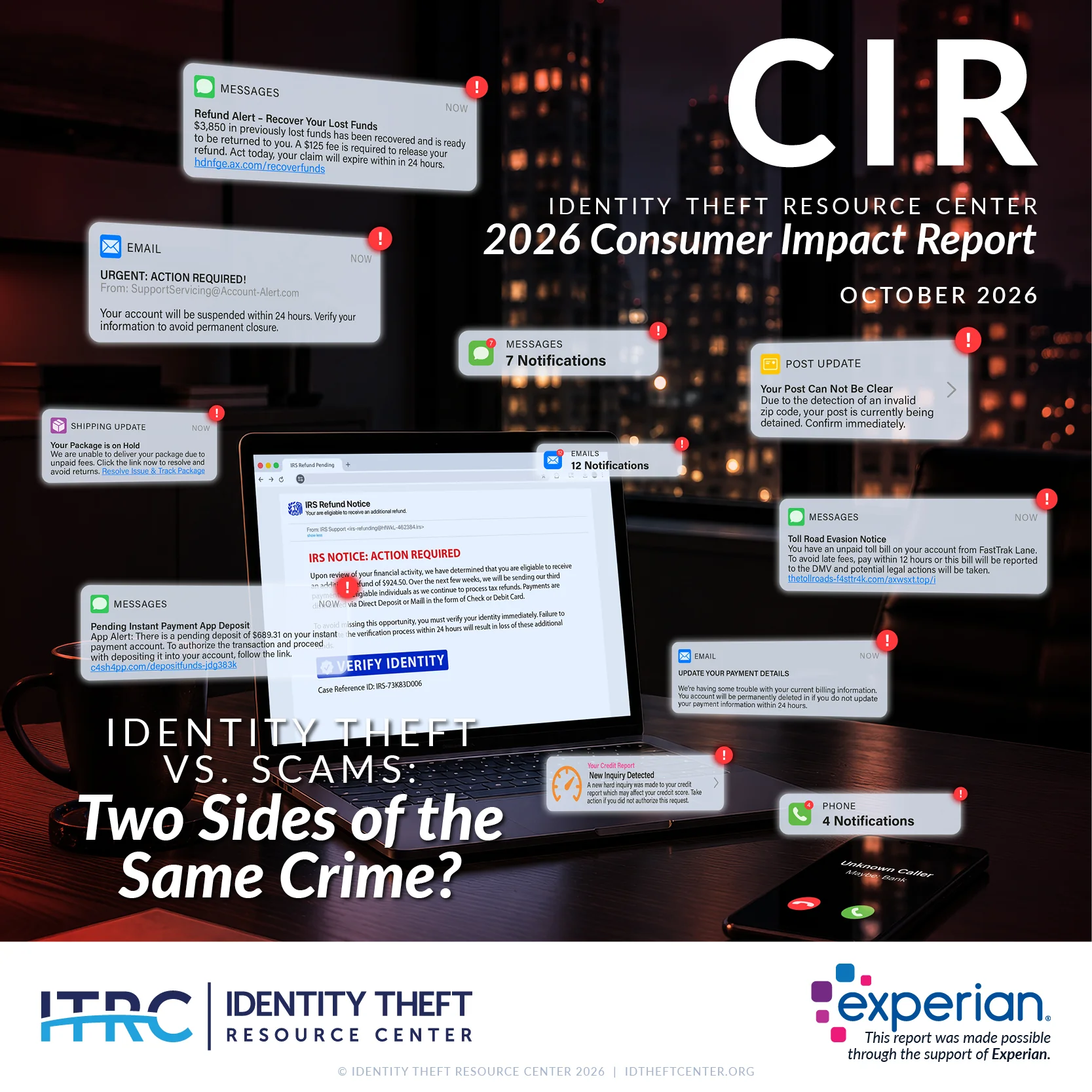
SAN DIEGO, Oct. 28, 2026 /PRNewswire/ -- Scams are having a major impact on people's lives in the United States, triggering acute emotional crises, life-changing financial losses and secondary revictimization, according to findings from the Identity Theft Resource Center's® 2026 Consumer Impact Report, released today and supported by Experian. The report goes beyond the basic financial implications of identity crimes and explores the lost opportunities as well as the emotional and physical impacts experienced by victims resulting from the crimes.

For the 2026 Consumer Impact Report, the ITRC, a nationally recognized nonprofit organization established to prevent and reduce the impact of identity theft, scams and fraud, surveyed 197 victims who contacted the ITRC and 1,111 general consumers (including 798 self-reported identity theft, fraud and scam victims). The findings reveal that scams function as an acute trauma characterized by manipulation and internalized guilt, while traditional identity theft operates as a chronic burden defined by institutional red tape, externalized anger and prolonged remediation timelines.

Download the ITRC 2026 Consumer Impact Report

Across 14 core financial, physical and emotional impact indicators, general consumer scam victims experienced an average adverse impact rate of 33.7%, compared to 17.3% among traditional identity theft victims. The mental health toll is especially stark: 80.5% of general consumer scam victims reported experiencing suicidal ideation following the crime, compared to 24.5% of traditional identity theft victims. In contrast, suicidal ideation dropped to 15.1% among scam victims who sought free assistance from the ITRC, demonstrating that specialized intervention alters outcomes. (If you or someone you know is experiencing overwhelming emotional distress or thoughts of suicide, call or text the Suicide and Crisis Lifeline at 988.)

"This year's survey makes it clear that scam victimization and traditional identity crimes are not two versions of the same injury," said Eva Velasquez, CEO of the ITRC. "Scams act as an acute trauma, while traditional identity theft acts as a chronic burden. Support for victims is as crucial now as it has ever been. Behind these numbers are real people enduring devastating trauma and shame. Lawmakers, companies and technology leaders cannot treat this as business as usual. We must replace institutional indifference with compassion, urgent action and a unified defense that meets this crisis head-on. And when prevention fails, recovery services must be available to victims."

"This report is a powerful reminder that identity theft and scams can erode trust and leave lasting emotional consequences that extend beyond financial loss," said Kathleen Peters, Chief Innovation Officer, Identity and Fraud at Experian. "Protecting consumers requires collaboration across the ecosystem and a shared commitment to helping victims recover from fraud with confidence."

Other key findings from the ITRC 2026 Consumer Impact Report include:

- Acute Shame vs. Externalized Anger: Since scammers weaponize social engineering, 87% of general consumer scam victims agreed the crime was partly their own fault. Self-blame remained high even among ITRC scam victims at 42.4%, compared to just 15.8% of traditional identity theft victims. Conversely, traditional identity theft was associated with higher rates of externalized anger among both general consumers (50.3% vs. 26.7%) and ITRC victims (76% vs. 65.6%).

- The "Revictimization Spiral" and the Power of Intervention: Nearly 9 in 10 (87.9%) general consumer scam victims asked an organization for help and never received a response, and 67.2% felt blamed by institutions they contacted. Without guidance, 78.9% were targeted again by secondary "recovery scammers" charging upfront fees to recover lost funds. In contrast, 52.8% of ITRC victims were ignored by organizations, and just 6.5% of ITRC scam victims paid a secondary recovery scammer.

- Catastrophic Financial Fallout for Working-Age Professionals: Countering assumptions that fraud primarily strikes older adults, 86.2% of general consumer scam victims â and 92.9% of those experiencing suicidal ideation â were working-age adults between 30 and 60. Furthermore, 77.9% lived in households earning $100,000 or more annually, with 29.5% losing $100,000 or more that was never recovered.

- Traditional Identity Crime Injures Through Duration: While scams hit fast, traditional identity theft grinds victims down over time. Among ITRC victims, nearly two-thirds (64%) of traditional identity crime victims spent more than 40 hours attempting to resolve the crime, compared to 47.3% of scam victims. More than 62% (62.7%) of traditional identity crime cases remained unresolved at the time of the survey, compared to 45.2% of scam cases.

- Severe Career and Workplace Disruption: The fallout extends directly into victims' livelihoods, with general consumer scam victims losing their jobs as a direct consequence of the crime at nearly four times the rate of traditional identity theft victims (12.3% vs. 3.1%). Furthermore, more than one in five (20.8%) general consumer scam victims lost out on a job or promotion (compared to 4.3% of traditional identity theft victims), and 29.9% experienced strained relationships with supervisors. Among ITRC victims, job losses hit both groups hard, with 10.9% of scam victims and 12.5% of traditional identity crime victims reporting job loss.

Consumers and victims of identity theft, fraud and scams can receive free support and guidance from a knowledgeable ITRC advisor by calling or texting 888.400.5530 or visiting idtheftcenter.org to live chat.

About the ITRC 2026 Consumer Impact Report

In August and September 2026, the ITRC surveyed two distinct cohorts regarding their experiences with attempted and successful identity theft, scams and fraud:

- ITRC Victim Cohort (N = 197): A random sample of identity crime victims who contacted the ITRC for assistance during the previous 12 months (55.6% scam victims; 27.8% non-scam traditional identity crime victims; 16.7% unsure).

- General Consumer Cohort (N = 1,111): A sample of U.S. adults who may or may not have been victims of identity theft, scams or fraud. Overall, 71.8% (798) reported experiencing an identity crime or scam in their lifetime (45.7% within the past 12 months; 26.1% more than 12 months ago), and 77.0% (578 of 751) of impacted respondents identified as scam victims.

Both groups completed a similar, though not identical, online survey. Approximately half of the survey questions align directly with previous annual questionnaires to preserve multi-year trendlines, while the remaining half ask deeper, targeted questions about identity-related scams.

About the Identity Theft Resource Center

Founded in 1999, the Identity Theft Resource Center®â¯is aâ¯nationalâ¯nonprofit organization established to prevent and reduce the impact of identity theft, scams and fraud. Through public and private support, the ITRC provides no-cost victim assistance and consumer education throughâ¯its websiteâ¯live chat,â¯idtheftcenter.org, andâ¯toll-free phone numberâ¯888.400.5530.â¯The ITRC alsoâ¯equipsâ¯consumers and businessesâ¯withâ¯information about recent data breaches through itsâ¯data breach tracking tool, Breach Alert.â¯The ITRC offers help to specificâ¯populations, includingâ¯theâ¯deaf/hearing impaired andâ¯blind/vision impairedâ¯communities.â¯

About Experian

Experian is a global data and technology company, powering opportunities for people and businesses around the world. We help to redefine lending practices, uncover and prevent fraud, simplify healthcare, deliver digital marketing solutions and gain deeper insights into the automotive market, all using our unique combination of data, analytics and software. We also assist millions of people to realize their financial goals and help them to save time and money.

We operate across a range of markets, from financial services to healthcare, automotive, agrifinance, insurance and many more industry segments.

We invest in talented people and new advanced technologies to unlock the power of data and to innovate. A FTSE 100 Index company listed on the London Stock Exchange (EXPN), we have a team of 25,200 people across 33 countries. Our corporate headquarters are in Dublin, Ireland. Learn more at experianplc.com.

SOURCE Identity Theft Resource Center

Share this article

Class (B2B/B2C)
B2C
Ingest Status
Need Review
Dedupe hash
prn_302917224
Press Eligible
Yes
Press Eligible Reason
QA FAIL (need review): The 15.8% self-blame figure for traditional identity theft victims is incorrectly attributed to the ITRC group; the source does not specify that 15.8% applies to ITRC traditional identity theft victims.
Source Name
Identity Theft Resource Center 2026 Consumer Impact Report
Original Summary

<p>General consumer scam victims report thoughts of suicide at more than triple the rate of traditional identity theft victims (80.5% vs. 24.5%). SAN DIEGO, Oct. 28, 2026 /PRNewswire/ -- Scams are having a major impact on people's lives in the United States, triggering acute emotional...</p>

Image URL
https://mmx.prnewswire.com/media/MS2018616/ITRC-2026-Consumer-Impact-Report.jpg?id=OA3033677&p=facebook
Generated Article_json
{"target_audience": "b2c", "is_medical": false, "ai_generated_title": "Scams Hit Harder Than Identity Theft, Major U.S. Survey Finds", "body_html": "<p><strong>SAN DIEGO -- [CURRENT_DATE] --</strong> Among general consumers in the U.S., 80.5% of scam victims report suicidal thoughts after the crime, versus 24.5% of traditional identity theft victims. That is one of the findings in the Identity Theft Resource Center's 2026 Consumer Impact Report, supported by Experian. Among scam victims who sought free help from the ITRC, the figure fell to 15.1%.</p><p>If you or someone you know is in overwhelming emotional distress, call or text the Suicide and Crisis Lifeline at 988.</p><h5>Scams land as acute trauma, identity theft as a chronic burden</h5><p>The ITRC surveyed 197 victims who had contacted the organization and 1,111 general consumers, 798 of whom reported experiencing identity theft, fraud or a scam. Across 14 financial, physical and emotional indicators, scam victims in the general consumer group averaged a 33.7% adverse impact rate, against 17.3% for traditional identity theft victims.</p><p>ITRC CEO Eva Velasquez said, \"Scams act as an acute trauma, while traditional identity theft acts as a chronic burden.\"</p><h5>Nearly 9 in 10 scam victims say they are partly to blame</h5><p>Of the general consumer scam victims, 87% agreed the crime was partly their own fault. Among traditional identity theft victims in the ITRC group, 15.8% said the same, versus 42.4% of ITRC scam victims. Identity theft victims showed more anger: 50.3% of general consumers, versus 26.7% of scam victims.</p><p>Of the general consumer scam victims, 87.9% asked an organization for help and never got a response, and 67.2% felt blamed by institutions they contacted. Without guidance, 78.9% were targeted again by \"recovery scammers\" charging upfront fees. Among ITRC scam victims, 6.5% paid such a scammer.</p><h5>Working-age professionals with high incomes took the biggest losses</h5><p>The data counters the assumption that fraud mainly hits older adults. Among general consumer scam victims, 86.2% were between 30 and 60, as were 92.9% of those who reported suicidal thoughts. In addition, 77.9% lived in households earning $100,000 or more a year, and 29.5% lost $100,000 or more that was never recovered.</p><h5>Scam victims lose jobs at nearly four times the rate of identity theft victims</h5><p>Among general consumers, 12.3% of scam victims lost their jobs as a direct result, against 3.1% of identity theft victims. Another 20.8% of scam victims missed out on a job or promotion (4.3% for identity theft), and 29.9% reported strained relationships with supervisors.</p><h5>Identity theft drags on, with 62.7% of cases unresolved</h5><p>Among ITRC victims, 64% of traditional identity crime victims spent more than 40 hours trying to resolve the crime, compared with 47.3% of scam victims. At the time of the survey, 62.7% of traditional identity crime cases were unresolved, against 45.2% of scam cases.</p><p>The survey ran in August and September 2026.</p>", "meta_description": "A new ITRC report finds 80.5% of general consumer scam victims report suicidal thoughts versus 24.5% for identity theft victims; free help cut it to 15.1%.", "seo_keywords": "scam victims, identity theft, ITRC, Consumer Impact Report, suicidal ideation, recovery scammers, fraud, Experian, Eva Velasquez", "companies": ["Identity Theft Resource Center", "Experian"], "topics": ["Money & Finance", "Public Health"], "markets": ["United States"], "locations": ["San Diego"], "products": ["ITRC 2026 Consumer Impact Report"], "cta_text": "Victims of identity theft, fraud and scams can get free guidance from an ITRC advisor by phone, text or live chat.", "learn_more": "", "fact_check": {"accuracy_score": 100, "legal_risk": "low", "corrections_made": [], "recommendation": "publish"}}
Content Hash (SHA-256, erste 32 hex)
fcfc18b4310f9ad02ad12a3703f4cea8
EVERSANA Expands Global Commercialization and AI-Powered HEOR Capabilities with Acquisition of U.K.-based Estima Scientific
Image File
Original HTML

Acquisition builds on EVERSANA's commitment to investing in transformative, technology-first companies to modernize commercialization.

CHICAGO and LONDON, Oct. 28, 2026 /PRNewswire/ -- EVERSANA®, a global provider of modern, AI-powered commercial services for the biopharmaceutical industry, today announced the acquisition of Estima Scientific, an innovative, London-based health economics and outcomes research (HEOR) technology and services company.

A leader in artificial intelligence (AI) and automation to accelerate elements of traditional HEOR processes, Estima Scientific will integrate its specialty consulting expertise and proprietary software into EVERSANA's market access and value & evidence solutions to help pharmaceutical companies demonstrate a drug's clinical and economic value more efficiently and transparently to payers. Estima has developed a variety of web-based, generative-AI applications that integrate proprietary code, bringing efficiency and accuracy across economic modeling, systematic literature reviews (SLR), network meta-analysis (NMA), and more.

Estima Scientific builds on EVERSANA's continued commitment to AI-enabled, technology-first offerings to drive accelerated commercialization for customers. EVERSANA's AI Agency platform, launched in 2025 and expanded in August 2026, serves as the foundation for expanding the company's AI solutions.

"Today more than ever, the pharmaceutical industry must embrace AI to transform commercialization," said Mark Thierer, Chief Executive Officer, EVERSANA. "As we scale to serve global clients, adding best-in-class companies that embrace a technology first mindset is critical to our success. The Estima Scientific team checks every box and will seamlessly fit into our organization."

Estima Scientific's team, including its co-founders Tim Reason and Andy Gimblett, will join EVERSANA's global workforce, ensuring continuity for existing clients while bringing expanded capabilities across EVERSANA. The company's solutions have been validated by large, top-tier pharmaceutical customers and leading health technology assessment (HTA) bodies, including the National Institute for Health and Care Excellence (NICE) in the United Kingdom.

"Joining EVERSANA is an incredible milestone for Estima Scientific and a validation of the specialized technology and consulting expertise our team has built," said Tim Reason, co-founder of Estima Scientific. "The company's global scale and end-to-end commercial infrastructure will allow us to accelerate how pharmaceutical companies build and communicate evidence-based value to payers, helping patients gain faster access to life-changing therapies."

Estima was founded in 2019 by Tim Reason and Andy Gimblett, following long careers in HEOR and software development. The company has built a strong base of global clients that rely on its proprietary AI-powered technology to support research studies for leading global pharmaceutical brands.

Financial details of the acquisition are not disclosed. Bourne Partners acted as exclusive financial adviser to Estima Scientific, and Wedlake Bell acted as legal adviser.

About EVERSANA®

EVERSANA® is an independent provider of modern commercialization services to the biopharmaceutical industry. The company's integrated solutions are rooted in the patient experience and span all stages of the product life cycle to deliver long-term, sustainable value for patients, prescribers, channel partners and payers. The company serves more than 650 organizations, including innovative start-ups and established pharmaceutical companies, to advance life sciences solutions for a healthier world. To learn more about EVERSANA, visit eversana.com or connect through LinkedIn and X.

About Estima Scientific

Estima Scientific is a London-based health economics and outcomes research (HEOR) technology and services company. By combining specialist consulting with proprietary, AI-powered software, Estima Scientific helps pharmaceutical and biotechnology companies demonstrate therapeutic value to global payers and health technology assessment bodies efficiently. To learn more, visit estima-sci.com.

Media Contact

Matt Braun

Vice President, Corporate Communications

[email protected]

SOURCE EVERSANA

Share this article

Class (B2B/B2C)
B2B
Ingest Status
Rewritten
Dedupe hash
prn_302921421
Press Eligible
Yes
Press Eligible Reason
Pharmaceutical commercialization company acquisition expands AI-powered HEOR capabilities.
Source Name
Unknown Company
Original Summary

<p>Acquisition builds on EVERSANA's commitment to investing in transformative, technology-first companies to modernize commercialization. CHICAGO and LONDON, Oct. 28, 2026 /PRNewswire/ -- EVERSANA®, a global provider of modern, AI-powered commercial services for the biopharmaceutical...</p>

Image URL
https://mmx.prnewswire.com/media/MS2021274/estima_LOGO_turquoise.jpg?id=OA3040653&p=facebook
Content Hash (SHA-256, erste 32 hex)
362c630085b60ac9bbba2583fcf9b771
Coface Risk Review: Geopolitische Krisen treiben Preise und Zinsen / Länderrisiko für sieben Volkswirtschaften angepasst
Image File
Original HTML

Coface Risk Review: Geopolitische Krisen treiben Preise und Zinsen

Länderrisiko für sieben Volkswirtschaften angepasst

Mainz (ots)

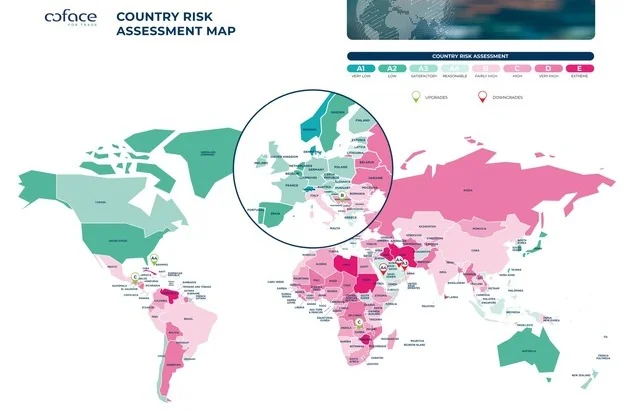
Die geopolitischen Spannungen haben sich im Verlauf des Sommers deutlich verschärft und bremsen zunehmend die Weltwirtschaft. Steigende Energie- und Rohstoffpreise, anhaltender Inflationsdruck sowie restriktivere Finanzierungsbedingungen belasten Unternehmen und Staaten gleichermaßen. Der internationale Kreditversicherer Coface erwartet, dass allein der Nahostkonflikt das globale Wachstum in den Jahren 2026 und 2027 um insgesamt 0,5 Prozentpunkte mindern wird. Vor diesem Hintergrund hat Coface die Risikobewertung für drei Golfstaaten herabgestuft.

Zwischen Inflationsdruck und steigenden Zinsen

Die Wiederaufnahme der Kampfhandlungen zwischen dem Iran und den USA sowie die weitere Eskalation des Konflikts zwischen Russland und der Ukraine haben die globalen Lieferketten erheblich belastet und die Rohstoffpreise in die Höhe getrieben. Trotz einer deutlichen Erholung der Ölexporte durch die Straße von Hormus und der Umleitung von Handelsströmen sind die Preise für Energierohstoffe massiv gestiegen. "Der Ölpreis hat um mehr als 50 Prozent zugelegt, während sich die Erdgaspreise nahezu verdoppelt haben. Auch Industriemetalle bleiben teuer", sagt Coface-Volkswirt Markus Kuger. Bei Agrarrohstoffen zeigt sich ein ähnliches Bild: Nach Angriffen auf Häfen am Schwarzen Meer und Hitzewellen in Europa sind die Preise deutlich gestiegen. So lag der Weizenpreis stellenweise rund 40 Prozent über dem Vorjahresniveau.

Die stark gestiegenen Rohstoff- und Energiepreise haben die Sorge vor einem erneuten Inflationsschub verstärkt. Vor diesem Hintergrund halten die Zentralbanken an ihrem restriktiven geldpolitischen Kurs fest. Sowohl die US-Notenbank Federal Reserve als auch die Europäische Zentralbank erhöhten ihre Leitzinsen zuletzt um jeweils 25 Basispunkte. Dadurch verteuerten sich die Finanzierungskosten für Unternehmen und Staaten weltweit weiter.

"Trotz dieser Belastungsfaktoren zeigt sich die Weltwirtschaft bislang bemerkenswert widerstandsfähig. Vor allem Investitionen in Künstliche Intelligenz sowie die positive Entwicklung an den Finanzmärkten stützen die Konjunktur", erklärt Markus Kuger. Dennoch hinterlässt der Nahostkonflikt deutliche Spuren: Coface beziffert den Wachstumsverlust für die Weltwirtschaft in den Jahren 2026 und 2027 auf insgesamt 0,5 Prozentpunkte. Für 2026 rechnet der Kreditversicherer weiterhin mit einem weltweiten Wachstum von 2,5 Prozent nach 2,8 Prozent im Jahr 2025. Für 2027 wird eine Stabilisierung bei 2,6 Prozent erwartet.

Weltwirtschaft entwickelt sich mit unterschiedlichem Tempo

Trotz eines insgesamt robusten globalen Wachstums fallen die Auswirkungen der geopolitischen Spannungen und des Inflationsdrucks regional sehr unterschiedlich aus. In den USA zeigt sich die Wirtschaft weiterhin widerstandsfähig. Gestützt durch den privaten Konsum, Investitionen in KI-Technologien und einen Arbeitsmarkt nahe der Vollbeschäftigung bleibt das Wachstum robust. Europa entwickelt sich ebenfalls etwas besser als erwartet. Vor allem die deutsche und die spanische Wirtschaft erweisen sich als stabil, während die angespannte Haushaltslage Frankreichs weiterhin Anlass zur Sorge gibt.

In Asien bleibt das Bild gemischt. Vietnam und Indien profitieren von umfangreichen Infrastrukturinvestitionen und der hohen Nachfrage nach KI-bezogenen Technologien. Gleichzeitig schwächt sich die Binnennachfrage in China weiter ab. Auch Thailand und die Philippinen spüren die Belastungen durch steigende Energiepreise und einen nachlassenden Konsum.

In Afrika und Lateinamerika bleibt die Inflation das zentrale Risiko. Höhere Energie- und Lebensmittelpreise treffen Wirtschaft und Verbraucher gleichermaßen. Die Auswirkungen von El Niño verschärfen den Kostendruck zusätzlich und engen den Handlungsspielraum vieler Staaten weiter ein.

Länderrisiko: Drei Herabstufungen im Nahen Osten

Besonders stark wirken sich die geopolitischen Spannungen auf die Golfstaaten aus. Das Länderrisiko beschreibt das allgemeine Umfeld eines Landes, um lokale Kreditrisiken zu bewerten und einordnen zu können. Vor diesem Hintergrund hat Coface die Länderrisikobewertung Saudi-Arabiens von A3 auf A4 herabgestuft. Ausschlaggebend sind die hohe Anfälligkeit der Energieinfrastruktur sowie Risiken entlang zentraler Exportwege. Die Vereinigten Arabischen Emirate wurden von A2 auf A3 und Katar von A3 auf A4 zurückgestuft. Beide Länder sind in hohem Maße vom Schiffsverkehr durch die Straße von Hormus abhängig und daher besonders anfällig für weitere Störungen.

Neben den Herabstufungen hat Coface auch vier Länder aufgewertet. Die Bahamas wurden von B auf A4 angehoben, gestützt durch eine robuste Tourismusbranche und solide wirtschaftliche Fundamentaldaten. El Salvador verbessert sich von D auf C, nachdem sich die makroökonomische Lage spürbar stabilisiert hat. Montenegro steigt von C auf B auf, getragen von einer positiven Entwicklung bei Tourismus und Investitionen. Sambia verbessert sich von D auf C. Ausschlaggebend sind Fortschritte bei der Haushaltskonsolidierung und eine stabilere Schuldenentwicklung.

Druck auf Agrarwirtschaft wächst

Auch die Agrar- und Ernährungswirtschaft gerät weltweit zunehmend unter Druck. Coface hat den Sektor in insgesamt sechs Ländern herabgestuft. Die Ursachen unterscheiden sich dabei von Region zu Region: Während in Frankreich, Österreich und Polen die extremen Wetterereignisse des Sommers 2026 die Landwirtschaft erheblich belasteten, wirken sich in Saudi-Arabien und den Vereinigten Arabischen Emiraten vor allem die hohe Abhängigkeit von Lebensmittelimporten sowie steigende Beschaffungskosten negativ aus. In Argentinien sieht sich die Branche weiterhin mit einem schwierigen Finanzierungsumfeld, mehreren Unternehmensinsolvenzen, hohen Kosten und rückläufigen Margen konfrontiert.

Das ausführliche Risk Review und sämtliche Risikobewertungen auf einen Blick: www.coface.de

Pressekontakt:

Coface, Niederlassung in Deutschland

Sebastian Knierim - Pressesprecher -

Tel. 06131/323-335

sebastian.knierim@coface.com

www.coface.de

Original-Content von: Coface Deutschland, übermittelt durch news aktuell

Class (B2B/B2C)
B2B
Ingest Status
Rewritten
Dedupe hash
pp_6379446
Press Eligible
Yes
Press Eligible Reason
Manuelle Prüfung nötig. Risiko: MEDIUM. Flags: ['numbers']. Stichprobe: False
Source Name
Coface Risk Review
Original Summary

Coface Deutschland: Mainz (ots) - Die geopolitischen Spannungen haben sich im Verlauf des Sommers deutlich verschärft und bremsen zunehmend die Weltwirtschaft. Steigende Energie- und Rohstoffpreise, anhaltender Inflationsdruck sowie restriktivere ...

Image URL
https://cache.pressmailing.net/thumbnail/highlight/afff4299-a456-47c2-b97a-95b07c1106da/2026-10_Coface%20Country%20Risk%20Map.jpg?crop=0,13,630,412
Content Hash (SHA-256, erste 32 hex)
a254ce85e4eec5e0c0c5027780363dca
Zuschuss Klimabilanz startet in die nächste Förderrunde
Image File
Original HTML

Landwirtschaftliche Rentenbank

Zuschuss Klimabilanz startet in die nächste Förderrunde

Frankfurt am Main (ots)

- Interessenbekundung vom 30. Oktober bis zum 27. November 2026 möglich

- Bis zu 1.000 Euro Zuschuss für die Erstellung einer Klimabilanz

- Bereits mehr als 1.500 Förderanträge seit Programmstart bewilligt

Die Landwirtschaftliche Rentenbank startet eine neue Förderrunde für ihren "Zuschuss Klimabilanz". Vom 30. Oktober (12:00 Uhr) bis zum 27. November 2026 (12:00 Uhr) können Unternehmen der landwirtschaftlichen Primärproduktion über das Förderportal der Rentenbank ihr Interesse bekunden. Gefördert werden 90 Prozent der Netto-Beratungskosten für die Erstellung einer Klimabilanz einschließlich eines Maßnahmenkatalogs, maximal 1.000 Euro pro Betrieb.

"Es ist extrem wichtig, dass wir neben Klimaanpassungsmaßnahmen weiterhin auch Maßnahmen adressieren, die die Erwärmung begrenzen. Denn wie stark die Folgen großer Hitze und anhaltender Trockenheit sind, zeigt sich dieses Jahr überdeutlich: In weiten Teilen der Südhälfte Deutschlands unterhalb einer Linie von Rheinland-Pfalz bis nach Südthüringen sind die Böden durch die Dürre nach wie vor nicht nur in den obersten 25 cm trocken, sondern bis in eine Tiefe von 1,80 m stark ausgetrocknet. Maßnahmen zur Minderung von Emissionen können Betriebe gezielt ergreifen, wenn sie eine Klimabilanz erstellen. Diese zeigt landwirtschaftlichen Betrieben, wo Emissionen reduziert und gleichzeitig Kosten gespart werden können. Diese doppelten Einsparpotenziale zu erkennen und zu nutzen - dafür legen wir mit unserem Zuschuss Klimabilanz ein Fundament", sagt Nikola Steinbock, Sprecherin des Vorstands der Rentenbank.

Das Interesse an der Klimabilanzierung wächst: Laut Rentenbank-Agrarbarometer vom Frühjahr 2026 erstellen bereits 20 Prozent der befragten Betriebe eine Klimabilanz, weitere zehn Prozent planen dies. Seit dem Start des Förderprogramms Mitte 2025 wurden mehr als 1.500 Anträge mit einem Zuschussvolumen von über 1,5 Millionen Euro bewilligt.

Auch Milchviehhalter Henrik Döhrmann aus Niedersachsen hat den Zuschuss bereits genutzt: "Die Klimabilanz zeigt uns, wo wir noch effizienter werden und Kosten sparen können. Wenn wir dadurch gleichzeitig Emissionen reduzieren, profitieren sowohl unser Betrieb als auch das Klima."

Interessenbekundung bis zum 27. November

Nach Abschluss des Interessenbekundungsverfahrens werden die Betriebe, die zur Antragstellung eingeladen werden, per Zufallsverfahren ausgewählt. Sie haben anschließend bis zum 29. Januar 2027 (12:00 Uhr) Zeit, ihren Förderantrag einzureichen. Mit der Erstellung der Klimabilanz darf erst nach Erhalt der Förderzusage begonnen werden.

Bestehende Förderzusagen bis Oktober 2027 verlängert

Für Betriebe, die bereits eine Förderzusage erhalten haben, gibt es ebenfalls eine Neuerung: Die Rentenbank hat alle Zusagen mit einem ursprünglichen Bewilligungsende am 15. November 2026 bis zum 31. Oktober 2027 verlängert. Die zugesagten Fördermittel stehen damit bis zu diesem Datum zur Verfügung. Ein gesondertes Schreiben zur Verlängerung wird nicht versandt. Die Rentenbank empfiehlt den Betrieben dennoch, die Erstellung ihrer Klimabilanz zeitnah abzuschließen und den Auszahlungsantrag möglichst frühzeitig einzureichen.

Weitere Informationen und die Möglichkeit zur Interessenbekundung unter:

https://www.rentenbank.de/zuschussprogramme/klimabilanz/

Hintergrund:

Die Landwirtschaftliche Rentenbank ist die deutsche Förderbank für die Agrarwirtschaft und den ländlichen Raum. Der Förderauftrag schließt neben der Land- und Forstwirtschaft sowie der gesamten Wertschöpfungskette Lebensmittel den Ausbau erneuerbarer Energien ebenso ein wie die Förderung der Bioökonomie. Besonderes Gewicht liegt auf der Innovationsförderung. Sie reicht von der Forschung und Entwicklung an Hochschulen über die Frühfinanzierung agrarnaher Start-ups bis hin zur Markt- und Praxiseinführung neuer Technologien und Produkte. Die Förderinstrumente der Rentenbank sind Zuschüsse, Nachrangdarlehen und Programmkredite. Die Programmkredite werden wettbewerbsneutral über die Hausbanken der Endkreditnehmer vergeben. Die Rentenbank refinanziert Banken, Sparkassen und Gebietskörperschaften mit Bezug zum ländlichen Raum. Die Bank ist eine bundesunmittelbare Anstalt des öffentlichen Rechts, deren Grundkapital von der Land- und Forstwirtschaft der Bundesrepublik Deutschland aufgebracht wurde. Sie unterliegt dem KWG und wird von der BaFin und der Bundesbank beaufsichtigt. Die Förderbank refinanziert sich an den Finanzmärkten und gehört zu den wenigen Triple-A-Adressen Deutschlands.

Pressekontakt:

Vanessa Zaher, Tel.: 069 2107-105, E-Mail:

vanessa.zaher@rentenbank.de

Original-Content von: Landwirtschaftliche Rentenbank, übermittelt durch news aktuell

Class (B2B/B2C)
B2B
Ingest Status
Rewritten
Dedupe hash
pp_6379464
Press Eligible
Yes
Press Eligible Reason
Manuelle Prüfung nötig. Risiko: MEDIUM. Flags: ['numbers']. Stichprobe: False
Source Name
Unknown Company
Original Summary

Landwirtschaftliche Rentenbank: Frankfurt am Main (ots) - - Interessenbekundung vom 30. Oktober bis zum 27. November 2026 möglich - Bis zu 1.000 Euro Zuschuss für die Erstellung einer Klimabilanz - Bereits mehr als 1.500 Förderanträge seit Programmstart bewilligt Die ...

Image URL
https://cache.pressmailing.net/thumbnail/highlight/0ce89b4f-3160-403c-a651-db43404f19d1/AdobeStock_986959622.jpeg?crop=52,0,630,412
Content Hash (SHA-256, erste 32 hex)
b5fa3a4bc090dcb44d3d60274ab46040
MaxSolar schließt Corporate PPA mit SAP: Erneuerbarer Strom aus zwei deutschen Solarparks
Image File
Original HTML

MaxSolar schließt Corporate PPA mit SAP: Erneuerbarer Strom aus zwei deutschen Solarparks

Traunstein (ots)

Der zehnjährige Vertrag umfasst Strom aus zwei Solarparks von MaxSolar mit einer installierten Gesamtleistung von 36,5 MWp. Mit der Inbetriebnahme des Solarparks Pahlen liefern nun beide Projekte erneuerbaren Strom im Rahmen des PPA.

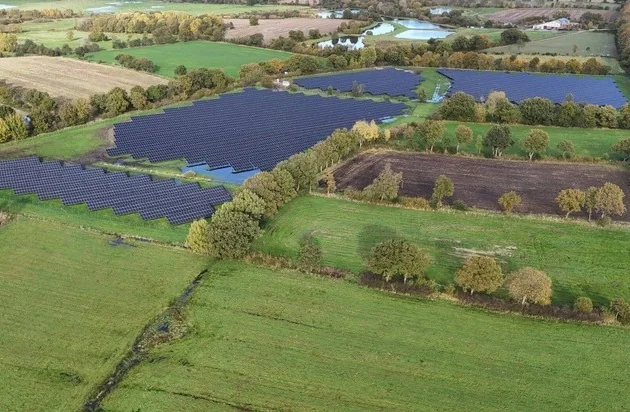
Der Infrastrukturentwickler MaxSolar GmbH gibt den Abschluss eines langfristigen Corporate Power Purchase Agreement (PPA) mit der SAP SE zur Lieferung erneuerbaren Stroms bekannt. Der Vertrag umfasst Strom aus zwei Freiflächen-Solarparks von MaxSolar: Memmendorf in Sachsen mit 25 MWp und Pahlen in Schleswig-Holstein mit rund 11,5 MWp.

Zusammen verfügen die Anlagen über eine installierte Leistung von 36,5 MWp. Mit der Inbetriebnahme des Solarparks Pahlen liefern nun beide Projekte im Rahmen des zehnjährigen Vertrags erneuerbaren Strom. Der Solarpark Memmendorf speist seit April 2026 Strom ein, Pahlen wurde im August 2026 in Betrieb genommen. Der Vertrag sieht eine physische Stromlieferung nach dem Pay-as-Nominated-Modell vor. Für den gelieferten Strom werden Herkunftsnachweise bereitgestellt. Die Stromlieferung aus beiden Solarparks markiert einen wichtigen Meilenstein in der Zusammenarbeit zwischen MaxSolar und SAP.

Erneuerbarer Strom als Grundlage der digitalen Wirtschaft

Künstliche Intelligenz, Cloud-Dienste und der Ausbau von Rechenzentren verändern den Strombedarf der digitalen Wirtschaft in Europa. Für Technologie- und Softwareunternehmen wird der verlässliche Zugang zu preislich wettbewerbsfähigem erneuerbarem Strom zu einem immer wichtigeren Faktor bei der langfristigen Energiebeschaffung und Infrastrukturplanung. Corporate PPAs verbinden beide Seiten: Sie ermöglichen Unternehmen einen langfristigen Zugang zu erneuerbarem Strom und schaffen zugleich einen verlässlichen Erlösrahmen für Erneuerbare-Energien-Projekte. "Der verlässliche Zugang zu bezahlbarem, grünem Strom wird zu einem entscheidenden Infrastrukturthema für Europas digitale Wirtschaft - insbesondere für technologieorientierte Unternehmen. Da nun Strom aus beiden Solarparks fließt, zeigt unsere Vereinbarung mit SAP, wie langfristige Partnerschaften Erzeugungskapazitäten aus erneuerbaren Energien mit dauerhaftem Unternehmensbedarf verbinden können", sagt Christoph Strasser, CEO der MaxSolar GmbH.

Energieinfrastruktur für die Rechenzentren von morgen

Über die Erzeugung erneuerbarer Energie hinaus verfolgt MaxSolar das Ziel, integrierte Energieinfrastruktur für Rechenzentren und andere energieintensive Technologiestandorte zu entwickeln und bereitzustellen. Je nach den Anforderungen des jeweiligen Standorts können diese Konzepte erneuerbare Energieerzeugung, Netzanbindungsinfrastruktur, Batteriespeicher und eine strukturierte langfristige Strombeschaffung miteinander verbinden.

Da der Zugang zu Netzkapazitäten und eine verlässliche Stromversorgung zunehmend darüber entscheiden, ob neue digitale Infrastrukturprojekte realisierbar sind, will MaxSolar Erzeugung, Flexibilität, Netzinfrastruktur und Energiebeschaffung in abgestimmten Entwicklungskonzepten zusammenführen. Dieser Ansatz baut auf den umfassenderen Aktivitäten des Unternehmens in den Bereichen erneuerbare Energien, Speicher, Wärme und Mobilitätsinfrastruktur auf.

"Der Beginn der physischen Stromlieferung aus beiden Projekten ist ein wichtiger Meilenstein. Er zeigt, was ein Corporate PPA letztlich leisten soll: erneuerbare Stromerzeugung mit dem tatsächlichen Bedarf von Unternehmen zu verbinden. Zudem spiegelt er die wachsende Nachfrage der Technologiebranche nach nachhaltigen und wirtschaftlich attraktiven Energielösungen wider", sagt Anwar Darwich, Commercial Director bei MaxSolar.

Mit dem Corporate PPA mit SAP baut MaxSolar seine Aktivitäten in der langfristigen Versorgung von Unternehmenskunden mit erneuerbarem Strom weiter aus. Die Vereinbarung zeigt, wie erneuerbare Stromerzeugung und eine strukturierte Energiebeschaffung für Unternehmen zusammenwirken können, um eine verlässliche Energieversorgung und langfristige Wettbewerbsfähigkeit zu unterstützen.

Über die MaxSolar GmbH

Als ganzheitlicher Infrastrukturentwickler und Betreiber decken wir die gesamte Wertschöpfungskette der neuen Energiewirtschaft ab. Mit Erneuerbaren Energien, flexiblen Speicherlösungen und regionalen Wärme- und Mobilitätskonzepten stärken wir die Resilienz der Versorgung und Wettbewerbsfähigkeit von Industrie-, Techunternehmen sowie Kommunen. Zudem bietet MaxSolar Power Purchase Agreements (PPAs) für eine langfristige und planbare Versorgung mit grünem Strom. Mit einer Projektpipeline von 6,1 Gigawatt und sechs Standorten in Deutschland ist MaxSolar sowohl regional als auch national aktiv. www.maxsolar.com

Pressekontakt:

Anastasia Segovia Astorga

Head of Energy Policy & Corporate Communications

MaxSolar GmbH

Telefon: 0151 18938015

Mail: anastasia.segovia(at)maxsolar.de

Original-Content von: MaxSolar GmbH, übermittelt durch news aktuell

Class (B2B/B2C)
B2B
Ingest Status
Rewritten
Dedupe hash
pp_6379466
Press Eligible
Yes
Press Eligible Reason
Manuelle Prüfung nötig. Risiko: MEDIUM. Flags: ['numbers']. Stichprobe: False
Source Name
MaxSolar schließt Corporate PPA mit SAP
Original Summary

MaxSolar GmbH: Traunstein (ots) - Der zehnjährige Vertrag umfasst Strom aus zwei Solarparks von MaxSolar mit einer installierten Gesamtleistung von 36,5 MWp. Mit der Inbetriebnahme des Solarparks Pahlen liefern nun beide Projekte erneuerbaren Strom im Rahmen des ...

Image URL
https://cache.pressmailing.net/thumbnail/highlight/cadf0f1e-5348-4ba4-b576-23b584048a67/Freifl%C3%A4chenanlage_Pa~_MaxSolar%20GmbH.jpeg?crop=5,0,630,412
Content Hash (SHA-256, erste 32 hex)
d30e1adef48bce39ab0af49f621a8361
DERMALOG stärkt biometrische Sicherheit durch unabhängige PAD-Validierungen für Gesichts- und Fingerabdruckerkennung
Image File
Original HTML

DERMALOG Identification Systems GmbH

DERMALOG stärkt biometrische Sicherheit durch unabhängige PAD-Validierungen für Gesichts- und Fingerabdruckerkennung

Hamburg (ots)

Unabhängige Sicherheitsprüfungen von Fime belegen die fortschrittlichen Anti-Spoofing-Funktionen von DERMALOG: Die Gesichts- und Fingerabdrucktechnologien haben alle 1.500 getesteten Präsentationsangriffe erkannt.

Die DERMALOG Identification Systems GmbH hat einen weiteren Meilenstein in der biometrischen Sicherheit erreicht. Die Gesichtserkennungstechnologie und der Fingerabdruck-Scanner TF60 des Unternehmens haben unabhängige Prüfungen zur Presentation Attack Detection (PAD) erfolgreich abgeschlossen. Durchgeführt wurden diese von Fime, einem international anerkannten Prüf- und Zertifizierungsdienstleister. Über beide Prüfungen hinweg erkannten die DERMALOG-Technologien alle 1.500 getesteten Präsentationsangriffe.

Angesichts der wachsenden Bedeutung biometrischer Lösungen für digitale Identitäten, Finanzdienstleistungen und Grenzsicherheit ist der Schutz vor betrügerischen Authentifizierungsversuchen entscheidend. Die Erkennung von Präsentationsangriffen hilft, echte Nutzer von Täuschungsversuchen mithilfe von Fotos, Videos, Gesichtsmasken oder künstlichen Fingerabdrücken zu unterscheiden.

Die unabhängigen Prüfungen gemäß der Normenreihe ISO/IEC 30107 bestätigen, dass beide Technologien die Level-2-Anforderungen von Fime an die Presentation Attack Detection erfüllen. Beide erzielten eine Attack Presentation Classification Error Rate (APCER) von 0,00 %. Besonders hervorzuheben ist, dass DERMALOGs Software zur Lebenderkennung von Gesichtern zudem eine Bona Fide Presentation Classification Error Rate (BPCER) von 0,00 % erreichte. Bei der PAD-Prüfung der Gesichtserkennung wurden somit nicht nur sämtliche getesteten Angriffe, sondern auch alle echten Nutzer korrekt als solche erkannt. Diese Ergebnisse unterstreichen die außergewöhnliche Kombination aus hoher Sicherheit und reibungsloser Nutzerauthentifizierung unter den geprüften Bedingungen.

"Vertrauen ist die Grundlage jeder sicheren digitalen Identität", sagt Günther Mull, CEO von DERMALOG. "Diese unabhängigen Ergebnisse unterstreichen unser Engagement, sich wandelnden Betrugsrisiken stets einen Schritt voraus zu sein und unseren Kunden biometrische Technologien zu bieten, auf die sie sich verlassen können."

Mit diesen erfolgreichen Validierungen stärkt DERMALOG seine Position als führender Anbieter biometrischer Identifizierungslösungen und unterstützt Organisationen weltweit dabei, digitale Identitäten zu schützen und eine sichere, komfortable Authentifizierung zu ermöglichen.

Pressekontakt:

DERMALOG Identification Systems GmbH

Sven Böckler

Media Relations

info@dermalog.com

Tel.: +49 (0)40 413 227 - 0

www.dermalog.com

Original-Content von: DERMALOG Identification Systems GmbH, übermittelt durch news aktuell

Class (B2B/B2C)
B2B
Ingest Status
Rewritten
Dedupe hash
pp_6379471
Press Eligible
Yes
Press Eligible Reason
Manuelle Prüfung nötig. Risiko: MEDIUM. Flags: ['numbers']. Stichprobe: False
Source Name
Unknown Company
Original Summary

DERMALOG Identification Systems GmbH: Hamburg (ots) - Unabhängige Sicherheitsprüfungen von Fime belegen die fortschrittlichen Anti-Spoofing-Funktionen von DERMALOG: Die Gesichts- und Fingerabdrucktechnologien haben alle 1.500 getesteten Präsentationsangriffe erkannt. Die DERMALOG ...

Image URL
https://cache.pressmailing.net/thumbnail/highlight/734aa915-c6da-42a9-8918-6e6377653b20/DERMALOGFimePAD.jpg?crop=0,4,630,412
Content Hash (SHA-256, erste 32 hex)
d257413057e12751b7f679eea7a255be
Weltklasse. Timo Boll schlägt mit seinem Promi-Team bei "Die Promi Tischtennis WM" 2026 am 12. Dezember in Düsseldorf auf
Image File
Original HTML

Weltklasse. Timo Boll schlägt mit seinem Promi-Team bei "Die Promi Tischtennis WM" 2026 am 12. Dezember in Düsseldorf auf

Unterföhring (ots)

Bo Bo Bollinger! Deutschlands erfolgreichster Tischtennis-Spieler Timo Boll kehrt an die Platte und auf die große Livebühne zurück. Zusammen mit seinem Promi-Team schlägt er bei "Die Promi Tischtennis WM" 2026 auf, um sich den Titel zu holen. Die Liveshow steigt am Samstag, 12. Dezember 2026, ab 20:15 Uhr im CASTELLO Düsseldorf. Die Partner ProSieben und der Deutsche Tischtennis-Bund e.V. bringen das Sport-Entertainment-Event auf die große TV-Bühne.

Neben dem achtmaligen Europameister und ehemaligen Weltranglisten-Ersten Timo Boll wollen die Moderatoren Panagiota Petridou und Frank Buschmann zeigen, dass sie nicht nur stark am Mikrofon sind, sondern auch den Tischtennisball erfolgreich übers Netz bringen. Insgesamt treten vier Teams an. Jedes Team besteht aus einem Tischtennis-Profi als Kapitän und drei prominenten Spieler:innen. Tickets für "Die Promi Tischtennis WM" 2026 gibt es ab sofort hier.

Timo Boll: "Fast jeder hat schon mal an einer Tischtennisplatte gestanden - ob im Schulhof, im Park oder im eigenen Keller. Ich freue mich, dass ProSieben in Form einer Entertainment-Show uns ermöglicht, ein breites Publikum für die Feinheiten dieses großartigen Sports zu begeistern."

So wird gespielt

Topspin. Unterschnitt. Schmetterball. Punkt. In der Liveshow treten vier Weltklasse-Tischtennisprofis als Team-Kapitäne mit jeweils drei Amateur-Tischtennis-Promis an und kämpfen gemeinsam gegeneinander um den "Promi Tischtennis WM"-Titel. In verschiedenen Wettbewerben - von Doppelmatches bis hin zu Trickshot-Challenges - müssen die Spieler:innen auf der großen TV-Bühne ihr Ballgefühl und ihre Tischtennis-Skills unter Beweis stellen. Trainingsvideos, Behind-the-Scenes-Einblicke und digitale Highlight-Clips auf den ProSieben-Plattformen machen die Show zum Multi-Channel-Event für alle Zielgruppen. Welcher Promi offenbart ungeahntes Tischtennis-Talent? Welcher Profi-Kapitän führt sein Team zum Sieg? "Die Promi Tischtennis WM" wird produziert von Redseven Entertainment.

"Die Promi Tischtennis WM" - am Samstag, 12. Dezember 2026, ab 20:15 Uhr live auf ProSieben oder streamen auf Joyn

Tickets für die Liveshow unter diesem Link

Pressekontakt:

Frank Wolkenhauer

Tel.: +49 (0) 89 95 07 - 1158

Frank.Wolkenhauer@ProSiebenSat1.com

Original-Content von: ProSieben, übermittelt durch news aktuell

Class (B2B/B2C)
B2C
Ingest Status
Rewritten
Dedupe hash
pp_6379476
Press Eligible
Yes
Press Eligible Reason
Announcement of a televised entertainment event by ProSieben and its production partner.
Source Name
Unknown Company
Original Summary

ProSieben: Unterföhring (ots) - Bo Bo Bollinger! Deutschlands erfolgreichster Tischtennis-Spieler Timo Boll kehrt an die Platte und auf die große Livebühne zurück. Zusammen mit seinem Promi-Team schlägt er bei "Die Promi Tischtennis WM" 2026 auf, um sich ...

Image URL
https://cache.pressmailing.net/thumbnail/highlight/d63f07b5-fb5d-4283-bf4a-d21b0fda3a64/Joyn_PromiTischTennisWM_3484010.jpg?crop=0,4,630,412
Content Hash (SHA-256, erste 32 hex)
cec45b63148649eda2aa0080beb39594
Hungerkrise im Sudan: Mehr als jedes zweite untersuchte Kind in Jebel Marra chronisch mangelernährt
Image File
Original HTML

Save the Children Deutschland e.V.

Hungerkrise im Sudan: Mehr als jedes zweite untersuchte Kind in Jebel Marra chronisch mangelernährt

Khartum/Berlin (ots)

Mehr als die Hälfte der untersuchten Kinder in Jebel Marra im sudanesischen Bundesstaat Zentral-Darfur ist laut neuen Daten von Save the Children chronisch mangelernährt. Der anhaltende Konflikt und die Folgen des Wetterphänomens El Niño verschärfen die Hungerkrise in der Region.

Die Erhebung von Save the Children unter 581 Haushalten zeigt zudem, dass 15 Prozent der Kinder von akuter Mangelernährung betroffen sind. Beide Formen der Mangelernährung können lebenslange Folgen für die Gesundheit und Entwicklung von Kindern haben.

"Wenn mehr als jedes zweite untersuchte Kind chronisch mangelernährt ist, zeigt das, wie dramatisch die Lage für Kinder geworden ist", sagt Florian Westphal, Geschäftsführer von Save the Children Deutschland, der in diesem Jahr den Sudan besuchte, um sich ein Bild von der Lage vor Ort zu machen. "Der Konflikt hat Existenzen zerstört und die lebenswichtige Versorgung für Millionen von Menschen stark eingeschränkt. Jetzt kommt die Dürre hinzu: Ernten bleiben aus, Wasser wird knapper und immer mehr Familien wissen nicht, wie sie ihre Kinder ernähren sollen."

In der einst fruchtbaren Region Jebel Marra haben Konflikt und Dürre zu einer schweren Hungerkrise beigetragen. Gleichzeitig fehlt es an ausreichender Gesundheitsversorgung, sauberem Wasser und sanitären Einrichtungen. Insgesamt waren 69 Prozent der befragten Haushalte auf unsicheres Wasser angewiesen und mehr als vier von zehn Kindern (43 Prozent) waren in den zwei Wochen vor der Erhebung krank.

"Die Ergebnisse zeigen deutlich: Kinder brauchen jetzt ausreichend Nahrung, Gesundheitsversorgung und sauberes Wasser. Dafür müssen Hilfsorganisationen die betroffenen Regionen sicher und ungehindert erreichen können", ergänzt Florian Westphal. "Doch Nothilfe allein reicht nicht: Wir müssen Kinder langfristig besser vor Hunger und Mangelernährung schützen."

Die Auswirkungen der Dürre und der Hungerkrise sind auch über Darfur hinaus zu spüren. Im sudanesischen Gedaref verlor der sieben Monate alte Hamza* kurz nach seiner Geburt seine Mutter. Als er an schwerer akuter Mangelernährung erkrankte, wurde er in einem von Save the Children unterstützten Stabilisierungszentrum behandelt. Heute ist er auf dem Weg der Besserung. "Er lächelt, spielt und wirkt wie ein ganz anderes Kind", sagt seine Großmutter Khadija*.

Der globale Hungerindikator "Integrated Food Security Phase Classification" (IPC) warnte erst kürzlich, dass Konflikte, Vertreibungen und die durch El Niño verursachte schwere Dürre das Risiko einer Hungersnot in Teilen der Regionen Darfur und Kordofan erhöhen. Insgesamt sind nach Angaben des Welternährungsprogramms mindestens 19 Millionen Menschen, also zwei von fünf Menschen im Sudan, von akuter Ernährungsunsicherheit betroffen. Rund 11 Millionen Menschen mussten infolge des anhaltenden Konfliktes aus ihrer Heimat fliehen.

Save the Children ist seit 1983 im Sudan tätig und unterstützt in 14 der 18 Bundesstaaten Kinder und Familien, die von Konflikten, Vertreibung, extremer Armut und Hunger betroffen sind. Die Kinderrechtsorganisation bietet unter anderem medizinische Versorgung, Ernährungshilfe, psychosoziale Unterstützung und Bildungsangebote an.

* Name zum Schutz geändert

Über Save the Children

Im Nachkriegsjahr 1919 gründete die britische Sozialreformerin und Kinderrechtlerin Eglantyne Jebb Save the Children, um Kinder in Deutschland und Österreich vor dem Hungertod zu retten. Heute ist die inzwischen größte unabhängige Kinderrechtsorganisation der Welt in rund 100 Ländern tätig. Save the Children setzt sich ein für Kinder in Kriegen, Konflikten und Katastrophen. Für eine Welt, die die Rechte der Kinder achtet, in der alle Kinder gesund und sicher leben sowie frei und selbstbestimmt aufwachsen und lernen können - seit über 100 Jahren.

Pressekontakt:

Save the Children Deutschland e.V.

Pressestelle

Tel.: +49 (0)30 - 27 59 59 79 - 226

Mail: presse@savethechildren.de

Original-Content von: Save the Children Deutschland e.V., übermittelt durch news aktuell

Ingest Status
Rejected
Dedupe hash
pp_6379506
Press Eligible Reason
JSON nicht lesbar - manuelle Pruefung noetig: Inhalt konnte nicht als JSON geparst werden
Source Name
Hungerkrise im Sudan
Original Summary

Save the Children Deutschland e.V.: Khartum/Berlin (ots) - Mehr als die Hälfte der untersuchten Kinder in Jebel Marra im sudanesischen Bundesstaat Zentral-Darfur ist laut neuen Daten von Save the Children chronisch mangelernährt. Der anhaltende Konflikt und die Folgen des ...

Content Hash (SHA-256, erste 32 hex)
9f7c9dbbd3e34c93f7fb635cbe3730c6
AerCap Holdings N.V. Reports Another Record Quarter for the Third Quarter 2026 and Raises 2026 Guidance
Image File
Original HTML

- GAAP net income for the third quarter of 2026 of $949 million, or $6.17 per share.

- Record adjusted net income for the third quarter of 2026 of $1,009 million, or $6.56 per share.

- Raising full-year 2026 adjusted earnings per share guidance to approximately $20.70, before any fourth quarter gains on sale.

DUBLIN, Oct. 28, 2026 /PRNewswire/ -- AerCap Holdings N.V. (NYSE: AER), the industry leader across all areas of aviation leasing, today reported record financial results for the third quarter and raised guidance for full-year 2026.

"AerCap delivered another quarter of record results and raised guidance, reflecting the power of our platform and the continued demand for high-quality aviation assets. While higher fuel prices are impacting airline profitability, the fundamental supply-demand dynamics in commercial aviation remain favorable for AerCap. Our superior long-term returns are the result of a unique platform that combines global scale, significant information advantages, deep customer relationships, and ownership of the most valuable aviation assets, particularly engines and next-generation aircraft," said Aengus Kelly, Chief Executive Officer of AerCap.

"This business is not simply about buying, leasing and selling aircraft. It is about actively managing aviation assets throughout their lifecycle, allocating capital where we see the most attractive returns, and using our market leadership and expertise to create value at every stage of ownership. This is what makes AerCap's earnings power durable and drives long-term value creation for our shareholders," concluded Mr. Kelly.

Highlights:

- GAAP return on equity of 20% and record adjusted return on equity of 22% for the third quarter of 2026.

- Cash flow from operating activities of $1.8 billion for the third quarter of 2026.

- Capex of $1.9 billion in the third quarter of 2026, including the purchase of 32 aircraft.

- $1.1 billion of asset sales in the third quarter with $353 million of gains on sale, representing an unlevered gain-on-sale margin of 45%, or 2.6x book value on an equity basis.

- Repurchased 5.3 million shares for a total of approximately $783 million during the third quarter of 2026, bringing total share repurchases to over $2.2 billion for 2026, representing approximately 10% of outstanding shares as of December 31, 2025.

- New $1 billion share repurchase program announced during the third quarter of 2026.

- Adjusted debt/equity ratio of 2.0 to 1 as of September 30, 2026; rated BBB+/Baa1 by all three major rating agencies.

Revenue and Net Spread

Basic lease rents were $1,698 million for the third quarter of 2026, compared with $1,690 million for the same period in 2025. Basic lease rents for the third quarter of 2026 reflected $23 million of lease premium amortization.

Maintenance rents and other receipts were $267 million for the third quarter of 2026, compared with $204 million for the same period in 2025. Maintenance rents for the third quarter of 2026 reflected $35 million of maintenance rights asset amortization.

Net gain on sale of assets for the third quarter of 2026 was $353 million, relating to 70 owned assets sold for $1.1 billion, compared with $332 million for the same period in 2025, relating to 32 owned assets sold for $1.5 billion.

Other income for the third quarter of 2026 was $97 million, compared with $83 million for the same period in 2025.

Interest expense excluding mark-to-market of interest rate derivatives was $479 million for the third quarter of 2026, compared with $477 million for the same period in 2025. AerCap's average cost of debt was 4.2% for the third quarter of 2026 and 4.0% for the same period in 2025, in each case excluding debt issuance costs, upfront fees and other impacts.

Selling, General and Administrative Expenses

Selling, general and administrative expenses were $125 million for the third quarter of 2026, compared with $129 million for the same period in 2025.

Other Expenses

Leasing expenses were $131 million for the third quarter of 2026, compared with $93 million for the same period in 2025. Leasing expenses for the third quarter of 2026 included $14 million of maintenance rights amortization.

Effective Tax Rate

AerCap's effective tax rate for the third quarter of 2026 was 12.3%, compared to an effective tax rate of 14.5% for the third quarter of 2025. The effective tax rate is impacted by the source and amount of earnings among our different tax jurisdictions as well as the amount of permanent tax differences relative to pre-tax income or loss, and certain other discrete items. Excluding any discrete items, the effective tax rate for the full year 2026 is expected to be approximately 15%.

Book Value Per Share

Financial Position

Flight Equipment

As of September 30, 2026, AerCap's portfolio consisted of 3,482 aircraft, engines and helicopters that were owned, on order or managed. The average age of the company's owned passenger aircraft fleet as of September 30, 2026 was 7.3 years (5.5 years for new technology aircraft and 15.7 years for current technology aircraft) and the average remaining contracted lease term was 7.4 years.

Dividend

In October 2026, AerCap's Board of Directors declared a quarterly cash dividend of $0.40 per share, with a payment date of December 3, 2026 to shareholders of record of AerCap ordinary shares as of the close of business on November 11, 2026.

Notes Regarding Financial Information Presented in This Press Release

The financial information presented in this press release is not audited.

Due to rounding, numbers presented throughout this document may not add up precisely to the totals provided and percentages may not precisely reflect the absolute figures.

The following are definitions of non-GAAP measures and metrics used in this press release. We believe these measures and metrics may further assist investors in their understanding of our performance. These measures and metrics should not be viewed in isolation and should only be used in conjunction with and as a supplement to our U.S. GAAP financial measures. Non-GAAP measures and metrics are not uniformly defined by all companies, including those in our industry, and so this additional information may not be comparable with similarly-titled measures and metrics and disclosures by other companies.

Adjusted net income / earnings per share, adjusted return on equity and adjusted earnings per share guidance

Adjusted net income is calculated as net income excluding the after-tax impact of the amortization of maintenance rights and lease premium assets recognized under purchase accounting and net recoveries related to the Ukraine Conflict. Adjusted earnings per share is calculated by dividing adjusted net income by the weighted average of our diluted ordinary shares outstanding. Adjusted return on equity is calculated by dividing adjusted net income by average shareholders' equity. Given the relative significance of these items during 2026, we have chosen to present this measure in order to assist investors in their understanding of the changes and trends related to our earnings.

Adjusted earnings per share guidance for full-year 2026 is calculated as projected net income (including gains on sale in the first nine months of 2026, but not including any gains on sale in the fourth quarter of 2026) excluding the after-tax impact of the amortization of maintenance rights and lease premium assets recognized under purchase accounting and net recoveries related to the Ukraine Conflict, divided by the weighted average of our projected diluted ordinary shares outstanding.

Adjusted debt/equity ratio

This measure is the ratio obtained by dividing adjusted debt by adjusted equity.

- Adjusted debt means consolidated total debt less cash and cash equivalents, and less a 50% equity credit with respect to certain long-term subordinated debt.

- Adjusted equity means total equity, plus the 50% equity credit relating to the long-term subordinated debt.

Adjusted debt and adjusted equity are adjusted by the 50% equity credit to reflect the equity nature of those financing arrangements and to provide information that is consistent with definitions under certain of our debt covenants. We believe this measure may further assist investors in their understanding of our capital structure and leverage.

Adjusted net interest margin, annualized net spread, annualized net spread less depreciation and amortization and average cost of debt

Adjusted net interest margin is calculated as the difference between basic lease rents, excluding the impact of the amortization of lease premium/deficiency recognized under purchase accounting, and interest expense, excluding the impact of the mark-to-market of interest rate derivatives. Annualized net spread is adjusted net interest margin expressed as a percentage of average lease assets. Annualized net spread less depreciation and amortization is adjusted net interest margin less depreciation and amortization, expressed as a percentage of average lease assets.

Average cost of debt is calculated as annualized interest expense, excluding mark-to-market on interest rate derivatives, debt issuance costs, upfront fees and other impacts, divided by average debt balance.

Lease assets

Lease assets include flight equipment held for operating leases, flight equipment held for sale, net investment in finance leases and maintenance rights assets.

Aviation assets

Aviation assets include aircraft, engines and helicopters.

Conference Call

In connection with its report of third quarter 2026 results, management will host a conference call with members of the investment community today, October 28, 2026, at 8:30 am Eastern Time. The call can be accessed live via webcast by AerCap's website at www.aercap.com under "Investors," or by dialing (U.S./Canada) +1 646 769 9200 or (International) +353 1 553 8798 and referencing code 4811095 at least 5 minutes before start time.

Class (B2B/B2C)
B2B
Ingest Status
Rewritten
Dedupe hash
prn_302921984
Press Eligible
Yes
Press Eligible Reason
Manuelle Prüfung nötig. Risiko: MEDIUM. Flags: ['finance', 'numbers']. Stichprobe: False
Source Name
Unknown Company
Original Summary

<p>GAAP net income for the third quarter of 2026 of $949 million, or $6.17 per share. Record adjusted net income for the third quarter of 2026 of $1,009 million, or $6.56 per share. Raising full-year 2026 adjusted earnings per share guidance to approximately $20.70, before any fourth quarter...</p>

Image URL
https://mmx.prnewswire.com/media/MS1410949/AerCap-Holdings-Logo.jpg?id=OA3043094&p=facebook
Content Hash (SHA-256, erste 32 hex)
e55635ddcef9f5f4dc5cb3dde012a444
Under the Hood: A Full Technical Breakdown of the HONOR X9e Pro
Image File
Original HTML

Under the Hood: A Full Technical Breakdown of the HONOR X9e Pro

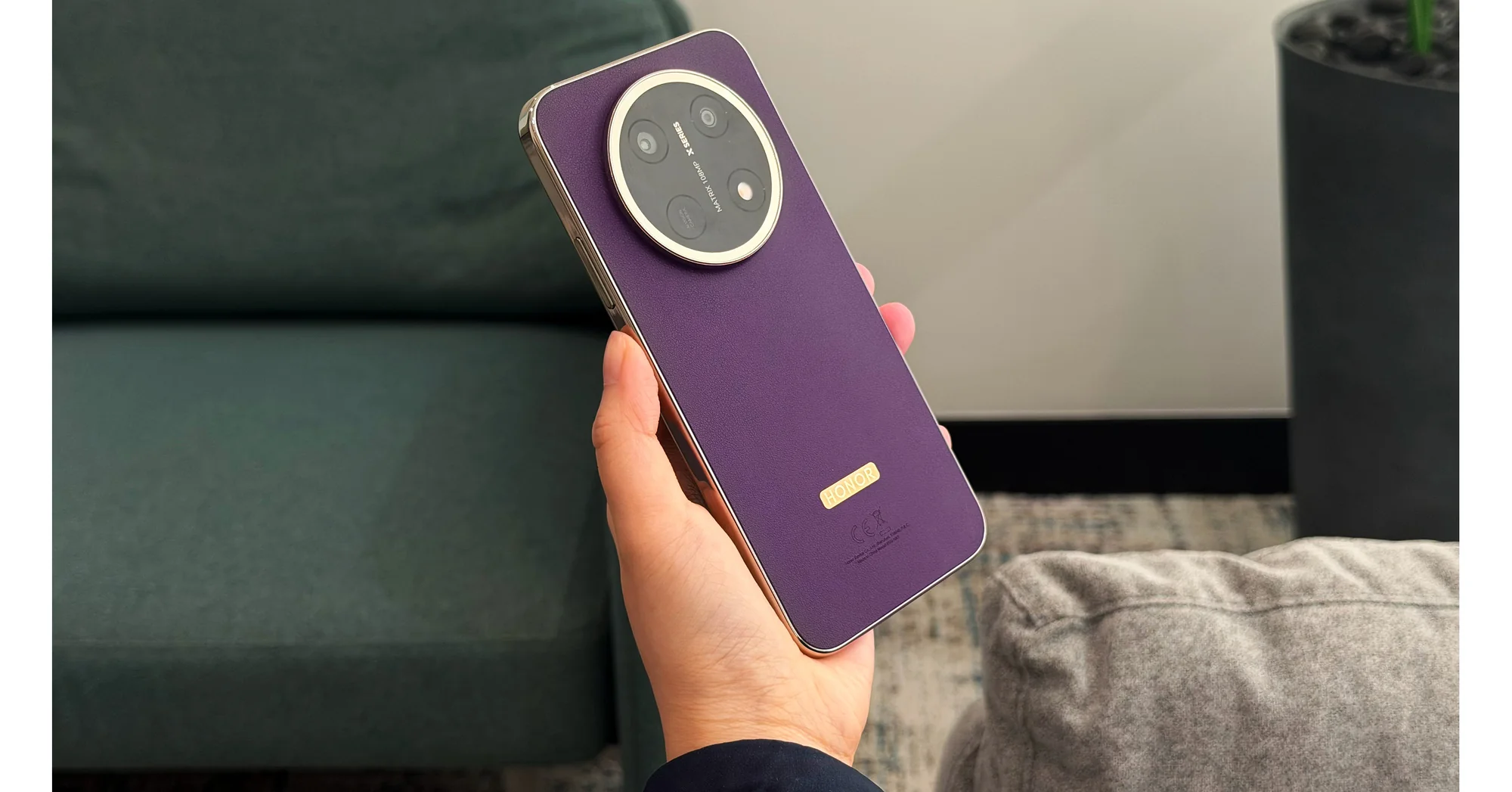
DUBAI, UAE, Oct. 28, 2026 /PRNewswire/ -- When HONOR announced the X9e Pro, its 11,000mAh battery, the first thing expected from the HONOR X9e Pro was that it would be bulk. With an 11,000mAh battery inside, there was an assumption of an obvious trade-off in how the phone looked and felt. Instead, at approximately 8.08mm thin and 203g, it feels much closer to an everyday smartphone than the kind of rugged device its durability credentials might suggest.

Big Battery, Conventional Smartphone Feel

HONOR X9e Pro uses HONOR's fourth-generation silicon-carbon battery, which increases energy density to store more power within limited internal space. HONOR also redesigned the internal architecture, optimizing the mainboard, display structure and mid-frame to make room for the larger battery.

The result is the largest in the industry 11,000mAh battery, while keeping the device approximately 8.08mm thin and 203g. AI Power Saving further manages consumption according to different activities, including reading, scrolling, video playback and background apps. When charging is needed, 80W HONOR SuperCharge provides faster top-ups, while 27W wired reverse charging allows the phone to power compatible devices.

From a technical perspective, this is where the X9e Pro becomes interesting. The challenge is not simply putting a huge battery into a phone. It is fitting that battery around the rest of the hardware without turning the device into a bulky power bank.

Built for Heat and Cold

Battery performance can change significantly under extreme temperatures, particularly when the display, processor and connectivity are under continuous load.

HONOR says the X9e Pro has been tested for battery endurance from -20°C to 50°C, covering scenarios including navigation, video playback, calls, standby and photography. At 50°C, the testing included sustained usage such as navigation and video playback, while low-temperature testing included recording, photography and navigation.

For a phone intended for long outdoor use, this is a detail one might find more relevant than it might initially sound. A large battery is useful, but its endurance still needs to hold up when the environment itself is working against it.

This adds another dimension to the endurance story: the phone is designed to maintain battery performance across a wider range of operating conditions, rather than focusing only on capacity at room temperature.

Durability Built Into the Frame

The X9e Pro uses arch-shaped structures around the corners and perimeter, combined with high-strength metal reinforcement in the mid-frame, to distribute impact forces away from sensitive components.

Its display uses PUR shear-resistant adhesive around the edges. HONOR's internal testing indicates approximately 10 times the shear resistance of its conventional backing adhesive baseline, helping reduce movement between the display and frame during impact.

HONOR says the phone has been tested for drops of up to 3 meters onto smooth marble and it has also received SGS certification for drop resistance in harsh scenarios.

What one may find interesting here is that the protection is happening inside the phone rather than simply being added around it. The frame, reinforcement and display bonding are essentially working together to manage the impact before it reaches the more sensitive components.

Water Protection Beyond the Basics

On the other hand, HONOR X9e Pro carries IP68, IP69 and IP69K ratings for protection against dust, immersion and high-pressure water under controlled conditions. Moreover, it withstands hot splashes up to 85°C.

HONOR's internal testing also includes immersion up to 10 meters, 100,000 repeated immersion cycles and 24-hour salt-spray exposure. Protecting a smartphone from water and dust requires more than sealing the outer shell. Openings for the speaker, buttons, USB port, and SIM tray must remain functional, while different areas of the device are exposed to different pressures and potential ingress pathways. HONOR X9e Pro therefore uses a compartmentalized protection architecture rather than relying on one continuous external barrier.

The display and mid-frame form one sealed zone, while the mid-frame and back cover form another. The physical buttons, speaker, USB port, and SIM tray each receive dedicated protective treatment. This separation reduces the possibility that moisture entering one exposed area can travel freely toward the mainboard or other core components.

This is one of those specifications that makes more sense when one looks at the engineering behind it. IP ratings tells the level of protection, but the real technical work is in how the phone keeps water away from the components that matter.

Display and Camera: Built for Challenging Conditions

The X9e Pro's display is designed for demanding outdoor use. Its 6.8-inch panel combines 2,788 Ã 1,280 resolution, a 120Hz refresh rate and peak brightness of up to 10,000 nits, the brightest in the industry, helping maintain visibility under strong sunlight.

The 108MP main camera pairs a 1/1.67-inch sensor and f/1.75 aperture with CIPA 6.0-level optical image stabilization. This helps compensate for hand movement, particularly during handheld night photography where longer exposures can increase blur.

The camera also features underwater color optimization, designed to compensate for the blue and green color shifts that can occur when shooting underwater.

Together, these features make the display and camera better equipped for bright, moving and wet environments, extending the phone's usability beyond standard conditions.

Performance That Keeps Everyday Use Moving

Underneath everything is the Snapdragon 6 Gen 5 Mobile Platform, which HONOR positions for responsive everyday use across communication, content, photography, navigation and entertainment.

For a device like this, that matters because the X9e Pro's appeal is not really about chasing a single performance number. It is about having the battery, protection, screen and hardware working together for people who expect their phone to stay useful throughout a demanding day.

Final Thoughts: Built for the Days You Cannot Predict

After spending time with everything the HONOR X9e Pro brings together, the 11,000mAh battery might be the specification that grabs attention first, but it is not what defines the phone.

What stands out is the sense that one does not have to constantly think about protecting it, finding the next charger or changing how to use it because conditions are less than ideal. The durability, endurance and practical touches all work towards the same thing: keeping the phone useful when everyday life gets unpredictable.

SOURCE HONOR

Share this article

Class (B2B/B2C)
B2C
Ingest Status
Rewritten
Dedupe hash
prn_302922026
Press Eligible
Yes
Press Eligible Reason
Manuelle Prüfung nötig. Risiko: MEDIUM. Flags: ['numbers']. Stichprobe: False
Source Name
Under the Hood
Original Summary

<p>DUBAI, UAE, Oct. 28, 2026 /PRNewswire/ -- When HONOR announced the X9e Pro, its 11,000mAh battery, the first thing expected from the HONOR X9e Pro was that it would be bulk. With an 11,000mAh battery inside, there was an assumption of an obvious trade-off in how the phone looked and felt....</p>

Image URL
https://mmx.prnewswire.com/media/MS2022543/Lifestyle.jpg?id=OA3044318&p=facebook
Content Hash (SHA-256, erste 32 hex)
ef3c5cf3c5768138f92d8fa35d56a57f