Introducing Chainguard Workspaces: Hardened, Hardware-Isolated Environments for Faster Agentic Development
Image File
Original HTML

Hardware-isolated, credential-free microVMs built from zero-CVE Chainguard OS Packages give security and platform teams a safe way to run fleets of agents at full speed

SEATTLE, Oct. 14, 2026 /PRNewswire/ -- Chainguard, the trusted source for open source, today announced Chainguard Workspaces, hardened microVMs that give every developer and coding agent their own secure environment, with no access to sensitive credentials and optional egress policies that block any connection a team has not approved. Because protection is built into the environment rather than left to the agent, security and platform teams can let agents run autonomously while limiting the blast radius of any compromise and keeping a signed record of everything each agent did.

The tradeoff between access and safety

Coding agents today run migrations, remediation campaigns, and refactors that last for hours, and most agents have the same access as the developer who launched them, right next to their credentials, cloud keys, and production systems. The controls meant to keep them in check, such as permission prompts and allowlists, depend on the agent's adherence to the rules. At the same time, many developers now run a dozen agents or more at once. Teams have to choose between giving agents enough access to be useful and accepting the risk, or locking them down behind approval prompts and spending their day clicking "allow."

"Right now teams are choosing between letting agents run next to their production keys or babysitting them through approval prompts all day. Neither one scales," said Dan Lorenc, CEO and Co-founder, Chainguard. "Workspaces gets rid of that tradeoff. Every agent gets its own hardened, isolated machine with nothing in it worth stealing, so you can let it run for hours and trust what comes out the other end."

A separate, hardened environment for every agent

Chainguard Workspaces is built for security and platform teams whose developers run fleets of coding agents. Workspaces run as remote microVMs that sync each developer's local working tree, so developers keep their editor and git workflow while execution happens off their machine. Because every agent gets its own isolated environment, dozens of agents can work in parallel without colliding, and long-running migrations, remediation campaigns, and refactors can run for hours with no one watching. Teams can safely run agent-generated or third-party code, give every developer a standardized environment drawn from their Chainguard catalog, and try many candidate fixes at once. Security teams get visibility into what the agent read, ran, and reached before approving agent use.

To meet security teams' needs, Workspaces has:

- Layers of defense: Workspace microVMs are built exclusively with zero-CVE Chainguard OS Packages, including FIPS-compliant toolchains. Dependencies are verified against the lockfile at runtime, so untrusted or tampered code can't execute.

- Exfiltration-safe by design: Real credentials are injected outside the workspace, so agents never hold them. Tools that need a credential on disk get an encrypted, short-lived stand-in that is useless if taken.

- Configurable egress controls: Optional network egress policies block unauthorized outbound requests, preventing a prompt-injected agent or compromised dependency from communicating with unapproved external systems.

- Total visibility into every run: Every credential call and network connection is logged in a tamper-proof record, and every run generates signed attestations of the exact environment, code changes, and check results.

Alongside those security controls, Chainguard Workspaces provides engineering teams with what they need to build faster with agents:

- Fast starts and resumes: Cache-hot microVM snapshots mapped to the exact repository and toolchain let teams launch new workspaces or resume idle ones in seconds.

- Instant local package loading: Dependencies load directly from local disk as defined by the lockfile, removing external registry fetches and download delays from the loop.

- Built-in completion validation with Chainguard Checks: Paired with Chainguard Checks (also launching today in Beta), agents run CI suites in context and keep iterating until checks pass. Tying the loop exit to verified results keeps incomplete or faulty code from being handed off.

- Human-in-the-loop: When an agent requires developer input, the Workspace stays active for 10 minutes before automatically suspending to a snapshot. Memory state, active processes, and warm caches are preserved with no ongoing compute spend while paused.

With Workspaces, Chainguard extends the secure-by-default foundation behind its open source software catalog to the environments where agents write and run code. As agent adoption outpaces security review, the shift from securing the agent to securing where it runs is becoming a requirement for enterprise teams.

"Banks, fintechs, and corporates across Australia rely on Cuscal to move money safely. For agent sandboxing, we need an environment where AI agents can iterate quickly without risking core systems. We're excited to work hand-in-hand with Chainguard as an early design partner to shape the future of software development end-to-end," Brad McCoy, Senior Manager, Cloud Platforms, Cuscal.

"IDC research shows that organizations rank AI-generated code and agentic development workflows alongside third-party software and open source packages as top software supply chain concerns. Addressing that risk means accounting for what an agent can access while it works, in addition to the code it writes. Agents running with developer-level credentials and broad network access extend the supply chain attack surface in ways that many traditional controls were not designed to address," said Katie Norton, Research Director at IDC. "Approaches that isolate agent execution environments, keep secrets out of the agent's reach, and maintain auditable records of agent activity, such as the approach Chainguard is taking with Chainguard Workspaces, are designed to support agentic development at scale while preserving control over the development environment."

Chainguard Workspaces is available now in Beta. For more information, visit: chainguard.dev/workspaces.

About Chainguard

Chainguard is the trusted source for open source. By providing engineers and AI agents with hardened, trusted, and production-ready artifacts, Chainguard helps organizations prevent AI supply chain attacks, increase engineering velocity while reducing toil, and maintain continuous compliance. Customers include Fortune 500 enterprises and global industry leaders, including Anduril, Canva, DocuSign, OpenAI, Public Storage, Snap Inc., and Snowflake. Chainguard is venture-backed by leading investors, including Amplify, IVP, Kleiner Perkins, Lightspeed Venture Partners, Mantis VC, Redpoint Ventures, Sequoia Capital, and Spark Capital.  For more information, visit: https://www.chainguard.dev/ 

Media Contact: Brittany Hendrickson, [email protected]

SOURCE Chainguard

Share this article
Class (B2B/B2C)
B2B
Ingest Status
Rewritten
Dedupe hash
prn_302907716
Press Eligible
Yes
Press Eligible Reason
Chainguard announced a security-focused developer product for enterprise teams.
Source Name
Introducing Chainguard Workspaces
Original Summary

<p>Hardware-isolated, credential-free microVMs built from zero-CVE Chainguard OS Packages give security and platform teams a safe way to run fleets of agents at full speed SEATTLE, Oct. 14, 2026 /PRNewswire/ -- Chainguard, the trusted source for open source, today announced Chainguard...</p>

Image URL
https://mmx.prnewswire.com/media/MS684620/Chainguard-Logo.jpg?id=OA3017484&p=facebook
Content Hash (SHA-256, erste 32 hex)
635a24c79841dd9a06ca864e087b09fc
Introducing Chainguard Libraries for Go and .NET: Secure Endpoints to Protect Organizations from Supply Chain Attacks
Image File
Original HTML

Chainguard Libraries now includes CVE remediation for JavaScript and Go; customers also receive protections from frontier AI-discovered zero-days once they are made public

SEATTLE, Oct. 14, 2026 /PRNewswire/ -- Chainguard, the trusted source for open source, today announced Chainguard Libraries for Go and Chainguard Libraries for .NET, adding coverage for two new language ecosystems that allow engineering teams and AI agents to safely pull Go and .NET dependencies without being exposed to the next supply chain attack. Chainguard Libraries also now offers CVE remediation for JavaScript and Go, which backports upstream fixes for critical- and high-severity vulnerabilities, helping teams where upgrading to the next version is not always immediately possible. Finally, Chainguard Libraries now protects customers from zero-day vulnerabilities, with fixes available the day a vulnerability is made public. Through Athena's crowdsourced threat intelligence, Chainguard Libraries customers receive novel patches for zero-day vulnerabilities that have been discovered by the world's largest institutions pointing frontier AI models at their applications.

Malware poses an increasing threat to open source dependencies

AI has escalated problems that have plagued open source language libraries for years, and malware is at the front of that shift. According to Chainguard's AI Exploit Gap report, 76% of cybersecurity leaders say their organization has experienced, or suspects it has experienced, an AI-driven attack in the last 12 months. Within open source registries, attackers are publishing malicious packages, hijacking trusted packages, and registering the names of packages that do not exist yet, knowing developers and AI agents will install them without a second look. At the same time, AI makes it possible for anyone to build and publish malicious packages, or find a way to gain improper access to internal systems by exploiting CVEs or newly discovered zero-day vulnerabilities. The risks are not new, but they are increasingly impossible to manage at scale as models become more capable and widely available.

"Attackers are counting on your developers and AI agents to trust every package they install," said Patrick Donahue, SVP of Product, Chainguard. "Chainguard Libraries removes the need for that trust. No malware gets in, CVEs get fixed even if you can't upgrade, and zero-days are patched on disclosure day. Prevention is the only defense that scales."

Protecting organizations from AI-level threats to open source software

Preventing malware from dependencies is only one part of a three-part problem. Organizations still need to worry about CVEs and zero-days that are becoming easier to discover and exploit as the capabilities of frontier AI models improve. Teams often pin dependencies to specific versions for stability, and CVEs build up in those versions over time. Meanwhile, frontier AI models are uncovering zero-days faster than open source maintainers can fix them. With today's announcement, Chainguard Libraries protects against all three threats across more of the languages organizations depend on:

- Introducing Chainguard Libraries for Go with CVE remediation: Chainguard Libraries for Go gives cloud and infrastructure development teams a secure endpoint to pull Go packages, limiting their organization's exposure to malicious modules and reducing the number of CVEs they need to remediate. Go Libraries come with built-in scanning for malware and greyware, a class of nefarious open source packages that traditional malware scanners miss. They also include configurable policies that allow teams to block packages that don't meet their security or compliance standards, and CVE remediation.

- Introducing Chainguard Libraries for .NET: Chainguard Libraries for .NET allows organizations building on top of the Microsoft and Azure ecosystems to trade NuGet for a secure-by-default Chainguard-managed endpoint, allowing them to safely pull dependencies without risking being compromised by the next supply chain attack. .NET libraries come with configurable policies and malware and greyware scanning.

- Enhancing JavaScript libraries with CVE remediation: Adding CVE remediation to Chainguard Libraries for JavaScript provides another layer of defense that reduces CVE risk. Backported fixes for critical- and high-severity CVEs allow engineering teams to shrink known vulnerability risk while strategically planning their next major version upgrade. The capability is built into the same endpoint that has blocked every malware attack that has hit npm this year.

- Providing zero-day protection for Chainguard Libraries for Java and Python: Chainguard Libraries for Python and Java now have artifacts that are remediated from frontier AI model-discovered vulnerabilities on the day they are publicly disclosed. This protection is powered by the crowdsourced threat intelligence of Athena, Chainguard's industry coalition for the orchestrated defense of open source software.

These advancements make Chainguard Libraries the most secure way to consume open source language dependencies. Chainguard Libraries helps organizations defend against the threats frontier AI models pose to open source software and to the AI software development lifecycle.

"Chainguard Libraries has shifted us from reacting to supply chain attacks to preventing them. We have immediate visibility into what's coming into our environment, but more importantly, malicious packages never reach us in the first place," said Kevin Fuller, CISO, Propio. "It's not just detection, it's prevention. With constant attacks on open source, that has given our team a world of peace."

Chainguard Libraries for Go and .NET are now available in Early Access. For more information, visit chainguard.dev/libraries.

About Chainguard

Chainguard is the trusted source for open source. By providing engineers and AI agents with hardened, trusted, and production-ready artifacts, Chainguard helps organizations prevent AI supply chain attacks, increase engineering velocity while reducing toil, and maintain continuous compliance. Customers include Fortune 500 enterprises and global industry leaders, including Anduril, Canva, DocuSign, OpenAI, Public Storage, Snap Inc., and Snowflake. Chainguard is venture-backed by leading investors, including Amplify, IVP, Kleiner Perkins, Lightspeed Venture Partners, Mantis VC, Redpoint Ventures, Sequoia Capital, and Spark Capital.  For more information, visit: https://www.chainguard.dev/

Media Contact: Brittany Hendrickson, [email protected]

SOURCE Chainguard

Share this article
Class (B2B/B2C)
B2B
Ingest Status
Rewritten
Dedupe hash
prn_302907708
Press Eligible
Yes
Press Eligible Reason
Enterprise cybersecurity product announcement for securing open-source software dependencies.
Source Name
Introducing Chainguard Libraries for Go and .NET
Original Summary

<p>Chainguard Libraries now includes CVE remediation for JavaScript and Go; customers also receive protections from frontier AI-discovered zero-days once they are made public SEATTLE, Oct. 14, 2026 /PRNewswire/ -- Chainguard, the trusted source for open source, today announced Chainguard...</p>

Image URL
https://mmx.prnewswire.com/media/MS684620/Chainguard-Logo.jpg?id=OA3017454&p=facebook
Content Hash (SHA-256, erste 32 hex)
f960c2f259206d78b8fd80ddf27e0c50
Semperis 2026 Ransomware Report Reveals Increases in AI-Driven Attacks and a Rise in Physical Threats Against Executives and Their Families
Image File
Original HTML

The study reveals AI is reshaping ransomware as repeat attacks, threats to employees and their families, and attacks on identity systems outpace recovery readiness.

HOBOKEN, N.J., Oct. 14, 2026 /PRNewswire/ -- Semperis, the identity-driven cyber resilience and crisis response company, today published results from its annual global ransomware report, highlighting that AI plays a significant role in the ransomware economy. In addition, hackers are increasingly threatening physical harm against companies' employees to extract ransom payments; in more than half the reported cases, the attackers followed through on those threats. Only organizations that were victimized by ransomware gangs in the past 12 months were included in the study.

"An attacker has one goal in mind: They want to extract something from you. And the only way they're going to do that is to make the cost of resisting their demands greater than the cost of giving in," said Chris Inglis, the first U.S. National Cyber Director and a Semperis Strategic Advisor. "Holding you at physical risk is the latest phenomenon because we've covered most of the other risks."

The 2026 Ransomware Risk Report, found that bad actors are threatening victims with psychological intimidation in nearly 25% of all attacks in the U.S., UK, France, Germany, Italy, Spain, Singapore, Canada and Australia. In 53% of cases, the victims reported that the hackers followed through on their threats; 23% of victims or family members were swatted; 25% of victims sought psychological and medical treatment because of the ransomware attack; and 24% of victims or families hired personal security.

"IT and cybersecurity staff are already dealing with high levels of stress," says Tim Beasley, Semperis Senior Incident Response Consultant. "A ransomware attack takes that to a whole new level. I have seen CISOs say, 'I'm out. I'm done. I can't do this. It isn't worth it.' I've seen people walk out the door because leadership thought they mismanaged something that caused the breach to occur. It all takes a mental toll."

Key Findings

- AI is changing the ransomware landscape. 

In 87% of attacks, threat actors weaponized artificial intelligence.

- Attackers increasingly threaten victimized companies' staff and their families. 

Overall, 40% of attacks involved psychological or physical threats against staff.

- Multiple attacks (and multiple payments) continue.

In nearly 70% of attacks, the ransomware victims were targeted multiple times; 31% made multiple payments to attackers.

- Identity infrastructure continues to be a prime target as identity recovery preparation lags.

All told, 87% of ransomware attacks targeted identity systems like Active Directory (AD), Entra ID, and Okta. But only about half the companies we surveyed have dedicated identity backups, automated identity recovery solutions, and identity-specific crisis response procedures.

"The bad guys are always evolving their tactics," said Mickey Bresman, Semperis CEO. "When the initial wave of ransomware attacks began, most focused on data encryption. Then, after data backup and recovery systems started gaining traction and enabling companies to resist ransom demands, we saw the double extortion: encryption coupled with data theft and threats to expose or sell that data. So, it makes sense that we'll continue to see attackers trying to find more ways to make victims pay."

Even though identity infrastructure is a prime target for threat actors, identity continues to be at risk in most organizations. In fact, nearly 75% of successful ransomware attacks targeted or exploited the identity system. Only 50% of companies maintain dedicated identity backup systems; and less than half automate identity system recovery. Shockingly, 40% of organizations' disaster recovery or crisis response plans don't include procedures for AD recovery.

"Identity is the coin of the realm. If an attacker can steal an identity, they're off to the races. Insider threats are not always a literal insider—a physical person who's abusing their authority," said Inglis. "Often, it's an internal person acting on an external attacker's behalf to abuse an insider's privileges. Sometimes it's a process that just runs amok. In every case, identity is the core issue."

The full Ransomware Risk Report can be found here: https://www.semperis.com/ransomware-risk-report/

About Semperis

Semperis is the identity-driven cyber resilience and crisis management company trusted by the world's largest enterprises and government agencies to protect critical identity systems. Purpose-built for multi-cloud and hybrid identity environments—including Active Directory, Entra ID, Okta, and Ping Identity—Semperis helps organizations prevent, detect, respond to, and recover from identity-based cyberattacks.

Modern cyberattacks are won or lost at the identity layer, where failures now escalate into full-scale business crises. Semperis' AI-powered platform unifies identity lifecycle defense and crisis management—hardening identity infrastructure, detecting and containing active threats, enabling rapid, trusted recovery, and supporting secure, out-of-band coordination when core systems are disrupted—all reinforced by a world-class identity forensics and incident response team.

As part of its mission to help organizations achieve true cyber resilience, Semperis supports the broader cyber community through the award-winning Hybrid Identity Protection (HIP) Conference and Podcast and free identity security tools including Purple Knight and Forest Druid. More than 1,200 organizations—including over 25% of the 100 largest U.S. companies—rely on Semperis. The company is privately held, headquartered in Hoboken, New Jersey, and serves customers in more than 40 countries.

Learn more: https://www.semperis.com

Follow us: Blog / LinkedIn / X / Facebook / YouTube

Media Contact:

Bill Keeler

Senior Director, PR & Comms

[email protected]

SOURCE Semperis

Share this article

Class (B2B/B2C)
B2B
Ingest Status
Rewritten
Dedupe hash
prn_302907731
Press Eligible
Yes
Press Eligible Reason
Company cybersecurity report on ransomware trends and organizational preparedness.
Source Name
Unknown Company
Original Summary

<p>The study reveals AI is reshaping ransomware as repeat attacks, threats to employees and their families, and attacks on identity systems outpace recovery readiness. HOBOKEN, N.J., Oct. 14, 2026 /PRNewswire/ -- Semperis, the identity-driven cyber resilience and crisis response company,...</p>

Image URL
https://mmx.prnewswire.com/media/MS1122565/Semperis-Logo-Logo-Logo.jpg?id=OA3017407&p=facebook
Content Hash (SHA-256, erste 32 hex)
3022b82ce7757489b871b2ff453b76db
Moxa Receives Prequalification from Saudi Energy for Industrial Networking and Computing Solutions
Image File
Original HTML

Moxa Receives Prequalification from Saudi Energy for Industrial Networking and Computing Solutions

TAIPEI, Oct. 14, 2026 /PRNewswire/ -- Moxa, a trusted leader in industrial communications and networking, is pleased to announce that it has received prequalification from Saudi Energy (Saudi Electricity Company (SEC) and National Grid (NG) , Saudi Arabia, for its Ruggedized Industrial Ethernet Switches, Industrial Next-Generation Firewalls, and Industrial Computers.

All three product categories have been approved and added to Saudi Energy's LOTAM (List of Technically Acceptable Manufacturers), enabling Moxa to provide an integrated industrial networking and computing solution for critical energy infrastructure applications, including Substation Automation (SA) and Advanced Metering Infrastructure (AMI).

Moxa's solutions can also support the migration and modernization of legacy substations, backed by extensive experience in upgrading legacy utility infrastructure worldwide.

The approval followed a rigorous prequalification process, including product testing at third party lab in the presence of Saudi Energy team, a factory visit, and proof-of-concept testing for various applications.

This prequalification strengthens Moxa's opportunity to expand its installed base across Saudi Arabia and the wider Middle East, particularly as the region's power sector continues to grow with the development of AI data centers and large-scale giga projects.

With extensive experience working with utility companies globally, Moxa remains committed to supporting the region with reliable, secure, and rugged industrial networking solutions.

Moxa sincerely thanks the Saudi Energy team for their support, collaboration, and trust in Moxa.

For more information reach us on [email protected]

About Moxa

Moxa is a leading provider of edge connectivity, industrial computing, and network infrastructure solutions for enabling connectivity for the Industrial Internet of Things. With over 35 years of industry experience, Moxa has connected more than 118 million devices worldwide and has a distribution and service network that reaches customers in more than 87 countries. Moxa delivers lasting business value by empowering industry with reliable networks and sincere service for industrial communications infrastructures. Information about Moxa's solutions is available at www.moxa.com.

The MOXA logo is a registered trademark of Moxa Inc. All other trademarks mentioned in this document are the property of their respective owners.

SOURCE Moxa Inc.

Share this article

Class (B2B/B2C)
B2B
Ingest Status
Rewritten
Dedupe hash
prn_302902517
Press Eligible
Yes
Press Eligible Reason
Industrial networking products prequalified for Saudi energy infrastructure applications.
Source Name
Unknown Company
Original Summary

<p>TAIPEI, Oct. 14, 2026 /PRNewswire/ -- Moxa, a trusted leader in industrial communications and networking, is pleased to announce that it has received prequalification from Saudi Energy (Saudi Electricity Company (SEC) and National Grid (NG) , Saudi Arabia, for its Ruggedized Industrial...</p>

Image URL
https://mmx.prnewswire.com/media/MS2005021/MoxaLogo_Tagline_Version.jpg?id=OA2994479&p=facebook
Content Hash (SHA-256, erste 32 hex)
793475d89c1ec86e0788544fc4283d8a
AI Needs a Governed Path, Not a Ban, Armor Founder Tells GovWare
Image File
Original HTML

AI Needs a Governed Path, Not a Ban, Armor Founder Tells GovWare

Chris Drake says AI should complete useful business work automatically within policy. CISOs can enable that autonomy by resolving data classification, owning routing rules and demanding auditable evidence.

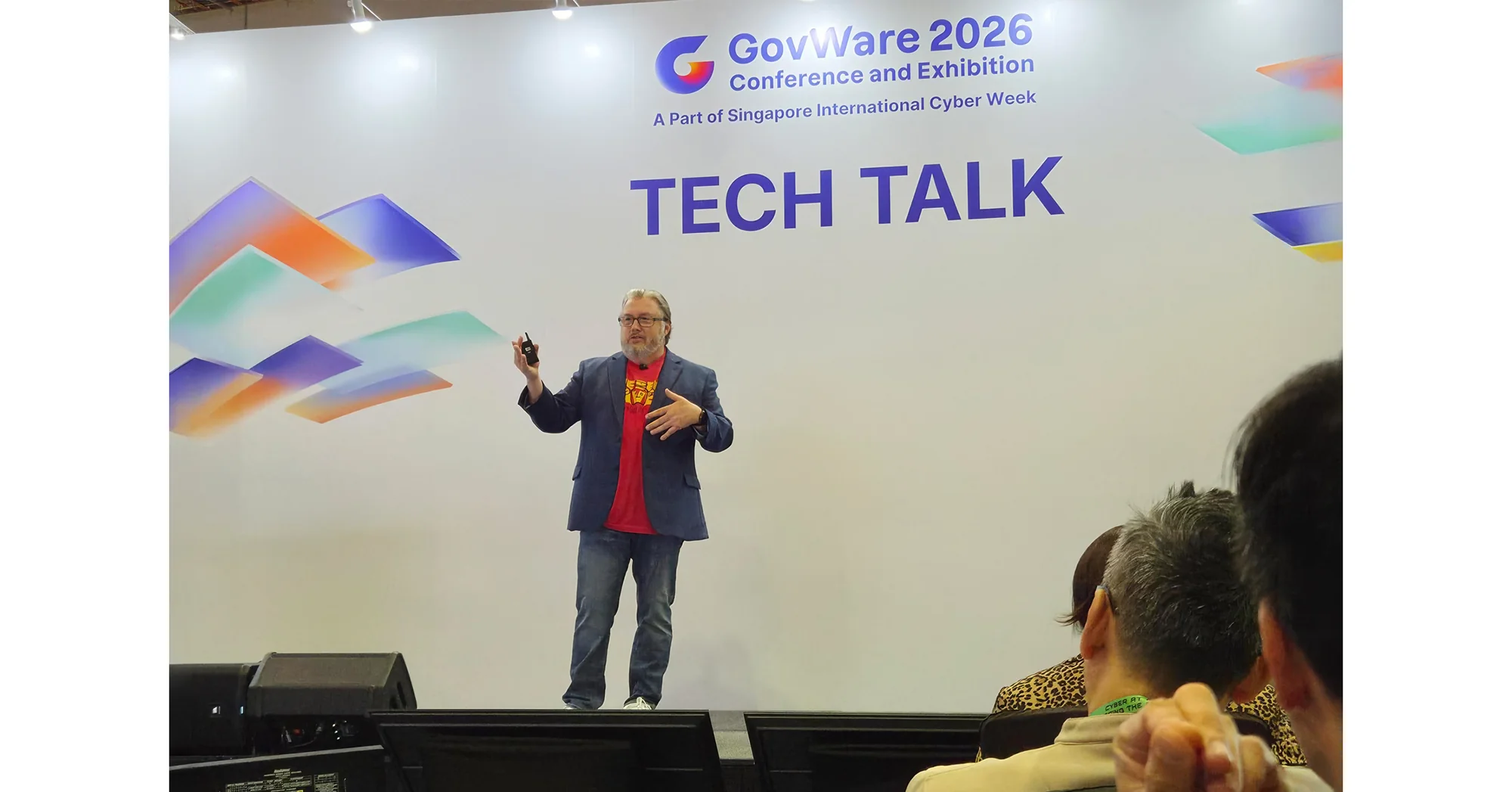
SINGAPORE, Oct. 14, 2026 /PRNewswire/ -- CISOs face pressure to get out of the way of AI innovation while keeping the business alive, Armor Founder and CEO Chris Drake told GovWare 2026 today. Leaders see a competitive risk in moving too slowly. Security leaders must also protect customer trust, contractual commitments, and operations. AI is already arriving through employees and the tools they use, often without a separate security decision. In his Tech Talk Spotlights session, "Once Again. AI Puts CISOs Between a Rock and a Hard Place," Drake argued for AI to complete useful business work automatically within policy, with CISOs setting the conditions for adoption and having the authority and evidence to enforce them.

"With the cloud, the CISO at least got a say. With AI, nobody asked. Banning it doesn't work, and ignoring it is how the breach report gets written," said Drake.

Drake contrasted AI with the cloud transition, when security could assess a provider and influence which applications and data left the corporate environment. AI can arrive inside existing browsers, productivity tools, and employees' machines without that checkpoint. Depending on permissions, an agent can read files, send data, and take actions. The risk can travel over an allowed connection even when the firewall works as configured.

After decades spent defending the perimeter, organizations must now examine the AI agents running on employees' machines. Drake highlighted specific local virtual machine visibility gaps: Anthropic documents that host endpoint detection and response (EDR) cannot inspect activity inside Cowork's local VM, while Docker documents that processes inside its local sandbox microVMs are invisible to the host. EDR alone cannot provide complete oversight; platform telemetry and network controls remain important. An employee clicking "Allow" does not settle whether the business approved the data access or processing.

Drawing on his conversations across APAC, Drake described the pressure on CISOs who report to the CIO or CTO sponsoring an AI rollout. He urged them to gain trust and lead the decision: agree on the business outcome, define what earns a yes and demand evidence that the controls and business result work. CISOs also need a written mandate to approve, restrict or pause AI use; a named executive who owns each risk exception and its expiration date; and an escalation path to the risk committee. These are decisions about the conditions for AI adoption, not approval of every routine AI action.

Suppliers extend that exposure. A vendor's use of another AI provider to process an organization's data introduces fourth-party risk. Organizations need evidence of the providers involved, where data is processed, what is retained and which contractual protections apply. Protiviti's February 2026 AI Pulse Survey found that 47% of large organizations reported incomplete visibility into employees' use of AI tools. A useful, approved AI path can reduce the incentive to work around security, while discovery and supplier oversight remain essential.

Drake said data classification has moved from nice-to-have to must-have. Organizations must know what their data contains, who owns it and how it may be used. Classification, ownership, permitted use and auditability provide the basis for rules that systems can enforce automatically. "AI cannot safely use data you cannot govern," he said. Once that foundation is established, organizations should own the routing policy. Use approved external models when data policy permits and private execution when required. Task complexity, model capability, business needs and cost then guide the choice among permitted options. AI can complete authorized work automatically, with records of the data accessed, policy decisions, models, routes, actions and outcomes. Those receipts let the organization reconstruct what happened without making a person approve every step.

Armor, a provider to regulated industries since 2009, faced the same challenge. Drake said the company was concerned about sending customer data through public AI services where the controls and audit evidence could not meet its customer commitments. It built a governed AI platform for its own operations, now Sovereign AI, and runs its business on it.

Drake closed with the principles behind Sovereign AI: know the data, preserve model choice, own routing policies, control actions and demand full auditability. Give the whole company useful, approved AI so employees have less reason to turn to shadow AI. He called for powerful agents and their credentials to run in governed, isolated, auditable environments, with scoped access, rather than on employees' laptops.

Before granting an AI tool access, he urged CISOs to ask three questions:

- What can it touch?

- Where can it send?

- Can we control what it does?

His message to CISOs was: "Yes. With rules. With authority. With evidence." The presentation is available at https://www.sovai.com/govware26.

Armor is demonstrating Sovereign AI at Booth A22 through October 15. Press and analyst briefings with Drake are available on-site and virtually; requests go to the media contact below.

ABOUT SOVEREIGN AI

Sovereign AI is the governed AI work platform for the whole company, built by Armor. One control layer for every model, every team, and every dollar, inside your walls, under your rules. Armor has spent 17 years securing regulated industries, protecting over 1,700 organizations across 40+ countries held to the highest compliance bars in the business. Sovereign AI is what that experience looks like as a product. Learn more at sovai.com.

ABOUT ARMOR

Since 2009, more than 1,700 organizations in 40+ countries have relied on Armor to protect regulated data in the public and private cloud. AI is the next risk, so Armor built Sovereign AI to bring that same protection and compliance to how organizations use AI in the workplace: a fully governed platform that lets them leverage AI without creating undue risk to their data and their regulatory obligations. For more information, visit armor.com and sovai.com and follow us on LinkedIn.

Media Contact

Michele Glassman

Marketing Director, Armor

[email protected]

SOURCE Armor Defense Inc

Share this article

Class (B2B/B2C)
B2B
Ingest Status
Rewritten
Dedupe hash
prn_302907936
Press Eligible
Yes
Press Eligible Reason
Company announcement about a governed AI platform and enterprise security guidance for CISOs.
Source Name
Unknown Company
Original Summary

<p>Chris Drake says AI should complete useful business work automatically within policy. CISOs can enable that autonomy by resolving data classification, owning routing rules and demanding auditable evidence. SINGAPORE, Oct. 14, 2026 /PRNewswire/ -- CISOs face pressure to get out of the way...</p>

Image URL
https://mmx.prnewswire.com/media/MS2012958/Armor-Defense-Inc-TT-PR-image-Drake.jpg?id=OA3017763&p=facebook
Content Hash (SHA-256, erste 32 hex)
e44fc6eba6738c407314f5879f769e01
WEMIX Fortifies Network Security with Upgraded CertiK Hunt Bug Bounty Program
Image File
Original HTML

WEMIX Fortifies Network Security with Upgraded CertiK Hunt Bug Bounty Program

The refreshed program features vetted security researchers, revamped reward structure, and payouts up to $10,000 per finding

SINGAPORE, Oct. 14, 2026 /PRNewswire/ -- WEMIX, the leading blockchain ecosystem combining over two decades of gaming giant WEMADE's AAA game development success with a proprietary Layer-1 mainnet, today announced the relaunch of its joint bug bounty program with global blockchain security leader CertiK. The initiative features a reorganized reward structure and updated verification scope designed to continuously strengthen the security and reliability of the WEMIX3.0 blockchain.

Hosted on CertiK's dedicated security platform, CertiK Hunt, the program rewards security researchers (ethical or white hat hackers) for identifying and reporting code vulnerabilities, with the payout set according to the severity of the finding. For instance, findings under the "Critical" classification address major risks, such as total network outages or direct financial loss.

Target Scope and New Reward Structure

Under the refreshed framework, bug bounty reports will focus on core components of the ecosystem, including the WEMIX3.0 blockchain (DLT) and Governance Smart Contracts. Rewards are denominated in USD and distributed in Tether (USDT) on the Ethereum network based on vulnerability severity:

Vetted Researchers and Report Verification Process

To ensure high report quality and operational efficiency, participation is restricted to security researchers who have passed CertiK's vetting process evaluating technical expertise, vulnerability history, and community contributions. Approved researchers are assigned to tier levels (Challenger, Sentinel, Vanguard), with reporting privileges reserved for the top Vanguard tier.

The reporting and payout process proceeds as follows:

- Report Submission: Vanguard-tier researchers submit WEMIX3.0 vulnerability reports via CertiK Hunt, including a Proof of Concept (PoC) demonstrating the impact of the vulnerability.

- Triaging by CertiK: CertiK triages the report and verifies its impact, asset, and severity falls within the scope of the WEMIX3.0 bug bounty program.

- Review and Confirmation by WEMIX: WEMIX reviews escalated report and confirms reward eligibility*, severity, and final payout amount.

- Reward Distribution: WEMIX directly disburses rewards following mandatory Know Your Customer (KYC) verification. Researchers can monitor report progress in real-time on CertiK Hunt.

Active participation from security researchers remains vital to safeguarding WEMIX3.0 as the ecosystem grows, reinforcing WEMIX's commitment to building a safer and more secure network for all users. For full program rules and the submission form, please visit the WEMIX program page within CertiK Hunt: https://hunt.certik.com/explore/wemix.

*Note: Individuals listed on OFAC (SDN) sanction lists, project employees, contractors, and technical contributors compensated within the past year are ineligible. Unfixed vulnerabilities already disclosed in publicly released audit reports are also excluded from reward eligibility.

-ENDS-

About WEMIX:

WEMIX is a leading blockchain ecosystem for gaming and digital economies, powered by its highly scalable, EVM-compatible Layer-1 mainnet, WEMIX3.0. With a wide range of integrated services—including NFTs, DeFi, stablecoin payments, and tokenized in-game assets—WEMIX enables seamless integration between gameplay and real-world value. Designed to be transparent, sustainable, and developer-friendly, WEMIX serves as the foundation for the global Web3 gaming ecosystem. For more information, please visit https://wemix.com/.

About WEMADE

WEMADE is the only company combining over two decades of AAA game development success with a fully operational, game-proven blockchain ecosystem—built entirely on its proprietary Layer-1 mainnet, WEMIX3.0. Known for global hits such as The Legend of Mir, MIR4, NIGHT CROWS and Legend of YMIR, WEMADE is leading the industry in seamlessly integrating gameplay, tokenomics, NFTs, stablecoin payments, and blockchain infrastructure. Through WEMIX PLAY, WEMADE delivers a unified digital economy where players, creators, and investors can own, trade, and benefit from digital assets—powering the next generation of interactive entertainment and driving the evolution of Web3 gaming. For more information, please visit https://wemade.com/.

About CertiK:

CertiK is the largest Web3 security services provider, utilizing industry-leading formal verification technology to protect and monitor blockchain protocols and smart contracts. Founded in December 2017 by professors from Yale University and Columbia University, CertiK applies cutting-edge innovations from academia to enterprise, enabling mission-critical applications to scale with safety and correctness.

SOURCE WEMIX

Share this article

Class (B2B/B2C)
B2B
Ingest Status
Rewritten
Dedupe hash
prn_302907970
Press Eligible
Yes
Press Eligible Reason
Blockchain company announcement about an upgraded security and bug bounty program.
Source Name
Unknown Company
Original Summary

<p>The refreshed program features vetted security researchers, revamped reward structure, and payouts up to $10,000 per finding SINGAPORE, Oct. 14, 2026 /PRNewswire/ -- WEMIX, the leading blockchain ecosystem combining over two decades of gaming giant WEMADE's AAA game development success...</p>

Image URL
https://mmx.prnewswire.com/media/MS2012942/20261013221742EDT_image_1.jpg?id=OA3017734&p=facebook
Content Hash (SHA-256, erste 32 hex)
8290f66fd6d8ae8bd87cd809641e4bdc
Taisei Corporation, TIER IV, and Taisei Rotec Partner to Advance Autoflow Road Deployment through a Japanese Government Project
Image File
Original HTML

Testing Multi-Vehicle Autonomous Operations and System Optimization in Purpose-Built Logistics Lanes

TOKYO, Oct. 14, 2026 /PRNewswire/ -- Taisei Corporation, TIER IV, Inc. (TIER IV), and Taisei Rotec Corporation have been selected by Japan's Ministry of Land, Infrastructure, Transport and Tourism (MLIT) for a demonstration project aimed at accelerating the deployment of the Autoflow Road.

Promoted by MLIT, the Autoflow Road is a new logistics system designed to transport cargo using unmanned, automated vehicles within purpose-built logistics lanes. The demonstration will evaluate multi-vehicle operations—including platooning, bidirectional driving, lane changes, merging and diverging, and obstacle avoidance—within tunnel environments and other dedicated space. The companies will also test ways to simplify automotive sensors and roadside infrastructure optimized for dedicated lanes, while validating T-Localizer®, Taisei Corporation's self-localization support technology. The demonstration will also evaluate the adaptability and scalability of Pilot.Auto, an autonomous driving system developed by TIER IV for logistics applications.

Demonstration Overview

Using three autonomous vehicles across straight and curved sections, the project will verify core maneuvers—including following, stopping, passing oncoming vehicle, merging and diverging, obstacle avoidance, and berth stopping accuracy, alongside the required driving space widths including standard, intermediate, and minimum.

*Passenger-car-based vehicles will be used in this demonstration for testing purposes. They do not represent the final dedicated transport hardware for the actual Autoflow Road deployment.

Technology Development for Autoflow Road

Operating within purpose-built logistics lanes requires an optimal integration of vehicle autonomy and roadside infrastructure.

Taisei Corporation has developed T-Localizer® and T-iPower® Road, a dynamic wireless power transfer system, while Taisei Rotec Corporation has developed tunnel surface coatings engineered to enhance vehicle LiDAR perception in GPS-denied environments. TIER IV has provided an autonomous vehicle equipped with Autoware.

To test the applicability of these technologies to the Autoflow Road, the companies participated in MLIT's FY2025 demonstration project, conducting trials using TIER IV autonomous vehicle and Taisei Corporation's T-Localizer® alongside the T-iPower® Road. The results confirmed the potential applicability and feasibility of these technologies for the Autoflow Road, while also identifying operational challenges.

Building on their joint FY2025 demonstration, the companies will evaluate multi-vehicle operations and streamlined sensor layout and roadside infrastructure in the FY2026 demonstration.

Looking Ahead

Insights from this project will help clarify the respective roles of vehicle autonomy and road infrastructure, laying the foundation for a lean and scalable deployment of the Autoflow Road.

*Based on current plans submitted to MLIT.

Related link

T-Localizer® https://www.taisei.co.jp/about_us/wn/2025/251215_10821.html

https://chizu.taisei.co.jp/trend/selection/09.html

https://chizu.taisei.co.jp/trend/selection/10.html

T-iPower® Road https://www.taisei.co.jp/about_us/wn/2025/250718_10570.html

Pilot.Auto https://pilot.auto/

Media Contacts

Taisei Corporation: Public Relations Office, Corporate Communications Department +81 3-5381-5011

TIER IV: Public Relations pr@tier4.jp

Taisei Rotec Corporation: Public Relations Department +81-3-5925-9431

SOURCE TIER IV, Inc.

Share this article

Class (B2B/B2C)
B2B
Ingest Status
Rewritten
Dedupe hash
prn_302906906
Press Eligible
Yes
Press Eligible Reason
Corporate technology partnership and government-backed demonstration of autonomous logistics infrastructure.
Source Name
Unknown Company
Original Summary

<p>Testing Multi-Vehicle Autonomous Operations and System Optimization in Purpose-Built Logistics Lanes TOKYO, Oct. 14, 2026 /PRNewswire/ -- Taisei Corporation, TIER IV, Inc. (TIER IV), and Taisei Rotec Corporation have been selected by Japan's Ministry of Land, Infrastructure, Transport and...</p>

Image URL
https://mmx.prnewswire.com/media/MS1463639/TIERIV-Logo-Logo.jpg?id=OA2996831&p=facebook
Content Hash (SHA-256, erste 32 hex)
1c44ba39c3ac619e37632784a8e33254
Forty Percent of Employees Say Their CEO Isn't Transparent Enough on AI
Image File
Original HTML

- Nearly 90% of CEOs Are Confident Employees Trust Their Leadership, but Only 46% of Employees Agree

- One in Three CEOs Have Considered Stepping Down in the Past Six Months, Rising to More Than 40% at the Largest Companies

BOSTON, Oct. 14, 2026 /PRNewswire/ -- CEOs are significantly overestimating how much their employees trust them, particularly as they lead transformations around artificial intelligence (AI), according to new research from Boston Consulting Group (BCG). Four in ten employees say their CEO has not been transparent enough about how AI will affect their roles and career opportunities. Yet just 15% of CEOs worry that their approach to AI transformation could erode employee trust.

The disconnect extends well beyond AI. Nearly 90% of CEOs are confident that their employees trust their leadership overall, but just 46% of employees agree.

The findings come from the second edition of BCG's CEO Insomnia Index, based on global surveys of 645 CEOs of leading companies with at least $100 million in revenue and 500 nonexecutive employees, as well as five years of CEO turnover data from the S&P 1200. By bringing employee perspectives into the Index, this edition aims to help CEOs better understand how their leadership is experienced across their organizations and identify ways to build trust as they navigate AI-driven change.

"Historically, there's always been this perception gap," says Julie Bedard, a BCG managing director and partner and a member of the firm's Global AI Leadership team. "Leadership teams, including CEOs, sometimes overestimate this type of trust, and I think it has only increased as the relationship between employer and employee becomes more transactional in some companies."

An AI Trust Gap with Real Costs

Half of employees who say their CEO's handling of AI has increased their trust are more willing to go above and beyond at work than they were three months ago. Among employees whose trust in their CEO's AI leadership has eroded, fewer than 10% say the same, a difference of more than 40 percentage points.

"CEOs assume that since employees hear their words, that's enough to build trust, but employees also judge CEOs by their actions," says Matthias Tauber, a BCG managing director and senior partner and regional chair for Europe, the Middle East, South America, and Africa. "CEOs must be realistic in their words and consistent in their actions."

Nearly 70% of CEOs are confident employees trust them to prioritize employee well-being when deciding how to fund critical business priorities. Only 36% of employees agree—a gap of more than 30 percentage points.

Despite these disconnects, 58% of CEOs say they are not concerned about rising employee disgruntlement, with many pointing to existing efforts to keep employees satisfied.

One in Three CEOs Have Considered Stepping Down

CEOs report feeling somewhat less stressed overall. The CEO Insomnia Index stress score fell to 64.2 out of 100, down from 66.7 earlier this year.

Despite this, 34% of chief executives say they have considered stepping down at some point in the past six months. That figure rises to more than 40% among CEOs of the largest companies in the study. Among the reasons they cite for leaving are better health, more family time, improved work-life balance, and a happier life.

C-Suite Changes May Be Coming

Sixty-three percent of CEOs are confident their senior leadership teams can execute their vision over the next two to four quarters. Yet nearly 60% of CEOs—and 70% of those leading the largest companies in the study—say they plan to replace a member of their C-suite within the next six months.

CFOs top the list, echoing the inaugural CEO Insomnia Index, in which 26% of CEOs identified their CFO as the C-suite colleague who posed the greatest threat to their own job security.

Download the publication here: https://www.bcg.com/publications/collections/the-insomnia-index-understanding-ceo-pressure

Media Contact:

Eric Gregoire

+1 617 850 3783

[email protected] 

About Boston Consulting Group

Boston Consulting Group bridges the gap between ambition and outcomes for the world's leading companies and organizations. We are built for this era of unprecedented change — bringing strategic clarity rooted in over 60 years of deep domain knowledge, combined with applied AI shaped by our practitioners. BCG works shoulder-to-shoulder with CEOs across industries and geographies to deliver transformative impact at scale: stronger returns, transferred capabilities, and change that sticks. For more information, visit bcg.com.

SOURCE Boston Consulting Group (BCG)

Share this article

Class (B2B/B2C)
B2B
Ingest Status
Rewritten
Dedupe hash
prn_302907871
Press Eligible
Yes
Press Eligible Reason
BCG research on CEO leadership, employee trust, and AI transformation.
Source Name
Unknown Company
Original Summary

<p>Nearly 90% of CEOs Are Confident Employees Trust Their Leadership, but Only 46% of Employees Agree One in Three CEOs Have Considered Stepping Down in the Past Six Months, Rising to More Than 40% at the Largest Companies BOSTON, Oct. 14, 2026 /PRNewswire/ -- CEOs are significantly...</p>

Image URL
https://mmx.prnewswire.com/media/MS1158128/Boston-Consulting-Group-Logo-2026.jpg?id=OA3017667&p=facebook
Content Hash (SHA-256, erste 32 hex)
9ddf036de6cbb86119ddcbc7446e56a0
Banking Revenue Pool on Track for Record $1.1 Trillion, Opening Window to Reshape for Growth
Image File
Original HTML

- BCG Report Finds Banks Beginning to Pivot to Client- and Platform-Led Models

- Revenue Pool Expected to Reach $1.4 Trillion by 2030, with Nonbank Financial Institutions Taking a 23% Share

- Hedge Fund and Sponsor Revenues Expected to Grow About 9% and 8% a Year Through 2030, Versus 2% for Traditional Corporate Clients

- AI Could Free Up as Much as 40% of Middle and Back Office Capacity by 2030, but Not All of It Means Fewer Jobs

BOSTON, Oct. 14, 2026 /PRNewswire/ -- Corporate and investment banking (CIB) is entering the next phase of its evolution with exceptional momentum and is beginning to pivot from a product-led model to a client- and platform-led one as growth shifts toward a new mix of clients and as technology changes the economics of serving them, according to a new report from Boston Consulting Group (BCG).

Revenues, including those of nonbank financial institutions (NBFIs), are on track to reach a record $1.1 trillion in 2026, up more than 7% from 2025. The report argues that this strength creates a "golden window" for CIB leaders to capture the next wave of growth while using today's earnings power to build the capabilities required for the future. That window, it cautions, will not stay open indefinitely.

These are among the findings of A Golden Window for Growth, BCG's 2026 Corporate and Investment Banking Report. Based on BCG Expand data and BCG analysis, the report projects that the total CIB revenue pool, including NBFIs, will reach about $1.4 trillion by 2030, growing roughly 5% a year. This year, 2026, will be the sixth consecutive year of growth.

Hedge Funds and Sponsors Are Driving the Next Wave of Growth

Growth in CIB is increasingly coming from hedge funds and financial sponsors rather than traditional corporate clients. This challenges the product-centric model through which many banks still organize coverage and accountability.

- They have a history of faster growth than traditional clients. Over the past two years, sponsor revenues have grown about 5.5% a year and hedge fund revenues about 9%, compared with roughly 1.7% for traditional corporate clients.

- The mandate is only part of the prize. For sponsors, financing, markets, and treasury carry more value than the advisory mandate itself. Banks that win the mandate and stop there capture only a fraction of a relationship's worth.

- Banks are organized differently from how clients buy. Sponsors and hedge funds tend to buy advisory, financing, markets, and transaction banking together, yet most CIBs still price and staff those products separately.

- NBFIs are gaining ground. Their share of the CIB revenue pool has grown almost fivefold, from roughly 4% in 2013 to an estimated 19% by the end of 2026, and BCG expects about 23% by 2030.

- Private-credit fund financing is the fastest-growing CIB product area. Its revenues compounded at roughly 15% a year from 2022 through 2025.

"Sponsors and hedge funds are raising the bar," said Julian Hein, a BCG managing director and partner, and a coauthor of the report. "They expect financing through the cycle, proprietary insight, and technology-enabled coverage, and they can tell a bank that has redesigned its workflows from one that has simply added new tools. Banks that meet that standard, with one accountable relationship owner rather than a handful of product teams, are best placed to share in the growth."

Regional Growth Is Diverging, with Asia-Pacific Growing Fastest

The report finds that regional averages will increasingly mask the country-level pockets of growth that matter most. Excluding NBFIs, North America will remain the largest region, with roughly 46% of the revenue pool, growing about 4% a year to 2030. Its lead will widen in absolute terms even though its share barely moves, as the largest base in the market keeps growing at a healthy rate.

Asia-Pacific is expected to grow fastest, at about 5% a year, with growth coming from three distinct country engines: Japan's rates and foreign exchange normalization, an equity and debt capital markets boom in India, and Southeast Asia, particularly Singapore, as a hub for private capital, transaction banking, and wealth management.

Europe, the Middle East, and Africa (EMEA) is expected to grow about 3% a year, with its share of the global pool declining further. The UK remains a mature, concentrated hub, where corporates with more than £1 billion in turnover account for roughly 60% of the addressable corporate market, the highest among major European markets.

Continental Europe faces slower, more fragmented growth, and US banks are expanding in Europe, raising competitive intensity in a slower-growing pool. The Middle East is the fastest-growing pool in the region, though growth there remains volatile and subject to geopolitical developments.

AI Will Transform the Economics of Banking

Today, most CIB operating models are led by humans, with AI supporting individual workflows. By 2030, the report expects leading banks' models to be technology-led and broadly AI-enabled, and says the operating model will determine whether growth can be served at attractive economics.

BCG estimates that up to 40% of current full-time-equivalent capacity in middle- and back-office functions could be freed up by 2030, measured against today's job profiles. Freed capacity is not the same as a net head count reduction: much of it may be absorbed by new roles as banks redeploy staff toward higher-value, judgment-intensive work.

The gap between leaders and laggards is expected to persist even as the pool grows. By 2030, leading CIBs are on track to sustain a cost-to-income ratio of roughly 53% and a return on tangible equity of roughly 21%, compared with roughly 68% and 10% for laggards.

Success Is No Reason to Wait

Current success can weaken the internal momentum for change, the report notes, yet it sees first movers in global markets, investment banking, and corporate banking already capturing a disproportionate share of value. Banks that wait risk finding that talent, platform standards, and client relationships are locked in and become progressively harder to dislodge.

"Growth is concentrating in particular clients and in particular markets," said Ingmar Brömstrup, a BCG managing director and senior partner, and a coauthor of the report. "From the country-level engines in Asia-Pacific to the largest base in North America, banks that pair the right client coverage with the right markets can capture growth that regional averages hide. Today's record revenues are what allow banks to build that now."

Download the publication here:

https://www.bcg.com/publications/2026/corporate-and-investment-banking-growth

Media Contact: 

Bruce Wraight

[email protected] 

About Boston Consulting Group

Boston Consulting Group bridges the gap between ambition and outcomes for the world's leading companies and organizations. We are built for this era of unprecedented change — bringing strategic clarity rooted in over 60 years of deep domain knowledge, combined with applied AI shaped by our practitioners. BCG works shoulder-to-shoulder with CEOs across industries and geographies to deliver transformative impact at scale: stronger returns, transferred capabilities, and change that sticks. For more information, visit bcg.com.

SOURCE Boston Consulting Group (BCG)

Share this article

Class (B2B/B2C)
B2B
Ingest Status
Rewritten
Dedupe hash
prn_302907878
Press Eligible
Yes
Press Eligible Reason
BCG report on banking industry revenue, growth, and AI-driven operating models.
Source Name
Unknown Company
Original Summary

<p>BCG Report Finds Banks Beginning to Pivot to Client- and Platform-Led Models Revenue Pool Expected to Reach $1.4 Trillion by 2030, with Nonbank Financial Institutions Taking a 23% Share Hedge Fund and Sponsor Revenues Expected to Grow About 9% and 8% a Year Through 2030, Versus 2% for...</p>

Image URL
https://mmx.prnewswire.com/media/MS1158128/Boston-Consulting-Group-Logo-2026.jpg?id=OA3017695&p=facebook
Content Hash (SHA-256, erste 32 hex)
6037451dcc1fce85e8130681f8fa96d4
BIDU Investors Have Opportunity to Lead Baidu, Inc. Securities Fraud Lawsuit with SBS Law
Original HTML

BIDU Investors Have Opportunity to Lead Baidu, Inc. Securities Fraud Lawsuit with SBS Law

LOS ANGELES, Oct. 13, 2026 /PRNewswire/ -- Schall, Brown & Schwartz LLP ("SBS"), a national shareholder rights litigation firm, reminds investors of a class action lawsuit against Baidu, Inc. ("Baidu" or "the Company") (NASDAQ: BIDU) for violations of §§10(b) and 20(a) of the Securities Exchange Act of 1934 and Rule 10b-5 promulgated thereunder by the U.S. Securities and Exchange Commission.

Shareholders who purchased shares of BIDU during the class period listed are encouraged to contact the firm regarding possible lead plaintiff appointments. Appointment as lead plaintiff is not required to partake in any recovery.

CLASS PERIOD: November 18, 2025 to August 17, 2026

DEADLINE: November 13, 2026

If you are a shareholder who suffered a loss, click here to participate.

CASE DETAILS: According to the Complaint, the Company made false and misleading statements to the market. Baidu overstated the ability of its AI business to cover the rapid decline in its legacy marketing business. The Company was likely to suffer a decline in revenue. Based on these facts, the Company's public statements were false and materially misleading throughout the class period. When the market learned the truth about Baidu, investors suffered damages.

We also encourage you to contact Brian Schall or David Schwartz of Schall, Brown & Schwartz LLP, 2049 Century Park East, Suite 2460, Los Angeles, CA 90067, at 310-301-3335, to discuss your rights free of charge. You can also reach us through the firm's website at www.schallfirm.com, or by email at [email protected].

The class, in this case, has not yet been certified, and until certification occurs, you are not represented by an attorney. If you choose to take no action, you can remain an absent class member.

Join the case to recover your losses

WHY SBS? Schall, Brown & Schwartz LLP represents investors around the world and specializes in securities class action lawsuits and shareholder rights litigation. Bringing together the extensive experience and diverse skillsets of founding partners Brian Schall, Andrew Brown, and David Schwartz, SBS is dedicated to aggressively advocating for every investor.

This press release may be considered Attorney Advertising in some jurisdictions under the applicable law and rules of ethics.

CONTACT:

Schall, Brown & Schwartz LLP

Brian Schall, Esq.,

Andrew Brown, Esq.,

David Schwartz, Esq.,

www.schallfirm.com

Office: 310-301-3335

[email protected]

SOURCE Schall, Brown & Schwartz LLP

Share this article

Ingest Status
Rejected
Dedupe hash
prn_302907795
Source Name
Unknown Company
Original Summary

<p>LOS ANGELES, Oct. 13, 2026 /PRNewswire/ -- Schall, Brown & Schwartz LLP ("SBS"), a national shareholder rights litigation firm, reminds investors of a class action lawsuit against Baidu, Inc. ("Baidu" or "the Company") (NASDAQ: BIDU) for violations of §§10(b) and 20(a) of the Securities...</p>

Content Hash (SHA-256, erste 32 hex)
15f720cfec434962a4f8f31a886f4fd6