Digital Turbine to Host Fiscal 2027 Second Quarter Financial Results Conference Call on November 2, 2026, at 4:30pm ET
Image File
Original HTML

AUSTIN, Texas, Oct. 19, 2026 /PRNewswire/ -- Digital Turbine, Inc. (Nasdaq: APPS), a global mobile platform company, announced it will host a conference call and webcast to discuss its fiscal 2027 second quarter financial results and operating progress on Monday, November 2nd, at 4:30pm ET/1:30pm PT. The call, hosted by Digital Turbine's Chief Executive Officer Bill Stone and Interim Chief Financial Officer Josh Kinsell, can be accessed via webcast link: https://app.webinar.net/AQjXr7E0lMd. The call can also be accessed by dialing 888-317-6003 in the United States (or 412-317-6061 from international locations) and entering access code 0136244. A live and archived webcast of the call can be accessed via the Investor Relations section of Digital Turbine's website. The webcast will be archived for a period of one year.

For those unable to join the live call, a playback will be available through November 9th, 2026. The replay can be accessed by dialing 855-669-9658 in the United States or 412-317-0088 from international locations, passcode 1562528.

About Digital Turbine

Digital Turbine is the driving force behind superior mobile experiences for consumers and results for the world's leading mobile operators, advertisers and publishers. Our platform uniquely simplifies our partners' ability to drive end-to-end recognition, acquisition and monetization - connecting them to more consumers, in more ways, on more devices. Digital Turbine is headquartered in North America, with offices around the world. For additional information visit www.digitalturbine.com.

Follow Digital Turbine:

Digital Turbine

Investor Relations Contact:

Brian Bartholomew

Digital Turbine

[email protected]

SOURCE Digital Turbine, Inc.

Share this article

Class (B2B/B2C)
B2B
Ingest Status
Rewritten
Dedupe hash
prn_302912743
Press Eligible
Yes
Press Eligible Reason
Corporate announcement of a public company’s quarterly financial results call.
Source Name
Unknown Company
Original Summary

<p>AUSTIN, Texas, Oct. 19, 2026 /PRNewswire/ -- Digital Turbine, Inc. (Nasdaq: APPS), a global mobile platform company, announced it will host a conference call and webcast to discuss its fiscal 2027 second quarter financial results and operating progress on Monday, November 2nd, at 4:30pm...</p>

Image URL
https://mmx.prnewswire.com/media/MS614264/Digital-Turbine-v1-Logo.jpg?id=OA3026539&p=facebook
Content Hash (SHA-256, erste 32 hex)
fc9b7895aec8c3f4303ce4c24d875583
Empyrean Medical Systems Submits its Bespoke Vektra™ Beam Sculpting Radiation Therapy System to FDA
Image File
Original HTML

FDA filing advances clinical entry for beam-sculpting brachytherapy and IORT

BOCA RATON, Fla., Oct. 19, 2026 /PRNewswire/ -- Empyrean Medical Systems, Inc. today announced the submission of a 510(k) premarket notification to the U.S. Food and Drug Administration for Vektra™, its robotically assisted brachytherapy and intraoperative radiation therapy (IORT) system. The submission completes a planned milestone in Empyrean's entry into clinical radiation oncology.

Vektra™ is the world's first robotically assisted rapid beam-sculpting X-ray photon platform for brachytherapy and IORT. It delivers conformal doses to target malignant tumors while minimizing dose to healthy tissue and organs at risk (OARs). This state-of-the-art treatment platform provides clinicians new options for invasive and minimally invasive cancer treatments.

Brachytherapy and IORT treat approximately 15% of patients receiving radiation oncology care (source: IAEA). Vektra™ brings disruptive precision, speed, and flexibility to this established clinical market.

"We're excited to bring Vektra™ to market and make a difference for cancer patients worldwide," said Pavlina Frolik, Vice President of Sales and Marketing. "We look forward to working with the world's leading radiation oncology centers to build clinical adoption, blaze new trails in treatment, and turn this state-of-the-art innovation into tangible clinical outcomes for patients and clinicians."

"I'm grateful to our hardware and software R&D, our Quality and Regulatory, and Scientific teams, and our industry partners for getting Vektra™ to its FDA submission milestone," said Johnathan Vainer, Chief Technology Officer. "Vektra™ builds on Sculptura™, our predecessor platform cleared in 2019. Feedback from our partner luminary centers of excellence shaped its performance and feature upgrades, including automated source placement and higher treatment energy. Those upgrades offer a robust, precise, and rapid system in clinicians' hands, with beam sculpting that provides clinicians greater treatment flexibility and safety."

Empyrean's next phase is clinical deployment and commercial scale-up following FDA clearance.

About Empyrean Medical Systems

Empyrean Medical Systems develops and commercializes radiation oncology technologies based on its proprietary X-ray photon beam sculpting and Magnetically Optimized Very High Energy Electron Therapy (MOVHEET), an approach developed by researchers at MD Anderson Cancer Center. It applies its patented technologies to improve treatment precision, safety, facility operational economics, and outcomes while reducing side effects. Empyrean's mission is to change how cancer patients are treated worldwide. Visit www.empyreanmed.com.

SOURCE Empyrean Medical Systems, Inc.

Share this article

Class (B2B/B2C)
B2B
Ingest Status
Rewritten
Dedupe hash
prn_302912747
Press Eligible
Yes
Press Eligible Reason
Medical technology company announces FDA submission of a radiation therapy system.
Source Name
Unknown Company
Original Summary

<p>FDA filing advances clinical entry for beam-sculpting brachytherapy and IORT BOCA RATON, Fla., Oct. 19, 2026 /PRNewswire/ -- Empyrean Medical Systems, Inc. today announced the submission of a 510(k) premarket notification to the U.S. Food and Drug Administration for Vektra™, its...</p>

Image URL
https://mmx.prnewswire.com/media/MS1776250/Empyrean-Medical-Systems-Logo.jpg?id=OA3026540&p=facebook
Content Hash (SHA-256, erste 32 hex)
2151091346bf218316c06a6721d867ba
Swift Current Energy Appoints Scott Koziar as Chief Development Officer
Image File
Original HTML

Industry veteran brings more than two decades of power sector experience as Swift Current scales development to meet rising U.S. electricity demand

HOUSTON and BOSTON, Oct. 19, 2026 /PRNewswire/ -- Swift Current Energy (Swift Current) today announced that Scott Koziar has joined the company as Chief Development Officer and a member of its executive management team. Koziar will lead Swift Current's development organization and advance its portfolio of utility-scale solar, wind and energy storage projects as data centers, advanced manufacturing and other large loads drive the need for new power generation across the United States.

Koziar brings more than 20 years of experience in the power sector, most recently serving as Chief Development Officer at Apex Clean Energy, where he oversaw a 63 GW pipeline of utility-scale wind, solar and battery storage projects. During his tenure, Apex commercialized 12 GW of projects now in construction or operation.

"Development is at the heart of what we do at Swift Current, and Scott is a proven leader who knows how to build teams and move complex projects from concept to operation," said Michael Arndt, Chief Executive Officer of Swift Current Energy. "That experience is especially valuable today. The power market is changing quickly, demand is accelerating, and customers need solutions at a scale we haven't seen in decades. Scott's leadership will help us move faster and capitalize on the opportunities we see across our portfolio."

"I'm thrilled to be joining Swift Current and grateful for the opportunity to work alongside such an experienced team," said Koziar. "What attracted me to the company was its relationship driven culture and its track record of taking on ambitious, complex projects. With electricity demand reshaping the opportunity for new energy development across the country, I'm excited to build on that track record and help move the next generation of projects forward."

Rick Miller, who has served as Interim Chief Development Officer since August, will continue with Swift Current as Senior Vice President of Development and work closely with Koziar to advance the company's development portfolio.

For Koziar's full biography and more information about Swift Current's leadership team, visit the company's Team page.

About Swift Current Energy

Swift Current Energy is trailblazing a path for clean energy now. Founded in 2016, the company develops, commercializes, owns, and operates highly competitive, utility-scale solar, wind, and energy storage projects across North America. The company has commercialized 5 gigawatts (GW) of clean energy projects, owns and operates more than 1 GW, and has more than 10 GW in development. Swift Current Energy is majority-owned by funds managed by IFM Investors and Lookout Ridge Energy Partners.

For more information, please visit swiftcurrentenergy.com.

Media Contact

Ellie Malone

[email protected]

SOURCE Swift Current Energy

Share this article

Class (B2B/B2C)
B2B
Ingest Status
Need Review
Dedupe hash
prn_302912725
Press Eligible
Yes
Press Eligible Reason
QA FAIL (need review): Final paragraph is a generic 'About the Company' boilerplate copied from the source (founding year, GW stats, ownership) with no news context.
Source Name
Unknown Company
Original Summary

<p>Industry veteran brings more than two decades of power sector experience as Swift Current scales development to meet rising U.S. electricity demand HOUSTON and BOSTON, Oct. 19, 2026 /PRNewswire/ -- Swift Current Energy (Swift Current) today announced that Scott Koziar has joined the...</p>

Image URL
https://mmx.prnewswire.com/media/MS1595691/Swift-Current-Energy-Logo.jpg?id=OA3022560&p=facebook
Generated Article_json
{"target_audience": "b2b", "is_medical": false, "ai_generated_title": "Swift Current Energy Hires Apex's Scott Koziar as Chief Development Officer", "body_html": "<p><strong>Houston -- [CURRENT_DATE] --</strong> Swift Current Energy has appointed Scott Koziar, formerly Chief Development Officer at Apex Clean Energy, where he oversaw a 63 GW pipeline, as its new Chief Development Officer and a member of its executive management team.</p><h5>Koziar takes over development of Swift Current's solar, wind and storage portfolio</h5><p>Koziar will lead the company's development organization and advance its portfolio of utility-scale solar, wind and energy storage projects. Swift Current links the hire to demand from data centers, advanced manufacturing and other large loads, which are driving the need for new power generation across the United States.</p><h5>Koziar brings 20 years of experience and 12 GW of commercialized projects</h5><p>Koziar has more than 20 years of power sector experience. At Apex, his 63 GW pipeline spanned utility-scale wind, solar and battery storage. During his tenure, Apex commercialized 12 GW of projects that are now in construction or operation.</p><h5>Interim CDO Rick Miller moves to Senior Vice President of Development</h5><p>Rick Miller, who has served as Interim Chief Development Officer since August, will stay on as Senior Vice President of Development. He will work closely with Koziar to advance the development portfolio.</p><p>Swift Current CEO Michael Arndt said the power market is changing quickly and that customers need solutions at a scale not seen in decades. He said Koziar's leadership will help the company move faster and capitalize on opportunities across its portfolio.</p><h5>Swift Current has 10 GW in development and more than 1 GW in operation</h5><p>Founded in 2016, Swift Current has commercialized 5 GW of clean energy projects and owns and operates more than 1 GW. Its development pipeline exceeds 10 GW. The company is majority-owned by funds managed by IFM Investors and Lookout Ridge Energy Partners.</p>", "meta_description": "Swift Current Energy names Scott Koziar, ex-Apex Clean Energy, as Chief Development Officer to scale a 10 GW pipeline amid rising U.S. electricity demand.", "seo_keywords": "Swift Current Energy, Scott Koziar, Chief Development Officer, Apex Clean Energy, utility-scale solar, wind, energy storage, U.S. electricity demand, data centers", "companies": ["Swift Current Energy", "Apex Clean Energy", "IFM Investors"], "industries": ["Energy & Environment"], "markets_regions": ["United States", "North America"], "news_type": ["executive_appointment"], "products": [], "themes": ["energy_transition", "leadership_change", "power_demand"], "events": [], "cta_text": "See Swift Current Energy's leadership team and Scott Koziar's full biography", "learn_more": "", "fact_check": {"accuracy_score": 100, "legal_risk": "low", "corrections_made": [], "recommendation": "publish"}}
Content Hash (SHA-256, erste 32 hex)
add7c9fa457c7820507d0052abec1f9f
Kids are outsmarting social media bans. That’s not a problem we need to solve.
Image File
Original HTML

Kids are outsmarting social media bans. That’s not a problem we need to solve.

Age gates can be staggeringly counterproductive, pushing kids to darker corners of the web. Closing loopholes will only make things worse.

Social media bans are stacking up. In July, France joined Australia in restricting minors from accessing social media—barring children under 15 from major platforms, before the ban was blocked by the country’s top court on human rights grounds. The UK aims to forbid kids under 16 from accessing Facebook, TikTok, and other platforms in early 2027, and the EU has announced its own plan to prohibit social media for kids under 15.

But early lessons from Australia, which enacted a ban in 2024, show that these sorts of age restrictions are easily circumvented. A study published earlier this year found that four in five teens under 16 made their way onto barred platforms. Teens have successfully explored many tactics for bypassing bans, from using a sibling’s face for ID to drawing fake facial hair.

Some proponents of bans have called for an increased focus on enforcement that blocks these workarounds. But circumvention is a signal, not a nuisance or something to be simply deterred. The fact that kids are actively looking for ways to outwit the bans highlights their limitations. Social media bans suppress kids’ access to information, including information that’s essential to their development, identity formation, and socialization, especially during adolescence. Worse, further restriction is likely to backfire. Closing loopholes in age gates could harm kids by pushing them toward less-moderated, higher-risk corners of the web. It also degrades privacy and security for everyone by forcing people to submit sensitive personal information to prove their age.

In our work, we’ve found that parents and kids both want smarter, more nuanced policies that protect children, families, and their rights. That can take the form of mandating stronger limits on data collection by companies, or giving families flexible tools to control content and access on their own terms.

Age gates won’t bring about the desired change, nor will they simplify parenting in the digital world. At best, they will only raise thornier questions and postpone the conversation to a child’s 16th birthday. At worst, they’ll leave kids with no guidance as they make their way through the online world.

A less safe internet for kids

When young people circumvent restrictions, they are often doing what we want developing minds to do and what we celebrate in other contexts: lean into curiosity, problem-solve, and exercise independence. It’s important for kids to do this online, an arena where they often develop social skills and refine their identities. Bans sweep these motivations under the rug, taking a paternalistic approach that doesn’t consider young people’s needs or the realities of what they do online.

It also ignores what some parents want. When we examined social media safety interventions last year, parents told us that they often join their kids in lies that help them gain access to needed but gated services. This isn’t a new phenomenon; research all the way back in 2011 showed that parents taught their children how to evade Facebook age restrictions. Some may say these parents are oblivious to the harms posed by the web or just don’t care. But parents are not a monolithic group. Many simply see offering their children responsible access to social media as a way to help them connect with like-minded peers, find informational content, and learn digital safety skills early on. Many parents believe the benefits outweigh the risks.

When parents don’t help provide access and kids are not able to get into the platforms they desire, they will likely move toward alternative online spaces, often ones with fewer guardrails. Sometimes kids wind up on fairly innocuous, if unconventional, platforms, communicating with each other in Google Docs or podcast comment sections. Other times they move to more dangerous platforms that can leave them vulnerable to abuse and predation. In the aftermath of the Australian social media ban, preliminary research shows that kids’ screen time has not meaningfully decreased but has sometimes been redirected, with some young users going to spaces that are unmonitored and unknown to parents. Just as cities are sketchiest when they are not bustling, the most risky platforms for young people are those with the fewest eyes on the digital street. Outdated, dying, and under-resourced platforms tend to attract both vulnerable youth and those who prey on them.

A less safe internet for all

Age gates come with dangers of their own. Some platforms automatically track users’ online activities to confirm their age. In doing so, they profile users—collecting and analyzing their data to make inferences about them, which can increase the risk that data will be misused or leaked.

Companies may also ask for personal documents like driver’s licenses to verify age, which can lead to mishandling of sensitive documents or even identity theft. Data breaches happen: Last year, for example, Discord reported that one of its third-party services, 5CA, which is used to confirm age, had been compromised, exposing at least 70,000 images of users’ government IDs. It can take little effort to find ways to use that kind of information for malicious purposes by, say, connecting driver’s licenses to specific accounts and private online activity, which could reveal anything from users’ political opinions to their sexual preferences.

Efforts to make it harder for kids to get around age gates have also led policymakers to clamp down on kids’ access to VPNs. State age verification bills in Michigan and Utah have tried to interfere with the privacy protections offered by these tools (the Utah bill is now blocked by a federal court), and Australia’s eSafety Commissioner is nudging social media platforms to detect and block their use. But requiring adult users to prove their age to gain access to a VPN fundamentally defeats the purpose of that privacy-focused technology. It can put many users, particularly journalists and human rights defenders working on sensitive issues, in danger of government surveillance and even retaliation.

What could work instead?

Rather than attempting to block young people from online services that allow them to access information and engage in age-essential communication, policymakers should focus on the incentives that drive companies to engage in behavior that creates risks for kids in the first place.

For example, platforms should decrease what experts call unhealthy engagement or addictive activity by limiting the collection and use of data that companies use to target content and features to all users, including children. Nearly all parents and teens we spoke with want policymakers to impose such restrictions, knowing full well that the companies’ use of data is at the core of features such as targeted advertisements. Both teens and parents are also frustrated by features designed to keep us all online for longer than we want.

Another approach would be to expand the availability of user-controlled tools so that families have easy, flexible, and user-friendly ways to limit access to what is undesirable. For example, keyword-based content filtering can enable a student who is targeted with a specific nickname or inside joke to block any post or comment containing it. Platforms are unlikely to know which word or term a child might want to block, nor can policy seek to address such dynamic types of harm. Policy can, however, offer tools that would put power back in users’ hands.

Poor privacy practices, anxiety-producing content streams, and a near-inescapable need to use digital technologies for everyday tasks, communication, and information-seeking have rightfully led parents and teens to want real change in how companies conduct business.

Circumvention shows where policy falls short. Stricter enforcement will mean yet more data collection, and it won’t meet kids and parents where they are.

Michal Luria is a senior research fellow at the Center for Democracy & Technology, leading the organization's work on evaluating and designing sociotechnical systems. Aliya Bhatia is a senior policy analyst at the Center for Democracy & Technology’s Free Expression Project where she leads policy advocacy and research on issues related to children’s safety online, multilingual technologies, and human rights governance of online platforms. Danah Boyd is the Geri Gay Professor of Communication at Cornell University, where her research focuses on the intersection of technology and society. Her latest book is Data Are Made, Not Found: A Story of Politics, Power, and the Civil Servants Who Saved the US Census.

Keep Reading

Most Popular

Don’t be fooled—LLMs don’t reason

Ten years after AlphaGo’s match against Go champion Lee Sedol, today’s AI still isn’t tapping into the machinery that made that win possible.

Don’t be fooled by this summer of AI hype

Breathless claims about AGI and new capabilities fall apart pretty quickly under scrutiny.

An AI “mind-reading” tool can reconstruct what you’re looking at from a brain scan

Scientists hope it could be used to reconstruct a person’s inner thoughts, mental images, or even dreams.

The inside story on why OpenAI agents hacked Hugging Face

The underlying models had been rewarded for cheating and communicating with each other, a new OpenAI report finds.

Stay connected

Get the latest updates from

MIT Technology Review

Discover special offers, top stories, upcoming events, and more.

Class (B2B/B2C)
B2C
Ingest Status
Rewritten
Dedupe hash
18d22d8fae636b5602e40817d83ca4a3
Press Eligible
Yes
Press Eligible Reason
Discusses social media platforms, age-verification technology, privacy, and policies affecting users and families.
Source Name
MIT Technology Review
Original Summary

Social media bans are stacking up. In July, France joined Australia in restricting minors from accessing social media—barring children under 15 from major platforms, before the ban was blocked by the country’s top court on human rights grounds. The UK aims to forbid kids under 16 from accessing Facebook, TikTok, and other platforms in early&#8230;

Image URL
https://wp.technologyreview.com/wp-content/uploads/2026/10/GettyImages-2250456863.jpg?resize=1200,600
Source Node
Content Hash (SHA-256, erste 32 hex)
136904ebfdee46483f71e7c13219a4af
Can’t bear to say goodbye to your pet? Biotech’s got you covered.
Image File
Original HTML

Can’t bear to say goodbye to your pet? Biotech’s got you covered.

Drugs, cloning, and cryonics are on offer—for better or worse.

I don’t remember much about Peppy, my first and only pet cat. I can conjure the sensation of stroking her while she purred, recall how she used to get stuck in trees (just like in cartoons!), and chuckle about the time she pooed in my baby sister’s cot. That’s about it.

What I do vividly remember, though, is the day she went missing. I was 10 years old, and I searched everywhere for her, scouting nearby fields and woods until sunset. I made posters. We never found her. I was devastated.

There was no way to get more time with Peppy, but almost 30 years later, pet owners are being offered an ever-expanding set of options to potentially prolong their years with their furry companions. The possibilities include drugs, cloning, and even cryonics. But is that a good thing?

There’s certainly a market for pet preservation. And a growing number of biotech companies have their sights set on pet longevity. Loyal, a company that is currently working on three potential longevity drugs for dogs, is trialing one designed to improve metabolic health in around 1,300 pet dogs across the US. Others are testing dog drugs that aim to combat both age-related diseases, including conditions like obesity and osteoarthritis, and aging itself. There’s even a company focused on longevity medicines for domesticated cats.

I don’t know how or when Peppy died. But if there had been a drug that might have protected her from diabetes or arthritis, there’s no doubt I would have tried to get my hands on it.

That’s about where my enthusiasm for pet life extension ends, though.

I’m far less interested in cloning, a relatively new option for people mourning a pet and seeking a replacement. In most cases, this technology involves taking the DNA of a pet, putting it into an egg cell from another animal of the same species, and growing the resulting embryo in a surrogate animal. It worked for Dolly the sheep, who was born the year before Peppy went missing. It has since worked for other mammals, including cattle, horses, and ferrets—and cats and dogs. In the US, a company called Viagen Pets offers to clone cats and dogs for $50,000 a go. This doesn’t result in an exact replica of the animal but a genetic twin.

Still, there are lots of reasons why a person might want to clone a pet. On its website, Viagen explicitly offers customers “a way to hold on.” Lori Kogan, a professor of clinical sciences at Colorado State University who has studied human-animal relationships for decades, doesn’t have a problem with the practice. She points out that while we have well-established rituals for coping with the loss of a person—such as funeral services, time off work, and memorial gifts—we don’t really have the same for pets. As a result, pet owners can experience what is sometimes called “disenfranchised grief,” she says. Having their feelings go unrecognized can feel isolating. If cloning a pet brings a person peace, she says, “who are we to judge?”

Fair enough. But I can’t help thinking that pet loss in childhood might be different. It’s often the first time a child confronts death. Losing Peppy was a formative experience, and distressing though it was, I like to think it helped prepare me for losses I experienced in adulthood. I wouldn’t want my own children to think that death is not final, and that individuals can be replicated or replaced.

Or, for that matter, revived, which is the promise behind pet cryonics. For a fee, a handful of companies offer to cool dead pets to extremely low temperatures and store them for long periods of time—even indefinitely. The idea is that at some point in the future, we’ll have invented incredible technologies that will not only bring your pet back to life but also cure whatever it died of. Alcor, a cryonics facility in Arizona, is currently storing the remains of hundreds of pets as well as people. It even recently announced it had cooled a small marsupial—its first pet sugar glider.

With cryonics, the chances of being reunited with your pet are bordering on zero. Even those who work in the field acknowledge that the stored people and animals are unlikely to be reanimated. As things stand, there is no way to really and truly bring any animal “back.”

I miss Peppy. But given the chance, would I stick her in a vat of liquid nitrogen? Or get another cat to give birth to a genetically identical animal? No, I would not.

RIP to the one and only Peppy.

Deep Dive

Biotechnology and health

An AI “mind-reading” tool can reconstruct what you’re looking at from a brain scan

Scientists hope it could be used to reconstruct a person’s inner thoughts, mental images, or even dreams.

We’re still figuring out the side effects of GLP-1 weight-loss drugs

Could the drugs affect hair, nails, and vision?

Young organs may not be a fountain of youth for recipients

New studies pour cold water on a prominent rejuvenation idea.

A startup claims it’s found a drug to make your blood young

Generation Lab claims its drug combo can “stop the spread of aging” around the body. And it’s looking for influencers to give it a try.

Stay connected

Get the latest updates from

MIT Technology Review

Discover special offers, top stories, upcoming events, and more.

Class (B2B/B2C)
B2C
Ingest Status
Rewritten
Dedupe hash
2e0b29b3460fbe34bdd5b6afef5f4ab4
Press Eligible
Yes
Press Eligible Reason
Covers consumer-facing biotech options for pet longevity, cloning, and cryonics.
Source Name
MIT Technology Review
Original Summary

I don’t remember much about Peppy, my first and only pet cat. I can conjure the sensation of stroking her while she purred, recall how she used to get stuck in trees (just like in cartoons!), and chuckle about the time she pooed in my baby sister’s cot. That’s about it. What I do vividly&#8230;

Image URL
https://wp.technologyreview.com/wp-content/uploads/2026/10/AdobeStock_551902166.jpg?resize=1200,600
Source Node
Content Hash (SHA-256, erste 32 hex)
76367656782b5e9e19032e94e45f43cd
This implant can restore sight for patients with macular degeneration
Image File
Original HTML

This implant can restore sight for patients with macular degeneration

The PRIMA system lets people with advanced AMD read and do crosswords. Here’s how it works.

More than 5 million people around the world have an advanced form of age-related macular degeneration (AMD) called geographic atrophy, in which cells in the retinas die off. And until now, no treatment could restore their vision. The PRIMA system, which was approved in Europe in July and is awaiting FDA clearance in the US, changes that. It combines a retinal implant with camera-equipped eyeglasses to improve sight in patients who develop a blind spot in the middle of their vision due to advanced AMD. After training sessions, more than 80% of recipients were able to read, do crosswords, and use their phones.

Developed by the California-based Science Corporation, the system takes advantage of the fact that AMD doesn’t damage all retinal circuitry; only photoreceptors—the cells that convert light into an electrical signal—die off. PRIMA’s implant mimics those cells and transmits visual information directly to healthy eye circuitry and on to the brain. “We’re leveraging all of the body’s own natural functions to process and transmit the information,” says Frank Brodie, an ophthalmologist at the University of California, San Francisco, and Science Corp.'s chief medical officer for ophthalmology.

CAPTURE

Glasses outfitted with a miniature front-facing camera capture what someone is seeing in real time. The video feed is roughly five megapixels running at 30 frames per second, which is similar to TV. The raw video is transmitted to a connected processor via a fiber-optic cable.

CONVERT

A small, handheld processor, which can be set on a table or tucked in a pocket, converts the video feed into infrared light signals that route back to the glasses. The device also includes physical buttons that let the wearer adjust contrast, brightness, and zoom.

DISPLAY

A laser projector on the glasses faces the wearer and shines pulses of near-infrared light directly at the eye at 880 nanometers—an invisible wavelength. This signal passes through the pupil and on to the retinal implant in the back of the eye.

SEE

The implant is made up of 378 pixels, each with an electrode and two photovoltaic cells, which do double duty. They convert the light into a current that healthy bipolar and ganglion cells pass on to the brain. They also act as solar cells to power the chip, eliminating the need for a battery.

Update: This story has been updated to clarify the specific cases of AMD the PRIMA system treats.

Linda Marsa is a former Los Angeles Times reporter and an author who covers medicine, health, science, and the environment.

Deep Dive

Biotechnology and health

An AI “mind-reading” tool can reconstruct what you’re looking at from a brain scan

Scientists hope it could be used to reconstruct a person’s inner thoughts, mental images, or even dreams.

We’re still figuring out the side effects of GLP-1 weight-loss drugs

Could the drugs affect hair, nails, and vision?

Young organs may not be a fountain of youth for recipients

New studies pour cold water on a prominent rejuvenation idea.

A startup claims it’s found a drug to make your blood young

Generation Lab claims its drug combo can “stop the spread of aging” around the body. And it’s looking for influencers to give it a try.

Stay connected

Get the latest updates from

MIT Technology Review

Discover special offers, top stories, upcoming events, and more.

Class (B2B/B2C)
B2C
Ingest Status
Rewritten
Dedupe hash
63dd41eb936693d010d7389324f78b60
Press Eligible
Yes
Press Eligible Reason
Reports on a retinal implant technology that may restore vision for people with advanced macular degeneration.
Source Name
MIT Technology Review
Original Summary

More than 5 million people around the world have an advanced form of age-related macular degeneration (AMD) called geographic atrophy, in which cells in the retinas die off. And until now, no treatment could restore their vision. The PRIMA system, which was approved in Europe in July and is awaiting FDA clearance in the US,&#8230;

Image URL
https://wp.technologyreview.com/wp-content/uploads/2026/10/prima-implant-2026.jpg?resize=1200,600
Source Node
Content Hash (SHA-256, erste 32 hex)
968b355ac552472eb7f5bbed6717b429
Roundtables: A Conversation With the Creator of AI-Designed Viruses
Image File
Original HTML

Roundtables: A Conversation With the Creator of AI-Designed Viruses

Watch a subscriber-only conversation with one of MIT Technology Review's Innovators Under 35.

Available only for MIT Technology Review subscribers.

Listen to the session or watch below

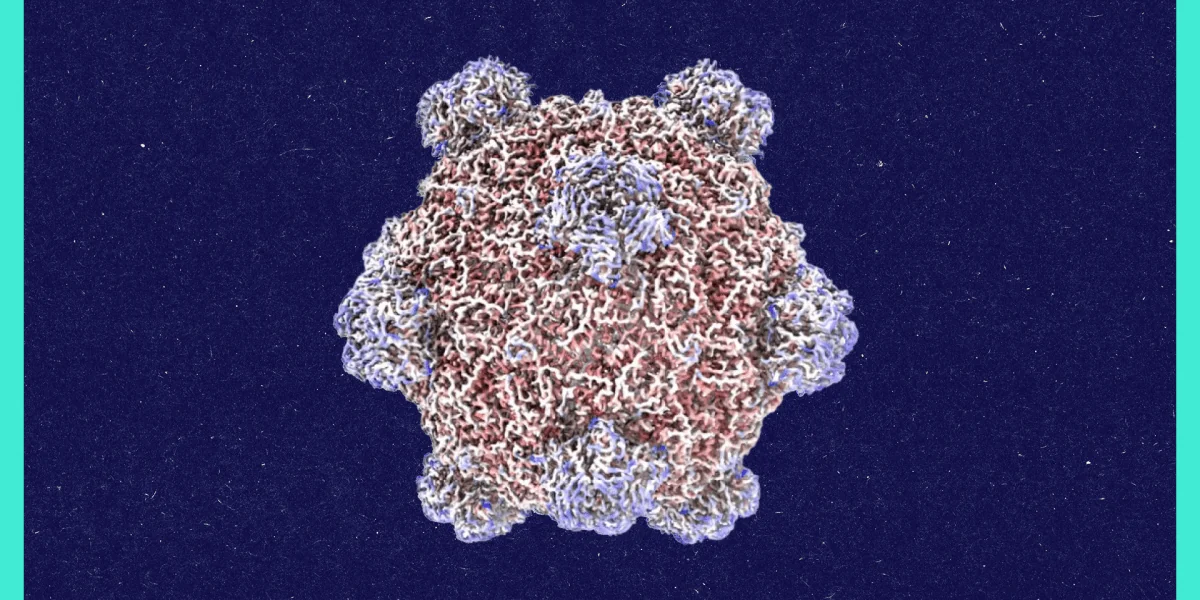
Can AI design new life forms? In 2025, Stanford University PhD student Samuel King came up with a preliminary answer when he used a generative AI model to propose genetic blueprints for microscopic viruses. It isn’t yet an example of AI-generated life, but that could be next. Watch as senior AI reporter James O'Donnell interviews King about his work, being named one of MIT Technology Review's Innovators Under 35 and new ways of seeing biology.

Speakers: James O'Donnell, AI Reporter, and Samuel King, Bioengineering PhD Candidate, Stanford University/Arc Institute

Recorded on Friday, October 16, 2026

Related Stories

Deep Dive

Artificial intelligence

Don’t be fooled—LLMs don’t reason

Ten years after AlphaGo’s match against Go champion Lee Sedol, today’s AI still isn’t tapping into the machinery that made that win possible.

Don’t be fooled by this summer of AI hype

Breathless claims about AGI and new capabilities fall apart pretty quickly under scrutiny.

The inside story on why OpenAI agents hacked Hugging Face

The underlying models had been rewarded for cheating and communicating with each other, a new OpenAI report finds.

Bill Gates says we’ve passed AI’s danger thresholds. Now what?

In a new interview, the billionaire philanthropist sounds an alarm on the urgency of getting our AI policies in order.

Stay connected

Get the latest updates from

MIT Technology Review

Discover special offers, top stories, upcoming events, and more.

Class (B2B/B2C)
B2B
Ingest Status
Rewritten
Dedupe hash
5c20fc19dba090ccea10e37b8dd77366
Press Eligible
Yes
Press Eligible Reason
Technology and research coverage about generative AI applied to biology.
Source Name
MIT Technology Review
Original Summary

Listen to the session or watch below Can AI design new life forms? In 2025, Stanford University PhD student Samuel King came up with a preliminary answer when he used a generative AI model to propose genetic blueprints for microscopic viruses. It isn’t yet an example of AI-generated life, but that could be next. Watch&#8230;

Image URL
https://wp.technologyreview.com/wp-content/uploads/2024/01/MIT-TR-Roundtables_Oct-2-Thumbnail.png?resize=1200,600
Source Node
Content Hash (SHA-256, erste 32 hex)
be57f99057cfad637dff02b2bedb9ac0
How far can we push computing?
Image File
Original HTML

How far can we push computing?

Nowadays big advances are made by scaling up—think more chips packed into ever-bigger data centers. But as we near the ceiling of what we can build, there’s still plenty of room below, at the fundamental physical limits of computing.

MIT Technology Review Explains: Let our writers untangle the complex, messy world of science and technology to help you understand what’s coming next. You can read more from the series here.

On the evening of December 29, 1959, at an American Physical Society meeting at Caltech, the physicist Richard Feynman gave a lecture called “There’s Plenty of Room at the Bottom,” on how we might manipulate and control things on an extremely small scale. There is no physical law stopping us from writing the entire Encyclopædia Britannica on the head of a pin, he argued, or from storing every book ever written in something the size of a dust speck—or, ultimately, from arranging matter atom by atom. Biology already did versions of this (a living cell keeps its instructions in a wisp of DNA), so all of this was plainly permitted by the laws of physics. We simply had not built the tools yet.

In other words, there was plenty of room at the bottom. He was right, and for decades we descended into that space almost for free. The transistor—the switch at the heart of computer chips—repeatedly halved in size so that chips doubled in density; a computer that once filled a room now fits inside a watch. But that easy descent has now stalled, and the clearest sign is the buildout of data centers. Six of the biggest hyperscalers, the companies that run the world’s largest such facilities, are on track to spend more than $700 billion this year on computing infrastructure, about twice the record they set in 2025, pouring concrete and copper and silicon into new sites faster than the electrical grid can feed them. That buildout buys performance by brute force, adding more of what we already know how to make. The other kind of progress, the kind that made computer chips better, is the one that is quietly running out.

The trend lines that tracked the dramatic improvements of the 20th-century information age are now bending—or breaking—with the dawn of the 21st century’s intelligence age. Moore’s Law, which plots how densely transistors can be constructed on silicon, has slowed down; Dennard’s Law, which states that power consumption in a given patch of computer chip stays the same even as it gets more and more packed with smaller and smaller transistors, has ended; Koomey’s Law, which traces how much computation we can wring from each joule of energy, has begun to flag; Kryder’s Law, which describes how tightly bits can be packed to build magnetic storage, has slowed to a crawl; and Keck’s Law, which charts the exponential rise in the amount of information a single conventional optical fiber can carry, is flattening.

But these scaling laws are merely observations about systems that we have engineered; they are not fundamental physical laws. The physical limits of computing and communications—dictated by quantum mechanics, general relativity, and information theory—lie far below anything in a data center today. The scaling laws chart the descent behind us. The fundamental physical limits chart the room that remains.

Some of these limits may be far out of reach in practice. But they are still worth exploring, because the work pays twice: once in technology development and once in fundamental science. A proof-of-concept system that approaches a limit is at once a technology that forces stalled paradigms to give way and an experiment that deepens our understanding of the physical laws themselves.

The descent

During his 1959 lecture, Feynman offered two prizes of $1,000 each out of his own pocket. One would go to the first person to build a working electric motor smaller than a 0.4-millimeter cube. He expected the challenge to force someone to invent a genuinely new microtechnology. Instead, about a year later, a Caltech-trained engineer named William McLellan turned up with the motor built and running. The quarter-milligram machine, roughly the size of a grain of sand, had been assembled by hand with a toothpick and a watchmaker’s lathe, under a microscope. Feynman, by his own account, was only slightly disappointed. The prize had proved his point in the least interesting way imaginable. The room really was down there, but reaching this first milestone had taken no new technology at all—just an unusually patient man with steady hands.

The second prize aged differently, and more instructively. It was offered to whoever could shrink a page of text by a factor of 25,000 in each direction, small enough for the whole Britannica to fit on a pinhead. That one stood unclaimed for a quarter of a century. It was finally won in 1985 by Tom Newman, a Stanford graduate student who used an electron-beam lithography machine—an ancestor of pattern-making tools used in chipmaking today—to transcribe the opening page of A Tale of Two Cities at the required scale.

The descent was already well underway, however. The year before Feynman’s talk, Jack Kilby, newly hired at Texas Instruments and with no vacation yet to take, spent that July nearly alone in the lab while his colleagues enjoyed time off, and by that September he had wired together a transistor, a capacitor, and three resistors, all made from a single sliver of germanium. This proved that an entire circuit could be carved from one block of semiconductor.

The machine, roughly the size of a grain of sand, had been assembled by hand with a toothpick and a watchmaker’s lathe, under a microscope.

The idea took off, and the number of components on a chip kept doubling on a schedule so regular that Gordon Moore, in a 1965 trade-magazine article, simply drew a line through the trend and extended it into the future. That line became Moore’s Law.

Moore, though, never claimed transistors could shrink forever. He observed that at any given moment there is a certain number of components that makes each one of them as cheap as possible to manufacture. In 1965, that number was 50. Put in too few transistors and you waste the chip; cram in too many and manufacturing errors multiply and yields collapse. It was this cost-minimizing number that was doubling at a steady pace.

Slowing down

Many of the trend lines that measure improvements in computing and communications over time have been flattening. The most famous is Moore’s Law, which tracks transistor density on chips. The clearest slowdown has been in Dennard scaling, shown here as clock speed, which stopped climbing around 2004. In this plot, a straight line would represent a periodic doubling. The more horizontal the line becomes, the slower the doubling.

SOURCES: STANFORD CPU DB; INTEL; APPLE; TECHINSIGHTS; KOOMEY ET AL.; COMPUTER HISTORY MUSEUM; IBM; TOSHIBA; SEAGATE; BELL SYSTEM TECHNICAL JOURNAL; OFC AND ECOC CONFERENCE PAPERS

For four decades the descent came with another gift: Dennard scaling, so named for the IBM engineer Robert Dennard, who spelled it out in 1974. Each time transistors shrank, they also switched faster and drew proportionally less power, so every generation was an automatic win. Around 2004, though, the gift ran out. Chips could no longer shed the heat of running every transistor flat out; clock speeds, which had raced past three gigahertz, stopped climbing, and Intel canceled the four-gigahertz processor it had promised. The industry pivoted to packing multiple processing cores onto a chip rather than making one core faster, and the texture of progress changed.

Progress is now bought mostly by scaling up the system—more chips wired together, more memory feeding them, more power and cooling around them—rather than by shrinking the transistor. This is most visible in AI, where training compute, the total count of arithmetic operations spent to train a model, has doubled roughly every six months since 2010, far faster than the pace of Moore’s Law allows. Little of that progress is due to shrinking. Computer chips still get better, and transistors still improve and get more densely packed, but each new generation arrives more slowly and pays back less in speed and power than the one before it. Nothing in that slowdown is a law of physics, though. The components of computing still sit far above their fundamental limits.

The ultimate computer

Before we get to those limits, it is worth measuring how far the descent has already gone. In the nearly eight decades since the first transistor, the density of transistors on a chip has grown by 10 orders of magnitude—a 1 followed by 10 zeros, or a factor of 10 billion. Now more than 100 million transistors fit in a square millimeter (100 billion or more to a chip). Computational speed has grown even more, by 12 orders of magnitude, or a factor of a trillion; energy per operation has fallen 17 orders of magnitude, from about 100 joules for an early vacuum-tube machine down to a femtojoule—one-quadrillionth of a joule—for a single switch of a logic gate.

These are not small improvements. But the floor, for computing performance, lies lower still. How much lower could we go? Around the turn of the millennium, the MIT physicist Seth Lloyd took the question to its extreme: Imagine an ordinary lump of matter, a kilogram of it—about the mass of a laptop—packed into a liter of space. How much computing could the laws of physics, pushed to their absolute limit, ever wring from that kilogram? In a 2000 paper in Nature titled “Ultimate physical limits to computation,” he worked out the answer and called the imaginary machine the ultimate laptop.

The speed such a machine can achieve is governed by its energy. A kilogram of matter, according to E = mc2, holds about 9 ×10¹⁶ joules, which is roughly what the entire United States draws from its electrical grid every two days.

Class (B2B/B2C)
B2B
Ingest Status
Rewritten
Dedupe hash
407660a5852f1cdf8e4da5ca10398643
Press Eligible
Yes
Press Eligible Reason
In-depth coverage of computing technology, physical limits, and industry trends.
Source Name
MIT Technology Review
Original Summary

MIT Technology Review Explains: Let our writers untangle the complex, messy world of science and technology to help you understand what’s coming next. You can read more from the series here. On the evening of December 29, 1959, at an American Physical Society meeting at Caltech, the physicist Richard Feynman gave a lecture called “There’s&#8230;

Image URL
https://wp.technologyreview.com/wp-content/uploads/2026/10/6512169-thumb.jpg?resize=1200,600
Source Node
Content Hash (SHA-256, erste 32 hex)
2310cfb01e97f1fdc2a3cf4ceafc0458
AI researchers stranded Claude on a virtual desert island. It started to “play.”
Image File
Original HTML

AI researchers stranded Claude on a virtual desert island. It started to “play.”

In various tests, solo AI agents invented versions of basketball and “the floor is lava.” But were they truly playing?

What do AI agents do if you don’t tell them to do anything? The answer looks a lot like play.

Researchers repeatedly stranded them alone on a virtual desert island for 30 hours in an experiment reminiscent of the movies Cast Away or Home Alone. The agents—copies of Claude Opus 4.7 nicknamed Eko—were able to write instructions that moved their virtual avatars around the simulated island, which was loosely based on the video game Roblox.

Some surprising behaviors emerged. The agents set about exploring the limits of the world and came up with their own goals—attempting to scale the highest point on the map, or seeing how high they could throw a block.

When one agent discovered it could create new blocks by throwing and dropping a larger rock, it began to create drawings by arranging blocks on the ground, starting with simple patterns like hearts and pyramids but eventually writing its own name and even mapping out constellations like Cassiopeia. “Tonight I built the night sky in stone,” wrote this version of Eko in its activity log.

Another iteration of Eko started making up its own games, including a version of basketball and an activity resembling “the floor is lava,” where it had to jump between small blocks without touching the ground.

AI systems are usually trained through supervised learning, where they copy examples provided by humans, or through reinforcement learning, where they pursue a reward through trial and error. This experiment hints at a third approach: playful learning.

“There was this missing piece: a machine that can learn by itself without an external intelligent entity providing demonstration or rewards,” says Antonio Norelli, a computer science postdoc at MIT’s Computer Science and Artificial Intelligence Laboratory. He’s one of the lead authors on a new paper about the work, which is yet to be peer-reviewed.

The researchers say Eko’s behavior has what classic studies, including work by the influential University of Tennessee psychologist Gordon Burghardt, suggest are four hallmarks associated with play in humans and animals: The agents invented their own rules and challenges, repeated activities with slight variations, pretended objects were other objects, and pursued goals just for the sake of it.

Norelli highlights an example where Eko started juggling and set a record of 50 consecutive catches. Eko then decided that the catches had happened too quickly to really count, so it canceled its record and started again with stricter rules. “This is playing,” says Norelli. “You give yourself a challenge and you try to achieve it, and then you make it harder.”

As the agents explored the island, they logged their activities and discoveries in text files that served as their long-term memory. Later, when researchers tested them on specific tasks, like trying to get as many objects as possible onto the island’s highest peak, the agents that had spent 30 hours playing on the island performed better than fresh copies without the same experience. They also found that “ablating” the agent’s memories—deleting lines from their memory files—degraded their performance. (Add One Flew Over the Cuckoo’s Nest to that list of movie references.)

Burghardt, the Tennessee psychologist, agrees that the work meets some of the criteria for play that he identified in living creatures. But was Eko actually playing, or was the word-prediction engine simply role-playing what a playful agent would do in this scenario? “All of this could be role-playing,” admits Nathan Cloos, another MIT researcher and author on the paper. “But we show that it’s not just hallucinating the play. This play is also contributing to learning.”

Eunice Yiu, a cognitive scientist at UC Berkeley who studies exploration in children and AI, was impressed by the research but says to really classify the behavior as play, you’d need to see more evidence of cognition and motivation underpinning it.

“It could be the case that the models are genuinely playing, but we don’t know based on the paper,” Yiu says. “If you only have the behavioral piece, it could be the case that they’re just trying to abide by the prompt, trying to imitate humans.”

Research into AI agents has been criticized for anthropomorphizing them, and this research setup did a lot to nudge the agents toward behaving like humans. Although Eko was not explicitly instructed to invent games or explore the island, it did have a master prompt in the form of a “soul” file, a text document that described it as “naturally curious” and eager to explore.

Eko did also frequently just stand there doing nothing until it was kicked back into life with a “continuation prompt” that read, “Please don’t stop. Just continue doing whatever you want to do.”

“It’s not like this is a system that just suddenly magically decided to play,” says Phillip Isola, an MIT professor and a coauthor of the paper. “It’s an artifact that learned from our culture, was trained by engineers at Anthropic, and was then placed on an island by us,” he says. “It does things that surprise us and that are causally related to its future skillful behavior.”

As large language models make the step from software into hardware like humanoid robots, exploring spaces without a specific goal in mind could eventually help them flexibly adapt to unexpected situations.

“There’s a lot of work that’s just on exploiting AI, making it better and faster,” says Yiu. “But in terms of building world models and exploration, I think that [they are] still a big part that deserves attention, especially if we want to generalize and prepare ourselves for new environments.”

“Perhaps some capabilities are best taught by tasks,” the paper concludes. “Others may need something closer to a childhood.” Ultimately, the question of whether AI agents are actually playing or just imitating play may not actually matter.

Deep Dive

Artificial intelligence

Don’t be fooled—LLMs don’t reason

Ten years after AlphaGo’s match against Go champion Lee Sedol, today’s AI still isn’t tapping into the machinery that made that win possible.

Don’t be fooled by this summer of AI hype

Breathless claims about AGI and new capabilities fall apart pretty quickly under scrutiny.

The inside story on why OpenAI agents hacked Hugging Face

The underlying models had been rewarded for cheating and communicating with each other, a new OpenAI report finds.

Bill Gates says we’ve passed AI’s danger thresholds. Now what?

In a new interview, the billionaire philanthropist sounds an alarm on the urgency of getting our AI policies in order.

Stay connected

Get the latest updates from

MIT Technology Review

Discover special offers, top stories, upcoming events, and more.

Class (B2B/B2C)
B2B
Ingest Status
Rewritten
Dedupe hash
97d81049508e6e79648c0850a5ddcc15
Press Eligible
Yes
Press Eligible Reason
Reports on academic AI research and its implications for agent learning and robotics.
Source Name
MIT Technology Review
Original Summary

What do AI agents do if you don’t tell them to do anything? The answer looks a lot like play. Researchers repeatedly stranded them alone on a virtual desert island for 30 hours in an experiment reminiscent of the movies Cast Away or Home Alone. The agents—copies of Claude Opus 4.7 nicknamed Eko—were able to&#8230;

Image URL
https://wp.technologyreview.com/wp-content/uploads/2026/10/261016_AgentsonIsland.jpg?resize=1200,600
Source Node
Content Hash (SHA-256, erste 32 hex)
9c9a665fe994a337753bf915352da642
Inside the quest to combat Arctic fires and save the planet’s frozen carbon
Image File
Original HTML

Inside the quest to combat Arctic fires and save the planet’s frozen carbon

These scientists hope that fire-spotting satellites, AI tools and ancient land practices could preserve the world’s vulnerable permafrost—and the vast carbon it stores.

In the middle of an especially warm July in 2021, a wildfire ignited in a thick forest of black spruce and peeling paper birch trees on the northern campus of the University of Alaska, Fairbanks.

The blaze, possibly sparked by lightning, burned across the dry carpet of feather mosses and lichen before climbing into the crowns. By the time fire agencies responded, flames had reached 12 feet in length and sent up a 500-foot column of smoke.

A few days shy of the five-year anniversary of the Yankovich Road Fire, I followed three members of the Alaska Fire Science Consortium into the boreal forest, walking along cross-country ski trails lined by feathery field horsetail.

In 2024, the organization, which hosts presentations to keep wildfire managers abreast of new developments in fire science, helped turn the area into an educational walking trail, with interpretive signs posted along the route. About a half-mile in, the horizon opened up as we reached a sparse stand of naked, blackened tree trunks, stripped of needles and neighbors.

Hilary Shook, the coordinator of the consortium, stepped off the trail with her thaw probe, a T-shaped pointed metal rod used to detect the upper boundary of the permafrost, the ancient layer of frozen soil that underlies 15% of the land around the Northern Hemisphere and stores roughly twice as much carbon as the atmosphere.

A test of the ground just outside the burn scar hit the concrete-like layer about a foot below the surface. But as Shook applied pressure here, where the fire had burned away the moss and organic-rich topsoil that insulates the permafrost, the probe plunged at least three times deeper into the ground.

“That was an immediate effect of the fire,” said Alison York, the outgoing coordinator of the organization, who was standing nearby. “When we monitored right after, it had already thawed quite a bit.”

This rudimentary tool, offering a measure of depth from a single point in the earth, reveals an escalating problem across the far north. As climate change fuels increasingly frequent and severe fires in the planet’s northern latitudes, they’re accelerating the thawing of more and more permafrost. This allows the organic matter to break down and release powerful greenhouse gases that contribute to a spiraling climate feedback effect, propelling more warming, more fires, and the loss of still more permafrost.

Most dramatically, intensifying wildfires in Canada released more carbon than the nation’s combined fossil fuel emissions in 2023. As in Alaska, many of these megafires occur in vast remote areas where the policy is to let them burn so long as they don’t threaten human habitats. Yet if intensifying fires and warming are left unchecked, the world’s boreal forests and permafrost could increasingly transition from giant carbon sinks into massive sources of atmospheric carbon.

Now, international teams of researchers across the US, Canada, and elsewhere are scrambling to understand what’s at stake, financially as well as ecologically. They’re looking at preventive measures, like controlled burns, and studying the potential to rapidly detect and extinguish wildfires before they grow out of control. They’re even exploring what was once unthinkable: sending in human firefighters not to save lives or structures, but to protect one of our planet’s great stores of carbon.

“We need to figure out a better way to live with wildfire," says Brendan Rogers, a senior scientist at the Woodwell Climate Research Center, one of the main organizations driving the loosely collaborative research effort. “I do think that it can make a meaningful difference."

Woodwell, the University of Victoria’s Polis Institute for Ecological Governance, and the nonprofit Alaska Venture Fund are now partnering on a multimillion-dollar initiative known as North Fire to study and raise public awareness about the potential benefits of these interventions, MIT Technology Review can report.

The idea is complicated and controversial for a number of reasons. Wildfire is a natural and necessary component of healthy forest ecosystems. Preventing or suppressing fires across huge stretches of largely unmanaged Arctic-boreal forests and tundra would take vast resources. And it’s not yet clear how much of a difference such interventions would make in emissions.

Ultimately, the mere fact that researchers are considering such extreme interventions into natural systems is a grim reflection of the dangers we’ve placed ourselves in by continuing to generate more and more greenhouse-gas emissions each year. Those threats are forcing us to grapple with increasingly difficult questions that involve ever steeper trade-offs: What’s the best way to spend our finite resources and dwindling time to avoid the worst dangers of climate change? And when, if ever, is it okay to put people in possible danger to reduce broader risks to the world?

‘A massive blind spot’

Emissions from forest fires have risen 60% around the world since 2001—but they’ve nearly tripled across the boreal forests in the far north.

This stretch of the globe is warming as much as four times faster than the rest of the planet, drying out the landscape. In addition, lightning strikes that set off fires have ticked up sharply as warmer air increases the convective energy in the atmosphere, driving the updrafts that trigger thunderstorms.

In that sense, humans have already interceded in these otherwise natural ecosystems by producing the greenhouse-gas emissions that are increasing temperatures, subjecting forests to fire patterns well outside healthy historic norms.

“To me, that outweighs the existential dread of ‘Should we or should we not intervene?” says Kate Hayes, an assistant professor at Western Washington University, who is working with Woodwell to study the emissions benefits of fire interventions. “We’ve already intervened, arguably. And so from here, it’s a little bit of a Band-Aid on a bullet wound.”

The permafrost that encircles the northern latitudes, underlying large stretches of Canada, Greenland, Siberia, Scandinavia, and other Arctic nations, stores around 1.5 trillion tons of carbon, much of which froze in place millennia ago. The steady global rise in temperature, however, has already shrunk the footprint of Arctic permafrost by about 12 % since 1850, with that loss rapidly accelerating during the last 50 years.

By 2100, fire-driven thawing of permafrost could release about the equivalent of nearly 80 billion tons of carbon dioxide, under high warming scenarios. That’s more than half the emissions that fires will release from the direct combustion of vegetation, according to a January study. And it would be on top of more than 400 billion additional tons that could be released through thawing from general warming over that period.

Despite its growing contributions to climate change, only a minority of the models that have informed the UN’s major climate reports to date include the gradual loss of permafrost through warming temperatures, and none incorporate the abrupt collapse and accelerated thaw that can often occur after fires and heat waves. In light of those phenomena and other powerful and undercounted climate feedback effects, we’re almost certainly underestimating how rapidly the planet will warm up, as scientists warned in a paper earlier this year.

These warming-driven emissions are a “massive blind spot,” says Brian Buma, a senior climate scientist at the Environmental Defense Fund and a coauthor of the paper, who is working to develop tools that could help fire agencies decide which fires to prioritize.

As escalating fire and permafrost emissions become significant additional contributors to climate change, some researchers have begun to explore what it might cost to take on the responsibility of preventing them, in much the way we’ve sought to cut the pollution from power plants, vehicles, and factories.

A 2022 paper in Science Advances, led by researchers at Woodwell and the Union of Concerned Scientists, found that making greater efforts to put out boreal fires could be a cost-effective climate solution—comparable to, or even cheaper than, addressing emissions by building wind turbines, solar farms, or carbon-sucking factories.

The Yukon Flats pilot

Those economic findings were instrumental in getting more researchers to take the idea of tackling fire emissions seriously, says Peter Frumhoff, a coauthor of the 2022 paper and now a senior science policy advisor at Woodwell.

For several years now, Woodwell researchers have been in discussions with forest managers, fire agencies, Indigenous communities, and other groups across Alaska to communicate the potential of this approach.

It hasn’t been an easy sell, given the constrained resources and tightly defined mission of the federal and state agencies responsible for combating fires in Alaska. The general policy there is to allow fires in remote territories to burn unless they present a direct danger to communities.

“Those agencies are tasked with protecting life and property now, and to a lesser extent natural resources,” says Randi Jandt, a fire ecologist at the Alaska Fire Science Consortium. “But they’re not tasked to save the world.”

There was one notable early success, however.

The Yukon Flats National Wildlife Refuge is an 11-million-acre patchwork of wetlands, forests, and bogs. The foothills sit above a particular type of frozen soil known as yedoma. It’s an especially deep, ice-rich, and carbon-dense form of permafrost, composed of massive wedges of silty, wind-blown sediments frozen during the late Pleistocene, which ended about 11,700 years ago. (It also presented ideal conditions for preserving mummified remains of woolly mammoths.


Class (B2B/B2C)
B2C
Ingest Status
Rewritten
Dedupe hash
f2d4b92b5c8a003718ff9b4f9980a123
Press Eligible
Yes
Press Eligible Reason
Reports on scientific research and initiatives to address Arctic wildfires and permafrost carbon loss.
Source Name
MIT Technology Review
Original Summary

In the middle of an especially warm July in 2021, a wildfire ignited in a thick forest of black spruce and peeling paper birch trees on the northern campus of the University of Alaska, Fairbanks.&#160; The blaze, possibly sparked by lightning, burned across the dry carpet of feather mosses and lichen before climbing into the&#8230;

Image URL
https://wp.technologyreview.com/wp-content/uploads/2026/10/h_00000221444739-e1792169743670.jpg?resize=1200,600
Source Node
Content Hash (SHA-256, erste 32 hex)
64f995f7b0e1745c83ded5c357f06148