Beloved Entertainment Returns to Disneyland Resort in 2027
Image File
Original HTML

Sitting along the curb before a parade, admiring the beauty of Sleeping Beauty Castle, and the building excitement of a show about to begin. Disneyland Resort entertainment has long had a way of turning incredible performances into lifelong memories, setting the stage from day to night.

On the Horizons stage at D23: The Ultimate Fan Event presented by Visa, host Neil Patrick Harris talked about this very feeling and his longtime love for Disneyland entertainment, including the nighttime spectaculars and parades that have dared to dream for years and years.

Neil also talked about his deep love for these moments in the park, adding, “I have so many great memories under the stars with my kids. I wish I could go back in time to relive them all over again.”

Well, Neil, ask and you shall receive. Some cherished and beloved entertainment is coming back to Disneyland Resort in 2027! Get ready for the return of two fan-favorite nighttime spectaculars and a beloved daytime parade.

“Remember… Dreams Come True” Lights Up Disneyland Once Again

Longtime Disneyland fans and fireworks enthusiasts alike: you’re in for quite a treat!

A refreshed version of the “Remember… Dreams Come True” nighttime spectacular will soon make a triumphant return to Disneyland park in February 2027. In addition to the projections on Sleeping Beauty Castle, the show will feature new projections at Rivers of America, the facade of “it’s a small world,” and all the way down Main Street, U.S.A.

Music and projections will delight guests with nightly scheduled performances, and on select evenings, the experience will be enhanced with fireworks above the skies of Disneyland park.

You may remember this nighttime spectacular debuted during the 50th anniversary of the Disneyland Resort (also known as The Happiest Homecoming on Earth). Featuring a vocal introduction by the iconic Broadway and film legend Julie Andrews, “Remember… Dreams Come True” illustrates the power of wishes and dreams in favorite Disney stories. Walt Disney’s dream of Disneyland is represented by songs and familiar phrases from some of the park’s most popular attractions.

Original “World of Color” Returns to California Adventure

On stage, Neil also revealed that fans will soon discover an updated take on the original “World of Color” nighttime spectacular at Disney California Adventure park, starting in February 2027.

This version of the show takes you on an imaginative journey into the colorful worlds of Walt Disney Animation Studios like The Little Mermaid and The Lion King, as well as Pixar Animation Studios stories Finding Nemo and Toy Story. Helping to tie it all together is a musical score that includes a special arrangement of the 1960s television theme for Walt Disney’s Wonderful World of Color, originally composed by Richard B. and Robert M. Sherman.

“Magic Happens” Parade Returns to Disneyland

Just in time for summer 2027, the “Magic Happens” parade will return to Disneyland park to once again fill the streets with inspirational moments of magic from favorite Disney stories.

Brought to life on a grand scale with stunning floats, artistic costumes, and imaginative music you’ll spot dynamic performers and characters in this high-energy daytime parade.

Led by Mickey Mouse and his pals, the “Magic Happens” parade features distinct stories with a mix of characters, making it feel contemporary and classic, fun and regal, and surprising and familiar – all at the same time.

Here, pumpkins become carriages and swords are plucked from a stone, highlighting stories from Disney Animation stories such as Cinderella and The Sword in the Stone, plus Coco from Pixar Animation Studios.

D23: The Ultimate Disney Fan Event

Catching up on all things Disney Parks at D23 2026? Find out what else happened on the Horizons stage at D23, now on our D23 2026 hub.

Class (B2B/B2C)
B2C
Ingest Status
Rewritten
Dedupe hash
88c1ba0795e4d11fce6cdfe8f3371b87
Press Eligible
Yes
Press Eligible Reason
Disneyland announces returning entertainment and attractions for visitors in 2027.
Source Name
Disney Parks Blog
Image URL
https://disneyparksblog.com/app/uploads/2026/08/Disneyland-Entertainment.png
Source Node
Content Hash (SHA-256, erste 32 hex)
fbceb5de023c2fe1b80eb008a5a4d203
Redwire Corporation News
Image File
Original HTML

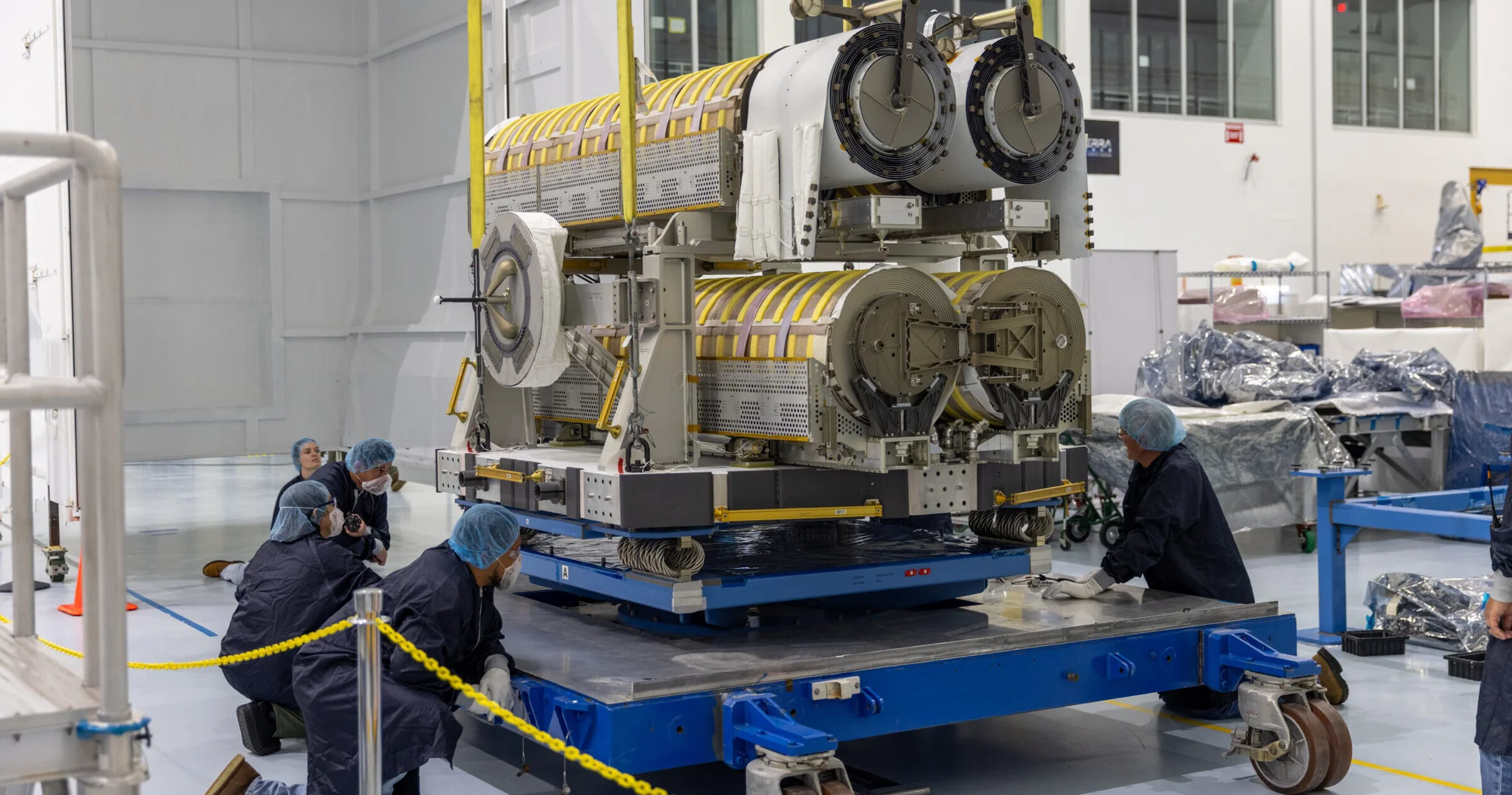
JACKSONVILLE, Fla. (October 12, 2026) – Redwire Corporation (NYSE: RDW), a leader in space infrastructure for the next generation space economy, announced today that the fourth and final pair of its Roll-Out Solar Array (ROSA) wings for the International Space Station will be launching to the station onboard NASA’s SpaceX 35th cargo resupply services mission (SpaceX CRS-35). Since 2021, a total of six Redwire-built ROSA wings have been deployed on the space station, modernizing its power supply to support critical astronautic and research operations.

Each ROSA wing provides 20+ kW of power for over 10 years once deployed, and all eight ROSA wings combined will provide more than 160 kW. Since installation on the station, the six currently deployed wings have contributed toward extended operation of the orbiting lab to 2030.

“We are very proud at Redwire to power the present and future of the International Space, Station which continues to serve as the pinnacle of global human spaceflight,” said Mike Gold, President of Redwire Space. “The ROSA program demonstrates the extraordinary benefits of public-private partnerships to create new technologies that not only enable flagship NASA missions, but have transitioned to support a wide variety of commercial programs. We’re grateful to our customer, Boeing, for their support of Redwire and the development of the innovative ROSA technology, which can now be used for future commercial space stations as well as providing power on the surface of the Moon, Mars, and beyond.”

Leveraging its initial experience on the space station, Redwire has continued to advance ROSA technology to provide robust and reliable power to numerous spaceflight platforms and ambitious missions including NASA’s Double Asteroid Redirection Test and supporting commercial geotelecommunications satellites. Moreover, Redwire has built the most powerful ROSA wings in its history to help power the historic SR-1 Freedom Mission to Mars. In addition to ROSA, Redwire has also developed the Extensible Low-Profile Solar Array (ELSA) for a variety of satellite missions. With more than 65 solar array wings delivered or in development, Redwire will power the future of civil, commercial, and national security missions in space.

About Redwire

Redwire Corporation (NYSE: RDW) is an integrated space and defense tech company focused on advanced technologies. We are building the future of aerospace infrastructure, autonomous systems, and multi-domain operations leveraging digital engineering and AI automation. Redwire’s approximately 1,400 employees located throughout North America and Europe are committed to delivering innovative space and airborne platforms transforming the future of multi-domain operations. For more information, please visit RDW.com.

Media Contact:  

Tere Riley

[email protected]

OR

Investors: 

[email protected]

Class (B2B/B2C)
B2B
Ingest Status
Rewritten
Dedupe hash
1898a255d7be035820af36af1f59d5c2
Press Eligible
Yes
Press Eligible Reason
Manuelle Prüfung nötig. Risiko: MEDIUM. Flags: ['numbers']. Stichprobe: False
Source Name
Redwire Corporation
Image URL
https://rdw.com/wp-content/uploads/2026/10/cropped-KSC-20260811-PH-RCR01_0191orig.jpg
Source Node
Content Hash (SHA-256, erste 32 hex)
912ab4f343440dab62f18fd6b90cd01e
Garmin International, Inc. News
Image File
Original HTML

The ultimate smartwatch

Our most advanced golf smartwatch

Premium cycling computer with hands-free voice control

Powerful smart trainer with multidirectional motion

The ultimate smartwatch

Ultraperformance GPS smartwatch

Simplify your drive with new ultrawide displays

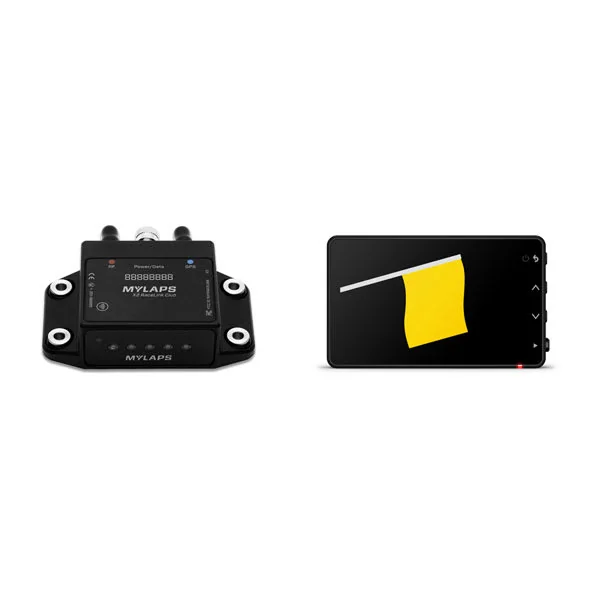
See real-time digital flag signals in the cockpit

Racing radar for high-performance drivers and track enthusiasts

Advanced marine head units

Our clearest sonar ever

Integrated flight displays for experimental and certified piston aircraft

Ultimate aviator smartwatch with satellite and LTE connectivity

Class (B2B/B2C)
Ignore
Ingest Status
Rejected
Dedupe hash
006e35e02ed92117f4645dfacdaa8b0e
Press Eligible
No
Press Eligible Reason
Text too short (78 words. Min: 150)
Source Name
Garmin International, Inc.
Image URL
https://res.garmin.com/en/products/BUNDLE-CAT2-X2RLCLUB/v/cf-lg.jpg
Content Hash (SHA-256, erste 32 hex)
255d2b33a1ed7c088fa4f69c9f84807b
Lawyers for Construction Accident Victims
Image File
Original HTML

Excluding motor vehicle collisions, construction accidents are a leading cause of serious injury and death in the United States. Depending on the circumstances of the accident, the injured worker may have several options when it comes to obtaining financial compensation to cover medical expenses, lost income, and lifetime damages.

Rapid Response Lawyers for Construction-Related Accidents

Over the years, Lead Attorney Doug Horn and the Horn Law team have had a track record of success in maximizing recovery in catastrophic injury claims throughout Missouri and Kansas. Construction accidents are complex and demand immediate investigations to begin securing important evidence that pertains to fault and liability. Early legal consultation enables Horn Law to begin legal investigations, identify parties at fault, outline comprehensive legal strategies for recovery, file claims, retain experts, and begin to assemble evidence to maximize recovery. Because construction accident victims are usually entitled to only one legal recovery, the best foundations must be laid early on to ensure the best possible results.

Ask A Question,

Describe Your Situation,

& Get Immediate Help

Contact Us & We’ll Guide You Through Your Next Steps!

Required Fields*

Your Information Is Safe With Us.

We respect your privacy. The information you provide will be used to answer your question or to schedule an appointment if requested.

Free Legal Consultations

If you or someone you know has been injured in a motor vehicle accident, alert Lead Attorney Doug Horn to the case at 816-795-7500. Horn offers free legal consultations. In addition to telephone consultations, Horn offers office, home, and hospital consultations to provide aid to clients at a convenient location.

As rapid response attorneys, early legal consultation is a priority with Horn Law. An early start allows us to take care of our clients’ immediate issues, including legal, investigative, insurance, and financial questions that arise in nearly every car accident claim.

Close & Convenient

The Horn Law home office is in Independence, Missouri, near I-70 and I-470 (across the street from Costco).

In addition to our home office, consultation offices are located in both Lee’s Summit and Liberty in Missouri, as well as Overland Park, Kansas.

Construction Accident Cases

Horn Law has handled a variety of construction accidents in Missouri and Kansas. Following is a brief overview of the most common cases our law firm handles on behalf of a seriously injured construction worker, including:

- Falls

- Falling Debris

- Construction Vehicle Accidents

- Electrocution

- Respiratory Hazards

- Caught In-Between

Falls: Falls are one of the most common types of injury facing construction workers. Due to the nature of the job, workers are frequently up on scaffolding or other unstable surfaces where falls are an immediate threat. While many precautions can be taken (such as mandating safety equipment, harnesses, etc.), falls usually are from such a height that catastrophic injuries are common. Potential liabilities in fall cases include:

- Failure to provide personal protective equipment

- Failure to assess the construction site’s risk

- Failure to warn, train, and educate employees on the risk of falling

- Failure to abide by regulations and code regarding working from heights

Falling Debris: Falling debris is a cause of injury that is distinctly associated with construction work. Because workers are often completing tasks from heights, they must use the highest degree of care and caution when disposing of scrap materials or other unneeded substances. Utilizing appropriate warnings, bins, and safety protocols can help prevent severe injury. Even when debris naturally or unintentionally falls as a result of the construction process, hard hats, goggles, and other safety equipment can help mitigate injury. Potential liabilities in falling debris cases include:

- Failure to provide personal protective equipment, such as a hard hat

- Failure to train and provide workers with safe disposal strategies

Construction Vehicle Accidents: Motor vehicle accidents on the roadway or the construction site are a common form of construction-related accidents. Often, distractions, blind spots, and the aggressive operation of a vehicle result in serious injury or death. Often, accidents result because drivers are not following safety protocols concerning the operations of vehicles. Our law firm has had cases where serious injury and death resulted because a construction-related vehicle was not properly outfitted with safety equipment, including back up warning alerts, reflectors, and/or cameras. Potential liabilities in construction vehicle cases include:

- Failure to follow strict roadway construction safety regulations

- Failure to provide and maintain vehicle safety equipment

- Failure to properly train and alert workers regarding vehicle operations and risks

- Failure to communicate safety protocols about vehicle operations

Electrocution: Because construction work often involves below-ground digging, managers must make sure that a full electrical and utility assessment is completed to outline spots that should be avoided. Accidentally cutting through a power line often results in very severe injury, if not death. Even once an assessment is completed, flagging should be implemented as a means of protecting workers from high-risk locations. Workers should also receive training to understand and recognize electrical hazards that exist above ground, such as those that may arise when constructing a house or office building where several panels, switches, and lines are needed. Power tools should be used with extreme caution, and open lines should always be flagged. Even if one wire or pipe is missing flagging, deadly consequences could occur. Potential liabilities in electrocution cases include:

- Failure to accurately assess electrical risks above and below ground

- Failure to properly flag specific risks on-site

- Failure to provide adequate electrical training to workers

- Failure to provide personal protective equipment to workers

Respiratory Hazards: Because construction sites will often be subject to many hazardous substances and irritants like dust or smoke, managers should make sure that workers receive appropriate protective equipment and fumigation strategies. Respiratory protection violations are one of the leading breaches of construction site regulation. However, by providing or requiring appropriate equipment, managers can save many employees from serious repertory illnesses that compromise health and lead to a lifetime disease. Potential liabilities in respiratory hazard cases include:

- Failure to provide or require protective fumigation equipment

- Failure to properly assess environmental and air quality risks

- Failure to train and monitor ongoing risks posed by irritants or hazardous substances

Caught In-Between Accidents: Being caught in between or compressed by objects in the workspace is another leading cause of serious injury for construction workers. When heavy objects or materials fall from loading docks, scaffolding, or any other surface, they can pin workers against another hard surface. Such incidents can result in serious injury. Potential liabilities in caught in-between cases include:

Honors & Awards

Related Blogs

Get practical tips, legal perspectives, and safety information directly from the team at The Horn Law Firm, P.C.

What should I do after a car accident in Kansas City if I feel injured but didn’t go to the hospital right away?

Many people don’t recognize the full extent of their injuries until hours or even days…

Douglas "Doug" Horn

November 4, 2025

How do car accident attorneys handle insurance companies that try to reduce settlement offers?

Insurance companies often look for ways to minimize what they pay out, especially in cases…

Douglas "Doug" Horn

November 4, 2025

What types of injuries qualify for a personal injury claim after a vehicle accident?

A wide range of injuries may provide grounds to pursue a personal injury claim. These…

Douglas "Doug" Horn

November 4, 2025

Can I still pursue compensation if I was partly at fault for the accident in Kansas City?

In Missouri, accident victims may still seek compensation even if they were partially responsible for…

Douglas "Doug" Horn

November 4, 2025

What makes work injury claims different from other personal injury cases?

Work-related injuries, such as those from construction accidents, warehouse incidents, or industrial hazards, often fall…

Douglas "Doug" Horn

November 4, 2025

What should I do after a car accident in Kansas City if I feel injured but didn’t go to the hospital right away?
Many people don’t recognize the full extent of their injuries until hours or even days…

Douglas "Doug" Horn

November 4, 2025

How do car accident attorneys handle insurance companies that try to reduce settlement offers?

Insurance companies often look for ways to minimize what they pay out, especially in cases…

Douglas "Doug" Horn

November 4, 2025

What types of injuries qualify for a personal injury claim after a vehicle accident?

A wide range of injuries may provide grounds to pursue a personal injury claim. These…

Douglas "Doug" Horn

November 4, 2025

Can I still pursue compensation if I was partly at fault for the accident in Kansas City?

In Missouri, accident victims may still seek compensation even if they were partially responsible for…

Douglas "Doug" Horn

November 4, 2025

What makes work injury claims different from other personal injury cases?

Work-related injuries, such as those from construction accidents, warehouse incidents, or industrial hazards, often fall…

Douglas "Doug" Horn

November 4, 2025

What should I do after a car accident in Kansas City if I feel injured but didn’t go to the hospital right away?

Class (B2B/B2C)
Ignore
Ingest Status
Need Review
Dedupe hash
2ffe360586d3dcca792903a43cdebf66
Press Eligible
No
Press Eligible Reason
Irrelevant (need review): Law firm promotional content soliciting construction accident injury claims and legal consultations.
Source Name
The Horn Law Firm, P.C
Image URL
https://hornlaw.com/wp-content/uploads/2025/10/construction-accident-lawyers-img-1.webp
Content Hash (SHA-256, erste 32 hex)
75b3f2cfa503ab94759db5250c26fe68
You Can't Consume Your Way Out of AI Cost Opacity
Original HTML

You Can't Consume Your Way Out of AI Cost Opacity

Government Needs to Manage AI Contracts Upfront

VIENNA, Va., Aug. 4, 2026 /PRNewswire/ -- Permuta Technologies today published a white paper, "You Can't Consume Your Way Out of AI Cost Opacity," the 2nd in a Series of Whitepapers focused on AI and government, examining how AI pricing is shifting toward token- and consumption-based models and why that change matters for government acquisition, budgeting, and long-term contract control. Using Palantir as a case study, the paper argues that tokenization mechanics can turn AI from a predictable line item into a variable operating cost, potentially creating budget unpredictability, reduced cost transparency, ceiling pressure, source-selection complexity, and lock-in risk as AI becomes embedded in mission workflows. The paper concludes that the next phase of AI oversight in government will be defined not only by mission performance, but by whether agencies can understand and govern AI cost behavior once usage is operationally indispensable.

"AI can amplify mission outcomes, but tokenization can quietly amplify marginal costs and reduce visibility unless contracts are structured to preserve budget control," said Sig Behrens, CEO of Permuta," We have to govern it upfront."

About Permuta Technologies

Permuta Technologies is a readiness software company delivering mission critical solutions to federal, defense, and government organizations. Built on Microsoft technologies, Permuta's platform enables organizations to put the right people in the right place at the right time.

SOURCE Permuta Technologies, Inc.

Share this article

Class (B2B/B2C)
B2B
Ingest Status
Rewritten
Dedupe hash
dd5b83a01a75a39439614a839446755b
Press Eligible
Yes
Press Eligible Reason
Company white paper discusses AI pricing, government procurement, and contract cost management.
Source Name
Permuta Technologies, Inc.
Content Hash (SHA-256, erste 32 hex)
71ddc35ca2389d97a13a6af51323577e
Aegiq and the National Epitaxy Facility extend development collaborations to accelerate the development of photonic quantum computing
Image File
Original HTML

Aegiq and the National Epitaxy Facility extend development collaborations to accelerate the development of photonic quantum computing

Aegiq, a UK-based photonic quantum computing company, and the National Epitaxy Facility (NEF), a leader in semiconductor epitaxial materials, structures and devices, have extended their long-standing collaboration to accelerate next-generation photonic quantum technologies and reinforce the UK’s compound semiconductor supply chain.

NEF has played a key role in supporting Aegiq’s research and early-stage development, supplying high-quality epitaxial growth capabilities that have enabled rapid iteration and device optimisation. In a field where the pace of advancement is accelerating, speed of execution is critical. NEF’s fast turnaround times have allowed Aegiq to shorten learning cycles while maintaining momentum at the forefront of photonic quantum computing.

This collaboration underscores the importance of the UK’s open-access semiconductor infrastructure in bridging fundamental research with scalable quantum and photonic technologies.

“NEF’s mission is to equip the UK research community with advanced semiconductor epitaxial materials, structures and devices, enabling it to compete at the highest level globally in this rapidly evolving field,” said Professor Jon Heffernan FREng, Director of the NEF. “Through collaborative partnering with Aegiq from its earliest stages, we’ve supported rapid progression from prototypes to deployable photonic quantum computing solutions creating impressive economic impact, high skills jobs in quantum technology and a truly pioneering UK quantum company.” 

Recommended by LinkedIn

“High-quality epitaxial growth and fast iteration cycles are fundamental to advancing photonic quantum technologies,” said Scott Dufferwiel, CEO of Aegiq. “NEF’s capabilities have enabled us to optimise device performance and accelerate development timelines. This continued partnership will be important as we scale towards more complex and deployable quantum systems.” 

About NEF

The National Epitaxy Facility (NEF) is an EPSRC funded centre of excellence for semiconductor epitaxial materials, structures and devices to enable the UK’s research community to compete at the highest levels on the world-stage.

About Aegiq

Aegiq is a UK-based full-stack photonic quantum computing company focused on delivering scalable quantum technologies for real-world applications. Working with organisations across telecoms, defence, aerospace, cybersecurity and AI, Aegiq develops solutions to address some of the most demanding computational challenges. Its integrated photonic platform enables high-performance, compact and modular quantum systems, creating a clear pathway toward the fault-tolerant, large-scale quantum computers needed to unlock the full potential of quantum technology.

Class (B2B/B2C)
B2B
Ingest Status
Need Review
Dedupe hash
727e9a0090161f3c3b49b91f6fa2c327
Press Eligible
Yes
Press Eligible Reason
QA FAIL (need review): The TARGET contains an unsupported factual claim: 'The companies disclosed no financial terms, contract duration or production volumes for the extended agreement.' This information is not explicitly stated in the SOURCE and constitutes a hallucination.
Source Name
GlobalFoundries Newsroom
Image URL
https://media.licdn.com/dms/image/v2/D4D12AQH2ESspHYNHbQ/article-cover_image-shrink_720_1280/B4DZ5k.8MNIMAc-/0/1779810683845?e=2147483647&v=beta&t=R2ySFoITNiOU_CVvVthaSP0qk0G7qXqh6WGjngdCnvY
Generated Article_json
{"target_audience": "b2b", "is_medical": false, "ai_generated_title": "Aegiq, NEF Extend Pact to Speed Photonic Quantum Computing", "body_html": "<p><strong>United Kingdom -- [CURRENT_DATE] --</strong> Aegiq, a UK-based photonic quantum computing company, has extended its collaboration with the National Epitaxy Facility (NEF) to accelerate development of photonic quantum technologies and reinforce the UK's compound semiconductor supply chain.</p><h5>NEF's fast epitaxial turnaround shortens Aegiq's development cycles</h5><p>NEF has supplied Aegiq with epitaxial growth capabilities since the company's research and early-stage development. According to the source, the facility's quick turnaround times let Aegiq shorten learning cycles, iterate rapidly and optimise device performance.</p><p>NEF is an EPSRC-funded centre of excellence for semiconductor epitaxial materials, structures and devices. Its stated mission is to equip UK researchers to compete globally in the field.</p><h5>Partnership moves Aegiq from prototypes toward deployable systems</h5><p>NEF Director Professor Jon Heffernan said that partnering with Aegiq from its earliest stages supported rapid progression from prototypes to deployable photonic quantum computing solutions. He also cited economic impact and high-skilled quantum technology jobs.</p><p>Aegiq CEO Scott Dufferwiel said the continued partnership will matter as the company scales \"towards more complex and deployable quantum systems.\"</p><p>Aegiq works with organisations in telecoms, defence, aerospace, cybersecurity and AI. The company develops an integrated photonic platform for compact, modular quantum systems.</p><p>The companies disclosed no financial terms, contract duration or production volumes for the extended agreement.</p>", "meta_description": "Aegiq and the National Epitaxy Facility extend their collaboration to speed photonic quantum computing and strengthen the UK compound semiconductor chain.", "seo_keywords": "Aegiq, National Epitaxy Facility, photonic quantum computing, epitaxial growth, compound semiconductor, UK supply chain, EPSRC, quantum technology", "companies": ["Aegiq", "National Epitaxy Facility"], "industries": ["Information & Communication Technology (ICT)"], "markets_regions": ["United Kingdom"], "news_type": ["partnership", "general_news"], "products": [], "themes": ["quantum_computing", "supply_chain", "semiconductors"], "events": [], "cta_text": "Follow Aegiq and the National Epitaxy Facility for updates on photonic quantum computing development.", "learn_more": "", "fact_check": {"accuracy_score": 100, "legal_risk": "low", "corrections_made": ["Removed LinkedIn recommendation metadata", "Used [CURRENT_DATE] placeholder in dateline; no city in source, so country used", "Paraphrased the Heffernan quote and kept one short direct quote from Dufferwiel"], "recommendation": "publish"}}
Content Hash (SHA-256, erste 32 hex)
0160135d24dff995ca854e658daef0a1
Diraq: Shaping the Future of Silicon Dot Quantum Computing
Image File
Original HTML

Diraq: Shaping the Future of Silicon Dot Quantum Computing

Quantum computers need to scale to many millions and ultimately billions of qubits to solve problems of global significance.

If you have tried to operate even a handful of qubits, you have noticed how hard that is—and how hard operating a billion qubits will be. Yet, the semiconductor industry has managed to control billions of transistors on a microchip. What if you could leverage existing semiconductor manufacturing techniques and scale to billions of transistors for quantum computing?

Diraq is a full-stack quantum computing company that aims to deliver the world’s first fault-tolerant quantum computer. It has established its core IP in the design and operation of silicon spin qubits, which are the same size as today’s transistors and compatible with CMOS foundry manufacturing.

Diraq was founded in 2022 by Andrew Dzurak, Scientia Professor of Quantum Engineering at the University of New South Wales in Sydney, Australia. In 2022, Diraq raised a $20M Series A led by Allectus Capital and this spring, it announced a Series A-2 extension led by Quantonation, bringing in an additional $15M in funding.

Learn more about the future of silicon dot quantum computing from our interview with the CEO and founder, Andrew Dzurak:

Why Did You Start Diraq?

I got involved with quantum computing in the early days when I moved back to Australia after doing my PhD in Cambridge, UK, and became a postdoc at the University of New South Wales in the 1990s. I have a long history in research, from studying quantum effects in semiconductors to exploring nuclear spins in silicon as qubits for quantum computing. The more I dug into quantum computing, the more exciting it got, which led me to get involved with establishing the Australian National Center for Quantum Computer Technology at UNSW, founded and led from 2000-2008 by my former mentor, Professor Bob Clark.

Over the past 25 years, it has become one of the longest-running research centers in quantum computing, helping hundreds of PhD students graduate, including Jeremy O'Brien, one of the co-founders of PsiQuantum.

Together with Professor Andrea Morello, we demonstrated the first electron and nuclear spin qubits. But we soon figured that for quantum to have an impact, we would need to make quantum error correction work and, thus, find a way to manufacture millions, if not billions, of qubits in a scalable way. We knew how hard it was to produce quantum devices with a few qubits, so billions of qubits seemed like an enormous challenge. There needed to be some unique insight on how to make it happen.

Yet semiconductor companies have already produced microchips with billions of transistors for classical, digital computing. Maybe there is a way to reuse semiconductor manufacturing techniques for quantum computing. Specifically, what if we could reuse existing transistors?

We took conventional MOSFET transistors and reduced the number of electrons they contained to just one electron, and then showed that we could use these electrons as a qubit. Over the next decade, we built a ton of IP and demonstrated that we could manufacture high-fidelity qubits out of transistors, perform two-qubit logic gates, and develop a quantum computing platform compatible with semiconductor manufacturing.

Finally, in May 2022, all of this research culminated in Diraq, which spun out of UNSW, Sydney, and raised a Series A round from Allectus Capital. We’re still working closely with the university and just opened a company lab on campus a few weeks ago. This way, we stay close to the latest advances in research while Diraq can focus as a company on leveraging semiconductor manufacturing to build a billion-qubit quantum computer.

Recommended by LinkedIn

How Do You Build Silicon Dot Quantum Computers?

Our qubits are modified transistors, literally the standard MOSFET transistors used in 99% of all integrated circuits today. A metal gate electrode is brought on top of an insulating oxide layer, which sits on top of the silicon substrate connecting the source and the drain. Turning the gate voltage on and off controls the current flow between the source and the drain.

What’s special about our technology is that we have found a way to reduce the number of electrons in such a transistor, even down to a single electron or a few electrons. These are confined to nanoscale regions within a silicon substrate, which are also called quantum dots.

We found a way to encode information in the spin of the electrons with a quantum dot, make quantum dots interact with each other, and thus perform a two-qubit logic gate—one of the fundamental prerequisites needed to build a quantum computer.

We need to combine many of these to build a powerful quantum computer: not only will we need many qubits to perform the actual quantum computations, but we’ll also need many qubits for quantum error correction.

The big advantage of our technology is that since it’s already compatible with semiconductor manufacturing, we will be able to put a large number of qubits on a chip—even millions, which is about the order of magnitude we’ll have to reach to make fault-tolerant quantum computing a reality.

Importantly, our qubits are much smaller at 20-30 nm than all other non-semiconductor-based quantum platforms: for example, superconducting qubits take 10s to 100s of microns. Packaging a million superconducting qubits will require a lot of space, and it will be hard to cool all of them down to cryogenic temperatures. This means scaling beyond a few 1000s of superconducting qubits while maintaining quantum entanglement across the entire chip and transferring large amounts of data between the qubits will be an enormous engineering challenge.

Even if one could solve these challenges, the cost of operating such a giant quantum computer would also be massive, requiring thousands of dilution refrigerators and enormous costs for cooling and operating these. In comparison, our chips and the required cooling infrastructure are much smaller and cheaper, so we can envision thousands of quantum computers in a data center, augmenting classical compute.

The major challenge for most quantum platforms is how to make many qubits interact with each other. Microchips faced the same problem when coordinating the operations of billions of transistors. Using metal gate electrodes between transistors, we’ve already demonstrated that we could use the same approach to turn the interaction between qubits on and off. Of course, interconnecting qubits will be more demanding than just standard transistors, requiring a more complex architecture. But we have developed a complete physical architecture for this, allowing for quantum error correction.

While older semiconductor process nodes already allow for many useful things, we’re benefiting from all the advances that come with the most cutting-edge process nodes, smaller feature sizes, and more advanced manufacturing.

How Did You Evaluate Your Startup Idea?

In the long term, our main focus is to manufacture universal, fault-tolerant quantum computers that can address all kinds of problems, and we expect to get there in the 2030s. But as early as 2028, we could see that our chips have thousands of qubits and target the first applications, e.g., in chemistry. Molecular design is certainly one of the domains where combining classical high-performance computing with quantum computing can provide early value. Once we have full error correction in place, we can address many more problems.

What Advice Would You Give Fellow Deep Tech Founders?

Focus on your end goal of leveraging technology to engineer a better product that customers need and will ultimately appreciate. Take advantage of scientific advances when they arise, but don’t get distracted by hype and focus on what your technology can do best.

Diraq is the coolest company name ever. So much progress already - exciting !

Thanks for sharing this wonderful post.Loved the interview.Quite informative

Class (B2B/B2C)
B2B
Ingest Status
Rewritten
Dedupe hash
0444bc5dc0e19e8a5c4eb2f73c9100a3
Press Eligible
Yes
Press Eligible Reason
Manuelle Prüfung nötig. Risiko: MEDIUM. Flags: ['finance', 'numbers']. Stichprobe: False
Source Name
GlobalFoundries Newsroom
Image URL
https://media.licdn.com/dms/image/v2/D5612AQF8Bsqu6E5gTw/article-cover_image-shrink_720_1280/article-cover_image-shrink_720_1280/0/1711550461985?e=2147483647&v=beta&t=MM7tdpZcFKs2msicWeUmX4KjT0YOciiAaW67mPY-D7Q
Content Hash (SHA-256, erste 32 hex)
ca0e0809428c1b827432095fc1b83c88
The hidden infrastructure behind intelligence
Image File
Original HTML

The hidden infrastructure behind intelligence

Connectivity is at the heart of nearly every major technology trend today. From mobile networks and AI infrastructure to satellite communications and IoT devices, RF enables the movement of information across the modern economy. It plays a critical role in every market we serve, making it one of the industry's most important and active areas of innovation. Every AI query, satellite connection and streamed video ultimately depends on RF technologies moving information. RF rarely gets noticed when it's working. Most people don't think about the technologies managing frequency, power and signal integrity until a call drops, a connection fails or data stops moving. That invisibility is RF doing its job.

To meet these demands, RF designers are being asked to do the impossible: higher bandwidth, more output power and greater efficiency, all in the same die area they had before. As AI pushes more computing onto devices, RF systems must provide greater performance using a smaller share of available power budget, while supporting more frequency bands, antennas and simultaneous wireless connections. What once required tradeoffs increasingly requires everything at once.

At GF, our strength has never been a single technology or application. Over the past two decades, we’ve built leadership across RF technologies and the system-level expertise required to bring them from innovation to high-volume manufacturing. RF-SOI, SiGe and RF GaN allow designers to optimize different parts of the connectivity chain, while FD-SOI, FinFET and silicon photonics help move data through increasingly complex communications and computing systems.

"We can serve nearly every component of the radio chain."

As the boundaries between terrestrial and satellite networks continue to blur, new architectures are emerging that promise to extend connectivity to places traditional infrastructure cannot reach. Concepts like direct-to-cell communications, alongside advances in 5G evolution, future 6G networks and next-generation satellite systems, will place even greater demands on the RF technologies that enable them, while creating new opportunities to rethink how wireless systems are designed and deployed.

In this issue, we explore how our RFGaN1 and SLATE™ advanced packaging technology are turning that leadership into scalable platforms customers can deploy today. We also go inside a GF Labs breakthrough that reimagines RF switching itself, built on GF's commercial RF-SOI platform and published earlier this year in Nature Electronics.

— Shankaran Janardhanan , SVP of Photonics & RF

Doubling down on GaN: A Q&A with Dan Denninghoff

RF GaN has spent years as a specialty technology. Earlier this year, GF moved it into volume production, expanding GF's ability to serve connectivity applications that demand higher power and efficiency while complementing the broader RF portfolio customers already rely on. Dan Denninghoff , Senior Director of RF GaN Product Line, breaks down what RFGaN1 changes for designers building the next generation of comms and defense systems.

RF GaN has been around for a while. Why is moving it into production at scale a big deal?

Dan: Up to now, GaN has lived as a high-performance, niche technology that a designer would reach for on a project with a big budget. RFGaN1 is our first RF GaN-on-silicon technology qualified for volume production. It combines GaN’s high output power, efficiency and frequency performance advantages with the cost structure and volume of 200mm silicon manufacturing, enabling customers to build a real supply chain around it instead of treating every design as a one-off.

We are already seeing this shift play out. At IMS 2026, Falcomm launched GaNdalph.ai, an AI design tool built with first-class support for RFGaN1. Together, these tools speed up power amplifier design and deployment. The pairing works because the underlying process is stable and manufacturable at volume. Maturing this technology is becoming the foundation that other companies build tools and roadmaps on top of.

Who is this platform built for and what performance does it deliver?

Dan: RF GaN supports numerous emerging sectors that require efficiency and high-power wireless infrastructure. Power amplifiers and high-power RF switches alter the way satellite communications and cellular infrastructure, for example, sustain themselves. RFGaN1 runs 12 to 28V with depletion-mode devices, which yields sustained high output power and efficiency across 1 to 15 GHz applications.

“GlobalFoundries’ RFGaN1 platform provides a powerful foundation for the future of adaptive RF systems, delivering the performance and efficiency required for advanced front-ends in the critical defense, 5G/6G and satellite communications markets we serve.” - Victoria Pereira, CEO, Otava RF

What is the biggest barrier to GaN adoption?

Dan: Access and volume manufacturability are obstacles many customers come to us with. At GF, we’ve worked hard to address these pain points directly. We built early-access programs and GlobalShuttle™ MPW runs, so designers can prototype and validate cost-effectively before committing to full production. This is backed by our existing RF design infrastructure and GlobalSolutions™ partner ecosystem. Our 200mm fab in Burlington, Vermont is an Accredited Trusted Foundry, meeting the U.S. government’s requirements for manufacturing chips used in aerospace and defense systems. For many of the applications we’re talking about, it’s the reason a customer can use the platform at all. Combining GF’s high-volume 200mm manufacturing excellence with the power of GaN makes RFGaN1 the most cost-effective RF GaN in the world. This is an attractive feature for all our customers.

Read Dan’s full blog on what it takes to scale RF power and efficiency:

Smaller, smarter RF front-ends: Introducing SLATE on 9SW

GaN adds power. SLATE removes area. Together, they cover both ends of what next-gen RF systems need.

Every smartphone is fighting for physical space inside its own case. More bands, more 5G, more antennas, more sensors — they all compete for room. For years, this meant sacrificing features, battery life and performance.

This past June, GF qualified SLATE, a wafer-to-wafer bonding technology on its 9SW RF-SOI platform that challenges this notion. Instead of laying components flat and overtaking board space, 9SW SLATE allows designers to stack them vertically, bonding two wafers together and folding large transistors across both. The result is up to 45% less die area, with no loss in RF performance, giving designers more room to manage the growing complexity of modern wireless systems.

Antenna tuning is a good example that shows why space reduction matters. Every time you move your phone, your hand shifts or you walk into a building, the antenna’s performance changes. Tuners compensate for these micro-shifts in real time, switching on and off dozens of times a second so your call doesn’t drop and data doesn’t stall. It’s the underlying tech that no one notices when it’s working. Those switches must handle high voltage while staying small, and SLATE on 9SW means they can do that job in a fraction of the space they used to need.

Recommended by LinkedIn

Satellite terminals, IoT sensors, wearables and future AI infrastructure all face a version of the same challenge: delivering more capability in less space. By enabling new forms of integration across technologies, SLATE on 9SW helps designers rethink how systems are assembled rather than simply shrinking individual components. This marks an important advancement in RF front-end design, giving designers a new path to increase functionality and integration when traditional scaling approaches begin to reach their limits. 3D integration stops being a specialty project for the most space-constrained edge cases and can now turn into a routine design choice.

To learn more, join Cadence ’s upcoming webinar on October 27 where technical experts from GF and Cadence will discuss how SLATE™ advanced packaging technology on 9SW enables 3D RF integration and supports next-generation RF front-end design. Registration details coming soon.

The research-to-production pipeline: A new path for RF innovation

For decades, the semiconductor playbook was simple: shrink the transistor, get more performance.

That approach transformed computing. But in RF, engineers have been running into a different problem. As switches get smaller, parasitic effects and contact resistance increasingly offset those benefits.

So, Mohammad Nikoo , now an assistant professor at Nanyang Technological University Singapore, and Hua Wang , professor of electrical engineering at ETH Zurich, tried something unexpected. The work was carried out while Nikoo was a postdoctoral researcher in Wang's IDEAS Group at ETH Zurich. They built a switch around a fundamentally different mechanism, using displacement fields and quantum tunneling currents to carry a signal.

Built on GlobalFoundries' commercial RF-SOI platform through GF's University Partnership Program, the device demonstrated:

Sub-30 picosecond switching speeds 

More than 10x higher power handling than conventional transistor-based switches on the same platform 

Significant improvements in linearity 

Lower parasitics and higher switching frequencies overall 

Equally important, the team demonstrated the technology using a "zero-change" approach on an existing commercial process, showing a path toward manufacturability and integration with real-world systems.

The results, published this year in Nature Electronics, point toward potential applications in reconfigurable terahertz systems, next-generation wireless networks, satellite communications, advanced sensing, and the high-speed connectivity that increasingly underpins AI infrastructure.

Class (B2B/B2C)
B2B
Ingest Status
Rewritten
Dedupe hash
04c3544995a204ddce8c832041715839
Press Eligible
Yes
Press Eligible Reason
Manuelle Prüfung nötig. Risiko: MEDIUM. Flags: ['numbers']. Stichprobe: False
Source Name
GlobalFoundries Newsroom
Image URL
https://media.licdn.com/dms/image/v2/D5612AQFMwomzxcn5SQ/article-cover_image-shrink_720_1280/B56aBEdLMUI0AQ-/0/1787854897640?e=2147483647&v=beta&t=4921wi2Er9P0OnyvtfR1DlTv-YCdpfCA6G_oBsWnL1E
Content Hash (SHA-256, erste 32 hex)
801a30d894fbf534e86fadb937d2a96f
Orange Quantum Systems: Shaping the Future of Quantum Chip Performance
Image File
Original HTML

Orange Quantum Systems: Shaping the Future of Quantum Chip Performance

To provide value to end users, quantum computers need to scale. But simply increasing the number of qubits is not enough; they also need to be tested.

Currently, this testing process takes days, which is too long for efficient industrial-scale production. This bottleneck has so far impeded the progress of the quantum industry—and this is where Orange Quantum Systems, a startup focused on the efficient and affordable testing of quantum chips, comes in.

Founded by Garrelt Alberts, Adriaan Rol, Thorsten Last, Kelvin Loh, Amber Van Hauwermeiren, Orange Quantum Systems recently secured €1.5M in pre-seed funding from QDNL Participations and the Cottonwood Technology Fund to build a full-scale system for the automated testing of qubits.

Learn more about the future of quantum chip performance from our interview with the co-founder and Director of R&D, Adriaan Rol:

Why Did You Start Orange Quantum Systems?

I have been interested in entrepreneurship for a long time, but I didn’t want to start a company just for the sake of it. During my Ph.D. in quantum physics, I specialized in getting qubits to work efficiently. However, I encountered a big challenge—doing this at scale. Optimizing a handful of qubits, no problem. Optimizing hundreds or thousands of qubits in conjunction, that’s a tough challenge.

So, I thought about founding a quantum software startup and developing software that would help with characterizing, tuning, and thus optimizing qubits. But it soon became evident that with the current state of the quantum industry, a pure software approach wouldn’t make for a viable business case.

So I shelved that idea for a year until Garrelt Alberts, one of my co-founders who at the time was leading the quantum engineering efforts at QuTech, a Dutch research institute for quantum computing, proposed the idea to start up a system integrator. Eventually, we founded Orange Quantum Systems to go full-stack—software and hardware—and build a solution for qubit inspection with our system engineering capabilities.

How Does It Work?

Quantum computers today are not powerful enough to provide economic value, which is a major challenge for the quantum industry. They need longer coherence times, better fidelity, and, of course, more qubits.

Just like microprocessors, quantum computers will need to scale to industrial-level development processes, which involves going through the cycle of design, fabrication, and multiple tests.

We focus on that last part, testing the qubits. There are a few reasons why testing is hard and fundamentally different from testing classical chips. For classical chips, you can work at room temperature and get most of the data from simple measurements such as optical inspection or resistance measurements. For quantum chips, first, you need an environment where quantum effects manifest themselves, which for most qubits means going to cryogenic temperatures. Next, before you can even test the quality of the chip (e.g., coherence times) or how close certain (Hamiltonian) parameters are to your design, you need to bring the chip to operating conditions by executing a range of tuneup protocols.

Testing qubits is still very manual, with state-of-the-art labs being able to test ~5-qubit chips. This involves cooling down the chips in a dilution refrigerator for several days, tuning them up, determining the quantities of interest, and warming up for a day. So, testing takes weeks, and only a few chips per year might be tested.

Thus, if we want to build powerful quantum computers at scale, we will have to automate qubit testing. People have tested quantum chips in the past by building a full-blown quantum computer, but that’s inefficient. One of our insights has been that building test equipment is very different from building quantum computers. The real business case is in building dedicated test equipment. Funny enough, we felt that we were both too early and too late, as the quantum industry is not yet mature, but testing is so important that people are already building inefficient solutions in-house.

We’re starting with superconducting qubits, as they’re the most established quantum hardware platform. From there, it is relatively straightforward to expand to other solid-state qubits, such as silicon spin qubits. Although the calibration and test protocols are different for different device architectures and qubit modalities, and these qubits operate in different frequency bands (e.g., microwave vs baseband), the fundamental physics of quantum computing stays the same.

The most important aspects to our customers are throughput and giving good feedback on the qubit quality to their design and fabrication teams. We provide systems on-site that are completely integrated with the development process. It starts early in the process when engineers devise the architecture of a quantum chip, and we provide feedback on whether it actually works. Then, they optimize their quantum chips for fabrication to prevent crosstalk, increase coherence times, and improve yield. The architecture is now fixed, but it’s still about the right material choices and geometry—and for that, you need statistics.

Recommended by LinkedIn

How Did You Evaluate Your Startup Idea?

You evaluate what you're doing by getting started and being critical and honest with yourself when considering what works and what doesn’t. After launching Quantum Inspire (Europe’s first quantum computer), many people expected us to become a full-stack quantum computing company, but we have decided against it as the technology is not mature enough. The core problem is improving quantum chips so we provide useful products as well as take advantage of a unique market opportunity.

It is really not just about fabricating qubits but testing them. The feedback cycle between fabrication runs is still very limited and costly. With our skill set, however, we are perfectly positioned to address this bottleneck. We could also get started immediately by going to academic labs next door and helping them. This brought us paying customers early on in the life of the company. Now, with the recent funding round and the EIC accelerator, we can develop a full-scale system and automate a lot of the qubit testing.

What Advice Would You Give Fellow Deep Tech Founders?

Start with paying customers and become financially independent as soon as possible. Contrary to conventional start-up thinking, it is not just about sketching a VC hockey stick in a cool pitch deck. You need to be able to actually deliver on this. By focusing on providing value to your customers, you can rapidly validate what works and iterate on it. The trick is to figure out how to align the long-term and short-term incentives. This will give you freedom and independence to focus on what’s really important, and that is to do something useful.

Work on the Future of Computing at Orange Quantum System

Are you passionate about pushing the boundaries of science and technology? Join the dynamic team at Orange QS as an Experimental Quantum Physics Engineer to apply your quantum physics expertise to real-world applications.

Are you an electrical or mechanical engineer with experience in the high-tech sector and eager to help unlock quantum chip testing at scale? Orange QS invites you to play a pivotal role in optimizing its supply chain, managing vendors effectively, and ensuring top-tier quality assurance.

Orange QS has many other open positions: Join them today and make a quantum leap in your career! Check out the Orange QS career page*.

Further Reading

A €1.5M investment for faster quantum chip testing – Read more on Orange Quantum Systems’ website about their latest pre-seed funding round.

Orange QS obtains EIC Accelerator grant to deliver diagnostics systems for the quantum industry – Also, more on the website about how the European Innovation Council (EIC) will support Orange Quantum Systems.

*Sponsored links – we greatly appreciate the support from Orange Quantum Systems. Learn more about sponsoring the Future of Computing blog here

Class (B2B/B2C)
B2B
Ingest Status
Rewritten
Dedupe hash
7d3b1a7b1050b17f890e1fb6b1230534
Press Eligible
Yes
Press Eligible Reason
Manuelle Prüfung nötig. Risiko: MEDIUM. Flags: ['finance', 'numbers']. Stichprobe: False
Source Name
GlobalFoundries Newsroom
Image URL
https://media.licdn.com/dms/image/v2/D4E12AQGmnNnYN3lveg/article-cover_image-shrink_600_2000/article-cover_image-shrink_600_2000/0/1698834361474?e=2147483647&v=beta&t=1l1SnFIBl5Nkk3cx1XushpQhpokRYo-qlaLuKPwT4oo
Content Hash (SHA-256, erste 32 hex)
e3c05a44c52e42496deb69e9fa452503
Build without boundaries
Image File
Original HTML

WAF

Protect your applications without sacrificing performance

Cloudflare WAF inspects HTTP/S requests at the edge, using managed and custom rules to identify and block malicious payloads before they can compromise your application.

Zero-Day Protection at Scale

When a new vulnerability emerges (like Log4j), our security team writes and deploys a rule that protects our entire network in hours or minutes. Developers are often protected before they even have time to patch their own code.

Low False Positive Rate

Our Managed Rulesets are run against massive volumes of diverse traffic, allowing us to fine-tune them to be highly effective without blocking legitimate users.

Performance and Ease of Use

The WAF is deployed across our entire global network, so protection is enforced close to the user, adding virtually zero latency. Fully managed via API, fitting seamlessly into CI/CD workflows.

Edge-based security without performance impact

The WAF protects web applications and APIs from common and zero-day exploits (like SQL injection, XSS) without forcing developers to become security experts, manage complex rulesets, or sacrifice application performance. WAF allows developers to ship code faster and with confidence, knowing they have a powerful, auto-updating security layer protecting their work from a huge range of attacks.

OWASP Top 10 Protection

Virtual Patching for CVEs

Inline Malware Gateway

Automated Security Updates

Carrefour

Retail giant Carrefour replaced five separate security tools, put 400 e-commerce sites behind Cloudflare, and cut incident-resolution time by 75% after deploying the WAF (plus Bot Management).

Powerful primitives, seamlessly integrated

Built on systems powering 20% of the Internet, WAF runs on the same infrastructure Cloudflare uses to build Cloudflare. Enterprise-grade reliability, security, and performance are standard.

Build without boundaries

Join thousands of developers who've eliminated infrastructure complexity and deployed globally with Cloudflare. Start building for free — no credit card required.

Class (B2B/B2C)
Ignore
Ingest Status
Need Review
Dedupe hash
ce1032bd00bb7edfddf7a7c6a56a6186
Press Eligible
No
Press Eligible Reason
Irrelevant (need review): Promotional Cloudflare WAF product page with no substantive news value.
Source Name
Brandi AI
Image URL
https://www.cloudflare.com/preview.png
Source Node
Content Hash (SHA-256, erste 32 hex)
ab7dcc9aac6c6ff209909a88e9a6584c