Energizing partners to innovate and elevate with Cloudflare
Image File
Original HTML

Energizing partners to innovate and elevate with Cloudflare

PowerUP is our award-winning partner program, designed to equip you with the products, tools, training, and resources to grow your business. By joining, you will become a next-generation network and security advisor - ready to deliver what’s next.

Benefits

Resell

Resell and/or integrate Cloudflare products to create solutions that deliver business outcomes for customers.

Manage

Build, sell, and remotely manage Cloudflare-based services that deliver business outcomes to customers.

Distribute

Provide seamless access to Cloudflare products and a wide array of services and support to resell and manage partners.

Consult

Provide services and refer customers to Cloudflare. No solution reselling or service management.

Opportunities to differentiate

Stand out in the crowd. Deliver the value of Cloudflare to help your customers thrive. Together, we strive to solve customer challenges, reach new markets, and boost profitability.

Capacity

Earn benefits based on proven performance and capacity to deliver results at scale.

Capabilities

Earn more benefits based on expertise with product, industry or services specialization(s).

Coverage

Earn highest benefits based on global capacity and capabilities.

Why partner with Cloudflare?

Gain Knowledge

Technical enablement from Cloudflare University makes you a security and connectivity expert.

Expand your reach

From architecture reviews to demand generation support, you can easily expand or specialize to reach your target market.

Value-added distributors

We work with value-added distributors to bring Cloudflare solutions to partners worldwide.

Increase profitability

Transparent pricing, exclusive PowerUP Partner discounts, and incentives help you maximize your partnership.

What our partners are saying

"Cloudflare has made Zero Trust adoption easy, with these integrated product bundles and partner services speeding customers' journey to comprehensive, Zero Trust-based security for teams, infrastructure and applications. We're excited to be one of Cloudflare's initial launch partners for these innovative solutions."

Dave Trader

Field CISO, Presidio

What our partners are saying

"Assurance Data's charter is to deliver integrated security solutions for next-generation cyber defense. We're thrilled to work with Cloudflare, adding their innovative, 100% cloud-native Zero Trust solutions to our technology portfolio and appreciate the significant investment they are making in the partner channel, with deep partner enablement and service delivery support along with rich incentives.”

Randy Stephens

Chief Operating Officer, Assurance Data

Class (B2B/B2C)
B2B
Ingest Status
Rewritten
Dedupe hash
04c34d891c28db1ed898e707b4640490
Press Eligible
Yes
Press Eligible Reason
Cloudflare’s partner program details its business services, benefits, and channel opportunities.
Source Name
Brandi AI
Image URL
https://www.cloudflare.com/img/cf-social-card.png
Source Node
Content Hash (SHA-256, erste 32 hex)
c7abc576a88022f2b7090bc00257e9c7
We’re Sorry.
Image File
Original HTML

2 min read time

Blog

We’re Sorry.

We let you down, and we are going to make it right.

On February 17, we invited you to celebrate our 40th birthday with us. Wow, did you turn out!

The response to our birthday BOGO offer was unlike anything we’ve seen. You visited our restaurants in overwhelming numbers to share in the milestone, and for that, we are genuinely humbled. Forty years is a long time, and the outpouring of support yesterday reminded us why we love what we do.

But we also need to be honest: We let you down, and we’re sorry.

The promotion spread far beyond what we anticipated, and our hardworking crews were placed in a difficult situation. Some locations ran out of product and had to close early. Online and app ordering experienced sporadic issues that prevented some of you from redeeming the offer.

If you were one of the customers unable to place an order, you deserve better and we’re going to make it right. We’re currently planning something special for customers who missed out, and we’ll have details to share very soon.

Until then, please know that we have been working diligently to replenish product at closed locations.

We also want to recognize the incredible men and women working in our restaurants. While yesterday’s issues were through no fault of their own, they handled it with the same grit and dedication that has defined Five Guys for four decades. We are working together with our franchisees to ensure our crew members are properly recognized for their efforts during the promotion.

Thank you for your understanding, patience and, most of all, your love for Five Guys. More information to come.

— Five Guys and our franchise family

Ingest Status
Need Review
Dedupe hash
60eeb76495a79d77fdb04f4d9f08ba6e
Press Eligible Reason
Luna Batch Upload fehlgeschlagen
Source Name
Five Guys Enterprises LLC
Image URL
https://www.fiveguys.com/wp-content/uploads/2025/07/slider-section-bkg-2.jpg
Content Hash (SHA-256, erste 32 hex)
21992b07316cf0d03f2ae46a0bbb9640
Garmin International, Inc. News
Image File
Original HTML

The ultimate smartwatch

Our most advanced golf smartwatch

Premium cycling computer with hands-free voice control

Powerful smart trainer with multidirectional motion

The ultimate smartwatch

Ultraperformance GPS smartwatch

Simplify your drive with new ultrawide displays

See real-time digital flag signals in the cockpit

Racing radar for high-performance drivers and track enthusiasts

Advanced marine head units

Our clearest sonar ever

Integrated flight displays for experimental and certified piston aircraft

Ultimate aviator smartwatch with satellite and LTE connectivity

Class (B2B/B2C)
Ignore
Ingest Status
Rejected
Dedupe hash
05af8b0cf374df59c2ecddac961e89fa
Press Eligible
No
Press Eligible Reason
Text too short (78 words. Min: 150)
Source Name
Garmin International, Inc.
Image URL
https://share-assets.fe.garmin.com/facebook-default.jpg
Content Hash (SHA-256, erste 32 hex)
255d2b33a1ed7c088fa4f69c9f84807b
MODE Global News
Image File
Original HTML

“We are thrilled to have the recognition and grateful to all the agents, employees and partners across all of our brands who make it possible,” said Lance Malesh, MODE Global CEO.

Rankings for both lists are based upon annual gross revenue. The lists feature the industry’s top freight brokerage firms, air and ocean freight forwarders, dry storage and refrigerated warehouse operators and dedicated contract carriers.

“With the historic supply chain disruptions of the last few years receding into the past, third-party logistics providers have been adjusting to normalizing freight market conditions while working to build more efficient and resilient supply chains for the future,” said Seth Clevenger, Transport Topics’ managing editor of features. “The Transport Topics Top 100 Logistics Companies and Top Freight Brokerage Firms lists offer an updated look at how the industry’s largest 3PLs are adapting to this shifting business landscape.”

To learn who made the list and read more about the issues facing logistics companies, visit Transport Topics at https://www.ttnews.com/logistics/rankings/2023.

Ingest Status
Rejected
Dedupe hash
9b3efe5f639864291dee9b4fff37232c
Source Name
MODE Global
Image URL
https://www.modeglobal.com/wp-content/uploads/2023/05/TT-Top-100-News-Page-Image-.png
Source Node
Content Hash (SHA-256, erste 32 hex)
822862628fab55b8aef51be122d896b8
MODE Global News
Image File
Original HTML

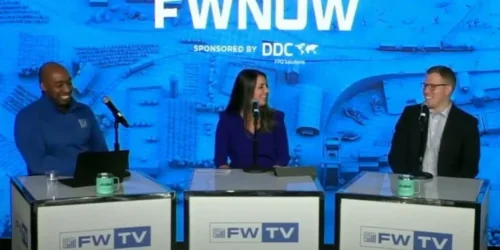
MODE Global is excited to release the recording of our own, Jason Roberts, SVP & BU President of Avenger Logistics, participating in a live interview during the FreightWaves F3: Future of Freight Festival, which took place November 1-3. In the FWTV interview, Jason discusses MODE Global’s new VPO technology.

About MODE Global

MODE Global is a $4B multi-brand, 3PL platform and one of the world’s leading logistics companies. We are the fifth largest truckload freight brokerage and the largest non-asset intermodal provider in the United States. Through our family of brands, which includes Avenger Logistics, MODE Transportation and SUNTECKtts, we offer more than 30 years of experience providing exceptional service with a focus on customer experience. MODE Global provides efficient, reliable transportation services around the world to more than 10,000 customers across a diverse set of markets. Powered by a sophisticated suite of technology solutions, MODE makes supply chain management easy through relationships with more than 100,000 carriers and agents in 230 locations throughout North America. For more information on how to transform your shipping solutions, please visit www.modeglobal.com.

Ingest Status
Rejected
Dedupe hash
466261498d8dfcf040b9950848377fb5
Source Name
MODE Global
Image URL
https://www.modeglobal.com/wp-content/uploads/2022/11/FW-TV-News-Page-Image-.png
Source Node
Content Hash (SHA-256, erste 32 hex)
1d3885531500169a63604a03571c9fef
Eagleview News
Image File
Original HTML

More Clarity. More Confidence.

See the critical details you need with 1-Inch GSD imagery.

Ultra-High Resolution Imagery

See the Difference with 1-Inch Imagery

Ultra-high resolution imagery offering unprecedented detail.

Gain Greater Clarity to Go from Guessing to Knowing

Our 1-inch GSD imagery gives you 9x more detail than 3-inch imagery.

Gain greater clarity with incredibly detailed images that let you see and distinguish small infrastructure details.

Extract high accuracy measurements to ensure confident decision making.

Get a 360-degree view with both orthogonal and oblique side-angled views.

High quality data feeds machine learning models for improved data processing and efficiency.

See the Difference

Resolution Matters

The higher the resolution, the more detail to inform your decisions.

1-Inch GSD

The Clearest Imagery Available

Only available from Eagleview, this resolution captures incredibly high levels of details, offering a very fine-grained view from all cardinal directions.

3-Inch GSD

High Resolution Aerial Imagery

Very high-resolution aerial imagery that captures fine details, but lacks the clarity of sub 1-inch imagery.

6-Inch GSD

Standard Aerial Imagery

A standard resolution offering a broader, but detailed view of the real world.

Greater Accuracy for Multiple Needs

Property Assessment

Analyze granular construction details, building materials, grades, and other aspects to precisely assess the value of a property.

Urban Planning

Get the minute details needed to extract precise data for mapping, project planning, and urban planning.

Asset Management

See and distinguish small infrastructure details, such as signage, fire hydrants, and light poles, to better measure, track, verify, inspect and report on infrastructure components.

Public Safety

Get uncompromised clarity about incident locations, such as road access, door and window placements, rooftop load, and potential hazards.

“When I worked with 3-inch imagery, I was thrilled, but 1-inch imagery truly takes it to the next level.

1-inch takes us to where we can actually save money because people are spending less time in the field.”

“Our transportation and mobility team has been able to lay out sidewalks and bike paths using just imagery rather than engineers. With 1-inch imagery, we can determine if room exists for bike paths. Previously, we’d need surveyors. Saves money and time.”

“The 1-inch views let us gather important information on a home that we cannot see from ground view. We collect this data before going out into the field. With this, we can see and measure all levels of a home, roof type and roof materials just to name a few. This in turn saves our office valuable time.”

See the Difference

Get in touch to schedule a demo.

Customer Success

Douglas County: Improving Decision-Making & Cost-Efficiency with 1-Inch Imagery

Learn more

Ingest Status
Need Review
Dedupe hash
a297ca511f51e7d0132aa5889dd09051
Press Eligible Reason
Luna Batch Upload fehlgeschlagen
Source Name
Eagleview
Image URL
https://www.eagleview.com/wp-content/uploads/2024/12/dropdown-1.png
Source Node
Content Hash (SHA-256, erste 32 hex)
3d173ffc99f8434ae1dbf7ba5c60001f
Market Resilience Isn’t Complacency
Image File
Original HTML

September 21, 2026

Our CIO and Chief U.S. Equity Strategist Mike Wilson discusses why quality stocks, strong earnings and price momentum support his view that the bull market remains intact.

Listen to our financial podcast, featuring perspectives from leaders within Morgan Stanley and their perspectives on the forces shaping markets today.

Matthew Hornbach: Welcome to Thoughts on the Market. I'm Matthew Hornbach, Global Head of Macro Strategy at Morgan Stanley.

Michael Gapen: And I'm Michael Gapen, Morgan Stanley's Chief U.S. Economist.

Matthew Hornbach: Today, what the Federal Reserve decided at its September meeting and what it could mean for rates through the end of the year.

It's Wednesday, September 16th at 4pm in New York.

So, Mike, the Fed raised rates by 25 basis points at this week's meeting. What stood out to you the most in the decision? And when it comes to inflation, how do you think this 25-basis point rate hike is actually going to affect the inflation outlook?

Michael Gapen: Yeah, so certainly the decision was in line with expectations. You know, obviously what we've learned in the very broad sense is that inflation isn't moving fast enough in the direction that the Fed wants. So, it's responding by tighter monetary policy. And that does set up a very interesting question which you just asked, which is: Well, is it going to work? Is this the right response to the inflation that we're seeing?

So, if you do go back and reread that Jackson Hole speech, there's not a lot in there about the drivers of inflation, what's causing higher inflation. But it's clear the only response to above target inflation from the point of view of the chair was tighter monetary policy. So, the Fed is in a bit of a pickle.

Most of us believe the majority of the inflation we're seeing is supply side driven from tariffs, from energy. At least in the past, let's call it supply chain disruptions, a de-globalization narrative. Some of it is demand side driven through AI. But I think we're all looking at that thinking modestly tighter rates isn't necessarily going to bring down that AI-related inflation.

So, we're left to conclude that the Fed's in this uncomfortable position of saying, "Well, a lot of the inflation that we're seeing is supply side driven and from the structural AI story that we're not convinced higher rates can maybe address."

So I think the answer would be, if inflation's going to come down, then higher rates will be weighing on the parts of the economy that are more interest rate sensitive and generally soft already.

Is this a one and done? Or do you think that when the Fed actually goes ahead and hikes rates after a long pause, they are thinking about delivering more than just one rate hike?

Michael Gapen: Yeah, I strongly believe the committee as a whole is thinking in terms of more than one move. Monetary policy doesn't, say, hyper-react. It reacts with a bit of a delay. So, to your point, they've been on hold for a while. When they think about changing policy, then they're thinking about a series of moves.

So, I think in their mind, if they're raising rates, there's a strong probability that they will do at least one more or two more. They're never going to think that a 25-basis-point move in the funds rate will fundamentally change the macro-outlook. So, I don't think they'd ever walk into this thinking one and done.

Now, it is possible we get an ex-post one and done. So, how could that come about? If it is true indeed that we're right that a lot of this inflation is supply-side driven. It is coming down. It's clear that the three- and six-month annualized rates are pointing to disinflation into year-end. We can debate whether it's fast enough or not.

But if disinflation continues to happen, then the Fed will have hiked, expect to maybe do another one. But by the time we get there, inflation has improved enough, and they end up not doing it.

So, they would sound like, "Oh, we're still ready. We still think we've got more work to do." But in the moment, the data just arrives in a way that they stay where they are. So you would look back and say it was a one and done, but I don't think they go into this thinking one rate hike is going to fundamentally change the story.

Matthew Hornbach: Now, of course, the data that we'll get between today and the December meeting will likely have an impact on their decision-making – as well as any revisions that we end up getting.

And I think one of the stories that investors have been talking about are some of the methodological changes that the Bureau of Economic Analysis is implementing into the PCE inflation data. Do you see any scope for those types of revisions to lend itself to a one and done type of a policy for this year?

Michael Gapen: It is possible. There's uncertainty about what actually those revisions are going to bring. But quality adjustments to software, for example, will over time likely bring inflation lower. Some of the revisions to the other categories. So, we do think it will on average lower year-on-year rate of inflation by about 1/10 or so, maybe a little more.

So, it could show up on the high side. And then you've got what looks to be a different path.

So yes, I think one of the reasons to maybe go slower, think about perhaps a quarterly pace of hikes, as opposed to, "Oh, we're just going to ramp up three, four meetings in a row," is to let some of this play out. See what those revisions look like.

So yes, it could contribute to a world where revisions plus softness in the incoming data mean they hike, say, in September, don't do another one after that. Or those revisions are part of the reason why they think a slower-moving cycle rather than a more aggressive one is appropriate.

Matthew Hornbach: Does the labor market play any role today in monetary policy?

Michael Gapen: I think it's certainly secondary, if not tertiary. I don't want to say that the committee as a whole sees the labor market just fine and we don't have any concerns there.

What's super helpful from the rate hike perspective is labor income, wage income out of the labor market is still decelerating and pretty modest. It doesn't suggest that the economy's overheating and the labor market is a source of upward pressure on inflation. So, I think that's beneficial in terms of thinking of the rate hike cycle.

In the other direction, I'd say we've had a number of months now of, kind of, you know, let's call it 50,000 to 70,000 jobs a month on average if you kind of smooth through some of the volatility. That's not amazing, but it's not awful either.

So Matt, I'd like to turn it back to you. This is of course the economist's perspective. When we translate this into the rates market; rates market clients may have a very different view. But I would be interested to hear your thoughts on how you think the rates market is dealing with the inflation. I don't want to say impulse, but let's call it the sticky disinflation we're getting, the sources of that inflation, and how it sees monetary policy reacting.

How is the rates market digesting all of this?

Matthew Hornbach: So, I think actually investors are reasonably nonplussed about what's happening in the underlying rate of inflation in the country. But what has inserted itself into the conversation is the price of energy and how impulsively energy prices have risen over recent months.

When we look at how market prices evolve with respect to the path for monetary policy, what we observe empirically is that if energy prices are going up in a given week or in a given month, the market reprices to a more hawkish path for Fed policy. And if energy prices come down in a given week or a given month, and we see the market pricing towards a less hawkish path for monetary policy.

So, the primary driver of how the markets are pricing the future of Fed policy is, in fact, the changes in the price of energy commodities. So, Brent crude oil, WTI crude oil, gasoline prices. And so, this is something that we just can't get away from.

There are, of course, other things that do influence the level of Treasury yields, but I would suggest that they are more secondary or tertiary themselves in terms of… Similar to the labor market. I would say they have less of an impact on the overall level of yields.

So, with a market-implied hiking cycle from the Fed at about three hikes or so from here, given that the Fed just delivered one rate hike, you know, the 10-year treasury yield is around 5 percent. It was much lower earlier this year, and we were pricing in two rate cuts at that point in time.

So, you get the sense that if the market's moving from pricing in two rate cuts to pricing in four rate hikes, and the 10-year yield goes from 4.25 percent to 5 percent, obviously there's a relationship there.

One factor that investors are certainly interested in is – how does the debt stock play a role in the level of yields? And one of the things that I've been telling people to consider is that it's not the level of the debt, the amount of debt in the economy that matters most for the level of interest rates – as odd as that may be to hear for listeners. It's how quickly that debt stock grows.

So, if the debt stock is going up at a certain pace, and that pace is within the bounds of investor expectations, then it typically doesn't have that big of an impact on the bond market. So, one of the factoids that may surprise people is: about four years ago, the news media was very interested in the fact that the amount of debt in the United States had breached $31 trillion. And, the 10-year treasury yield at that time had peaked at about 4.25 percent, somewhere around there.

Well, earlier this year, before the conflict in Iran began, the 10-year treasury yield was also around 4.25 percent. But this is four years later, and over these four years, the U.S. has added $9 trillion to the debt.

Ingest Status
Need Review
Dedupe hash
a83a8c4e98d24180f97531623923157f
Press Eligible Reason
Luna Batch Upload fehlgeschlagen
Source Name
Capgemini Newsroom
Image URL
https://www.morganstanley.com/content/dam/msdotcom/Insights/podcasts/thoughts-on-the-market/tw-thoughts-on-the-market.png
Source Node
Content Hash (SHA-256, erste 32 hex)
825ba66ab25712fd04b5e9ae429e5c83
Thermo Fisher: The Company Behind the Science
Image File
Original HTML

October 1, 2026

Most people don’t interact with Thermo Fisher Scientific firsthand. Still, the company's tools, services and manufacturing capabilities underpin many of the advances that define modern life, from new medicines and diagnostic tests that keep us healthy, to the materials and semiconductors that power the digital economy.

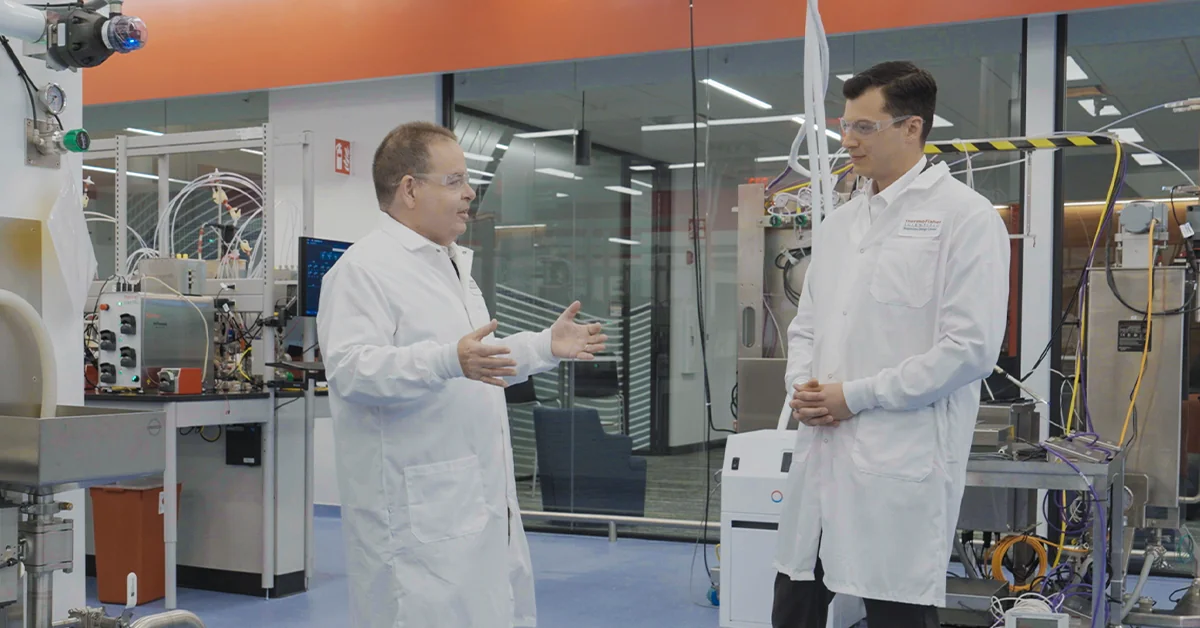
In this episode of Exceptional Leaders, Morgan Stanley’s Head of Life Science Tools and Diagnostics Research, Kallum Titchmarsh, visits Thermo Fisher's biologics and gene-therapy manufacturing facility in Plainville, Massachusetts, for a conversation with the company’s Chairman and CEO Marc Casper. They discuss how Thermo Fisher helps turn discovery into medicine at every stage, and how AI, automation and a relentless customer focus could accelerate the breakthroughs ahead.

MARC CASPER

My mother used to say to me, “We're born with two ears and one mouth, and there's a reason for that.” I think we have a culture in the organization that’s very much about listening, understanding, so that we have real clarity about what those big ideas are and then passionately going after making them a reality to help our customers do their important work. So, we're the company that helps make the world a healthier place.

KALLUM TITCHMARSH

Most people never encounter Thermo Fisher Scientific directly, but its products, technologies, services and manufacturing sit behind many of the scientific advances that shape modern life. From the medicines we take and the tests that doctors rely on to the advanced materials and semiconductors powering the digital world. Two decades ago, Thermo Fisher looked very different. Its roots were largely in lab products and scientific instruments. Then under chairman and CEO Mark Casper, who took the helm in 2009, the company expanded dramatically. Today, Thermo Fisher is now a key partner in everything from research to manufacturing. In a time where science grows increasingly complex. As Morgan Stanley's head of life science tools and diagnostics research, I cover the so-called picks and shovels of drug development. I wanted to know how AI is changing that toolkit and how Casper decides where to invest next. So, I travel to Thermo Fisher Biologics and gene therapy manufacturing facility in Plainville, Massachusetts, to ask him.

Marc, thank you so much for having us out here at this wonderful facility.

Kallum, thanks. It's really a pleasure to be able to have this conversation with you today.

If you had a minute to explain why this company matters to over day lives, what would you say.

We’re the company behind the scenes, and our mission is around enabling our customers to make the world a healthier place. And that enablement can be seen in developing breakthrough diagnostics that a pediatrician or your primary care physician would use to diagnose a complex disease all the way through helping the pharmaceutical and biotech industry identify the new breakthrough medicines. And we take them from the molecule all the way through the commercial production of those medicines, rely on our technologies, our people, our services, really around bringing medicines to patients.

When you took over the company in 2009, this was largely a business addressing the life sciences research community with consumables. You've since spanned way beyond that. What inspired that shift and talk us through your game plan?

we are a customer-focused, customer-centric organization deeply ingrained in customer success, because in our industry, customers are working on ten-year journeys to bring a medicine to market, or they're working on their life's research. And so that intimacy really is important. You get new ideas, and you become a trusted partner. We've been able to both organically invest in our business to expand our offerings, but also, we’ve deployed meaningful capital to be able to grow our business. And over time, we expanded our product offering, becoming a leading company in, you know, high-technology reagents, and then we added electron microscopy, so we kind of filled out the suite of laboratory-based technologies and then ultimately expanded our services offering to help our customers be able to produce medicines and manage complexity and then ultimately execute the clinical trials to determine the safety and efficacy of those medicines. It has all been a journey methodically executed to just help our customers be successful.

How do you stay connected with all your customers?

Probably somewhere in the range of a third of my time is purely on seeing customers, interacting in different ways to understand reality, right? How are we doing? What are the biggest unmet challenges that a customer is facing? Where can we be helpful? How are they thinking about the future? Right? And constantly across the leadership team and all of our colleagues, our customers know that fundamentally, we truly care about their success and we are an extension of their organization.

VOICE OVER: KALLUM TITCHMARSH

Drug development has grown far more complex. New approaches like cell gene therapy carry enormous promise. But turning those scientific breakthroughs into medicines requires specialized infrastructure and expertise. Thermo Fisher has increasingly expanded its capabilities to help customers manage that complexity.

Any examples come to mind from feedback driving maybe a major change in the business?

You know, we have been involved in the development and production of medicines for over 20 years. And over time, through the intensive interactions with our customers, what we saw was there were more modalities and more complexity coming into the biotech and pharmaceutical industry, because it wasn't just a monoclonal antibody, it wasn't just small molecule, but all of a sudden you have cell therapies and gene therapies.

And what those customers wanted was a partner that could help them manage their complexity, so they wouldn't have to be an expert in everything. And that allowed us ultimately to acquire Patheon in 2017. We could give it the resources. And the facility we're in today here in Massachusetts is one of the largest gene therapy sites in the world, and it's a site that we built from the ground up to meet customer demand. And ultimately, what you'll see here is not only, you know, the production of medicines, but you'll also see our collaboration center. You'll see how our technologies are used and how our customers can do their application work in a production setting.

Scale matters at a site like this, designed to move promising therapies from development into production and strip out the bottlenecks where time is measured in patient outcomes. That capability was put to a historic test during the Covid-19 pandemic, when Thermo Fisher mobilized across the company to expand production and support global testing almost overnight.

Maybe we can cast our mind back to 2020. Covid was obviously a really important time. How did you lead your employees through that pivot? And I'm curious whether Covid has changed the way you're thinking about the next hypothetical crisis.

As leaders, our job was to help shape priorities and give the team the resources they needed to be successful. And that backbone allowed us to do some extraordinary things as an organization and made a really big impact on society. Prior to the pandemic, you know, in a good year, we might be producing somewhere between 10 and 100,000 tests, right? Right? And ultimately, during the pandemic, we produced about a billion. What was special is that the team that does that work actually defined the problem set properly. So what the team figured out is, you know, what was the order of magnitude of the number of tests that might be needed to really get the pandemic under control? When you have that problem defined, you want it with a totally different set of solutions. We did some things that in six weeks, we had a factory producing stuff that you'd never be able to do in normal times. But society needed help and governments were supportive and ultimately we were able to step up to the moment and help in our small way of making a difference.

On this Thermo Fisher evolution, acquisitions have been an important part of that. What makes a company a Thermo Fisher company, and which parts of the operating model and culture and non-negotiable?

We've been an active acquirer over the last 20 plus years. And, you know, the way we think about it is ‘Does a company that we might acquire, does it really make the company stronger?’ And most importantly, ‘will customers value it?’ Right. When they read the press release, will their reaction be, ‘Oh that's interesting. That's an important field for me.

I want to learn more’ or is it more skeptical? And it starts with culture. Is there great pride in doing, you know, excellent work? Is it a well-run business? Right? What we're not looking to do is take broken businesses. We're looking at taking businesses and actually grow them more quickly, to expose them to more customers, to help them have the resources to scale more quickly. And it's not that we parachute a bunch of existing colleagues into the business, but we give the existing teams the resources to be successful. And it's worked well, right? And, you know, on day one of an acquisition, maybe the most important message that we give our teams are, ‘The day you joined the original company was the day you joined Thermo Fisher.’ It's not today on the day one. And we want to learn from you, and we want to benefit from your experience, and that collaboration and ownership, it really unlocks incredible potential. And we closed a meaningful acquisition in March of a company called Clario. It's used to be a technology provider for clinical development. And when you're doing a clinical study, it's really important to very easily understand how a patient is reacting to a medicine.

You have a pretty large business outside of healthcare too.

Ingest Status
Need Review
Dedupe hash
b9e2cfb67337760bf7fe9c5116d1fb24
Press Eligible Reason
Luna Batch Upload fehlgeschlagen
Source Name
Capgemini Newsroom
Image URL
https://www.morganstanley.com/content/dam/msdotcom/Insights/series/exceptional-leaders/thermo-fisher-scientific/tw-Exceptional-Leaders-Thermo-Fisher-Scientific.png
Source Node
Content Hash (SHA-256, erste 32 hex)
c76660fc92b651271c563a47fd8753da
The Morgan Stanley Blueprint
Image File
Original HTML

The AI boom is driving unprecedented demand for electricity—and reshaping how power is delivered. In this Blueprint episode, Bloom Energy Founder and CEO KR Sridhar shares how the company is enabling speedy on-site power for data centers and critical infrastructure. Partnering with Morgan Stanley, the company raised capital by translating its innovation in technology and energy into a clear investor proposition, which supported its next phase of growth.

KR Sridar:

When you think about the AI boom, for the first time in human history, we are manufacturing intelligence.

And those data centers consume more power than the biggest refineries in the world.

When you need gigawatts worth of power, the size of some small nation’s worth of power, coming into one single data center, the electric grid was not designed for that.

And that's where Bloom comes in.

Sridar:

What we do at Bloom Energy is we take a molecule, whether it's biogas, natural gas, hydrogen, and, without combusting it, we extract the chemical energy in that molecule to make electricity.

And because we don't burn, there is no air pollution. It requires no water and it makes no noise. You can locate it right where you need the electricity.

And today, you can find our Bloom Boxes in almost all segments of commercial and industrial customers.

In the very early days, when I had to go make a pitch about this to venture capitalists,

we had to just completely educate them from the basic understanding to get the company funded.

It was around 2007 that we were looking for funding and our early investors had a great relationship with Morgan Stanley.

Skip Grow:

A lot of investors weren't sure which box to put Bloom in. Is it a technology company? Is it a power company? In this case, using bankers who understood both technology and power, allowed us to best communicate that story to investors.

We were able to help them raise capital at the asset level, which allowed them to offer to their customers a lease or a power purchase agreement solution rather than an upfront capital cost.

We have been a tax equity provider for them for a number of years, and we became a customer as well x several years ago.

We installed Bloom servers in our Purchase, New York facility as well as our headquarters here in Manhattan.

Through that customer experience, they got to have much greater knowledge of what this product and technology was capable of doing.

Being a private company and then transitioning to a public company is a huge transition.

And what you really need is a financial partner who understands your technology, who understands the energy sector, who understands the electricity sector, and knows why this disruption in an industrial age sector can happen with a technology minded company.

Stephen Byrd:

Morgan Stanley was the lead on the IPO of Bloom Energy and so me and my team really were thinking through not just where the company was today but importantly, as we fast forwarded to much greater scale, where were they going to be? And we liked what we saw in terms of an incredibly large market with minimal competition, with a product from Bloom Energy that was very efficient, very elegant, and with the potential to drop in cost a lot.

It took Steven to really understand it and articulate this to everybody. And he also realized the role that Bloom could play as an on-site power in a very disruptive manner.

Now with the AI boom, that's our big growth area.

Byrd:

So as these data center developers are eagerly looking for power, there are very few options that can be put in place very quickly. Bloom Energy's fuel cells can be installed in a couple of months. That's very rare. And what we're seeing now is incredibly rapid growth at Bloom.

Grow:

As they grow, their needs change and we're able to provide those different services according to their needs.

We were there with private equity, we were there with direct investment, the IPO, as well as private wealth management.

Bloom Energy is sometimes thought of as an overnight success, but it really hasn't been. It's the culmination of a lot of work. But the last year or two have been really transformative.

The future for Bloom Energy, in my opinion, is very exciting.

We set out Bloom with a bold mission statement of being accessible, affordable and abundant electricity for everybody on the planet.

We are prepared for the challenge and we’ll grow as fast as we can.

We want to become more productive, more profitable, and more useful to humanity.

This is where we see the future going.

Steve Huffman: A big reason we wanted to take the company public is because our users and moderators feel this deep sense of ownership over Reddit. And justifiably right – they created Reddit, and we wanted the opportunity for them to be actual owners. And what happened is actually better than we could have even dreamed of.

Reddit is a community of communities. Communities are made of people. And so therefore, Reddit is the most human place on the internet. Reddit is a place powered by people, we should be owned by people. Giving our users and moderators and then just retail investors at large, the ability to own Reddit. I think it very much fits in the Reddit ethos.

We've known the team at Morgan Stanley for a very long time. They've been helpful, shepherding us on growing the business and getting us on the path to go public. (They) understand how Reddit's different. And so they know what the opportunities are and maybe what some of the challenges will be.

Kate Claassen: Every IPO has some really clear selling points, some really clear referendums. We're meeting with investors who have very diverse, investing backgrounds. And so we really focused on being able to tell the story to any type of investor.

Steve Huffman: One of the things that I talked about with our team at Morgan Stanley is I felt like we were getting lumped in with, you know, other kind of similarly scaled ads companies and what Reddit was wasn't coming through.

Kate Claassen: What we did is we brought a number of the mods from communities to Morgan Stanley to meet with investors. This is the first ever investor day prior to a company going public.

The investors left a full day of meetings with more energy and more excitement, which is a feat.

And so being able to lay that foundation was really special and is why we've repeated it for so many others following the innovation for Reddit.

Steve Huffman: I think that was really a turning point in our conversations with investors where they could see that Reddit was a unique thing on the internet.

Kate Claassen: One of the reasons that Morgan Stanley was able to win this IPO is the fact that we're an integrated investment bank. And so the very first conversation that we had with Steve about the IPO, we were talking about Tanya and her team and what she could achieve.

Tanya Hoffman: A directed share program allows an issuer to reserve a portion of the shares during the IPO process and allocate those shares to their employees, friends and family, anyone who's really been instrumental in that IPO journey. And so for Reddit, when we awarded the mandate for the IPO, inviting their community, the user community into the process was very important.

Steve Huffman: And then the IPO, our users got to invest alongside the pros. And I'm so honored we were able to create that opportunity for them.

Tanya Hoffman: With the Reddit story, I think it was so important because we touched so many different parts of the organization, right? So, directed share program, yes. They were also a stock plan client of ours, and then cash management. They were a cash management client. So it really just embodies what the integrated firm can offer them.

Steve Huffman: Preparing to be a public company is a lot of work. Being a public company, we actually really enjoy. Now the tone has completely changed. The moderators are shareholders. They're like, Steve, we want to grow.

Now we're on the same team. And I think that's, it's great for us, it's great for them, it's great for the platform. And I think being public provided that alignment.

Praveer: We here at Figma believe the process of company building isn't something that's done overnight. It's gonna continue to change and iterate, and you're going to be presented with new opportunities over time.

One of the superpowers that I've been able to unlock is when I find that partner that can help and guide us in different ways. It’s super empowering to me, as a leader.

Figma is a platform for product development and design teams to come together and build the best world-class products and digital experiences. We are a platform that enables you to bring your designer, your developer, your marketer, your PM, the whole team, to come and coalesce around the ideas that will ultimately become the products of the future.

We grew from about 25 individuals when I joined to, I think, we’re just shy of about 2000 people today.

Shaan: When we started the relationship with Figma, it was a very small company at the time. The beauty of having an integrated firm and Morgan Stanley is there are so many different challenges a company faces. It's not just the IPO but years ahead of that IPO, the employee education on the wealth side, working with Scott and his team to make sure Praveer and his team are ready.

Scott: For Praveer, we focused on private wealth management for the C-suite, financial literacy for the broad population, cap table management for the employee base, and corporate cash for the company.

And corporate cash is managing excess balance sheet cash, for private and public companies. Every dollar that we can optimize for to then take that and build and help grow the company.

Praveer: They presented to us a number of different ideas just by virtue of understanding our business in really unique ways.


Ingest Status
Need Review
Dedupe hash
d0528fe7ad298f025acb3ed6744601a7
Press Eligible Reason
Luna Batch Upload fehlgeschlagen
Source Name
Capgemini Newsroom
Image URL
https://www.morganstanley.com/content/dam/msdotcom/en/blueprint/tw-blueprint-promo.png
Source Node
Content Hash (SHA-256, erste 32 hex)
567c364317c418fd659708bd87f4dff5
Consumers Write a New Prescription for Healthcare
Image File
Original HTML

U.S. consumers are increasingly taking the lead in how they access and pay for healthcare, creating potential opportunities across biopharma and healthcare services.

Author

Erin Wright, Healthcare Services Analyst

Key Takeaways

Patients are gaining more control over their care, testing and medicines—in addition to payment approaches—in part due to policy changes and new technology.

The GLP-1 market has shown that branded prescription medicines can drive substantial volume through consumer-led access pathways.

The direct-to-consumer cash-pay opportunity in biopharma could reach $26 billion at its peak.

A Morgan Stanley AlphaWise survey found that 36% of U.S. consumers would be willing to pay entirely out of pocket for healthcare services, spending an average $413 a year.

In the complex and costly U.S. healthcare system, patients are no longer just heeding drug ads to “Ask Your Doctor”—they’re going straight to the source.

Policy changes and technological advances have given consumers more ways to directly choose the healthcare products and services that best suit their needs—including care, testing and medicines—as well as how they pay for them.

The healthcare industry is adapting to this trend, potentially creating new opportunities for investors. In biopharma alone, the total direct-to-consumer cash-pay market could reach $26 billion at its peak. Eyeing that opportunity, many large-cap biopharma companies now offer direct-to-consumer platforms.

How Policy and Market Practices Evolved

Healthcare consumerism took root with the creation of Health Savings Accounts (HSAs) in 2003, followed by the growth of high-deductible health plans (HDHPs). These changes gave consumers more control over healthcare spending—but also shifted more of the costs and decisions to them.

The 2010 Affordable Care Act (ACA) reinforced that shift by creating insurance marketplaces and strengthening consumer protections. Comparison shopping and standardized benefit information became central to buying insurance.

Beyond policy, efforts to make healthcare more convenient, accessible and consumer-friendly have also played a role. Digitization, for example, has helped engage more consumers.

The COVID-19 pandemic accelerated telehealth adoption and showed that much of healthcare could happen outside traditional facilities. Finally, wearables, direct-to-consumer diagnostics, cash-pay testing and direct-primary-care models let consumers monitor their health and seek care on their own.

GLP-1s Demonstrate the Direct-to-Consumer Model

Traditionally, drug manufacturers marketed their products to physicians and consumers, but the transaction itself still ran through many intermediaries. That is starting to change.

Patients can now identify a treatment they want, find a price that fits their budget, obtain a prescription digitally and fill it through a manufacturer-selected pharmacy or fulfillment partner.

Consumers are not necessarily stepping outside the healthcare system. Rather, they’re taking healthcare into their own hands—and gaining greater control over their health journey.

The GLP-1 market offered the first large-scale proof that this direct-to-consumer model can work. Patients’ desire to treat obesity generated substantial demand before insurers were ready to pay for it. What matters is not just that patients are willing to pay cash for an obesity medicine, but that a branded prescription product could support roughly half of its volume through a consumer-led access pathway.

That shifts the question for the biopharma industry: It’s no longer whether direct access can work, but where else it can unlock demand that the reimbursement system isn’t meeting today.

Healthcare services are evolving as well:

Payers are aligning more closely with consumer choice.

Direct-to-consumer pharmacy models can expand medication access and transparency.

Emerging consumer-enablement technologies, such as apps for screenings, patient support and home delivery,can facilitate access within existing systems.

Consumers Are Willing to Pay Out of Pocket

In an August 2026 Morgan Stanley AlphaWise survey of U.S. consumers, 25% of respondents said they had paid fully out of pocket for at least one healthcare service in the past year, and 31% had done so for a medicine or treatment.

The survey also suggests that 36% of consumers would be willing to pay entirely out of pocket for healthcare services, spending an average of $413 per year. Willingness to pay is significantly higher among younger and upper-income consumers.

Healthcare consumerism, however, is not simply about shifting more costs to cash-pay models. It’s about an emerging system in which consumers increasingly choose among coverage options, control healthcare spending, access their own data and initiate care directly.

There are limits to how far this shift can go, along with macroeconomic sensitivities and other risks. Still, models that emphasize transparency and choice are likely to play a growing role.

Consumers are not necessarily stepping outside the healthcare system. Rather, they’re taking healthcare into their own hands—and gaining greater control over their health journey.

7275232

63766

3CD19151-F46C-4595-84CF-8EEC3E05FD19

Sign up to get Morgan Stanley Ideas delivered to your inbox.

Would you like to help us improve our coverage of topics that might interest you? Tell us about yourself.

default-msdotcom-options

true

Submit

Thank You for Taking the Survey!

Thank you for taking the survey to help improving our newsletter. We value your feedback.

ResearchHealthcare Outlook Brightens as Policy Uncertainty EasesIndustry leaders at Morgan Stanley's 24th Annual Global Healthcare Conference discussed the U.S. policy environment, the risks and opportunities coming from China, the innovation potential of AI and more.

ResearchChina's Next Industrial EraChina is entering a new phase of industrialization that could reshape manufacturing, productivity and global supply chains as it evolves from the world's factory to the world's industrial operating system.

ResearchWhy Canada Is on a Path to Higher GrowthDespite the recent uncertainty created by U.S. trade tensions, Canada is entering a new phase of growth, driven by productivity gains, efficiency and higher investment.

Class (B2B/B2C)
B2B
Ingest Status
Rewritten
Dedupe hash
e4a13f9e9fdc591741b89def69c5a64d
Press Eligible
Yes
Press Eligible Reason
Manuelle Prüfung nötig. Risiko: MEDIUM. Flags: ['finance', 'numbers']. Stichprobe: False
Source Name
Capgemini Newsroom
Image URL
https://www.morganstanley.com/content/dam/msdotcom/Insights/articles/healthcare-consumerism-drives-26-b-opportunity-2026/tw-healthcare-consumerism-drives-26-b-opportunity-2026.jpg
Source Node
Content Hash (SHA-256, erste 32 hex)
42dbaa4b1ac63a5b11761645c44f8f9f