Optimize Government Efficiency and Elevate Citizen Experiences
Original HTML

Optimize Government Efficiency and Elevate Citizen Experiences

Bridge digital skill gaps, streamline legacy transitions, and boost workforce efficiency with Whatfix. Our platform enables federal and public sector agencies to deliver faster, more accessible services—without overspending or overhauling systems.

Enable Government Employees & Enhance Citizen Experiences With Digital Adoption

Enable public sector employees and provide better digital services to citizens with contextual in-app guidance and real-time support to drive user adoption and maximize technology ROI.

Maximize ROI of Legacy Application Modernization Initiatives

Drive adoption of new government technologies and AI platforms and eliminate friction during legacy system migrations. Whatfix delivers in-the-flow support, usage insights, and task automation that reduce support costs, increase system utilization, and accelerate time-to-value, enabling federal agencies and public services to do more with less, at scale.

Strengthen Compliance and Reduce Operational Risk

Ensure secure, policy-aligned actions across applications with embedded guidance and real-time insights. Whatfix helps agencies meet regulatory requirements, minimize compliance risk, and maintain workflow integrity—supporting audit readiness and data security without slowing down day-to-day operations.

Improve Workforce Efficiency by Enabling Government Employees

Equip government employees with the tools to navigate new and evolving digital systems confidently. Whatfix empowers teams to adapt quickly to change—whether adopting AI-enabled tools or new process updates—reducing errors and delays while improving productivity and public service delivery.

Whatfix Platform

Accelerate Adoption, Scale ROI.

Drive success across the entire software lifecycle. Prepare users before launch, support them with live guidance, and continuously optimize for maximum impact.

Mirror

Create replicate app environments for hands-on training and AI roleplay.

Explore Mirror →

DAP

Support users in the flow of work with in-app guidance and AI self help.

Explore DAP →

Analytics

Analyze how users engage with applications and launch targeted interventions.

Explore Analytics →

Federal Agency Transformation Clicks Better With Whatfix

See why government and public sector agencies choose Whatfix as their digital adoption partner.

No-code content

editor

Effortlessly create and maintain contextual in-app guidance across any application with a true no-code editor, matching content to your brand identity without relying on development resources.

Unified approach to digital adoption

Bridge the gap between learning and doing. Whatfix is the only DAP that pairs in-app guidance with application simulation, enabling teams to build hands-on sandboxes that acclerates proficiency, improves skills, and accurately assess readiness.

Cross-application workflow support

Whatfix’s open ecosystem supports cross-app processes, guiding users across systems without disruption. This eliminates friction in complex workflows and ensures seamless full-stack adoption.

Customer services that drive outcomes

Whatfix combines dedicated enablement support, author training, technical support, and customer success frameworks to help teams accelerate adoption, scale effectively, and prove ROI.

faster time-to-value on digital investments.

higher ROI on enterprise software.

higher user proficiency after 3 months.

increase in overall user productivity.

end-users enabled with Whatfix in-app guidance.

Abby Essing

Security & Compliance

Your Security Is Our Priority

As a Digital Adoption Platform provider, we must stay aware of regulatory requirements for data. Whatfix’s compliance team ensures our data handling practices meet these requirements.

WHITEPAPER

How DAP Accelerates Public Sector Transformation Projects

Learn how DAP enables federal agencies and governments to put end-user experience at the center of transformation to achieve ROI and business outcomes.

BLOG

Digital Transformation in Government

See how federal agencies are driving business outcomes by transforming public services and core business processes – and how to accelerate digital ROI.

ANNOUNCEMENT

The US Army Selects Whatfix as Its Digital Adoption Partner

Whatfix enters the federal sector, empowering the US Army’s HCM transformation on its personnel and pay system for its military members and HR operations.

BEST-IN CLASS SOLUTIONS

Recognized by

industry leaders

Whatfix FAQs

Don’t see your answer? Send a message to our live chat, we’d be happy to help!

Software Clicks Better With Whatfix

In-app guidance. Hands-on simulations. Actionable analytics. One unified, AI-powered platform to drive adoption and maximize ROI.

Ingest Status
Rejected
Dedupe hash
a57f44dc09e757055c44f2d1e97c8ac6
Press Eligible Reason
JSON nicht lesbar - manuelle Pruefung noetig: Inhalt konnte nicht als JSON geparst werden
Source Name
Whatfix
Source Node
Content Hash (SHA-256, erste 32 hex)
69bdd10ef620b6c6c493a07ae9018f51
Whatfix News
Image File
Original HTML

Leading Automotive Distributor LKQ Europe Deploys Whatfix to Transform Digital Learning Across 13 European Countries

Whatfix, the global leader in agentic digital adoption platforms (DAPs) for enterprises, today announced that LKQ Europe is enhancing the experience offered through LKQ Academy, Europe’s largest provider of digital learning for vehicle repair professionals, using Whatfix. The deployment of Whatfix Digital Adoption Platform and Product Analytics, will make learning simpler and more intuitive for 70,000 registered users across 13 countries.

Press Releases

Announcements

Generative AI Simulator Emerges as a Critical Technology for Enterprise Workforce Readiness; Gartner Names Whatfix Across Future of Work and Banking Hype Cycle Reports

Whatfix, a global leader in agentic Digital Adoption Platforms (DAP) for enterprises, today announced being named across four 2026 Gartner® Hype Cycle™ reports:

Hype Cycle for Future of Work (recognized for Generative AI Simulators); Hype Cycle for Artificial Intelligence in Banking; Hype Cycle for AI-Driven Trade Finance Transformation in Banking and Hype Cycle for Corporate Learning Technologies (recognized for Generative AI Simulators).

In the News

Class (B2B/B2C)
B2B
Ingest Status
Rewritten
Dedupe hash
3261736b353b51fefd46e4268ae9ea42
Press Eligible
Yes
Press Eligible Reason
Enterprise software deployment and industry recognition news.
Source Name
Whatfix
Image URL
https://website.whatfix.com/wp-content/uploads/2024/01/Group-6355-1.png
Source Node
Content Hash (SHA-256, erste 32 hex)
2d3a6badefc669879f21195b117fccf0
Detect and remediate data posture issues at the source
Image File
Original HTML

Detect and remediate data posture issues at the source

MIND® pinpoints exposure risks and automatically enforces policies for your data at rest. Now you can secure the sensitive data in your organization and fix issues before they become incidents.

Sensitive data remains over-exposed

Sensitive data is left open to misuse, compliance violations and reputational damage.

Relying on users to manually label sensitive data is burdensome, leads to errors and creates critical security gaps.

Sensitive elements often go undetected, allowing significant security and compliance risks to persist quietly without awareness or resolution.

"Anyone with a link" can bypass controls, gaining unauthorized access to sensitive files without detection or restriction.

Context drives better fixes

MIND classifies sensitive data with your unique organizational context and business meaning in mind. We maintain a complete, intelligent catalog of resources, users, authorizations, file activities and metadata, ensuring 'at-rest' security policies are effective and enduring.

Risk-based resolution pathways

MIND AI determines risk severity using complete business context across all data at rest. We’ve developed a unique language to describe user–data interactions, enabling faster, smarter detection and automated fixes that eliminate root causes.

Fix with speed and confidence

When MIND detects a data at rest exposure issue, it can automatically apply your remediation policies, or keep a human in the loop for review. Our ability to collaborate with users and data owners makes fixes faster, more transparent and educational.

Automate these actions end-to-end, or review and approve. Either way, you stay in control and secure your data before threats emerge.

Class (B2B/B2C)
B2B
Ingest Status
Rewritten
Dedupe hash
83e630da57b9dd10302fab49afe6f241
Press Eligible
Yes
Press Eligible Reason
Describes an enterprise data security product and its capabilities.
Source Name
MIND
Image URL
https://cdn.sanity.io/images/3l9nidp2/production/5842ea7185343bafa1a15718981a3afd67bc9b18-1200x630.jpg?w=1200&h=630&fit=max&auto=format
Source Node
Content Hash (SHA-256, erste 32 hex)
9d2608e6abf6b98817932c59384d63c5
DLP at the speed of AI
Image File
Original HTML

DLP at the speed of AI

Agentic AI is moving fast across the enterprise. MIND® helps you understand where AI agents operate, what data they access and how to apply the right controls so innovation stays safe and productive.

Agentic AI is a data security blind spot

AI agents are no longer limited to standalone tools. They’re embedded across SaaS platforms, custom workflows and third-party services, often operating autonomously and at machine speed.

When security teams lack visibility and control, sensitive data can move in ways that are difficult to detect and even harder to stop.

Embedded and third-party AI agents operate beyond traditional security visibility

AI agents access multiple systems, increasing exposure of sensitive enterprise data

Agents act independently, magnifying risk from misconfigurations and weak policies

Rigid security controls frustrate teams and limit agent-driven productivity

The smarter way to secure agentic AI

Why this matters

Agentic AI represents a fundamental shift in how work gets done across the enterprise. Instead of static tools or single-purpose automations, agents can reason, make decisions and take action across systems with little to no human involvement. As these agents gain autonomy, the potential impact of data misuse grows exponentially. A single misconfigured agent can access sensitive information, propagate it across workflows or expose it to external tools in seconds.

Traditional DLP and access controls weren’t designed for this reality. They focus on users, files and known applications, not autonomous software entities that operate continuously and adapt in real time. As a result, security teams struggle to answer basic questions about where agents exist, what data they touch and whether those interactions align with policy.

Without the right approach, organizations face increased exposure, regulatory risk and loss of trust. At the same time, slowing down AI adoption isn’t an option. Business leaders expect agentic AI to drive efficiency, innovation and competitive advantage. Security must evolve to enable this shift, not block it.

MIND helps you:

Identify all active AI agents

Understand exactly what data agents access

Apply data controls that protect sensitive information

Reduce risk without adding friction

Enable secure, scalable adoption of agentic AI

Let MIND help you safely enable Agentic AI for your organization.

Class (B2B/B2C)
B2B
Ingest Status
Rewritten
Dedupe hash
fb6ee3fc5af0176be5418d0453191639
Press Eligible
Yes
Press Eligible Reason
Enterprise AI data security and DLP product information for business audiences.
Source Name
MIND
Image URL
https://cdn.sanity.io/images/3l9nidp2/production/5842ea7185343bafa1a15718981a3afd67bc9b18-1200x630.jpg?w=1200&h=630&fit=max&auto=format
Source Node
Content Hash (SHA-256, erste 32 hex)
8eb29e34dc869aacc9e5865a90c33c7e
Top 15 Sales Knowledge Management Tools
Image File
Original HTML

Key Takeaways

- Sales teams are struggling due to ever-increasing knowledge needs and poor systems for accessing information.

- AI-powered knowledge management tools bridge knowledge gaps.

- A good AI sales enablement tool helps agents throughout calls, as well as assisting with post-call wrapup and analysis.

- Look for a tool that supports integrations with your current app, as well as strong AI support and management tools.

- KMS Lighthouse is currently your best choice for an all-around sales KMS system.

Are Your Sales Teams Losing Deals Due to Knowledge Gaps?

Modern sales teams are often caught in a bind: increasingly complicated products and savvy customers demand every rep have deep knowledge of the products, but older knowledge management solutions can create barriers to information discovery.

Typical problems include:

- Institutional knowledge not being captured in the system, forcing reps to rely on experienced gurus for deep knowledge.

- Data silos that prevent a sales team from accessing necessary cross-department knowledge.

- A higher call volume than your managers can reasonably oversee, track, grade, and provide feedback for.

- Sales reps becoming so distracted looking for necessary info that they lose focus on the customer and their signals.

- Burdensome bureaucracy which forces reps to spend more time on documentation than actually making sales.

- Slow onboarding and new hires who need consistent oversight for extended periods.

A modern AI-powered sales knowledge management system can handle all these issues and more. With the right software tool, you can streamline your sales motions while empowering your reps to make more sales!

What Does a Sales Knowledge Management System Need to Do?

A sales KMS should be laser-focused on the needs of your sales agents and their managers. This isn't a general-purpose database such as your tech support team might need; your reps need knowledge specifically aimed at generating leads and making conversions.

This includes:

- AI analysis of calls in-progress, offering up suggestions, Battle Cards, and interactive decision trees based on contextual clues and buyer signals.

- Intuitive access to needed product information – ideally offered up proactively by the AI, before the agent has to go looking.

- Robust call summary, documentation, and review to speed up the "paperwork" of sales calls.

- Deep integration with your existing CRM, cloud systems, and other necessary software tools, with both read and write capabilities.

- Training tools built into the software itself, speeding up onboarding and retraining.

- Management tools that speed up oversight, review, and feedback.

In short, the goal of sales enablement software is to take your enablement to the next level: giving your agents better access to necessary sales information that turns directly into improved revenues and ROI.

The Top 15 Sales Knowledge Management Tools

1 – KMS Lighthouse

Currently, KMS Lighthouse is the leader in all-in-one AI-powered KMS systems. It's designed to be easy to deploy, with training built directly into the system, alongside robust AI assistance helping with everything from knowledge discovery to on-call sales pitch assistance. KMS Lighthouse may lack some specific niche features, but it's a great all-rounder for most sales teams.

2 – Bloomfire

Bloomfire is another strong all-rounder, with strong knowledge discovery and AI assistance. It also offers excellent knowledge governance tools, necessary for maintaining your KB over time. However, the quote-based pricing may be an issue for smaller operations looking to maximize their spend.

3 – Momentum

Momentum focuses on making your sales reps' lives easier by using AI to automate numerous per-call functions such as creating call summaries and auto-populating MEDDPICC fields. These are also added to the KB for easy future retreival. It's good for teams that generate a huge amount of data that would otherwise need to be entered manually.

4 – Guru

Guru's strength is keeping reps on-track within their workflow. It utilizes pop-up windows and browser extensions so that the AI is always available no matter what your reps are doing. However, it's less adept at information discovery and will need human oversight to keep the KB reliable.

5 – SpekIt

SpekIt's headline feature are its "speks" – microcards of relevant information offered up contextually, as needed. This makes it a strong sales playbook software option, great at providing necessary bite-sized info and helping new hires get up to speed. However, it's less useful for long-form information and lacks AI content generation features.

6 – Confluence

If your operation already utilizes the Atlassian ecosystem, Confluence is an obvious upgrade. Confluence integrates directly into Atlassian systems to pull information, while being a solid choice for AI-assisted sales enablement software in general. It's only worth considering if you're already using Atlassian, though.

7 – Salesforce Knowledge

Salesforce Knowledge is the KMS designed to integrate into the larger Saleforce ecosystem, with deep links directly into the Salesforce CMS. It can bridge the gap between sales and customer support, providing benefits and collaboration opportunities to both. However, as with Confluence, it doesn't make sense unless you're already standardized on Salesforce.

8 – Docket

Docket is a lightweight KMS designed for fast implementation and easy usage, especially for smaller operations, although at the expense of a deeper tool set. It focuses on providing AI assistance for calls and updating internal information based on calls. Just don't expect in-depth content governance tools or editorial workflows.

9 – eGain

eGain is tuned specifically for call centers that experience high call volumes and need robust AI assistance for management and call documenting. It can support both inbound and outbound teams simultaneously with a strong single-source-of-truth database. However, its usefulness outside of high-capacity call centers is more limited.

10 – Highspot

Highspot is focused on content and coaching, with a strong emphasis on training. If your operation generates a lot of content and your team struggles to keep up, Highspot could be a good option. It even incorporates AI-powered roleplaying for live training opportunities. Like other niche entries on this list, however, it isn't a good all-around choice.

11 – Kendo

Another sales onboarding software tool focused on coaching and feedback, Kendo utilizes AI to summarize and grade every call with comprehensive notes. This could be highly useful for call centers with over-burdened management, or for operations seeking a single standardized way of tracking call center metrics.

12 – Outreach

Outreach integrates AI agents and a personable AI assistant named Kaia directly into reps' and agents' daily workflow, similar to Guru. It also features strong collaboration features, including live meetings within the app. This makes good for information sharing, although it's weaker on the management side.

13 – Document360

Document360 is a strong all-purpose KMS that lacks some sales-specific features, but could still be a good choice due to its close compatibility and integration with Microsoft systems. It can assist with knowledge gathering, KB management, content creation, and call oversight, backed up by solid AI assistance.

14 – Stonly

Another mid-tier all-rounder, Stonly focuses on making it easier to create and manage documentation for a growing operation. It can be embeded into a range of apps and webpages, and is overall a solid product even if it lacks a strong central focus.

15 – Salesloft

Salesloft is focused on providing support to agents mid-call, leveraging intelligent AI analysis of caller signals to offer personalized suggestions for converting each lead. Alongside this are strong management tools, although it's light on coaching/training options.

How Do You Choose the Right KMS Tool for Your Sales Motion?

Different tools are better for different sales motion situations. To cover some of the most common motions:

- Product-led growth. Focus on fast intuitive information delivery. Your reps should have to put in minimum effort in answering questions and finding proper sales pitches, to keep volume up.

- Inside sales and/or sales-led growth. You need AI tools capable of deep analysis of customer data, call history, and mid-call signaling. The AI becomes a co-pilot, helping your rep navigate challenging pitches.

- Outbound / cold call. Again, look for AI systems capable of meaningfully supporting agents mid-call by analyzing lead signals for any sign of an opening.

- Enterprise. Knowledge, knowledge, knowledge. Your reps may be called on to function as CS, even tech support, and must have free access to company-wide data as needed to hold onto clients.

- Field sales. Look for lightweight cloud-based solutions which can run on any device, prioritizing speed and accessibility over depth.

How Do You Drive Sales Team Adoption of a Knowledge System?

Perhaps ironically, the best way to drive sales team adoption is to sell the solution. Your rollout should be conceptualized as a campaign. Bring up known agent/rep complaints and pain points, and show how the new AI KMS will be able to overcome those issues.

Convince your reps that the new toolset will lead directly to more sales (and therefore more commissions) and they'll happily adopt it.

Beyond that, executive buy-in is also key. The more enthusiastic the C-suite is about your new sales playbook software investment, the more official backing you'll receive to help keep everyone on the same page.

What Does Good Sales Knowledge Hygiene Look Like in Practice?

Even the best AI-powered sales enablement software still needs significant human oversight, especially when it comes to maintaining the knowledge base.

You should:

- Have clearly-defined tags and naming conventions that are standardized across all entries.

Class (B2B/B2C)
B2B
Ingest Status
Rewritten
Dedupe hash
984dd7b0fb1d7e190800a460586e269e
Press Eligible
Yes
Press Eligible Reason
Business-focused roundup comparing sales knowledge management software for sales teams.
Source Name
KMS Lighthouse
Image URL
https://kmslh.com/wp-content/uploads/2026/10/Top-15-Sales-Knowledge-Management-Tools.jpg
Source Node
Content Hash (SHA-256, erste 32 hex)
369e1b16e762d3fc39eeec9795f39b1d
MODE Global News
Image File
Original HTML

MODE Global Named a 2023 Top 50 Leading 3PL by Global Trade Magazine

DALLAS, TEXAS (September 18, 2023) – MODE Global, a leading third-party logistics (3PL) firm, is proud to announce it has been named a 2023 Top 50 Leading 3PL by Global Trade magazine.

Announced in the September issue of Global Trade, the list was broken into 10 categories including Air Savvy, Cold Chain, Conscientious, Cross-Border, Intermodal, Last Mile, Less-Than-Truckload (LTL), Retail/E-commerce, Tech-Savvy and Truck-Savvy. MODE Global was ranked in the intermodal category based on its access to carriers, equipment and capacity through its extensive network of transportation specialists.

“MODE Global is thrilled to receive this recognition based on our extensive intermodal expertise and our ability to offer our customers unrivaled support for their logistics needs,” said Lance Malesh, MODE’s president and CEO. “We are grateful to Global Trade for their acknowledgment of our continuous efforts to deliver innovative solutions and industry-leading service.”

You can view the full list of the 2023 Top 50 Leading 3Pls here.

Ingest Status
Rejected
Dedupe hash
03937cc2ed03fb2ab33862f33edd9f6a
Source Name
MODE Global
Image URL
https://www.modeglobal.com/wp-content/uploads/2023/09/MODE-Global-Global-Trade-News-Page-Image-.png
Source Node
Content Hash (SHA-256, erste 32 hex)
24031d7303bc4bb9dc14d8ddf44a0f68
Top 9 Bloomfire Alternatives & Competitors in 2026
Image File
Original HTML

Key Takeaways

- Bloomfire is a capable enterprise knowledge platform with AI search, content management, collaboration, governance, and analytics.

- Teams often compare Bloomfire alternatives because they need capabilities that are more closely aligned with contact centers, structured documentation, enterprise search, customer self service, or existing technology ecosystems.

- The right replacement depends on the specific knowledge problem you need to solve rather than which platform offers the longest feature list.

- Before changing platforms, evaluate search quality, governance, integrations, AI capabilities, analytics, security, and how employees actually use knowledge during their workday.

Bloomfire has evolved considerably beyond a traditional internal knowledge base. Its current platform combines AI powered search, conversational answers, content authoring, governance, analytics, multimedia indexing, and connections to other enterprise systems. For many organizations, that combination can provide a strong foundation for sharing and discovering internal knowledge.

Still, no knowledge platform is ideal for every environment. Teams typically begin evaluating Bloomfire alternatives when their requirements become more specialized or when another platform aligns more naturally with how employees work.

Common reasons include:

- Contact center teams need guided procedures and answers delivered directly during customer interactions.

- IT organizations want knowledge tightly connected with service management workflows.

- Documentation teams need more structured authoring, versioning, and public knowledge base capabilities.

- Large enterprises want search that reaches across dozens of existing applications without centralizing all content first.

- Customer service teams need both agent knowledge and customer self service from the same environment.

- Organizations want different governance, AI, integration, or pricing models.

These differences matter because poor knowledge access has a measurable impact on productivity. A 2025 Harvard Business Review sponsored report found that employees spend an average of 10% of their workweek searching for information. When information is difficult to locate, the problem affects far more than convenience. Employees lose time, repeat work, interrupt coworkers, and make decisions without complete information.

That makes the search for Bloomfire alternatives less about replacing one piece of software and more about finding the right operating model for organizational knowledge.

What Bloomfire Does Well and Where It Falls Short

A fair comparison should begin with what Bloomfire does well.

Bloomfire can deep index structured and unstructured information, including documents, presentations, audio, and video. Its conversational AI experience can provide answers grounded in approved organizational content, while authoring tools help categorize, summarize, and tag knowledge.

Bloomfire also provides governance, analytics, permissions, content moderation, and integrations with platforms such as SharePoint, Salesforce, Google Drive, Microsoft Teams, and Confluence. These capabilities make it a serious option for enterprise knowledge sharing rather than a simple document repository.

The limitations depend heavily on your use case. A customer service organization may prefer a platform designed more specifically around agent guidance and service workflows. A technical documentation team may want deeper documentation controls. An enterprise focused primarily on search across a large application environment may prefer a platform built around federated discovery.

Pricing can also influence the decision. Bloomfire doesn't publish simple per user prices. Its current plans are structured around team, department, and enterprise deployments, with implementation and migration services potentially adding to the overall investment.

This is why comparisons among knowledge management software should focus on operational fit rather than assuming one platform is universally better.

How to Decide Which Bloomfire Alternative Fits Your Needs

Before comparing products, identify the knowledge problem you are trying to solve.

If employees struggle to find information scattered across dozens of applications, enterprise search may be your priority. If contact center agents need accurate answers while customers are waiting, speed, guided workflows, and governance may matter more.

Ask questions such as:

- Who needs the knowledge?

- Where does the information live today?

- Do employees need complete documents or direct answers?

- Will customers access the knowledge too?

- Which existing systems need to integrate with the platform?

- How tightly must content be reviewed and controlled?

- Do you need collaboration, structured documentation, or both?

- What role should AI play in retrieving and maintaining knowledge?

Your answer may lead you toward a highly structured enterprise platform, a flexible internal knowledge base, or a search layer that connects existing repositories. Comparing current can also help clarify how different platforms approach search, collaboration, governance, and knowledge delivery.

AI deserves particular attention, but it shouldn't be evaluated in isolation. Strong ai knowledge management still depends on accurate content, sensible permissions, clear ownership, and processes for keeping information current.

The best Bloomfire alternatives are therefore the ones that solve your specific knowledge problems while fitting naturally into the systems and workflows your employees already use.

The 9 Best Bloomfire Alternatives and Competitors in 2026

The strongest Bloomfire alternatives solve different knowledge problems. I evaluated these platforms based on search quality, AI capabilities, governance, integrations, usability, customer service support, and how well each platform fits specific enterprise workflows.

Rather than looking for a universal winner, focus on which platform addresses the weaknesses or limitations that led you to reconsider Bloomfire in the first place.

1. KMS Lighthouse

KMS Lighthouse is particularly well suited to organizations that need knowledge delivered during customer service, contact center, and field service workflows. It combines intelligent search with structured content management, governance, analytics, and guided processes.

Key strengths include:

- AI powered search and conversational answers

- Guided workflows for complex procedures

- Content ownership, review, and approval controls

- Knowledge delivery inside service workflows

- Analytics that help identify knowledge gaps

Compared with Bloomfire, KMS Lighthouse places greater emphasis on operational knowledge and guided service experiences. This can make it a strong option when employees need more than discovery and collaboration. They need accurate answers and clear next steps while helping customers.

2. Guru

Guru combines company knowledge with enterprise search and AI assistance. It is designed to make information accessible inside applications employees already use rather than requiring them to repeatedly visit a separate knowledge portal.

Key strengths include:

- Enterprise AI search

- AI generated answers grounded in company information

- Content verification workflows

- Integrations with workplace applications

- Knowledge delivery inside employee workflows

Guru is one of the more direct Bloomfire alternatives for companies focused primarily on internal knowledge sharing. Bloomfire emphasizes broad knowledge discovery and engagement, while Guru places significant emphasis on verified information and delivering answers within everyday workplace tools.

3. Glean

Glean approaches the problem primarily through enterprise search. It connects information across more than 100 workplace applications and uses company context to deliver personalized, permission aware results.

Key strengths include:

- Search across a large number of enterprise applications

- Natural language questions

- Generative AI answers

- Personalized results based on organizational context

- Existing permission controls carried into search results

Glean can be an attractive Bloomfire alternative when your information already lives across many established systems and you don't want to move everything into one central repository. It is especially useful when fragmentation, rather than content creation, is your largest knowledge problem.

4. Document360

Document360 focuses more heavily on structured documentation. It supports internal documentation, product knowledge, technical content, customer help centers, and AI assisted knowledge experiences.

Key strengths include:

- Structured article creation

- Version management

- Approval workflows

- AI assisted authoring and search

- Public and private knowledge experiences

Document360 may be a better fit when your organization needs formal documentation rather than a broad employee knowledge community. Product teams, technical organizations, and companies maintaining detailed procedures may value its structured approach.

The difference also illustrates why knowledge AI and knowledge management should be considered together. AI can dramatically improve retrieval and processing, but content ownership, governance, organization, and human expertise still determine whether the information behind those answers can be trusted.

5. eGain Knowledge Hub

eGain Knowledge Hub focuses heavily on enterprise customer service. It unifies knowledge from different repositories and delivers governed answers across customer self service, agent desktops, voice applications, and other service channels.

Key strengths include:

- Governed AI answers

- Agent guidance

- Customer self service

- Role based knowledge delivery

- Compliance and audit capabilities

- Knowledge delivered across service channels

eGain is another strong option when customer service is your primary use case.

Class (B2B/B2C)
B2B
Ingest Status
Error
Dedupe hash
feb31d404a2bc7d18fac05bd8f38fabb
Press Eligible
No
Press Eligible Reason
Drupal Push 422
Source Name
KMS Lighthouse
Image URL
https://kmslh.com/wp-content/uploads/2026/10/Top-9-Bloomfire-Alternatives-Competitors-in-2026.jpg
Source Node
Content Hash (SHA-256, erste 32 hex)
fa8e176bf1f5089840e792ad4ce2e645
MODE Global News
Image File
Original HTML

MODE Global Achieves Approval from SBTi for Ambitious Science-Based Emissions Reduction Targets

DALLAS, TEXAS (March 28, 2024) – MODE Global, a leading third-party logistics (3PL) firm focused on sustainable shipping, is pleased to announce that it has received approval from the Science-Based Targets initiative (SBTi) for its near-term science-based emissions reduction targets. The targets entail reducing the company’s scope 1 and scope 2 greenhouse gas (GHG) emissions by an impressive 42% by the year 2030 compared to a 2022 base year. Additionally, MODE is committed to measuring and reducing its scope 3 emissions in alignment with its sustainability goals.

“With the approval and validation of our ambitious emissions reduction targets by SBTi, MODE Global reinforces its commitment to sustainability within the logistics industry,” said Jason Roberts, senior vice president of digital enablement for MODE. “Our commitment to these targets not only reflects our dedication to combatting climate change but also underscores our alignment with widely recognized industry standards, mirroring the goals of many of our customer partners. This collective commitment serves as a powerful catalyst for driving meaningful change and fostering a more sustainable future for all.”

By setting these ambitious emissions reduction targets, MODE Global demonstrates its dedication to combating climate change and contributing to a more sustainable future. The approval of MODE’s targets by SBTi validates the company’s commitment to taking tangible actions to reduce its environmental impact in line with what the latest climate science deems necessary to meet the goals of the Paris Agreement – limiting global warming to 1.5°C above pre-industrial levels and sets a high standard for corporate sustainability efforts in the industry.

MODE Global looks forward to implementing innovative strategies and initiatives to achieve these targets, working toward a greener and more sustainable business model. MODE remains steadfast in its mission to lead by example and inspire positive change within the supply chain and logistics sector. For more information on MODE Global and its sustainability initiatives, please refer to our 2023 Sustainability Report.

Ingest Status
Rejected
Dedupe hash
ace4b25d7694c677e88fbea31b39bfc8
Source Name
MODE Global
Image URL
https://www.modeglobal.com/wp-content/uploads/2024/03/MODE-Global-SBTi-News-Page-Image-.png
Source Node
Content Hash (SHA-256, erste 32 hex)
71d98f69f29fd872d7b08959bdecff96
Garmin International, Inc. News
Image File
Original HTML

The ultimate smartwatch

Our most advanced golf smartwatch

Premium cycling computer with hands-free voice control

Powerful smart trainer with multidirectional motion

The ultimate smartwatch

Ultraperformance GPS smartwatch

Simplify your drive with new ultrawide displays

See real-time digital flag signals in the cockpit

Racing radar for high-performance drivers and track enthusiasts

Advanced marine head units

Our clearest sonar ever

Integrated flight displays for experimental and certified piston aircraft

Ultimate aviator smartwatch with satellite and LTE connectivity

Class (B2B/B2C)
Ignore
Ingest Status
Rejected
Dedupe hash
a5106ed2fd69c25dff60fe3dd3fc12fb
Press Eligible
No
Press Eligible Reason
Text too short (78 words. Min: 150)
Source Name
Garmin International, Inc.
Image URL
https://share-assets.fe.garmin.com/facebook-default.jpg
Content Hash (SHA-256, erste 32 hex)
255d2b33a1ed7c088fa4f69c9f84807b
MODE Global News
Image File
Original HTML

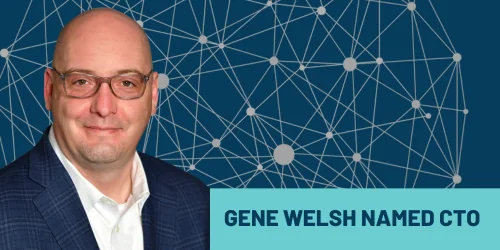
Dallas, Texas (April 17, 2023) – MODE Global is excited to announce the promotion of Gene Welsh to chief transportation officer (CTO). As a member of MODE Global’s leadership team, Welsh previously served as senior vice president of international.

As CTO, Welsh will have oversight and accountability for all transportation modes. This will include mode-specific strategy development, capacity planning, vendor management, compliance, technology, value proposition development, branding and marketing, service model development, dynamic transportation technology and revenue growth.

“Gene’s in-depth experience will further elevate our product lines into versatile and transformative product offerings,” said MODE Global CEO, Lance Malesh. “His exceptional knowledge and expertise across all aspects of logistics will no doubt help to differentiate us within the transportation industry and drive long-term success for our company.”

Welsh started his logistics career in June of 2006 and has held various roles within the international logistics field from operations to global tender management and most notably as a leader in the Non-Vessel Operating Common Carrier (NVOCC) transportation segment since 2010. In his extensive background, he has directly supported the management and development of various key transportation solutions from an NVOCC perspective, and as a consultant to many beneficial cargo owner client supply chains. Welsh has also led the commercial oversight of all NVOCC activity at his prior organization.

“I am committed to advancing MODE’s product offerings through innovative technology, customer-experience focus and value creation,” said CTO, Gene Welsh. “I have a firm foundation to build from and am leading a fantastic team who will continue to grow our reach and services.”

Welsh will report directly to Malesh in his new role. He is based out of Philadelphia, Pennsylvania.

Ingest Status
Rejected
Dedupe hash
7f1bdd06bb704292b92517d2426b2aab
Source Name
MODE Global
Image URL
https://www.modeglobal.com/wp-content/uploads/2022/12/Gene-CTO-News-Page-Image-.png
Source Node
Content Hash (SHA-256, erste 32 hex)
28a314830dc71abebf59ae2f0ef40f94