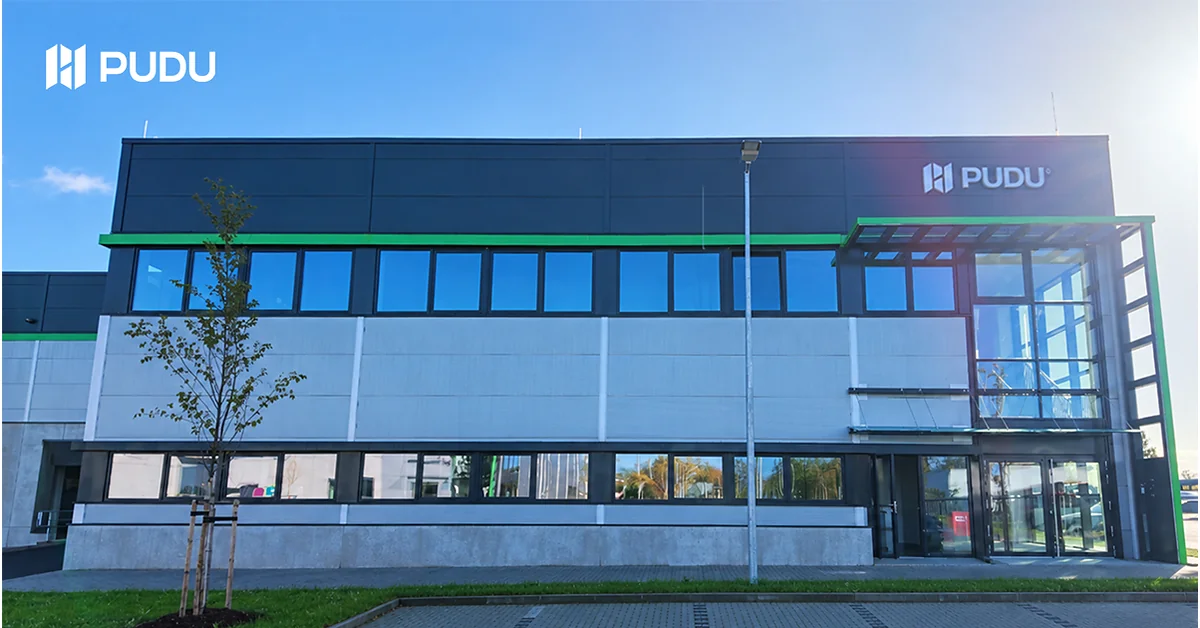
Pudu Robotics Opens European Headquarters in Germany to Support Continued Growth Across the Region
Image File
Original HTML

NEUSS, Germany, Oct. 30, 2026 /PRNewswire/ -- Pudu Robotics, a global leader in commercial robotics, today announced the opening of its European headquarters in Neuss, Germany, strengthening its local operating capabilities as its business continues to expand across the region.

The new headquarters brings together sales, product demonstrations, training, warehousing and after-sales services, reinforcing Pudu Robotics' investment in the local infrastructure and customer support needed to scale robotic deployments across European markets.

Strong Growth and Scaled Deployments Across Europe

Pudu Robotics' business spans more than 20 countries across Europe, reflecting its expanding presence throughout the region. Over the past two years, markets including Germany, Austria, Switzerland, France, the Netherlands, Norway, the United Kingdom, Spain, Italy, the Czech Republic and Poland have each recorded annual business growth of more than 60%.

The company serves customers across 16 industries, including retail, food and beverage, hospitality, healthcare, transportation, education, and more. Its European customers include leading retailers and hospitality groups such as EDEKA, Albert Heijn, Carrefour, Marriott, Van der Valk, Pizza Hut, Intermarché and Denner, as well as major transportation hubs such as Paris Charles de Gaulle Airport.

A notable example is Denner, a leading Swiss supermarket chain, which has deployed more than 200 PUDU CC1 Series cleaning robots across its store network. The deployment illustrates how autonomous cleaning can scale in demanding retail environments, where reliability, store-specific workflows and consistent service support are essential.

Supporting deployments of this scale requires more than supplying robotic equipment. Pudu works with customers to adapt deployment plans to store layouts and operating patterns, while providing technical assistance and ongoing operational support. This combination helps customers integrate robotic cleaning into daily operations and expand its use across their businesses.

Building Local Capabilities to Support Customers

Pudu Robotics' European growth is supported by an operating model built around local teams, regional partners and service infrastructure. The company continues to invest in local capabilities to strengthen collaboration with customers and partners and provide support throughout the deployment lifecycle.

Across Europe, Pudu has nearly 50 sales professionals supporting channel partners and customer projects, alongside nearly 40 technical support personnel serving different markets and deployments. Its local infrastructure includes a service center in Germany and warehousing facilities in the Netherlands and Germany for whole-robot inventory and spare parts, helping support delivery coordination and service responsiveness.

The company also works closely with local distributors, system integrators and service providers to support market development, deployment and ongoing maintenance. Within its European subsidiaries, Pudu has established local organizational structures and operational objectives, with continued investment in sales and service teams, warehousing and local service networks.

By combining local market knowledge and service capabilities with its global technical resources, Pudu aims to help customers deploy robotic solutions more effectively across diverse operating environments. Multilingual support in English, German, French, Spanish, Italian and other languages further facilitates collaboration across the region.

A Regional Hub for the Next Phase of Growth

Located in Neuss, Germany, the new European headquarters brings together office operations, a product showroom, warehousing, training, sales, after-sales service and repair capabilities, all of which are now operational. The facility supports product demonstrations, customer engagement, distributor training and local service delivery, while providing a hub for coordinating regional business activities.

The headquarters complements Pudu Robotics' existing European offices, partner network and warehousing infrastructure in the Netherlands and Germany. Together, these resources strengthen coordination across sales, deployment and after-sales support, providing a foundation for continued growth across the region.

Looking ahead, Pudu Robotics will continue to develop its local operating capabilities, deepen collaboration with regional partners and expand the application of its robotic solutions across industries, supporting customers as robotics becomes increasingly integrated into everyday operations.

"Europe is an important growth market for Pudu Robotics. As adoption expands, customers need more than reliable robotic solutionsâthey need local teams and service capabilities that can support deployment and ongoing operations over the long term. Our European headquarters in Neuss strengthens our ability to work closely with partners and customers across the region and support the next phase of our growth," said Bella Sun, Vice President and General Manager for Europe at Pudu Robotics.

About Pudu Robotics

Pudu Robotics is a global commercial robotics leader dedicated to empowering easier work and better lives through AI and robotics, with a vision of building a global intelligent robotics infrastructure serving 10 billion people worldwide.

Pudu has pioneered a "One Brain, Multiple Embodiments" architecture spanning specialized, semi-humanoid, and humanoid robots. Pudu develops robotic solutions across commercial and home robotics, with a portfolio spanning service delivery, commercial cleaning, industrial delivery, general embodied AI, commercial grounds care, and consumer lawn care.

With over 130,000 robots shipped and a presence in more than 85 countries and regions, Pudu serves customers across diverse industries, including retail, hospitality, manufacturing, healthcare, real estate and property services, education, entertainment and sport, and public services.

Share this article

Class (B2B/B2C)
B2B
Ingest Status
Rewritten
Dedupe hash
prn_302923863
Press Eligible
Yes
Press Eligible Reason
Manuelle Prüfung nötig. Risiko: MEDIUM. Flags: ['numbers']. Stichprobe: False
Source Name
Unknown Company
Original Summary

<p>NEUSS, Germany, Oct. 30, 2026 /PRNewswire/ -- Pudu Robotics, a global leader in commercial robotics, today announced the opening of its European headquarters in Neuss, Germany, strengthening its local operating capabilities as its business continues to expand across the region. The new...</p>

Image URL
https://mmx.prnewswire.com/media/MS2023612/20261029075730EDT_image_1.jpg?id=OA3047755&p=facebook
Content Hash (SHA-256, erste 32 hex)
2890eac736cc483fd113b3efd38d032f
As AI Gets Smarter, Healthcare Education Must Get More Human
Image File
Original HTML

WHITTIER, Calif., Oct. 30, 2026 /PRNewswire/ -- As artificial intelligence becomes increasingly integrated into healthcare, the next generation of healthcare professionals will need more than technological proficiency. They will need stronger critical thinking, clinical judgment, and interpersonal skills to ensure that advances in technology translate into better care for patients, according to Tamara Rozhon, EdD, Provost of Southern California University of Health Sciences (SCU).

AI is already helping healthcare professionals analyze medical images, support clinical decisions, and advance research. The U.S. Food and Drug Administration maintains a list of AI-enabled medical devices authorized for marketing, while the World Health Organization identifies applications across clinical care, drug development, and health systems management.

As access to information expands, Rozhon says that educators must place greater emphasis on how students evaluate and apply it. Future healthcare professionals need to assess the evidence, recognize potential bias and error, consider ethical concerns, and determine whether an AI-generated finding makes sense for an individual patient.

"The best healthcare requires not just understanding patient data, but understanding patients: their individual circumstances, preferences, goals, aspirations, and all the factors that may be supporting or hindering their health and well-being," Rozhon says.

For educators, this means designing learning experiences and assessments that require students to question and defend an answer and make sound decisions in the context of a real person. Clinical experiences must also strengthen listening, empathy, communication, judgment, and connection. These abilities become increasingly important as technology takes on more of the work of generating and synthesizing information.

"Perhaps the greatest challenge for health sciences education, then, is not keeping pace with artificial intelligence. It is developing the human intelligence required to use it well," says Rozhon.

Read Rozhon's full perspective: "As AI Gets Smarter, Healthcare Education Must Get More Human."

About Southern California University of Health Sciences

Southern California University of Health Sciences (SCU) is one of the world's only Integrative, Whole Health universitiesâteaching students to blend the best of conventional medicine with proven complementary approaches, and to treat the whole person (body, mind, and spirit). Founded in 1911, SCU has been challenging convention and pushing healthcare forward for more than 100 years. Today, the institution offers graduate, undergraduate, and certificate programs in a wide range of disciplines, including Chiropractic, Sports Medicine, Physical & Occupational Therapy, Genetic Counseling, Genetics & Genomics, Medical Science, Physician Assistant, Ayurveda, Acupuncture & Chinese Herbal Medicine, Clinical Psychology, Whole Health Leadership, and beyond. Learn more at scuhs.edu.

SOURCE Southern California University of Health Sciences

Share this article

Class (B2B/B2C)
B2B
Ingest Status
Rewritten
Dedupe hash
prn_302924433
Press Eligible
Yes
Press Eligible Reason
Healthcare education perspective on AI and training future professionals.
Source Name
Unknown Company
Original Summary

<p>WHITTIER, Calif., Oct. 30, 2026 /PRNewswire/ -- As artificial intelligence becomes increasingly integrated into healthcare, the next generation of healthcare professionals will need more than technological proficiency. They will need stronger critical thinking, clinical judgment, and...</p>

Image URL
https://mmx.prnewswire.com/media/MS1815621/SCU-Horizontal-Logo-with-Tagline.jpg?id=OA3048315&p=facebook
Content Hash (SHA-256, erste 32 hex)
c89d0805742fb700e0148bcca58c89ae
IDEAYA Biosciences Announces Inducement Grants under Nasdaq Listing Rule 5635(c)(4)
Image File
Original HTML

SOUTH SAN FRANCISCO, Calif., Oct. 30, 2026 /PRNewswire/ -- IDEAYA Biosciences, Inc. (NASDAQ: IDYA), a precision medicine oncology company committed to the discovery, development and commercialization of targeted therapeutics, today announced that, on October 29, 2026, the Compensation Committee of IDEAYA's Board of Directors granted non-qualified stock options to purchase an aggregate of 99,600 shares of the Company's common stock to four newly hired employees. The stock options were granted under the IDEAYA Biosciences, Inc. 2023 Employment Inducement Incentive Award Plan (2023 Inducement Plan) as an inducement material to such individuals' entering into employment with IDEAYA in accordance with Nasdaq Listing Rule 5635(c)(4).

The 2023 Inducement Plan is used exclusively for the grant of equity awards to individuals who were not previously employees of IDEAYA, or following a bona fide period of non-employment, as an inducement material to such individuals' entering into employment with IDEAYA, pursuant to Nasdaq Listing Rule 5635(c)(4).

The stock options have an exercise price of $32.89 per share, which is equal to the closing price of IDEAYA's common stock on The Nasdaq Global Select Market on the date of grant. The stock options have a 10-year term and will vest over four years, with 25% of the options vesting on the first anniversary of the vesting commencement date and the remaining 75% of the options vesting in equal monthly installments over the three years thereafter. Vesting of the stock options is subject to such employee's continued service to IDEAYA on each vesting date.

About IDEAYA Biosciences

IDEAYA is a precision medicine oncology company committed to the discovery, development, and commercialization of transformative therapies for cancer. Our approach integrates expertise in small-molecule drug discovery, structural biology and bioinformatics with robust internal capabilities in identifying and validating translational biomarkers to develop tailored, potentially first-in-class targeted therapies aligned to the genetic drivers of disease. We have built a deep pipeline of product candidates focused on synthetic lethality and antibody-drug conjugates, or ADCs, for molecularly defined solid tumor indications. Our mission is to bring forth the next wave of precision oncology therapies that are more selective, more effective, and deeply personalized with the goal of altering the course of disease and improving clinical outcomes for patients with cancer.

Investor and Media Contact

IDEAYA Biosciences

Joshua Bleharski, Ph.D.

Chief Financial Officer 

[email protected]

SOURCE IDEAYA Biosciences, Inc.

Share this article

Class (B2B/B2C)
B2B
Ingest Status
Need Review
Dedupe hash
prn_302924462
Press Eligible
Yes
Press Eligible Reason
QA FAIL (need review): The target contains factual claims not explicitly stated in the source: the aggregate exercise value of approximately $3.28 million (99,600 x $32.89) and the average of 24,900 shares per hire. These derived numbers are not present in the source and violate the requirement that the target must not contain factual claims not explicitly stated in the source.
Source Name
Unknown Company
Original Summary

<p>SOUTH SAN FRANCISCO, Calif., Oct. 30, 2026 /PRNewswire/ -- IDEAYA Biosciences, Inc. (NASDAQ: IDYA), a precision medicine oncology company committed to the discovery, development and commercialization of targeted therapeutics, today announced that, on October 29, 2026, the Compensation...</p>

Image URL
https://mmx.prnewswire.com/media/MS1161589/IDEAYA-v2-Logo.jpg?id=OA3048673&p=facebook
Generated Article_json
{"target_audience": "b2b", "is_medical": false, "ai_generated_title": "IDEAYA Grants 99,600 Inducement Options to Four New Hires", "body_html": "<p><strong>South San Francisco -- [CURRENT_DATE] --</strong> IDEAYA Biosciences (NASDAQ: IDYA) granted non-qualified stock options on an aggregate 99,600 shares of common stock to four newly hired employees, the precision oncology company disclosed. The Compensation Committee of its Board of Directors approved the awards on October 29, 2026.</p><h5>Options carry a $32.89 exercise price set at the grant-date close</h5><p>The strike price equals the closing price of IDEAYA stock on The Nasdaq Global Select Market on the grant date. At that price, the aggregate exercise value of the 99,600 shares comes to roughly $3.28 million, or an average of 24,900 shares per hire.</p><h5>Awards vest over four years with a 25% cliff after year one</h5><p>The options have a 10-year term. Twenty-five percent vest on the first anniversary of the vesting commencement date. The remaining 75% vest in equal monthly installments over the following three years. Each vesting date is conditional on the employee's continued service to IDEAYA.</p><h5>Grants fall under the 2023 Inducement Plan and Nasdaq Rule 5635(c)(4)</h5><p>IDEAYA issued the awards under its 2023 Employment Inducement Incentive Award Plan as an inducement material to each individual's decision to join the company. The plan is reserved exclusively for people who were not previously IDEAYA employees, or who return after a bona fide period of non-employment. It operates under Nasdaq Listing Rule 5635(c)(4).</p>", "meta_description": "IDEAYA Biosciences granted options on 99,600 shares to four new hires at a $32.89 exercise price, vesting over four years under Nasdaq's inducement rule.", "seo_keywords": "IDEAYA Biosciences, IDYA, inducement grants, stock options, Nasdaq Rule 5635(c)(4), precision oncology, employee equity awards, 2023 Inducement Plan", "companies": ["IDEAYA Biosciences"], "industries": ["Biopharmaceuticals"], "markets_regions": ["United States"], "news_type": ["financial_disclosure", "personnel_update"], "products": [], "themes": ["talent_acquisition", "executive_compensation"], "events": [], "cta_text": "Review IDEAYA Biosciences' investor disclosures for details on its 2023 Employment Inducement Incentive Award Plan", "learn_more": "", "fact_check": {"accuracy_score": 100, "legal_risk": "low", "corrections_made": ["Aggregate exercise value (~$3.28 million) and average per hire (24,900 shares) are derived from source figures: 99,600 x $32.89 and 99,600 / 4.", "Dateline uses the [CURRENT_DATE] placeholder per system rules."], "recommendation": "publish"}}
Content Hash (SHA-256, erste 32 hex)
2993d26f0a9ecf46760c54b79168e5be
Cognizant commits more than 25,000 professionals to OpenAI delivery as enterprises move frontier AI into production
Image File
Original HTML

- Cognizant's new OpenAI Frontier Capability Group brings more than 25,000 professionals together in a global OpenAI delivery organization

- Cognizant is scaling OpenAI across its own sales and customer success operations first, so clients can benefit from approaches tested at enterprise level

TEANECK, N.J., Oct. 30, 2026 /PRNewswire/ -- Cognizant (Nasdaq: CTSH) today announced the formation of its OpenAI Frontier Capability Group, bringing together more than 25,000 professionals aligned to delivering OpenAI products, including Codex and ChatGPT, for clients. The group is designed to help enterprises apply OpenAI models to how they write software, serve customers and run day-to-day operations.

Access to frontier models is no longer what holds many enterprises back; what they lack is skilled professionals who know how to build with those models inside the systems their business depends on. Cognizant has been building that capability across the company, where more than 21,000 associates have earned 40,000+ OpenAI badges, each awarded for completion of learning tracks on OpenAI technologies. The new group adds an organization focused on building and supporting the operation of OpenAI-powered systems for clients.

That work is expected to draw on Cognizant's Frontier workforce model, through which it is developing Frontier Certified Engineers and Frontier Business Operators credentialed directly by frontier-model companies.

Cognizant often tests new approaches in its own business before taking them to clients. Its sales and customer success teams already use a solution built on OpenAI models to find and pursue new opportunities. For clients, that means the group's work can start from methods tested at scale inside a global enterprise.

"Over the last 50 years, every shift in enterprise technology has changed who builds the systems and how," said Ravi Kumar S, CEO of Cognizant. "With Codex and ChatGPT, OpenAI is changing both at once. We are committing more than 25,000 of our people to bring that change inside our clients' businesses. We started with our own, and OpenAI is beginning to reshape how we sell."

"OpenAI is helping businesses fundamentally rethink how they operate, from the way they serve customers to how they get work done," said Dali Rajic, Chief Revenue Officer at OpenAI. "By bringing together more than 25,000 professionals in a dedicated OpenAI practice and putting our technology to work across its own operations, Cognizant is helping more enterprises turn AI into meaningful business impact."

Initial focus areas

The group will initially focus on three areas: AI-native software engineering with Codex, application modernization and agentic customer operations. Codex anchors the first and is designed to support engineers as they write, test and ship new code. In application modernization, the group will use Cognizant Application Modernizer, powered by OpenAI models, across the full lifecycle, from reverse engineering legacy mainframe code to generating cloud-native code. Engineers review every consequential decision, backed by Cognizant's experience modernizing mainframe systems for more than 500 clients. In customer operations, the group will apply OpenAI models to sales, service and support, drawing on Cognizant's experience using them in its own business.

Cognizant is already delivering for clients: at a global biopharmaceutical company, Cognizant co-engineered an OpenAI-powered enterprise assistant that brings search, content creation, translation and approvals into one place. It has handled more than 5 million conversations and cut content creation time by 60%.

Cognizant is one of a select group of Advanced partners in the OpenAI Partner Network. Its Codex hackathons in India and the Americas brought together more than 12,000 participants.

About Cognizant

Cognizant (Nasdaq: CTSH) is an AI Builder and technology services provider, bridging the gap between AI investment and enterprise value by building full-stack AI solutions for our clients. Our deep industry, process and engineering expertise enables us to build an organization's unique context into technology systems that amplify human potential, drive tangible outcomes and keep global enterprises ahead in a fast-changing world. See how at www.cognizant.ai or @cognizant. 

For more information, contact:

SOURCE Cognizant Technology Solutions

Share this article

Class (B2B/B2C)
B2B
Ingest Status
Rewritten
Dedupe hash
prn_302924550
Press Eligible
Yes
Press Eligible Reason
Manuelle Prüfung nötig. Risiko: MEDIUM. Flags: ['numbers']. Stichprobe: False
Source Name
Unknown Company
Original Summary

<p>Cognizant's new OpenAI Frontier Capability Group brings more than 25,000 professionals together in a global OpenAI delivery organization Cognizant is scaling OpenAI across its own sales and customer success operations first, so clients can benefit from approaches tested at enterprise...</p>

Image URL
https://mmx.prnewswire.com/media/MS607279/Cognizant-Logo-V1.jpg?id=OA3048728&p=facebook
Content Hash (SHA-256, erste 32 hex)
d6ef19e3fcee466023efe20baf409eb8
Cambrex Breaks Ground on $120 Million Expansion in Charles City, Iowa
Image File
Original HTML

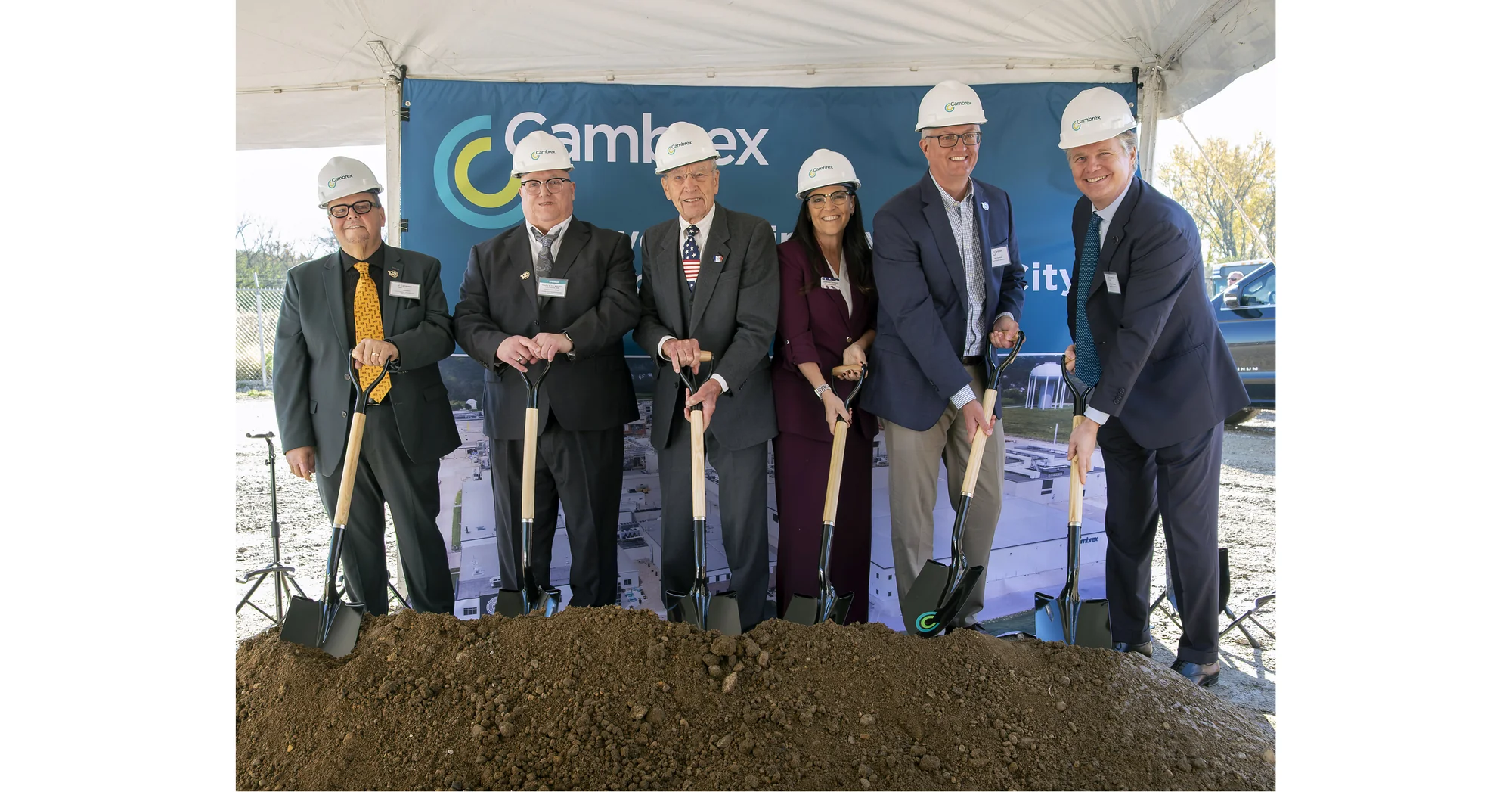
EAST RUTHERFORD, N.J., Oct. 30, 2026 /PRNewswire/ -- Cambrex, a leading global contract development and manufacturing organization (CDMO), today marked the groundbreaking of its $120 million expansion at its Charles City, Iowa facility.

The expansion will add 160,000 liters of manufacturing capacity, increasing the site's total capacity by approximately 25% to nearly one million liters, supporting the development and commercial manufacturing of small molecule active pharmaceutical ingredients (APIs) and synthetic peptides. The project is anticipated to be completed in the fourth quarter of 2028.

Cambrex celebrated the start of construction with a groundbreaking ceremony on October 29, bringing together company leaders, employees, state and local officials and members of the Charles City community. The milestone comes as the Charles City site celebrates its 100th anniversary, marking a century of operations at the facility.

"This groundbreaking marks an important milestone in our continued investment in U.S. manufacturing and in the Charles City site," said Claudio Russolo, Chief Operating Officer and incoming Chief Executive Officer, Cambrex. "As the site celebrates its 100th anniversary, this expansion reflects both its long history and its continued importance to our future. By expanding commercial-scale capacity for both small molecule and peptide manufacturing, we are strengthening our ability to support customers as their programs advance from development through commercialization."

The Charles City facility provides development and manufacturing services for small molecule APIs, synthetic peptides and pharmaceutical intermediates, supporting projects from clinical development through commercial-scale production. The expansion builds on the site's existing infrastructure and technical expertise while providing additional capacity to meet customer demand.

About Cambrex

Cambrex is a leading global contract development and manufacturing organization (CDMO) that provides drug substance development and manufacturing across the entire drug lifecycle, as well as comprehensive analytical services.

With over 45 years of experience and a team of 2,000 experts servicing global clients from North America and Europe, Cambrex offers a range of specialized drug substance technologies and capabilities, including continuous flow, controlled substances, peptide synthesis, solid-state science, biocatalysis, material characterization, complex synthetics, and highly potent APIs.

Share this article

Class (B2B/B2C)
B2B
Ingest Status
Rewritten
Dedupe hash
prn_302924343
Press Eligible
Yes
Press Eligible Reason
Manuelle Prüfung nötig. Risiko: MEDIUM. Flags: ['finance', 'numbers']. Stichprobe: False
Source Name
Unknown Company
Original Summary

<p>EAST RUTHERFORD, N.J., Oct. 30, 2026 /PRNewswire/ -- Cambrex, a leading global contract development and manufacturing organization (CDMO), today marked the groundbreaking of its $120 million expansion at its Charles City, Iowa facility. The expansion will add 160,000 liters of...</p>

Image URL
https://mmx.prnewswire.com/media/MS2023991/DSCF0652-touchup-ID-9be23a548b8a.jpg?id=OA3048606&p=facebook
Content Hash (SHA-256, erste 32 hex)
a287a63ed45a9e9de1a8d4ccb66b6a32
How to Design MQTT Topic Hierarchies for Industrial Equipment
Image File
Original HTML

An MQTT topic convention can look tidy during a pilot and become unmanageable after the second plant, a new equipment vendor, or the first external integration. The cost is not only cosmetic. Inconsistent paths make subscriptions overbroad, access rules difficult to review, and equipment identity ambiguous downstream.

A useful hierarchy gives a message enough stable context for routing and authorization without turning every changing telemetry value into a topic level. It is a namespace design decision, not an MQTT requirement and not a replacement for a governed asset model.

Start with the decisions a topic must support

Before choosing names, list the people and systems that will subscribe. A site operations team may need one line’s telemetry. A historian collector may need all approved telemetry. A maintenance application may need only condition events for selected assets. Security administrators need topic patterns that can be translated into broker access-control rules.

For each use case, identify stable dimensions that are useful in a route: site, area, line, equipment, and message class are common candidates. Do not include a dimension merely because it exists in an engineering drawing. A level earns its place when subscribers, routing, ownership, or authorization need it.

Use stable identity levels and a clear message class

One illustrative plain-MQTT structure is:

industrial/{site}/{area}/{line}/{equipment_id}/{message_class}

Examples might be:

industrial/shanghai/packaging/line-2/filler-07/telemetry

industrial/shanghai/packaging/line-2/filler-07/event

industrial/shanghai/packaging/line-2/filler-07/health

This is an organizational convention, not a protocol-mandated industrial schema. The key is that each level has one documented meaning. filler-07 is a stable equipment identifier; telemetry, event, and health classify the message purpose. Values such as pressure, mode, batch number, or a temporary alarm state normally belong in the payload, because they change message by message.

Avoid paths such as plant-a/line-2/filler-07/running/pressure. A device state is transient, so using it as an identity level splits the same asset across routes as it operates. It also creates subscriptions and access rules that have to anticipate every state spelling.

Design subscriptions from the hierarchy, not after it

MQTT uses / to separate topic levels. The + wildcard matches one complete level in a topic filter, while # matches the parent and any remaining levels and must be the last character of the filter. Wildcards belong in subscription filters, not published topic names. Topic names are case-sensitive, and the broker does not normalize them. See the OASIS MQTT 5.0 specification for the exact matching rules.

With the example namespace, these filters have readable intent:

Keep hierarchy depth stable. If one site inserts an equipment-type level but another does not, a filter that works in one plant can silently miss or overmatch another. Do not use # in a routine application subscription merely because it is convenient; its breadth makes least-privilege access and message-rate control harder.

Treat naming as a governed interface

Define a concise naming standard before devices publish at scale:

- Choose lowercase or another single case convention; MQTT treats Line-2 and line-2 as different names.

- Use controlled site and equipment identifiers rather than display labels that change with operators or projects.

- Reserve message-class names and document their intended payload contract.

- Decide how a renamed asset, retired line, or moved machine is handled without silently changing the historical source identity.

- Version a breaking payload or namespace change explicitly, such as a documented v2 level, rather than changing the meaning of an existing path without notice.

The MQTT specification permits many valid topic names, including empty levels and leading or trailing separators. Those are protocol facts, not reasons to use them in an industrial convention. Set stricter organizational rules where they improve clarity, auditability, and automation.

Connect topic paths to access control and routing

A well-designed hierarchy lets a broker policy express intent. A packaging-line maintenance service can be authorized to subscribe under its approved line and message classes, while a central historian service can subscribe to the telemetry branches it is responsible for. The exact ACL syntax and behavior are broker-specific, so validate policies with the deployed broker rather than assuming that a topic pattern is authorization by itself.

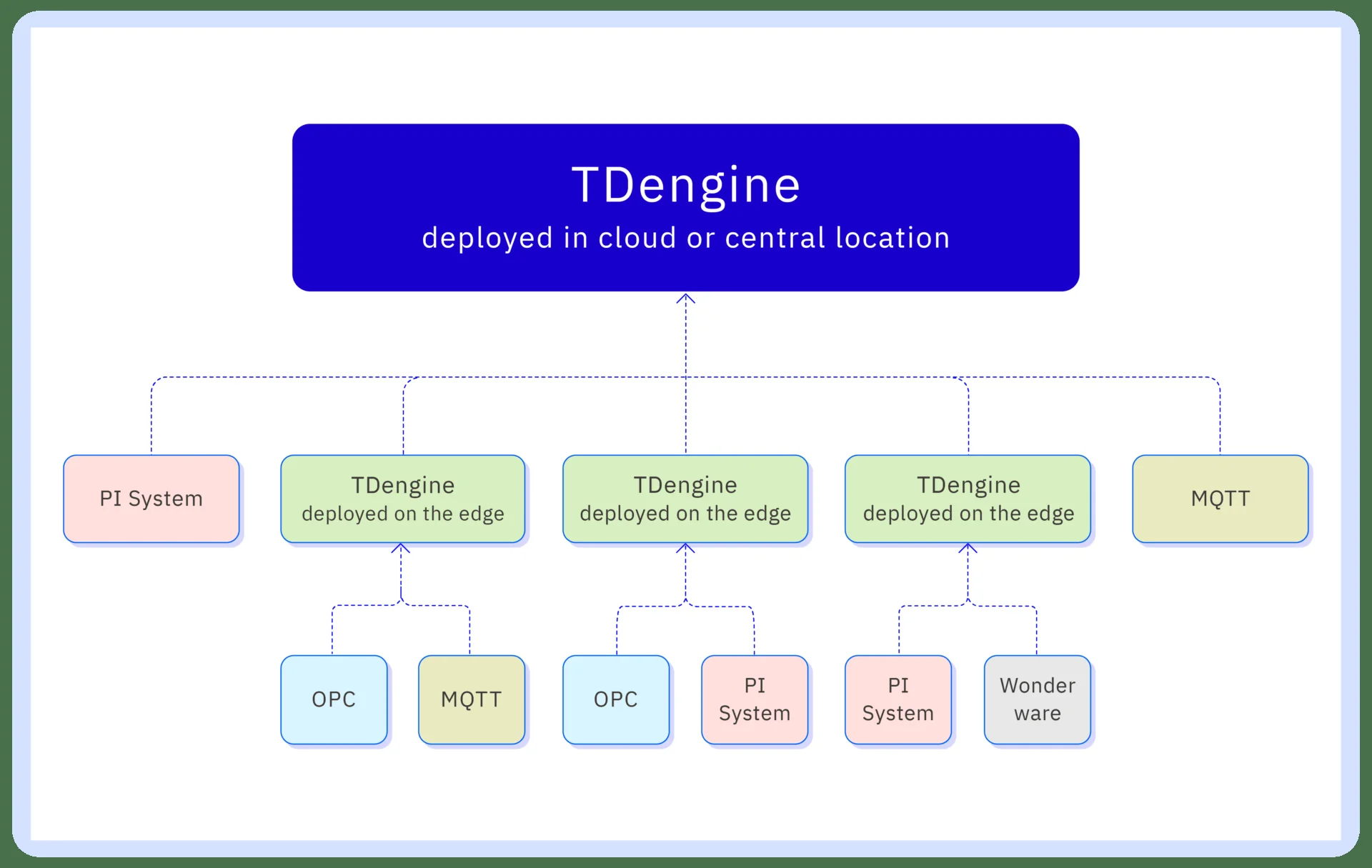
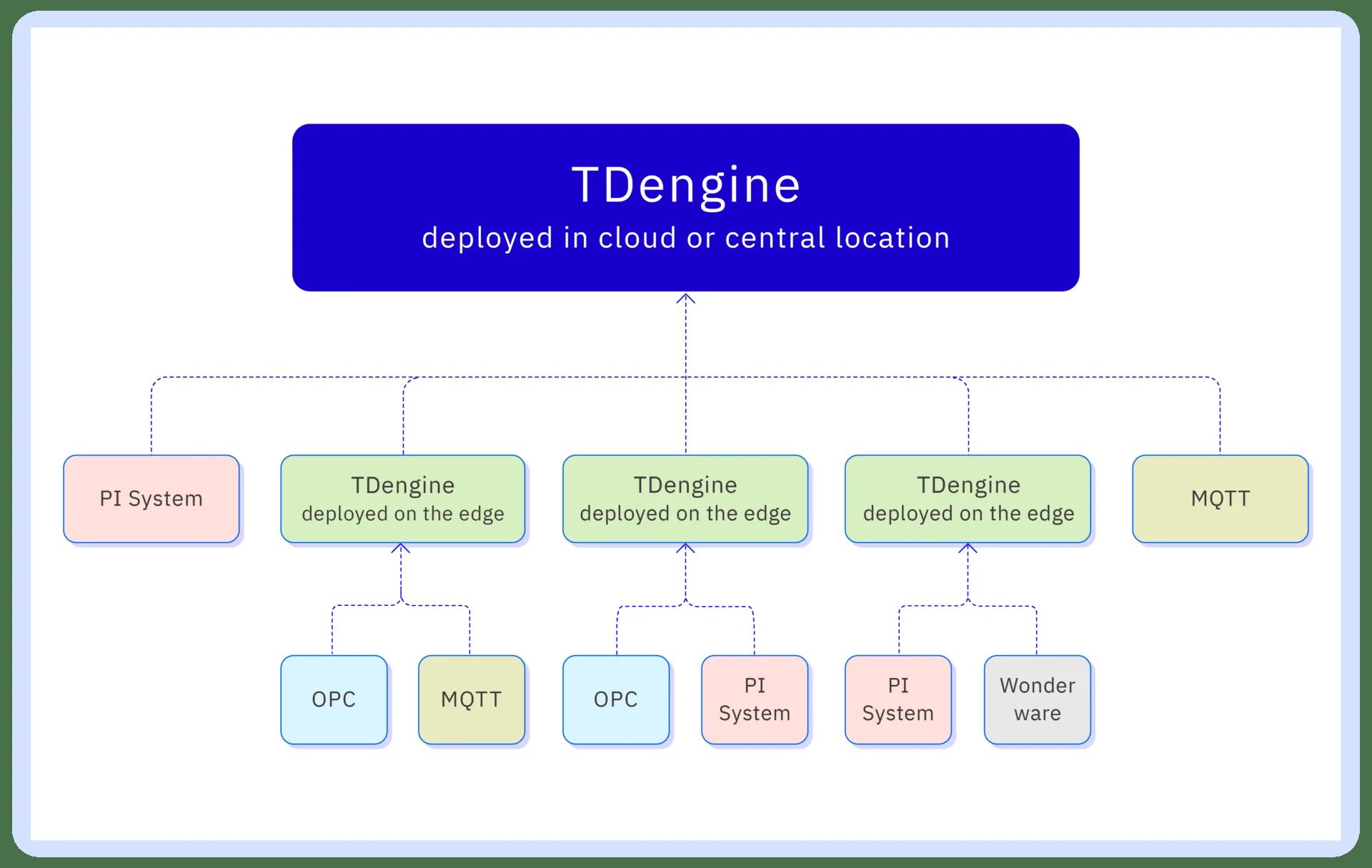
The same structure helps routing. A collector can subscribe to a stable telemetry branch without parsing display-name text from each message. TDengine’s MQTT ingestion documentation describes Topic Analysis, which parses topic levels into variables for subsequent payload transformations. That is a mapping capability, not proof that a topic path automatically creates an asset hierarchy or validates equipment identity.

For an industrial program that needs governed equipment context above raw time-series data, TDengine IDMP is the relevant product destination. Its asset trees and data-model capabilities should be configured from reviewed context; an MQTT topic hierarchy can contribute source context, but it does not by itself become an ontology.

Review the hierarchy against realistic change

Before standardizing it, test a proposed namespace with real subscription and governance questions:

- Can each intended consumer subscribe to exactly its required scope without an overly broad wildcard?

- Can an ACL reviewer tell what a client may publish and receive from the topic pattern?

- Does every equipment identifier remain stable across a rename, move, and controller replacement?

- Can a new message class be added without changing existing paths or subscriber meaning?

- Can downstream collectors associate topic identity with approved equipment context without assuming it is a complete asset model?

Run the test with at least two plants and several equipment classes. A hierarchy that is elegant for one skid but inconsistent across sites will create long-lived integration debt. The best topic design is predictable enough that routing, permissions, historians, and operators all interpret the same path consistently.

Class (B2B/B2C)
B2B
Ingest Status
Rewritten
Dedupe hash
f5b192a5164e0db9ac478aaf84553f99
Press Eligible
Yes
Press Eligible Reason
Manuelle Prüfung nötig. Risiko: LOW. Flags: ['none']. Stichprobe: True
Source Name
TDengine
Original Summary

An MQTT topic convention can look tidy during a pilot and become unmanageable after the second plant, a new equipment vendor, or the first external integration. The cost is not only cosmetic. Inconsistent paths make subscriptions overbroad, access rules difficult to review, and equipment identity ambiguous downstream. A useful hierarchy gives a message enough stable ... <a class="read-more" href="https://tdengine.com/mqtt-topic-hierarchies-industrial-equipment/&quot; title="How to Design MQTT Topic Hierarchies for Industrial Equipment">Read more</a>

Image URL
https://eujqw4hwudm.exactdn.com/wp-content/uploads/nh-0326-02.png
Source Node
Content Hash (SHA-256, erste 32 hex)
1e031ad9cfe0b88f5cbe2857bf6c19b3
Sparkplug B vs. Plain MQTT: When Do Industrial Systems Need More Structure?
Image File
Original HTML

Plain MQTT is intentionally flexible. It moves a topic and an application payload between clients through a broker, but it does not say how a machine should be named, how a measurement should be typed, or how an application learns that an edge gateway has come online.

That freedom is useful when one team controls a bounded system and can govern its own topic and payload contract. It becomes costly when several gateways, vendors, or consuming applications need the same equipment identity, metric definitions, and state behavior. Sparkplug B addresses that coordination problem by defining industrial application conventions on top of MQTT; it does not replace MQTT or turn a broker into a historian.

What plain MQTT provides—and leaves to the application

MQTT provides client-to-broker publish/subscribe messaging, topic names, topic filters, QoS choices, retained messages, sessions, and a Last Will mechanism. The payload is application data: the MQTT specification does not require JSON, a device model, metric names, data types, or an industrial topic namespace.

With plain MQTT, an architecture team must define those elements itself. That includes:

- Topic-level meaning and stable equipment identifiers.

- Payload encoding and metric names, types, units, and timestamps.

- How devices announce their available metrics or configuration changes.

- How subscribers decide whether a gateway or device is currently usable.

- Rules for command messages, duplicates, version changes, and backward compatibility.

None of this makes plain MQTT inadequate. A governed schema and a small number of controlled publishers can be simpler than adopting another application specification. The risk appears when every integration invents a slightly different contract and downstream systems must reverse-engineer it.

What Sparkplug B adds

Sparkplug B is an industrial application specification that uses MQTT transport and defines a topic namespace, message types, payload conventions, and operational behavior. It introduces concepts including a group ID, Edge of Network (EoN) node ID, optional device ID, and standard message classes for data, commands, and state changes.

For example, Sparkplug’s Birth and Death messages give consuming applications a defined way to learn lifecycle state. An Edge Node publishes an NBIRTH message after establishing an MQTT session; a broker can publish the node’s NDEATH as its Last Will when that session ends unexpectedly. Device-level DBIRTH and DDEATH messages provide related conventions for devices managed by an edge node. These are application-level semantics coordinated with MQTT features, not generic MQTT behavior.

Sparkplug B also defines metric payloads that include metric identity, data type, value, metadata-related structures, timestamps, and sequence behavior. Sparkplug B metric messages use Protocol Buffers encoding, so JSON renderings of those metrics in documentation are illustrative rather than the on-wire format. Sparkplug Host Application STATE messages are a separate case and use JSON payloads. The current Eclipse Sparkplug specification is the source of truth for required message flows and version-specific details.

Compare the architectural choice

The distinction is not “simple versus enterprise.” It is whether the cost of maintaining a custom application contract is lower than the cost of adopting and operating a shared one.

When Sparkplug B is useful

Sparkplug B is a strong candidate when an architecture needs consistent gateway and device lifecycle visibility across multiple vendors or sites, and when several applications need to consume metrics without negotiating a new payload contract for every integration. It can reduce custom adapter work when producers and consumers genuinely support the same Sparkplug version, roles, and message behavior.

It is also useful when an edge gateway represents several downstream devices. The EoN and device distinction gives a common way to express that relationship, while Birth messages communicate the metric set expected from each node or device. That does not create a complete plant ontology; it standardizes messaging context, not every business or engineering relationship.

Before adopting it, verify ecosystem fit. A broker’s ability to route MQTT packets does not mean it understands or validates Sparkplug semantics. A generic MQTT client may connect successfully but still not produce compliant Birth, Death, data, or command messages. Confirm the capabilities of each gateway, broker, SCADA application, and backend consumer—not just the protocol label on a product page.

When plain MQTT is sufficient

Plain MQTT is often sufficient when one organization controls publishers and consumers, the payload schema is compact and well versioned, and the system does not need cross-vendor Sparkplug interoperability. It can be the better choice for a single telemetry flow, a constrained device, or an existing platform with a mature governed schema.

The condition is discipline. Publish a documented topic namespace, a versioned payload contract, stable identifiers, metric data types and units, timestamp rules, lifecycle expectations, and access-control rules. A custom convention without an owner becomes accidental protocol design.

Do not adopt Sparkplug B only to solve historian storage. Neither Sparkplug nor a broker replaces validation, buffering, timestamp policy, data retention, and query design. Those remain responsibilities of the collection pipeline and historian.

Use a short decision review

Ask the architecture team five questions:

- Do multiple independent producers and consumers need a shared industrial metric and lifecycle contract?

- Can every required component implement and test the same Sparkplug version and role correctly?

- Would Birth/Death state awareness replace custom behavior that is currently inconsistent or unreliable?

- Does the team have an owner for Sparkplug namespace, metric, security, and version-governance decisions?

- Would a documented plain-MQTT contract meet the same requirements with less operational complexity?

For Sparkplug-based data collection, TDengine TSDB Enterprise documents a SparkplugB ingestion connector that subscribes to MQTT brokers and maps incoming data into time-series tables. This is a documented ingestion capability, not a guarantee of complete Sparkplug conformance across all roles, versions, or deployments. For industrial programs that also need governed equipment context above raw telemetry, TDengine IDMP addresses a separate layer through industrial data modeling and asset trees.

Class (B2B/B2C)
B2B
Ingest Status
Rewritten
Dedupe hash
3f5c04929c3770ddf6edb5b4ee93a0fa
Press Eligible
Yes
Press Eligible Reason
Manuelle Prüfung nötig. Risiko: LOW. Flags: ['none']. Stichprobe: True
Source Name
TDengine
Original Summary

Plain MQTT is intentionally flexible. It moves a topic and an application payload between clients through a broker, but it does not say how a machine should be named, how a measurement should be typed, or how an application learns that an edge gateway has come online. That freedom is useful when one team controls ... <a class="read-more" href="https://tdengine.com/sparkplug-b-vs-plain-mqtt/&quot; title="Sparkplug B vs. Plain MQTT: When Do Industrial Systems Need More Structure?">Read more</a>

Image URL
https://eujqw4hwudm.exactdn.com/wp-content/uploads/nh-0326-02.png
Source Node
Content Hash (SHA-256, erste 32 hex)
f1b94748d4e424c8ee168e4e4a0abd64
FACTUREE zählt zu Berlins besten Arbeitgebern: Was Beschäftigte heute wirklich bindet
Original HTML

FACTUREE zählt zu Berlins besten Arbeitgebern: Was Beschäftigte heute wirklich bindet

Berlin (ots)

Wie lassen sich Fachkräfte langfristig binden, wenn diese zunehmend Flexibilität erwarten, gleichzeitig aber Zusammenarbeit und Unternehmenskultur nicht verloren gehen sollen? Und wie gelingt das, wenn ein Unternehmen wächst und neue Strukturen benötigt? Der Berliner Beschaffungsdienstleister FACTUREE beschäftigt sich intensiv mit diesen Fragen. Das Unternehmen gehört 2026 zu den vom Tagesspiegel und dem Sozialwissenschaftlichen Institut Schad ausgezeichneten "Besten Arbeitgebern" Berlins.

FACTUREE hat sich als digitaler Beschaffungsdienstleister für maßgefertigte Zeichnungsteile etabliert. Über seine Plattform ermöglicht das Unternehmen Industriekunden den Zugang zu einem Netzwerk von mehr als 2.000 Fertigungspartnern. Über 30.000 Kunden nutzen inzwischen das Angebot. Parallel zur Weiterentwicklung der Plattform, unter anderem durch den Einsatz von KI, baut FACTUREE seine persönliche Kundenbetreuung aus. Dafür benötigt das Unternehmen zusätzliche Fachkräfte. Die Mitarbeiterzahl ist von 53 im Jahr 2025 auf bisher 62 im Jahr 2026 gestiegen.

Mit dem Wachstum stellt sich auch die Frage, wie sich die Unternehmenskultur weiterentwickeln muss. Das 2017 in Berlin gegründete Unternehmen FACTUREE hat sich aus seiner Start-up-Phase flache Hierarchien, kurze Entscheidungswege und eine offene Kommunikation bewahrt. Gleichzeitig wurden klare Rollen- und Zieldefinitionen sowie systematische Kapazitäts- und Vertretungsplanungen eingeführt.

"Wir wollen wachsen, ohne zu verlieren, was uns als Arbeitgeber auszeichnet. Das ist ein Spagat. Denn je größer ein Unternehmen wird, desto mehr Strukturen braucht es. Gleichzeitig wollen wir kurze Entscheidungswege, Vertrauen und Eigenverantwortung erhalten", erklärt Richard Schentke, Head of People and Culture bei FACTUREE.

Mitarbeitende wollen wissen, welchen Beitrag sie leisten

Mit zunehmender Unternehmensgröße wird es oft schwieriger, alle Beschäftigten einzubinden und ihnen zu vermitteln, welche Rolle sie für den gemeinsamen Erfolg spielen. Wie FACTUREE dabei aufgestellt ist, zeigt eine anonyme Mitarbeiterbefragung aus dem Jahr 2026. Die Beschäftigten geben an, dank transparenter Kommunikation genau zu wissen, wie ihre Arbeit zum Unternehmenserfolg beiträgt. Dieser Aspekt erreicht 4,92 von maximal 5 Punkten. Auch die Sinnhaftigkeit ihrer Tätigkeit bewerten sie mit 4,75 Punkten hoch.

Eine weitere Herausforderung beim Wachstum ist es, Vertrauen und einen offenen Umgang miteinander zu bewahren. FACTUREE setzt dabei auf direkte Kommunikation über Hierarchiegrenzen hinweg und eine Fehlerkultur, bei der Probleme gemeinsam gelöst werden, statt Schuldige zu suchen. In der Befragung erreicht diese sogenannte No-Blame-Kultur 4,42 von 5 Punkten, das gegenseitige Vertrauen innerhalb der Teams 4,50 Punkte.

Auch die Bereitschaft, FACTUREE als Arbeitgeber weiterzuempfehlen, ist hoch. Der sogenannte Employee Net Promoter Score (eNPS) liegt bei +42,4 auf einer Skala von -100 bis +100. Der Wert zeigt, dass die überzeugten Befürworter unter den Beschäftigten deutlich überwiegen. Doch was erwarten Mitarbeiter heute überhaupt von einem guten Arbeitgeber?

Was Mitarbeiter über ihre Tätigkeit hinaus bindet

"Wir stellen seit einigen Jahren fest, dass die Erwartungen an Arbeitgeber vielfältiger werden. Lebensmodelle verändern sich, familiäre Aufgaben werden zunehmend partnerschaftlich verteilt und gerade jüngere Beschäftigte legen großen Wert darauf, Beruf und Privatleben flexibel miteinander vereinbaren zu können. Gleichzeitig erwarten sie individuelle Entwicklungsmöglichkeiten und klare berufliche Perspektiven. Für uns bedeutet das, flexibler werden zu müssen", erklärt Schentke.

FACTUREE bietet daher ein hybrides Arbeitsmodell mit Gleitzeit, Vertrauensarbeitszeit und Homeoffice-Option. Darüber hinaus können Mitarbeiter zeitweise aus dem Ausland arbeiten. Gerade für die internationale Belegschaft mit Menschen aus 13 Nationen ist dies ein wichtiger Aspekt.

Auch bei der beruflichen Weiterentwicklung berücksichtigt FACTUREE die unterschiedlichen Bedürfnisse der Beschäftigten. Neben individuellen Weiterbildungsangeboten arbeitet das Unternehmen derzeit an einem transparenten Karrierestufenmodell, das klare Entwicklungs- und Aufstiegsmöglichkeiten schaffen soll. Doch je individueller die Arbeitsmodelle werden, desto anspruchsvoller wird es, den Zusammenhalt im Unternehmen zu erhalten. FACTUREE fördert daher bewusst persönliche Begegnungen - zum Beispiel beim gemeinsamen Mittagessen im Büro, wo täglich kostenfrei frisch für die Belegschaft gekocht wird, oder bei regelmäßigen Teamveranstaltungen. Letztere nutzt die Geschäftsführung auch, um die Mitarbeiter über die wirtschaftliche Entwicklung und anstehende Veränderungen zu informieren.

Auszeichnung bestätigt den eingeschlagenen Weg

Die Auszeichnung als einer von "Berlins Besten Arbeitgebern 2026" basiert auf einer Untersuchung des Tagesspiegels und des Sozialwissenschaftlichen Instituts Schad. Bewertet wurden unter anderem Arbeitszeitmodelle, Gesundheitsschutz, Zusatzleistungen, Chancengleichheit und Entwicklungsmöglichkeiten.

"Die Auszeichnung freut uns sehr. Ein guter Arbeitgeber zu sein ist eine Daueraufgabe. Die Erwartungen der Mitarbeiter verändern sich, und mit unserem Wachstum verändern sich auch die Rahmenbedingungen. Wir müssen deshalb immer wieder neu austarieren, was wir brauchen, um als Unternehmen gemeinsam erfolgreich zu sein", sagt Schentke.

Pressekontakt:

PR-Agentur:

punctum pr-agentur GmbH

Neuer Zollhof 3

40221 Düsseldorf

Ansprechpartner:

Ulrike Peter

-Geschäftsführerin-

Tel.: +49 (0)211-9717977-0

E-Mail: pr@punctum-pr.de

www.punctum-pr.de

Original-Content von: FACTUREE, übermittelt durch news aktuell

Class (B2B/B2C)
B2B
Ingest Status
Rewritten
Dedupe hash
pp_6380729
Press Eligible
Yes
Press Eligible Reason
Unternehmensnews über FACTUREEs Wachstum, Personalstrategie und Arbeitgeberkultur.
Source Name
FACTUREE zählt zu Berlins besten Arbeitgebern
Original Summary

FACTUREE: Berlin (ots) - Wie lassen sich Fachkräfte langfristig binden, wenn diese zunehmend Flexibilität erwarten, gleichzeitig aber Zusammenarbeit und Unternehmenskultur nicht verloren gehen sollen? Und wie gelingt das, wenn ein Unternehmen wächst und ...

Content Hash (SHA-256, erste 32 hex)
1b90f6d840300d054bd42a0607affa41
Bertrandt gewinnt automotiveIT "IT Team Award 2026" mit violis.io / Virtuelle Testplattform beschleunigt die Absicherung von Fahrzeugsoftware
Image File
Original HTML

Bertrandt gewinnt automotiveIT "IT Team Award 2026" mit violis.io

Virtuelle Testplattform beschleunigt die Absicherung von Fahrzeugsoftware

Ehningen (ots)

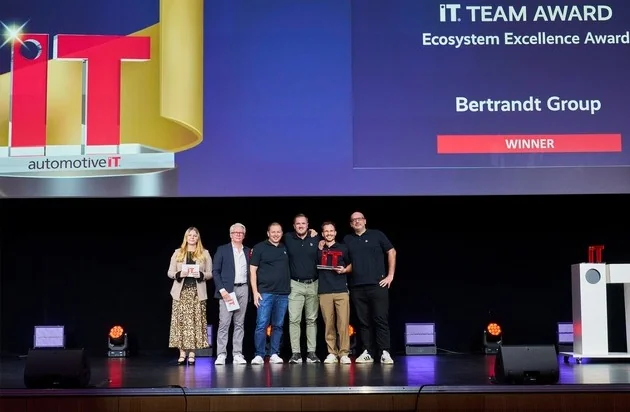
Bertrandt hat mit violis.io den ersten Platz bei den automotiveIT "IT Team Awards 2026" in der Kategorie "Ecosystem Excellence" erreicht. Die Plattform ermöglicht es, Fahrzeugsoftware bereits in einer virtuellen Umgebung zu integrieren und zu testen, bevor die entsprechenden realen Steuergeräte oder Fahrzeuge verfügbar sind. Entwicklungsteams können dadurch früher mit Tests beginnen, zahlreiche Prüfungen parallel durchführen und Fehler schneller erkennen. Gleichzeitig werden physische Prüfstände entlastet und zusätzliche Investitionen in Testhardware reduziert.

Die Auszeichnung wurde kürzlich im Rahmen des automotiveIT Kongresses verliehen. In der Kategorie "Ecosystem Excellence" werden Lösungen ausgezeichnet, mit denen Technologiepartner und gemeinsam arbeitende Teams die Weiterentwicklung der Automobilindustrie unterstützen, beispielsweise durch IT-Projekte mit nachvollziehbarem wirtschaftlichem Nutzen, innovativer Technologie und nachhaltiger Wirkung auf die Arbeitsweise von Unternehmen. Die Gesamtwertung setzt sich zu 60 Prozent aus dem Urteil einer Fachjury und zu 40 Prozent aus dem Community-Voting zusammen.

Mit der steigenden Zahl softwarebasierter Fahrzeugfunktionen wächst auch der Aufwand für deren Absicherung. Neue Funktionen und Updates müssen umfassend getestet werden. Gleichzeitig sind reale Testanlagen nur begrenzt verfügbar. Das kann dazu führen, dass Entwicklungsteams auf freie Kapazitäten warten müssen und Fehler erst zu einem späteren Zeitpunkt im Entwicklungsprozess erkennen.

Die Plattform violis.io des Engineeringpartners Bertrandt bildet Steuergeräte und ihr Zusammenspiel in einer virtuellen Umgebung nach und führt dafür virtuelle Steuergeräte, Simulationsmodelle und vorhandene Testwerkzeuge zusammen. So kann Fahrzeugsoftware bereits getestet werden, wenn die entsprechende Hardware noch nicht zur Verfügung steht. Entwicklungsteams können frühzeitig überprüfen, ob einzelne Funktionen wie vorgesehen arbeiten und unterschiedliche Fahrzeugfunktionen zuverlässig zusammenspielen.

Anders als bei klassischen, hardwaregebundenen Tests ist die Testkapazität dabei nicht von der Zahl verfügbarer Prüfstände abhängig: Virtuelle Testumgebungen lassen sich auf geeigneter IT-Infrastruktur vervielfältigen und parallel betreiben. violis.io stellt die benötigten Testumgebungen bereit, automatisiert Abläufe und bündelt die Ergebnisse. Durch die offene Verbindung unterschiedlicher Werkzeuge und Testumgebungen können vorhandene Systeme und etablierte Testabläufe weiterhin genutzt und in automatisierte Abläufe integriert werden. Die Tests können sowohl parallel auf einer Cloud-Infrastruktur als auch innerhalb der IT-Umgebung ausgeführt werden. Bertrandt verbindet dabei seine Erfahrung aus der Fahrzeugabsicherung mit der Kompetenz für Aufbau und Betrieb der Plattform.

"Mit violis.io verlagern wir einen Teil der Absicherung in die virtuelle Welt und ermöglichen unseren Kunden damit, deutlich früher im Entwicklungsprozess mit dem Testen zu beginnen. Tests können parallel durchgeführt und Ergebnisse schneller verfügbar gemacht werden. Reale Prüfstände lassen sich dadurch gezielt für die Aufgaben nutzen, bei denen physische Hardware tatsächlich erforderlich ist", sagt Nic Eckstein, Teamleiter im Bereich Testing Solutions bei Bertrandt.

Besonders deutlich zeigt sich der Vorteil von violis.io bei einer großen Zahl von Testfällen, etwa bei der Prüfung der Fahrzeugbeleuchtung. Werden 1.800 Testkombinationen mit einer durchschnittlichen Laufzeit von sieben Minuten nacheinander durchgeführt, dauert der Test insgesamt 210 Stunden. Werden dagegen 100 Tests gleichzeitig ausgeführt, sinkt die rechnerische Testdauer auf rund 2,1 Stunden. Durch diese Parallelisierung erhalten Entwicklungsteams deutlich früher Rückmeldung und können Fehler zügiger beheben. Das reduziert die Time-to-Market für neue Funktionen und Updates.

Gleichzeitig werden vorhandene Prüfstände entlastet und zusätzliche Investitionen in Testhardware reduziert.

Erfahren Sie mehr unter: www.bertrandt.com und www.violis.io

Pressekontakt:

Bertrandt AG

Birkensee 1

71139 Ehningen

Julia Schmid

Corporate Communications

Mobil: +49 (0)16098628706

E-Mail: presse@bertrandt.com

www.bertrandt.com

Original-Content von: Bertrandt AG, übermittelt durch news aktuell

Class (B2B/B2C)
B2B
Ingest Status
Rewritten
Dedupe hash
pp_6380775
Press Eligible
Yes
Press Eligible Reason
Manuelle Prüfung nötig. Risiko: MEDIUM. Flags: ['numbers']. Stichprobe: False
Source Name
Unknown Company
Original Summary

Bertrandt AG: Ehningen (ots) - Bertrandt hat mit violis.io den ersten Platz bei den automotiveIT "IT Team Awards 2026" in der Kategorie "Ecosystem Excellence" erreicht. Die Plattform ermöglicht es, Fahrzeugsoftware bereits in einer virtuellen Umgebung zu ...

Image URL
https://cache.pressmailing.net/thumbnail/highlight/49858635-cfb0-457d-9abf-02f191af5eaa/automotiveIT%20Kongres~%20Markus%20Br%C3%B6nner.jpg?crop=0,5,630,412
Content Hash (SHA-256, erste 32 hex)
9bc136269425083cc3c52df43aa67794
Vorsicht! Show akut in Gefahr! Carolin Kebekus, NBA-Star Moritz Wagner und Knossi quizzen ab Sonntag um Joko Winterscheidts Job
Image File
Original HTML

Vorsicht! Show akut in Gefahr! Carolin Kebekus, NBA-Star Moritz Wagner und Knossi quizzen ab Sonntag um Joko Winterscheidts Job

Unterföhring (ots)

Geht der Horror direkt nach Halloween weiter? Ab Sonntag muss Original-Moderator Joko Winterscheidt wieder um seine Sendung fürchten. In sechs neuen Folgen von "Wer stiehlt mir die Show?" greifen auf ProSieben immer sonntags um 20:15 Uhr Comedy-Queen und Schauspielerin Carolin Kebekus, NBA-Spieler Moritz Wagner und Entertainer und Streamer-Legende Jens "Knossi" Knossalla an und quizzen um den Moderationsjob von Joko.

Für NBA-Star Moritz Wagner ist die große Show Neuland: "Ich war noch nie im Fernsehen. Das ist natürlich ein anderes Parkett, das ist kein Basketball. Deshalb bin ich etwas aufgeregt."

Comedy-Legende Carolin Kebekus konnte ihren Terminkalender diesen Herbst endlich freiräumen, um Joko die Show zu stehlen: "Ich konnte nie, weil ich immer selbst produziert habe. Ich freue mich sehr!"

Für Streamer Knossi ist es nicht die erste TV-Show, dennoch gibt er voller Respekt zu: "Das ist zu groß für mich, aber jetzt ist es zu spät. Ich habe schon die erste falsche Antwort gegeben, weil ich gesagt habe: 'Ja, ich komme!'" Zur Sicherheit stellt er direkt zu Beginn klar: "Ich habe kein Abitur, ich will, dass wir das von vornherein wissen."

Neben den drei Prominenten haben auch in dieser Staffel zusätzlich Zuschauerinnen und Zuschauer als Wildcard die Möglichkeit, um den Show-Gewinn zu quizzen und damit den ungewöhnlichsten Preis in der Geschichte der TV-Quizshows zu gewinnen: die Moderation einer eigene Prime-Time-Show auf ProSieben. Katrin Bauerfeind moderiert die Finalrunde. Nur wer Joko hier mit Kalkül und Wissen schlägt, übernimmt in der nächsten Folge seine Show.

Produziert wird "Wer stiehlt mir die Show?" von der Florida Entertainment GmbH im Auftrag von ProSieben.

"Wer stiehlt mir die Show?" - ab 1. November 2026, immer sonntags, um 20:15 Uhr auf ProSieben und streamen auf Joyn

Pressekontakt:

Kevin Körber

Tel.: +49 (0) 89 95 07 - 1187

Kevin.Koerber@ProSiebenSat1.com

Photo Production & Editing

Nadine Vaders

Tel.: +49 (0) 89 95 07 - 1161

Nadine.Vaders@ProSiebenSat1.com

Original-Content von: ProSieben, übermittelt durch news aktuell

Class (B2B/B2C)
B2C
Ingest Status
Rewritten
Dedupe hash
pp_6380790
Press Eligible
Yes
Press Eligible Reason
Consumer-facing announcement about a TV quiz show and its upcoming season.
Source Name
Unknown Company
Original Summary

ProSieben: Unterföhring (ots) - Geht der Horror direkt nach Halloween weiter? Ab Sonntag muss Original-Moderator Joko Winterscheidt wieder um seine Sendung fürchten. In sechs neuen Folgen von "Wer stiehlt mir die Show?" greifen auf ProSieben immer sonntags ...

Image URL
https://cache.pressmailing.net/thumbnail/highlight/144b234a-ec21-4a88-bfb7-0b66b9b7d30e/Joyn_P7_WSMDS_3456161.jpg?crop=0,4,630,412
Content Hash (SHA-256, erste 32 hex)
52f9a45f7534812211f2e7d7cbc90e28