Where the future takes shape
Image File
Original HTML

Where the future takes shape

Inside essential innovation: the trends, people and progress shaping the future.

Newsletter Published monthly

Created by

GlobalFoundries

Editions

- Published on Jun 26, 2026 Quantum’s future depends on volume manufacturing GlobalFoundries on LinkedIn

- Published on May 12, 2026 From electrons to photons: Scaling optical connectivity with silicon photonics… GlobalFoundries on LinkedIn

- Published on Mar 5, 2026 Insights on Physical AI GlobalFoundries on LinkedIn

Class (B2B/B2C)
Ignore
Ingest Status
Rejected
Dedupe hash
76aee25ea6757ba1f50973c6b414b82d
Press Eligible
No
Press Eligible Reason
Text too short (68 words. Min: 150)
Source Name
GlobalFoundries Newsroom
Image URL
https://media.licdn.com/dms/image/v2/D4E12AQHi2TcgAh5fag/series-logo_image-shrink_100_100/B4EZx8.B91GsAU-/0/1771623162008?e=2147483647&v=beta&t=eM2VTTD6r4N4ZUKDVsKQ9QHHgsD4Ysu6Ct3B2Dw2I_E
Content Hash (SHA-256, erste 32 hex)
e53f7da27aebfbbb4af7a02a700d7667
Quantum - Monday, December 2, 2024: Commentary with Notable and Interesting News, Articles, and Papers
Image File
Original HTML

Quantum - Monday, December 2, 2024: Commentary with Notable and Interesting News, Articles, and Papers

Commentary and a selection of the most important recent news, articles, and papers about Quantum. This newsletter is also available on Substack

Today’s Brief Commentary

Ahead of my talk at Q2B Silicon Valley on December 12 and an Analyst Insight article for The Futurum Group, I’ve been looking at companies around the world who claim to be creating quantum processing units (QPUs). Here are some of my impressions that I’ve gleaned from personal knowledge, company websites, listings of quantum computing companies, and general research:

It’s difficult to tell if a company is really (still) actively in business. Clues that it may not include a missing website, a one-page website, no listing of team members, and no company physical address.

A minority of companies mention how many physical qubits they have and whether they have demonstrated entanglement.

Companies often spend so much time repeating why we think quantum computing will be valuable. I understand you want to be self-contained, but could you try to be slightly original in your descriptions? After a while, many websites look alike with very little differentiation. Help is available for messaging. I compliment many companies on their graphics, especially animations. Just don’t make me wait too long or have to scroll to find out what you do.

You are not all “world leaders in quantum computing.” Perhaps you are the leader in your region or country.

You do not all do “full-stack quantum computing.” “Full-stack” does not equal “whatever we happen to do.” I repeat this a lot, but it is a hollow claim for many organizations, and people know it. Like your claim of intergalactic quantum predominance, it can leave a bad first impression that makes people question any later claims.

Tell us why you have a chance to do something great. Expand upon your unique expertise in science, engineering, and business. Make me understand why I should pay attention to you. Please.

P.S. Some of you need to be much clearer about whether you are using silicon spin qubits or superconducting qubits such as transmons.

Semiconductor Chipsets and Infrastructure

First ever CMOS transistor fully optimized for cryogenic conditions released by SemiQon

(Tuesday, November 26, 2024) “This new innovation dramatically increases performance of electronics through elimination of heat dissipation and enables scalability of quantum computers.”

Government Policy and Legislation

Bipartisan quantum funding bill advances from committee | Washington Technology

Author: Alexandra Kelley

Commentary: It's not at all clear that this will get passed and signed into law before the US change of government in January.

(Monday, November 25, 2024) “The Department of Energy Quantum Leadership Act of 2024 — a bipartisan bill authored by Sens. Dick Durbin, D-Ill., and Steve Daines, R-Mont. — contains multiple provisions related to quantum technology and sciences research, namely funding federal efforts in quantum networking research and development, establishing domestic foundry programs and conducting industry outreach efforts.”

Quantum Computing

Qubit that makes most errors obvious now available to customers | Ars Technica

Author: John Timmer

Commentary: Also see the two technical research dual-rail papers below.

(Wednesday, November 20, 2024) “The technology is called a dual-rail qubit, and it is intended to make the most common form of error trivially easy to detect in hardware, thus making error correction far more efficient. And, while tech giant Amazon has been experimenting with them, a startup called Quantum Circuits is the first to give the public access to dual-rail qubits via a cloud service.”

IBM Quantum 2024 State of the Union: From utility to algorithm discovery | YouTube

Author: Jay Gambetta

(Tuesday, November 26, 2024) “Last year, IBM Quantum announced that the field had entered the era of quantum utility. Now, it's time to use utility-scale quantum computers for algorithm discovery. This talk covers the remarkable performance breakthroughs and software and hardware innovations that will allow users to explore uncharted computational territory with quantum computers, plus progress as we push forward along our development and innovation roadmaps.”

Recommended by LinkedIn

IQM to deploy quantum computer in Taiwan | DCD

Author: Dan Swinhoe

Commentary: Five qubits are only good for research, experimentation, and education.

(Friday, November 29, 2024) “European quantum computing firm IQM is to deploy a system in Taiwan. The company saw the Taiwan Semiconductor Research Institute (TSRI), under the National Applied Research Laboratories, announce the acquisition of a five-qubit Spark quantum computer.”

Quantum Computing - Technical

Dual-rail encoding with superconducting cavities | Processings of the National Academy of Sciences

Authors: Teoh, James D.; Winkel, Patrick; Babla, Harshvardhan K.; Chapman, Benjamin J.; Claes, Jahan; de Graaf, Stijn J.; Garmon, John W. O.; Kalfus, William D.; Lu, Yao; ; ...; and Schoelkopf, Robert J.

(Friday, October 6, 2023) “Here, we propose an architecture for quantum computing that applies the dual-rail encoding from quantum optics to a superconducting quantum circuit platform. In doing so, we not only benefit from the error detection properties of this encoding but also exploit the strong nonlinearities available in superconducting circuits, which enable gate-based quantum computation. While any useful quantum computer is expected to need quantum error correction, direct error detection allows us to know exactly where and when a qubit has an error, making error correction much easier. By designing the dual-rail qubits such that most of their errors can be detected, we believe that practical quantum error correction can already be achieved with the coherence times of today’s superconducting circuits.”

A superconducting dual-rail cavity qubit with erasure-detected logical measurements | Nature Physics

Authors: Chou, Kevin S.; Shemma, Tali; McCarrick, Heather; Chien, Tzu-Chiao; Teoh, James D.; Winkel, Patrick; Anderson, Amos; Chen, Jonathan; Curtis, Jacob C.; ; ...; and Schoelkopf, Robert J.

(Tuesday, July 2, 2024) “Dual-rail encodings of quantum information can be used to detect loss errors, allowing these errors to be treated as erasures. The measurement of dual-rail states with error detection has now been demonstrated in superconducting cavities.”

[2411.03683] Polylog-time- and constant-space-overhead fault-tolerant quantum computation with quantum low-density parity-check codes

Authors: Tamiya, Shiro; Koashi, Masato; and Yamasaki, Hayata

(Wednesday, November 6, 2024) “A major challenge in fault-tolerant quantum computation (FTQC) is to reduce both space overhead – the large number of physical qubits per logical qubit – and time overhead – the long physical gate sequences per logical gate. We prove that a protocol using non-vanishing-rate quantum low-density parity-check (LDPC) codes, combined with concatenated Steane codes, achieves constant space overhead and polylogarithmic time overhead, even when accounting for non-zero classical computation time. This protocol offers an improvement over existing constant-space-overhead protocols, which have polynomial time overhead using quantum LDPC codes and quasi-polylogarithmic time overhead using concatenated quantum Hamming codes. To ensure the completeness of this proof, we develop a technique called partial circuit reduction, which enables error analysis for the entire fault-tolerant circuit by examining smaller parts composed of a few gadgets. With this technique, we resolve a previously unaddressed logical gap in the existing arguments and complete the proof of the threshold theorem for the constant-space-overhead protocol with quantum LDPC codes. Our work highlights that the quantum-LDPC-code approach can realize FTQC with a negligibly small slowdown and a bounded overhead of physical qubits, similar to the code-concatenation approach, underscoring the importance of a comprehensive comparison of the future realizability of these two approaches.”

Sovereign Initiatives

Quantum Computing in India: Key Advancements in 2024 | The Quantum Insider

Author: Cierra Choucair

Commentary: Great survey article by Cierra Choucair.

(Wednesday, November 27, 2024) “India is actively building a quantum ecosystem powered by government support, academic research, and private-sector collaboration.”

Nice commentary Robert Sutor about some of our "global thought leaders." And India is definitely a country to watch like quantum pioneers Dr. L Venkata Subramaniam . Thanks for sharing.

Robert Sutor, sounds like the vendors might need a makeover. Dual-rail quantum is intriguing; hope the bill surprises us all. What's your take on IBM's accomplishments?

Class (B2B/B2C)
B2B
Ingest Status
Need Review
Dedupe hash
30194c6df44f985b1ada76d3889aea53
Press Eligible
Yes
Press Eligible Reason
QA FAIL (need review): The target's statement that only a minority of companies state 'how many physical qubits they have or whether they have demonstrated entanglement' uses 'or' where the source uses 'and', changing the factual claim from requiring both pieces of information to allowing either. This is a partial accuracy failure.
Source Name
GlobalFoundries Newsroom
Image URL
https://media.licdn.com/dms/image/v2/D4E12AQFrTOjFu5Mf7w/article-cover_image-shrink_720_1280/article-cover_image-shrink_720_1280/0/1733113222066?e=2147483647&v=beta&t=Kcg2q-CFdRXpujNPyY8af5r1g1VTkGdQ1OGIB354B8c
Generated Article_json
{"target_audience": "b2b", "is_medical": false, "ai_generated_title": "Quantum Circuits Opens Cloud Access to Dual-Rail Qubits", "body_html": "<p><strong>United States -- [CURRENT_DATE] --</strong> Startup Quantum Circuits has become the first company to give the public cloud access to dual-rail qubits, a design meant to make the most common quantum error trivially easy to detect in hardware, Ars Technica reported on November 20, 2024. Amazon has also experimented with the technology.</p><h5>Dual-rail research targets cheaper error correction</h5><p>Two papers by a team including Robert Schoelkopf cover the underlying science. A 2023 PNAS paper proposed applying dual-rail encoding from quantum optics to superconducting circuits. The authors argue that knowing exactly where and when a qubit fails would make practical error correction achievable with the coherence times of today's superconducting circuits.</p><p>A July 2024 Nature Physics paper then demonstrated measurement of dual-rail states with error detection in superconducting cavities.</p><p>Separately, Tamiya, Koashi and Yamasaki published a proof on November 6, 2024. It shows that quantum low-density parity-check codes combined with concatenated Steane codes achieve constant space overhead and polylogarithmic time overhead. Existing constant-space protocols using quantum LDPC codes have polynomial time overhead.</p><h5>Senate quantum funding bill advances, but timing is uncertain</h5><p>The Department of Energy Quantum Leadership Act of 2024, authored by Sens. Dick Durbin (D-Ill.) and Steve Daines (R-Mont.), advanced from committee, Washington Technology reported on November 25. The bill would fund federal quantum networking research and development, establish domestic foundry programs and fund industry outreach.</p><p>Analyst Robert Sutor noted it is unclear whether the bill will pass and be signed before the change of US government in January.</p><h5>Hardware suppliers push cryogenic electronics and small research systems</h5><p>SemiQon announced on November 26 what it calls the first CMOS transistor fully optimized for cryogenic conditions. The company says it eliminates heat dissipation and enables scalability of quantum computers.</p><p>In Taiwan, the Taiwan Semiconductor Research Institute, part of the National Applied Research Laboratories, is acquiring a five-qubit Spark system from European vendor IQM. Sutor commented that five qubits are only good for research, experimentation and education.</p><p>IBM's Jay Gambetta used the company's 2024 State of the Union talk on November 26 to frame the next phase as using utility-scale quantum computers for algorithm discovery. IBM declared the era of quantum utility a year earlier.</p><h5>Vendor claims draw scrutiny ahead of Q2B Silicon Valley</h5><p>Sutor reviewed companies worldwide that say they are building quantum processing units ahead of his December 12 talk at Q2B Silicon Valley. He found that only a minority state how many physical qubits they have or whether they have demonstrated entanglement. Some show warning signs of inactivity: a missing or one-page website, no team listing and no physical address.</p><p>He also criticized widespread \"full-stack\" and \"world leader\" claims as hollow. He said some companies need to state clearly whether they use silicon spin qubits or superconducting qubits such as transmons.</p><p>The Quantum Insider also published a survey of India's 2024 quantum advances on November 27, citing government support, academic research and private-sector collaboration.</p>", "meta_description": "Quantum Circuits opens cloud access to dual-rail qubits as a US quantum funding bill clears committee and IQM sells a five-qubit Spark system to Taiwan.", "seo_keywords": "quantum computing, dual-rail qubit, Quantum Circuits, error correction, IQM Spark, SemiQon, DOE Quantum Leadership Act, IBM Quantum, QPU", "companies": ["Quantum Circuits", "IQM", "SemiQon"], "industries": ["Information & Communication Technology (ICT)"], "markets_regions": ["United States", "APAC"], "news_type": ["market_analysis", "regulatory_update", "product_launch"], "products": ["Spark"], "themes": ["quantum_computing", "error_correction", "government_policy"], "events": ["Q2B Silicon Valley"], "cta_text": "Follow quantum computing policy and hardware developments on fairsonline.org", "learn_more": "", "fact_check": {"accuracy_score": 100, "legal_risk": "low", "corrections_made": ["Used the [CURRENT_DATE] placeholder in the dateline as instructed, ignoring the source date", "Attributed commentary to Robert Sutor, identified only in the reader replies", "Omitted the Substack, LinkedIn and reader-comment boilerplate"], "recommendation": "publish"}}
Content Hash (SHA-256, erste 32 hex)
728dbcc48b94d71010217203184c1c2e
From electrons to photons: Scaling optical connectivity with silicon photonics and SiGe
Image File
Original HTML

From electrons to photons: Scaling optical connectivity with silicon photonics and SiGe

AI infrastructure is scaling simultaneously within the rack, across the data center and between data center campuses. That multidimensional growth is redefining the industry’s core challenge. The constraint is no longer compute alone, but the speed, efficiency and reliability of data movement at scale. As AI workloads grow more distributed and bandwidth-intensive, the industry is exceeding the practical limits of copper—accelerating the shift to optical interconnects that can deliver the performance, energy efficiency and resilience required across the architecture.

At the center of this transition are two tightly coupled technologies: silicon photonics (SiPh) and silicon germanium BiCMOS (SiGe). Together, they deliver the bandwidth density, energy efficiency and signal integrity required as optical interconnects scale from 800G to 1.6T and onward to 3.2T per optical transceiver—and toward the multi‑terabit systems now coming into view.

Silicon photonics brings optics onto a scalable silicon manufacturing foundation, while SiGe delivers the high‑speed analog and mixed‑signal electronics that make those optical systems practical and efficient. But performance at scale depends on more than the optics or electronics alone. It’s their co‑optimization across devices, electronics and packaging that turns optical innovation into deployable AI infrastructure.

GF is ramping these critical technologies today, drawing on more than a decade of sustained SiPh investment, over four decades of SiGe innovation and deep manufacturing expertise across a growing ecosystem. And further still, by combining these technologies with advanced packaging, we’re enabling a new class of optical platforms designed to meet the power, performance and reliability demands of large‑scale AI data centers.

In this issue, we explore SCALE, GF’s co-packaged optics (CPO) solution for modern AI scale‑up compute architectures, share insights from our first Optica Fellow and examine how SiPh and SiGe are being manufactured, integrated and deployed in production today.

Introducing SCALE solution: The OCI MSA-capable co-packaged optics platform, ready for AI scale-up

Modern AI data center infrastructure is now defined by scale. Rapid growth in model complexity, training data and east‑west traffic has exposed hard limits in today’s copper‑reliant frameworks, forcing the industry to rethink system efficiency at every level. Simply increasing speed is no longer enough unless bandwidth density and energy efficiency advance in parallel.

Co‑packaged optics (CPO) represent a critical breakthrough for enabling these expansive AI workloads, integrating photonic ICs (PICs) with electronic IC (EICs) into a single functional module with the power, performance and compact sizing required for next‑generation scale‑up data center architectures. At GF, our leadership in silicon photonics technologies has already demonstrated success in addressing the bandwidth, reach, density and efficiency requirements set by major industry leaders. That momentum is reflected in initiatives such as the OCI MSA, which aims to standardize CPO and accelerate the transition to optical connectivity at the CPU, GPU or AI Accelerator and Network Switch.

Our recently announced SCALE™ CPO solution brings together GF’s proven technology and manufacturing expertise to deliver a platform that is production‑ready for widespread deployment. SCALE—our Silicon Photonics Co‑packaged Advanced Light Engine—leverages both dense wavelength‑division multiplexing to significantly reduce fiber counts and increase overall bandwidth density, supporting 8λ and 16λ per fiber today. Combined with a portfolio of fully qualified photonic devices, detachable fiber‑attach solutions and integration of EICs as per our customer requirements, SCALE provides a comprehensive, deployable path to accelerating optical scale‑up interconnect adoption and keeping pace with AI‑driven demand.

Speaking at GF’s Investor Day 2026, Chief Technology Officer Gregg Bartlett made it clear that the shift from copper to photonics is no longer theoretical. The focus now is on scaling photonics fast enough to meet the demands of next‑generation infrastructure:

Advancing high-performance SiPh and SiGe for the next era of optical connectivity

Optical interconnects have become a defining constraint on system performance, and solving it requires more than photonics alone. SiPh enables data movement, while SiGe delivers the ultra‑high‑speed analog and mixed-signal electronics that drive, receive and condition those signals with the precision and efficiency modern systems demand.

The industry recognizes SiGe as a proven, high‑performance platform for addressing the RF, timing and mixed‑signal challenges emerging alongside next‑generation optical and AI infrastructure.

In this blog, GF experts outline how the convergence of SiPh, SiGe and advanced integration is shaping the future of optical modules—from pluggables to co‑packaged optics—and moving these architectures into production.

A conversation with GF’s pioneer silicon photonics leader and Optica Fellow Dr. Yusheng Bian

At 1310 nanometers—roughly the width of a single bacterium—the light pushing hundreds of gigabits per second through data server exists beyond the edge of human vision. Hitting the retina and disappearing, it carries the silent weight of our digital world across switches, storage and AI compute clusters.

Recommended by LinkedIn

That sense of imperceptibility does not apply to GF Master Inventor Dr. Yusheng Bian. The energy this Optical Engineering Ph.D. holder emits when talking about silicon photonics is unmistakable. He answers questions with his hands as much as his words and makes a habit of apologizing for getting lost in the nuances of his life’s work.

“The moment I realized the same silicon platform we used for electronics could also guide light, it completely changed how I thought about what was possible,” Bian said.

When Bian joined GF in 2017 as a silicon photonics researcher, silicon was still primarily a medium for moving electrons. While silicon photonics had been demonstrated, its nascent ability to use light—rather than electrons, at scale and with far greater efficiency—was still emerging.

Light that small requires faith. In Bian’s case, that faith has since been affirmed by the field itself, most recently with his elevation to Optica Fellow, one of the highest recognitions in photonics and optical engineering.

We sat down with Bian to discuss the evolution of silicon photonics from research to reality, why its role in AI infrastructure is only just beginning and how a different expression of waveform and frequency inspires his work. Here’s a preview of the conversation:

What are some things that you've really been focusing on in the silicon photonics space?

Yusheng: I think over the past few years, both GlobalFoundries as a team and I personally have made tremendous progress. We are now seeing AI data centers evolve to a point where traditional copper‑based electronic solutions can no longer keep pace with increasing data demands—especially for data transfer between chips and across data centers.

Because of that, silicon photonics is now widely recognized as a must‑have solution for next‑generation data transfer, replacing copper where electronic interconnects can no longer scale. It enables lower power consumption, longer transmission distances and significantly better signal integrity.

This represents a real paradigm shift—from traditional copper wiring, which everyone is familiar with, to optical fiber, and now toward integrating optical functionality directly into silicon photonics, or photonic engines, that can be placed very close to electronic systems.

Was this explosion in demand for silicon photonics driven by AI something you anticipated?

Yusheng: Even a decade ago when I joined GlobalFoundries as one of the earliest R&D engineers purely focused on silicon photonics and we launched our silicon photonics technology this was not obvious. Back then, we knew silicon photonics was coming, but across the industry there was no clear consensus that it would definitively replace copper or traditional electronic solutions.

Over the last few years, however, with the AI boom, rapidly growing data center demand and strong momentum from key ecosystem players, we’ve gained much greater confidence. Photonics is now clearly one of the essential solutions needed in data centers to address current bandwidth, power and signal integrity bottlenecks.

This wasn’t a big surprise or completely unexpected, but we are seeing strong confidence and real momentum toward photonic solutions across the board. And this extends beyond data centers. We’re also seeing adoption in areas such as photonic computing, quantum computing, sensing and other emerging applications.

Photonics may not be a ubiquitous solution yet, but it is becoming very widely adopted as a replacement—or complement—to state‑of‑the‑art electronic technologies. Over the next decade, we expect to see major advancements and extensive deployment across these fields.

Find the full conversation with Bian:

Did you know?

GF holds approximately 3,000 combined SiPh and SiGe patents

This number of combined patents is one of the largest portfolios among leading semiconductor manufacturers.

Subscribe to be notified when the next issue of GF’s Where the future takes shape is published.

Interested Topics Newsletter : I invite you to visit my new Weekly Newsletter Bulletin ✍️ https://www.linkedin.com/newsletters/the-evolving-market-news-7349475298716839936

Interested Topics Newsletter : I invite you to visit my new Weekly Newsletter Bulletin ✍️ https://www.linkedin.com/newsletters/the-evolving-market-news-7349475298716839936

Class (B2B/B2C)
B2B
Ingest Status
Error
Dedupe hash
7fa1ac6b9705139bb50468e633a0c2c5
Press Eligible
No
Press Eligible Reason
Drupal Push 422
Source Name
GlobalFoundries Newsroom
Image URL
https://media.licdn.com/dms/image/v2/D4E12AQE-Rrnf6MR8Wg/article-cover_image-shrink_720_1280/B4EZ3lHGL7GkAQ-/0/1777665339638?e=2147483647&v=beta&t=qqU4p6eCUo6xQnMrfwYN_dMvT2xbimgD5Op4AeYdUz8
Content Hash (SHA-256, erste 32 hex)
f12fa3a8f3fc657b42dd9d80151dfb25
What Emerging Quantum Computing Can Learn from the Growth of Semiconductors
Image File
Original HTML

What Emerging Quantum Computing Can Learn from the Growth of Semiconductors

Introduction: Lessons From My Experience in Semiconductors

When I began my career in Japan’s semiconductor industry in the early 1990s, I stepped into a world undergoing rapid transformation. The semiconductor boom of the 1980s and early 1990s had already set the stage for the modern computing revolution, and I had the privilege of witnessing firsthand how this industry scaled, standardized, and commercialized to become what it is today.

Now, over 30 years later, I see striking parallels between the early days of semiconductors and today’s quantum computing industry. Both technologies started in laboratories, both faced skepticism over their commercial viability, and both required breakthroughs in scalability and standardization before they could change the world.

The semiconductor industry’s journey—from niche to a $500 billion global powerhouse—offers valuable lessons for quantum computing. If quantum leaders can recognize and apply these lessons, they can accelerate quantum’s trajectory from research curiosity to an indispensable business tool.

Lesson 1: Standardization is the Foundation of Industry Growth

In the early decades of semiconductor development, from the 1950s through the 1970s, chipmakers each had proprietary designs, fabrication methods, and architectures. This lack of standardization meant that integrating chips from different manufacturers was nearly impossible, slowing industry adoption.

What I Learned in the 1990s

By the time I entered the semiconductor market, the industry had already begun to align around standards—notably the dominance of x86 and RISC architectures. These standards weren’t just technical conveniences; they were the key to mass production, cost reduction, and software ecosystem growth.

What Quantum Needs to Learn

Today, quantum computing is where semiconductors were pre-1980s—with multiple competing architectures (superconducting qubits, trapped ions, photonic qubits) and no universally accepted standard.

From my experience, industry-wide adoption only happens when businesses feel confident in interoperability and future stability. Quantum computing must follow the semiconductor industry’s path by:

✔ Establishing standardized quantum processor architectures (like x86 did for semiconductors).

✔ Creating universal quantum programming frameworks (just as we saw with C, then Java, then Python in the classical world).

✔ Aligning on error correction models so businesses don’t have to gamble on proprietary, unproven approaches.

The quantum companies that embrace standardization will be the ones that win the market.

Lesson 2: Scaling Requires a Breakthrough, Like CMOS Did for Semiconductors

In the 1960s and 1970s, semiconductor scaling was limited by high power consumption and unreliable transistors. The turning point came with CMOS (complementary metal-oxide-semiconductor) technology, which drastically reduced power consumption and improved stability. This innovation enabled mass production and laid the foundation for the microprocessor revolution.

What I Witnessed in the 1990s and 2000s

In the 1990s, I watched how semiconductor firms leveraged miniaturization and lithography advancements to make chips cheaper, faster, and more power-efficient. By the 2000s, the industry had mastered sub-100nm transistor manufacturing, driving the explosion of personal computing, mobile devices, and eventually AI and cloud computing.

What Quantum Needs to Learn

Quantum computing desperately needs its equivalent of CMOS. Right now, quantum processors:

Require extreme cooling to near absolute zero.

Have high error rates and short coherence times (unstable qubits).

Operate on architectures that aren’t yet scalable.

From what I saw in semiconductors, scaling only happens when manufacturing processes become predictable and cost-effective. Until quantum computing:

✔ Develops a reliable quantum error correction system.

✔ Improves qubit stability and coherence times.

✔ Finds ways to manufacture quantum processors at scale.

It will remain a research tool, not a commercial industry.

Lesson 3: Ecosystem Development Will Be the Biggest Accelerator

Semiconductors didn’t succeed because of hardware alone. The real inflection point came when companies like Intel, AMD, and TSMC built an ecosystem that connected chip designers, software developers, and manufacturers.

Recommended by LinkedIn

What I Experienced From 1990s Onward

During the 1990s and early 2000s, I saw how the semiconductor industry shifted focus from hardware to software partnerships. The rise of Windows, Linux, and mobile OS platforms meant that semiconductor companies were no longer just making chips—they were powering ecosystems that enabled businesses, developers, and entire industries to grow.

What Quantum Needs to Learn

Right now, quantum computing lacks an ecosystem. Programming a quantum computer requires deep physics knowledge, and businesses struggle to see practical use cases.

To follow the semiconductor playbook, the quantum industry must:

✔ Develop accessible programming environments (like Python did for classical computing).

✔ Partner with enterprise software companies (the way Intel partnered with Microsoft).

✔ Create cloud-based quantum access so businesses can experiment without massive upfront investments.

The quantum companies that focus on building a developer ecosystem will be the ones that dominate.

Lesson 4: Commercial Viability Matters More Than Technical Superiority

The semiconductor industry did not succeed simply because transistors got smaller and faster—it succeeded because companies proved their business value. By the late 1990s and early 2000s, chipmakers had positioned semiconductors as the foundation of personal computing, enterprise IT, and mobile technology.

What I Witnessed in the 2000s and Beyond

By the time smartphones emerged in the late 2000s, semiconductor companies had already built the low-power, high-performance chips that enabled mobile computing. Businesses didn’t need to understand transistor physics—they just needed chips that worked reliably and profitably.

What Quantum Needs to Learn

Quantum computing still lacks a clear commercial path. It needs:

✔ A tangible business case beyond academic experiments.

✔ Hybrid models that integrate classical and quantum computing (just as early microprocessors still relied on mainframes).

✔ Clear ROI for enterprise use cases.

Right now, quantum computing is where semiconductors were in the 1970s—fascinating, but without mass-market applications. Until quantum companies focus on real-world business impact, adoption will remain slow.

Final Thoughts: Quantum’s Future Hinges on Learning From the Past

After three decades in semiconductors, I’ve seen how industries scale, standardize, and commercialize. The playbook for quantum computing already exists—but whether the industry follows it remains to be seen.

✔ Standardization will create confidence in adoption.

✔ Scalability breakthroughs will unlock mass production.

✔ An ecosystem will drive mainstream developer adoption.

✔ Commercial viability will be the real test of success.

If the quantum industry applies these lessons now, we could see quantum computing reach commercial maturity within the decade—just as semiconductors did before it. But if it fails to learn from history, it risks remaining stuck in the lab, rather than changing the world.

The roadmap is clear. The question is: Who will be the Intel of the quantum era?

#QuantumComputing #SemiconductorIndustry #TechInnovation #FutureOfComputing #QuantumTechnology #ChipIndustry #DeepTech #EmergingTech #DigitalTransformation #TechStrategy #BusinessLeadership #EnterpriseTechnology #SemiconductorRevolution #MooresLaw #TechEcosystem #IndustryGrowth

About the Author

Shayne De la Force is a globally experienced Chief Marketing Officer and Founding Partner at The CMO Syndicate (www.CMOsyndicate.com), bringing over two decades of operational C-Suite leadership in marketing strategy, advanced manufacturing, and international market expansion. With a career spanning six continents and multiple manufacturing industries, he now drives transformative results for B2B manufacturing clients globally as an independent CMO. Shayne specializes in helping businesses accelerate decision-making and adapt to market challenges with speed and precision. Through The CMO Syndicate, he provides immediate, proven expertise to drive profitable growth, reduce risk, and position organizations for long-term success. Shayne can be contacted at: shayne.delaforce@cmosyndicate.com

Shayne, thanks for sharing! Any good events coming up for you or your team? I am hosting a live monthly roundtable every first Wednesday at 11am EST to trade tips and tricks on how to build effective revenue strategies. I would love to have you be one of my special guests! We will review topics such as: -LinkedIn Automation: Using Groups and Events as anchors -Email Automation: How to safely send thousands of emails and what the new Google and Yahoo mail limitations mean -How to use thought leadership and MasterMind events to drive top-of-funnel -Content Creation: What drives meetings to be booked, how to use ChatGPT and Gemini effectively Please join us by using this link to register: https://www.eventbrite.com/e/monthly-roundtablemastermind-revenue-generation-tips-and-tactics-tickets-1236618492199

For more on quantum systems, see https://mltblog.com/3DgambA

Quantum Computing Quotes by Top Minds. Collection of quantum computing quotes that will get your mind racing. Imagine a computer that could solve problems in seconds that would take traditional computers years, if not decades to do. That’s the potential of quantum computing. https://www.supplychaintoday.


Class (B2B/B2C)
B2B
Ingest Status
Error
Dedupe hash
8eb6b2ad02474144a705ec1089e01c82
Press Eligible
No
Press Eligible Reason
Drupal Push 422
Source Name
GlobalFoundries Newsroom
Image URL
https://media.licdn.com/dms/image/v2/D5612AQHho58uqQv7TQ/article-cover_image-shrink_720_1280/B56ZU2bJglGoAI-/0/1740374846167?e=2147483647&v=beta&t=ig57K2yZt_JnBN6VwWyyJUKuhGwBdcJvFnpvHw-4LtY
Content Hash (SHA-256, erste 32 hex)
9d68346c52b566c33f3786ae4923df50
Build without boundaries
Image File
Original HTML

Launch confidently and stay protected

Cloudflare helps small businesses secure, accelerate, and build their online presence with ease. You can defend against cyber threats, optimize web performance, host your websites, and grow your business with confidence. Our platform provides a comprehensive suite of tools to help you succeed online.

Empower Your Small Business with Cloudflare

Launch confidently and stay protected with our integrated security, performance, and reliability solutions

Advanced Security Features

Cloudflare's Web Application Firewall (WAF) offers superior protection by analyzing incoming traffic, blocking malicious requests, and defending against OWASP threats like SQL injection, cross-site scripting (XSS), and zero-day vulnerabilities. Our advanced machine learning also tracks and mitigates sophisticated, evolving cyber threats, ensuring your business stays protected.

Optimized Web Performance

Cloudflare's performance tools, including Cache Analytics and , Argo and Automatic Platform Optimization (APO) for WordPress, help increase cached resources, improve site speed, and enhance core web vitals. Our CDN optimizes the delivery of your web pages for fastest page load times, ensuring a seamless user experience.

Easy Growth and Scalability

Cloudflare makes it simple to get started with our free plan and step-by-step guide. Our integrated solutions allow you to launch confidently and stay protected without trading off security for growth. You can also enhance your online presence with features like Content prefetch for Google Search and other advanced tools.

Easy Hosting Solutions

Cloudflare offers a wide range of tools for making it easy to host your web applications. Whether they're static sites that can easily be deployed to Cloudflare Workers, or Wordpress sites that can be migrated to our EmDash CMS — Cloudflare offers performance and easy of use, out of the box.

FAQ

Support Ecosystem

From solution providers to technology alliances, we offer flexible programs designed to match your business model and help you deliver greater value to your customers.

PowerUP Partner Program

Our award-winning chanel program with four routes-to-revenue — Resell, Manage, Distribute, or Consult — backed by 5-star CRN recognition, partner enablement, and dedicated support.

Technology alliance partners

Build integrations on Cloudflare's global network for application, Zero Trust, network, and developer services.

Self-serve Agent

Cloudflare's in-dashboard agent helps you answer all the questions you have, and take action on any tasks you have, without having to dig through forums, or navigate the dashboard.

Pricing that scales with you

Start on our free plans, or paid plans, as low as $20 a month.

Build without boundaries

Join thousands of developers who've eliminated infrastructure complexity and deployed globally with Cloudflare. Start building for free — no credit card required.

Ingest Status
Rejected
Dedupe hash
38206cbf357154258a48d3ef75e0526a
Press Eligible Reason
JSON nicht lesbar - manuelle Pruefung noetig: Inhalt konnte nicht als JSON geparst werden
Source Name
Brandi AI
Image URL
https://www.cloudflare.com/preview.png
Source Node
Content Hash (SHA-256, erste 32 hex)
361630f3beb2e82ddb01b095ad2c8c32
Scalable, durable, affordable object storage
Image File
Original HTML

Scalable, durable, affordable object storage

Build stateful applications that read and write data globally, integrate directly with Workers, and scale without infrastructure overhead or surprise storage costs.

Near-infinite scale

Access data from anywhere, create millions of buckets, and write as much data as you need to run your business.

Sleep better

Don't wake up to a huge egress bill overnight: R2 doesn't charge for egress.

S3-compatible APIs

R2 exposes S3 compatible APIs: use your existing tools without a rewrite.

Progressive migration

R2 can sit in front of your legacy object storage provider and progressively copy objects as they are requested, taking the complexity out of managing data migration.

R2 Data Catalog

Use R2's Iceberg-compatible data catalog with your favorite SQL data warehouse to query logs and structured data formats you store in R2.

Part of Cloudflare Workers

Access your R2 buckets directly from your Workers code without having to juggle API keys and SDKs with a native Workers API.

R2 Store anything, serve everywhere

R2 is globally distributed object storage designed for modern applications. Durable, S3-compatible, and tightly integrated with Workers for building data-driven systems without extra infrastructure.

See more

Store application data without egregious egress fees

Store AI datasets and model artifacts

Break free from cloud vendor lock-in

Migration without the risk

Drop-in replacement for existing S3 workflows

Switch your endpoints to R2 and keep using your current tools, SDKs, and pipelines. R2's S3-compatible API makes migration frictionless.

import boto3

s3 = boto3.resource('s3', endpoint_url = 'https://{your-account-id}.r2.cloudflarestorage.com', aws_access_key_id = '{access_key_id}', aws_secret_access_key = '{access_key_secret}')export default { async fetch(request, env) { let key = new URL(request.url).searchParams.get('key'); // Write an object to R2 directly await env.MY_BUCKET.put(key, request.body);

// Fetch an object (or objects!) using the Workers API: const object = await env.MY_BUCKET.get(key); return new Response(object); },};-- Install the iceberg DuckDB extension and load the extension.INSTALL iceberg;LOAD iceberg;

-- Create a DuckDB secret to store Basin Catalog credentials.CREATE SECRET r2_secret ( TYPE ICEBERG, TOKEN '');

-- Attach your Basin CatalogATTACH '' AS prod_analytics_data ( TYPE ICEBERG, ENDPOINT '');

-- Show all available tables.SHOW ALL TABLES;

-- Query your Iceberg table.SELECT * FROM prod_analytics_data.default.user_events;

Character.AI

"

R2 has been the glue behind our multi-cloud architecture for training and processing requests. We are now able to store our training and production data in R2 for access by any cloud, without egress fees, and get the best prices and performance across multiple cloud providers. "

R2 Pricing

Object storage without egress fees. View Storage & Data pricing details

Standard Storage

10 GB-month

$0.015 / GB-month

Standard Class A operations

1 million

$4.50 / million requests

Standard Class B operations

10 million

$0.36 / million requests

Infrequent Access Storage

—

$0.01 / GB-month

Infrequent Access Class A operations

—

$9.00 / million requests

Infrequent Access Class B operations

—

$0.90 / million requests

Infrequent Access Data Retrieval

—

$0.01 / GB

Powerful primitives, seamlessly integrated

Built on systems powering 20% of the Internet, R2 runs on the same infrastructure Cloudflare uses to build Cloudflare. Enterprise-grade reliability, security, and performance are standard.

Build without boundaries

Join thousands of developers who've eliminated infrastructure complexity and deployed globally with Cloudflare. Start building for free — no credit card required.

Class (B2B/B2C)
B2B
Ingest Status
Error
Dedupe hash
6f90c370f9a8df1f8eaa6fa909e91c77
Press Eligible
No
Press Eligible Reason
Drupal Push 422
Source Name
Brandi AI
Image URL
https://www.cloudflare.com/preview.png
Source Node
Content Hash (SHA-256, erste 32 hex)
3a8e79f58c33a652b7dfa0f4bbe76c42
Cloudflare Just Changed How AI Crawlers Scrape the Internet-at-Large; Permission-Based Approach Makes Way for A New Business Model
Image File
Original HTML

Press release. 1 July 2025

Cloudflare Just Changed How AI Crawlers Scrape the Internet-at-Large; Permission-Based Approach Makes Way for A New Business Model

Empowers leading publishers and AI companies to stop the scraping and use of original content without permission

This Press Release is also available in Deutsch, English, Español (España), Nederlands

San Francisco, CA, July 1, 2025 – Cloudflare, Inc. (NYSE: NET), the leading connectivity cloud company, today announced it is now the first Internet infrastructure provider to block AI crawlers accessing content without permission or compensation, by default. Starting today, website owners can choose if they want AI crawlers to access their content, and decide how AI companies can use it. AI companies can also now clearly state their purpose – if their crawlers are used for training, inference, or search – to help website owners decide which crawlers to allow. Cloudflare's new default setting is the first step toward a more sustainable future for both content creators and AI innovators.

For decades, the Internet has operated on a simple exchange: search engines index content and direct users back to original websites, generating traffic and ad revenue for websites of all sizes. This cycle rewards creators that produce quality content with money and a following, while helping users discover new and relevant information. That model is now broken. AI crawlers collect content like text, articles, and images to generate answers, without sending visitors to the original source – depriving content creators of revenue, and the satisfaction of knowing someone is viewing their content. If the incentive to create original, quality content disappears, society ends up losing, and the future of the Internet is at risk.

“If the Internet is going to survive the age of AI, we need to give publishers the control they deserve and build a new economic model that works for everyone – creators, consumers, tomorrow’s AI founders, and the future of the web itself,” said Matthew Prince, co-founder and CEO of Cloudflare. “Original content is what makes the Internet one of the greatest inventions in the last century, and it's essential that creators continue making it. AI crawlers have been scraping content without limits. Our goal is to put the power back in the hands of creators, while still helping AI companies innovate. This is about safeguarding the future of a free and vibrant Internet with a new model that works for everyone.”

“Cloudflare’s innovative approach to block AI crawlers is a game-changer for publishers and sets a new standard for how content is respected online. When AI companies can no longer take anything they want for free, it opens the door to sustainable innovation built on permission and partnership,” said Roger Lynch, CEO of Condé Nast. “This is a critical step toward creating a fair value exchange on the Internet that protects creators, supports quality journalism and holds AI companies accountable.”

“We have long said that AI platforms must fairly compensate publishers and creators to use our content. We can now limit access to our content to those AI partners willing to engage in fair arrangements,” said Neil Vogel, CEO of Dotdash Meredith. “We're proud to support Cloudflare and look forward to using their tools to protect our content and the open web.”

"As the largest publisher in the country, comprised of USA TODAY and over 200 local publications throughout the USA TODAY Network, blocking unauthorized scraping and the use of our original content without fair compensation is critically important,” said Renn Turiano, Chief Consumer and Product Officer of Gannett Media. “As our industry faces these challenges, we are optimistic the Cloudflare technology will help combat the theft of valuable IP.”

“Creators and publishers around the world leverage Pinterest to expand their businesses, reach new audiences and directly measure their success. As AI continues to reshape the digital landscape, we are committed to building a healthy Internet infrastructure where content is used for its intended purpose, so creators and publishers can thrive,” said Bill Ready, CEO of Pinterest.

“AI companies, search engines, researchers, and anyone else crawling sites have to be who they say they are. And any platform on the web should have a say in who is taking their content for what,” said Steve Huffman, co-founder and CEO of Reddit. “The whole ecosystem of creators, platforms, web users and crawlers will be better when crawling is more transparent and controlled, and Cloudflare’s efforts are a step in the right direction for everyone.”

"We applaud Cloudflare for advocating for a sustainable digital ecosystem that benefits all stakeholders — the consumers who rely on credible information, the publishers who invest in its creation, and the advertisers who support its dissemination," said Vivek Shah, CEO of Ziff Davis.

Enforcing a Permission-Based Model for the Internet

Cloudflare powers one of the world’s largest networks, helping to manage and protect traffic for 20% of the web. The company handles trillions of requests daily, and thus has the world’s most advanced bot management solutions, accurately distinguishing between human users and AI crawlers. In September 2024, Cloudflare introduced the option to block AI crawlers in a single click. More than one million customers have since chosen this option, meant to be an aggressive but easy solution that halts scraping while they determine their AI strategy.

Now, Cloudflare is taking the next step to enforce a permission-based model for AI crawlers. AI companies will now be required to obtain explicit permission from a website before scraping. Upon sign-up with Cloudflare, every new domain will now be asked if they want to allow AI crawlers, giving customers the choice upfront to explicitly allow or deny AI crawlers access. This significant shift means that every new domain starts with the default of control, and eliminates the need for webpage owners to manually configure their settings to opt out. Customers can easily check their settings and enable crawling at any time if they want their content to be freely accessed.

Top Global Publishers, Media, & Technology Companies Embrace a Permission-Based Model for AI Crawling

Leading content, media, and technology companies are in support of creating a more sustainable future that values original content, including: ADWEEK, The Arena Group, The Associated Press, The Atlantic, Atlas Obscura, BuzzFeed, Inc., Condé Nast, Digital Content Next, DOC, Dotdash Meredith, Drupal & Acquia, EngineEars, Evolve Media, Fortune, Gannett | USA TODAY Network, Groundviews.org, Half Baked Newsletter, Hyperscience, IAB Tech Lab, Independent Media, International Center for Journalists, Internet Brands, Linkup, News/Media Alliance, O'Reilly Media, PMC, Pinterest, ProRata AI, Quora, Raptive, Reddit, SimpleFeed, Sky News Group, Snopes.com, SourceForge, Sovrn, Inc., Stack Overflow, StockTwits, SustainableMedia.Center, Third Door Media, TIME, Universal Music Group, Webflow, and Ziff Davis.

AI Companies Can Now More Reliably Verify Their Crawlers

Now Cloudflare is making the content ecosystem more transparent for AI companies and creators. The company recently proposed new ways for AI bots to authenticate themselves as well as for websites to identify those bots – giving creators and website owners new identification mechanisms and control over what crawlers they want to allow. Cloudflare is participating in the development of a new protocol to provide bot owners and AI agent developers with a public, standard way to identify themselves.

Companies in Support of a Permission-Based Approach for AI Crawling

- ADWEEK: “As the front page and homepage for marketing, advertising and media industry leaders, ADWEEK’s position has been clear that we must be compensated for our investment grade journalism and information. I am thrilled Cloudflare has created a marketplace and mechanism that will enable us to properly participate in the promise LLMs have for our industry.” – Will Lee, CEO, ADWEEK

- The Arena Group: “We think of our writers and content creators as entrepreneurs. Their work deserves protection. By blocking unauthorized AI crawlers, Cloudflare is not just defending content – it’s defending the future of creators and storytellers. This is a vital move toward a digital economy built on trust, permission and fair value.” – Paul Edmondson, CEO, The Arena Group

- The Associated Press: “The information landscape continues to change rapidly but the value of accurate, factual, nonpartisan journalism has never been more essential. We’re pleased to participate in this important framework that will help ensure intellectual property is protected and all content creators are fairly compensated for their work.” – Kristin Heitmann, Chief Revenue Officer, The Associated Press

- The Atlantic: “For too long, giant AI companies have built businesses on training data that they never paid for, and by scraping sites from whom they haven’t even asked permission. Now, thanks to Cloudflare, and its long-time commitment to the health of the open Web, this dynamic is finally going to change.” – Nicholas Thompson, CEO, The Atlantic

- Atlas Obscura: “As a media CEO, a former chief technology officer, and a longtime journalist, I am constantly reflecting on the moment we are in and how pivotal it is to the economics of public discourse. We have to get the calculus right now, so that publishers are treated fairly. As a customer of Cloudflare, I’m glad Cloudflare is looking for ways to create fair economics in the age of AI.” – Louise Story, CEO, Atlas Obscura

- BuzzFeed, Inc.: “Cloudflare’s initiative is a crucial first step in publishers taking control of their content in the AI era.

Class (B2B/B2C)
B2B
Ingest Status
Error
Dedupe hash
572db55c777133cb7cfa0d258dc8b577
Press Eligible
No
Press Eligible Reason
Drupal Push 422
Source Name
Brandi AI
Image URL
https://cf-assets.www.cloudflare.com/dzlvafdwdttg/53qCYhQbir5WtIU0VDWESo/5b0a0e044a5352bc0f43e122815779c8/unnamed-3.png
Source Node
Content Hash (SHA-256, erste 32 hex)
ef52f5f71181843560b479862afaddea
Garmin International, Inc. News
Image File
Original HTML

The ultimate smartwatch

Our most advanced golf smartwatch

Premium cycling computer with hands-free voice control

Powerful smart trainer with multidirectional motion

The ultimate smartwatch

Ultraperformance GPS smartwatch

Simplify your drive with new ultrawide displays

See real-time digital flag signals in the cockpit

Racing radar for high-performance drivers and track enthusiasts

Advanced marine head units

Our clearest sonar ever

Integrated flight displays for experimental and certified piston aircraft

Ultimate aviator smartwatch with satellite and LTE connectivity

Class (B2B/B2C)
Ignore
Ingest Status
Rejected
Dedupe hash
7233b9c9114ecd63a14fe2b18ec13697
Press Eligible
No
Press Eligible Reason
Text too short (78 words. Min: 150)
Source Name
Garmin International, Inc.
Image URL
https://share-assets.fe.garmin.com/facebook-default.jpg
Content Hash (SHA-256, erste 32 hex)
255d2b33a1ed7c088fa4f69c9f84807b
News from Natilus A wide array of domestic and global news stories; news topics include politics/government, business, technology, religion, sports/entertainment, science/nature, and health/lifestyle.
Image File
Original HTML

News from Natilus A wide array of domestic and global news stories; news topics include politics/government, business, technology, religion, sports/entertainment, science/nature, and health/lifestyle.

Making a selection with these dropdown will cause content on this page to change. News listings will update as each option is selected.

Latest

Journalists and Bloggers

The news you need, when you need it.

Join PR Newswire for Journalists to access all of the free services designated to make your job easier.

In need of subject matter experts for your story? Submit a free ProfNet request and find the sources you need.

LEARN MORE

Class (B2B/B2C)
Ignore
Ingest Status
Rejected
Dedupe hash
624586085f0ef297a075c472912216ed
Press Eligible
No
Press Eligible Reason
Text too short (102 words. Min: 150)
Source Name
Natilus
Image URL
https://www.prnewswire.com/content/dam/prnewswire/common/prn_facebook_sharing_logo.jpg
Source Node
Content Hash (SHA-256, erste 32 hex)
bb8d63268c2b847230bf03e9e6b1bd58
Blended-Wing-Body Aircraft Pioneer Natilus Promotes Nolan Giblin to Chief Operating Officer
Image File
Original HTML

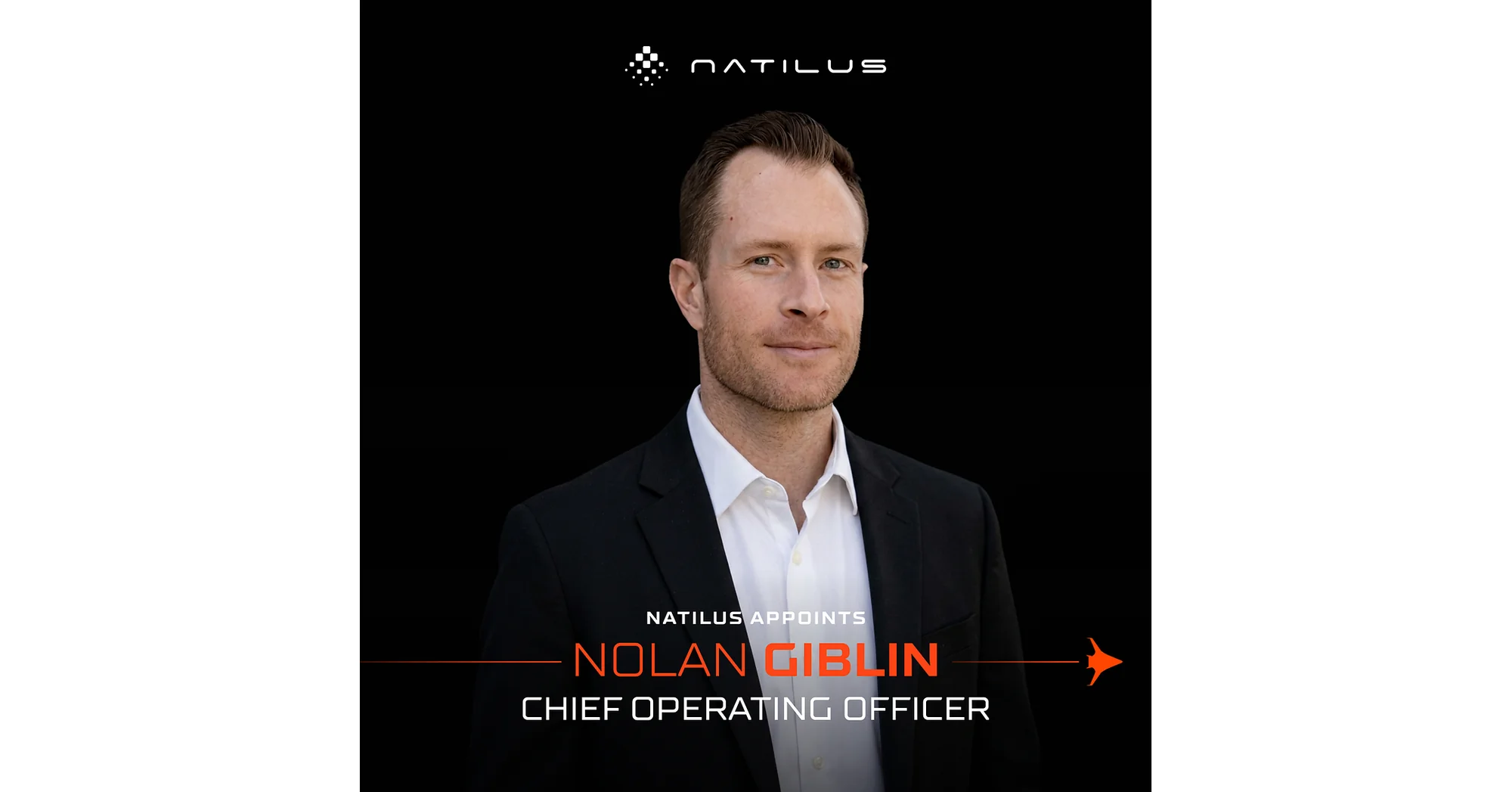
Since joining Natilus in 2022 as Head of Business Development, Nolan has played a central role in building the commercial foundation for Natilus' blended-wing-body aircraft, KONA and HORIZON EVO. Under his guidance, the company has secured reservation agreements with operators including Ameriflight and Nolinor Aviation, building the commercial order book to 570+ aircraft pre-orders.

His promotion comes as global demand accelerates for fuel-efficient, lower-emission aircraft capable of operating within existing airport infrastructure. Natilus' blended-wing-body design delivers substantial reductions in fuel burn and operating costs alongside greater volumetric capacity than traditional tube-and-wing aircraft. These advantages are driving strong interest from cargo and passenger operators alike as the industry works to meet rising capacity commitments.

"As we build an entirely new category of aircraft that promises to reshape the future of flight for commercial, cargo and defense markets, there isn't a more exciting opportunity in the aviation industry," said Nolan Giblin, COO of Natilus. "I'm invigorated by the role I play in bringing KONA and HORIZON EVO to commercialization and inspired by the opportunities ahead."

With a bachelor's degree from the University of San Diego and an MBA from San Diego State University, Nolan is a tenured aerospace professional with nearly two decades of business development and operations experience. Prior to joining Natilus, he held roles in business management and strategic finance across major defense aviation programs, including at Northrop Grumman and General Atomics, building the operational and financial discipline he now brings to scaling Natilus' commercial and defense aircraft programs.

"Since Nolan joined in 2022, the company has undergone dramatic growth, due in large part to Nolan's strategic vision and organizational prowess," said Aleksey Matyushev, CEO of Natilus. "As we enter this next chapter, I couldn't have a better partner to drive our business operations forward, ensure our priorities stay aligned and scale both the organization and our family of aircraft. Nolan is exactly the type of visionary needed to transform our vision of a blended-wing-body aircraft into a commercial reality."

About Natilus

Natilus is a U.S.-based company developing a family of hyper-efficient blended-wing-body (BWB) aircraft designed to transport people and cargo more sustainably and efficiently than ever before. With over 570+ aircraft pre-orders valued at $24 billion, Natilus is commercializing its BWB aircraft that unlock improved aviation economics – reducing fuel consumption by 30% and operational costs by 50% while increasing payload capacity by 40%. Founded in 2016, the Natilus team is composed of innovators from Boeing, General Atomics, Northrop Grumman, Skunkworks, SpaceX, and Piper Aircraft. Learn more at natilus.co.

SOURCE Natilus

Share this article

Class (B2B/B2C)
B2B
Ingest Status
Error
Dedupe hash
27fbdb69e01d605538c55d24ae8baf69
Press Eligible
No
Press Eligible Reason
Drupal Push 422
Source Name
Natilus
Image URL
https://mmx.prnewswire.com/media/MS1983819/Nolan-Giblin.jpg?id=OA2936181&p=facebook
Source Node
Content Hash (SHA-256, erste 32 hex)
7ec33a9a302d3281d52438ee378aa384