6 Best SAP Enable Now Alternatives for Enterprise Adoption Programs
Original HTML

SAP Enable Now is SAP’s legacy digital learning and enablement platform for creating tutorials, simulations, walkthroughs, and documentation that help users learn SAP applications.

The problem for organizations with learning programs built on SAP Enable Now is that the product has no future. SAP has already signaled its end-of-life path, is no longer supporting updates, and is actively migrating customers to SAP’s recent acquisition, WalkMe.

This creates a forced migration event. Teams now have to decide whether to stay on SAP’s preferred WalkMe transition path or use this moment to re-evaluate their entire digital adoption strategy and program partner across both SAP and non-SAP systems.

That is the right frame for this guide. The real decision is not just which tool replaces SAP Enable Now. The real decision is whether your organization still wants a narrow, SAP-only training platform or needs a broader digital adoption operating model with governed content operations, simulation readiness, in-app support, and measurable workflow outcomes across the full application estate.

TL;DR: Which SAP Enable Now alternative should you choose?

- Whatfix: Best for enterprises that want one platform for governed content operations, simulation training, in-app guidance, and analytics across SAP and non-SAP applications.

- WalkMe: Best for SAP customers who want to stay closest to SAP’s preferred transition path and evaluate the platform SAP is pushing forward post-acquisition.

- Assima: Best for organizations that still prioritize high-fidelity practice environments and simulation realism for SAP and other complex enterprise systems.

- datango: Best for SAP Enable Now customers that want a migration-oriented path for legacy SEN content and continued performance support around SAP-heavy environments.

- Pendo: Best for product-led organizations that want product analytics plus in-app guides and feedback for customer-facing products, not broad SAP-centered employee enablement.

- Userpilot: Best for SaaS teams that want fast onboarding, feature adoption, and retention tooling inside a customer-facing product, not enterprise-scale adoption across SAP and non-SAP systems.

Whatfix

Details:

- Founded: 2014

- Similar to: WalkMe, Assima

- Typical roles: Enterprise application owners, CIO organization, transformation PMO, L&D enablement leaders, service desk leaders

- Typical customers: Large enterprises with many applications, frequent workflow changes, controlled processes, SAP plus non-SAP systems, and global rollouts

What Is Whatfix?

Whatfix is an enterprise-grade digital adoption platform built to accelerate digital transformation outcomes across mission-critical applications. It improves productivity and reduces support burden with contextual in-app guidance, in-app self-service support, and adoption analytics tied to workflow performance. Whatfix also unifies simulation training, in-workflow guidance, and analytics in one operating model, with agentic AI embedded across authoring, guidance, insights, and task execution.

Key Features

- Enterprise content lifecycle management: Governed publishing, QA, approvals, version control, rollback, localization, and structured release operations built for scale, as well as an easy-to-use no-code editor and Authoring Agent for AI content authoring.

- Mirror simulations: Risk-free training environments that let users practice high-stakes workflows before go-live.

- In-app guidance: Flows, Smart Tips, Pop-Ups, and Task Lists that guide users through live workflows inside the application.

- Self Help: Embedded in-app support with conversational AI that reduces ticket volume and helps users find the right answer in the flow of work.

- Adoption analytics: Workflow and program analytics that surface friction, drop-offs, behavior patterns, and business impact.

- Agentic AI: AI support for content authoring, contextual guidance, insights, roleplay, and task execution.

- Software ecosystem independence: Built to support SAP, Salesforce, Oracle, Workday, Microsoft, custom applications, and mixed-vendor stacks.

- Any application type: While most DAPs support only web or mobile applications, Whatfix supports desktop, mobile, and web apps, as well as Citrix (VDI) environments.

How does Whatfix compare to SAP Enable Now?

Main differences between Whatfix and SAP Enable Now: Whatfix is a broader enterprise adoption platform, not just a training and content creation tool. It is designed for organizations that need one system for readiness, live guidance, self-service support, analytics, and governed operations across SAP and the rest of the software estate.

Main similarities between Whatfix and SAP Enable Now: Both support training and enablement for enterprise software rollouts, especially when readiness and user proficiency matter.

Why do companies use Whatfix?

- Support SAP transformation and non-SAP adoption under one, multi-app adoption platform.

- Reduce post-go-live support burden with contextual guidance and Self Help.

- Enterprise-grade content lifecycle management, from AI content authoring (Authoring Agent), AI contextualization (Guidance Agent), auto-testing, QA, staging, rollback, translation, etc.

- Prepare users before live application usage with simulation training paired with AI roleplay.

- Tie enablement work to workflow completion, proficiency, and business KPIs to maximize digital investments that hold up to boardroom scrutiny.

TL;DR for Whatfix

- Best for: Enterprises that want one platform for readiness, execution, and optimization across SAP and non-SAP systems.

- Watch-outs: Organizations looking only for a narrow SAP training replacement may not need the full platform.

- When Whatfix is the better fit: When SAP Enable Now’s sunset becomes the catalyst to modernize a digital adoption program that spans the full application landscape, including SAP and non-SAP systems, internal and customer facing systems, and desktop, mobile, and web apps.

WalkMe

Details:

- Founded: 2011

- Similar to: Whatfix

- Typical roles: CIO organization, enterprise app owners, transformation leaders, digital workplace teams

- Typical customers: Large enterprises standardizing adoption across major business applications

What Is WalkMe?

WalkMe is a digital adoption platform used to deliver in-app guidance, automation, and adoption support across enterprise applications. It is now the most visible platform in SAP’s transition narrative after the acquisition and is the product SAP is increasingly aligning to its future digital adoption story.

Key Features

- In-app guidance: Walkthroughs, prompts, and overlays that help users complete workflows.

- Segmentation and targeting: Tailored experiences for different audiences and use cases.

- Enterprise adoption layer: A broad overlay used across major enterprise applications.

- Transformation fit: Often used in large-scale SAP transformation programs

- SAP transition relevance: Central to SAP’s future direction after the acquisition.

How does WalkMe compare to SAP Enable Now?

Main differences between WalkMe and SAP Enable Now: WalkMe is a broader DAP and not a like-for-like replacement for SAP Enable Now’s legacy training authoring model. The transition path may still require rethinking content, workflows, and licensing.

Main similarities between WalkMe and SAP Enable Now: Both sit inside SAP’s transformation narrative and are meant to improve user adoption and software value realization.

Why do companies use WalkMe?

- Stay aligned to SAP’s preferred transition direction

- Standardize digital adoption across major enterprise systems, primarily focused on SAP applications

- Build a broader adoption layer beyond legacy training content

TL;DR for WalkMe

- Best for: SAP customers who want to stay closest to SAP’s transition strategy.

- Watch-outs: Buyers should validate content migration effort, roadmap clarity, and how legacy SAP Enable Now use cases map into WalkMe.

- When Whatfix is the better fit: When the organization wants to use this forced transition to evaluate a broader, more independent DAP strategy.

Assima

Details:

- Founded: 2002

- Similar to: SAP Enable Now, Whatfix Mirror

- Typical roles: L&D leaders, ERP program owners, transformation PMO, IT training teams

- Typical customers: Enterprises that need hyper-realistic practice environments for SAP and other complex enterprise systems

What Is Assima?

Assima is a systems training platform built around high-fidelity simulations and practice environments for complex enterprise applications. While it has strong pre-production training capabilities, it lacks in-app guidance features for user learning and support in the flow of work. It is strongest when training realism and pre-production readiness are the top priorities.

Key Features

- High-fidelity simulations: Cloned practice environments designed to mirror complex systems.

- Training-first model: Built for readiness and proficiency before go-live.

- Enterprise application fit: Commonly used for SAP, ERP, and other complex enterprise systems.

- Training analytics: Measurement centered on learning usage and simulation engagement.

- Large rollout readiness: Strong fit for transformation programs where training is the main workstream.

How does Assima compare to SAP Enable Now?

Main differences between Assima and SAP Enable Now: Assima leans harder into simulation realism and hands-on practice. It is often the better fit when the organization still sees training realism as the main success factor.

Main similarities between Assima and SAP Enable Now: Both are natural fits for enterprises that have historically treated enablement as a pre-go-live readiness problem.

Why do companies use Assima?

Class (B2B/B2C)
B2B
Ingest Status
Rewritten
Dedupe hash
e2481e741f57a349771a324d398cd288
Press Eligible
Yes
Press Eligible Reason
Enterprise software comparison and guidance on alternatives to SAP Enable Now.
Source Name
Whatfix
Source Node
Content Hash (SHA-256, erste 32 hex)
a228f1bb2257b27389617ca1e24a901a
DAP migration, made easy.
Image File
Original HTML

DAP migration, made easy.

Considering switching to Whatfix, but have concerns around migration timelines, budget, and guidance continuity? With Whatfix Fast Track, streamline your rollout and eliminate the headaches associated with migration projects.

Remove migration risk with Fast Track

Avoid dual billing

Whatfix provides software access for the remainder of your incumbent DAP contract, helping you transition financially without carrying overlapping vendor costs.

Offload the work

Our Fast Track specialists manage the migration and rebuild of your existing DAP content, so your team does not have to recreate every flow, asset, and experience from scratch.

Protect business continuity

We use a parallel-run migration approach that keeps critical guidance available throughout your transition. End users stay supported in production while your program moves to Whatfix behind the scenes.

“Whatfix made migration a great experience for us with its FastTrack program. We moved hundreds of content pieces in just over a month, which helped us accelerate adoption and drive value much faster.”

Kate Stapleton, Sr. Product Manager, Extra Space Storage

Read the Extra Space Storage story →

“Whatfix gave us the support and flexibility to govern guidance by role, simplify a heavy curriculum, and keep users moving through constant releases."

Maggie Huffman, VP of Operations at AutoAlert

Read the AutoAlert story →

Fast Track DAP Migration Framework

Here's how it works

Fast Track is a structured, five-phase approach to reduce migration risk, remove low-value content, and launch on Whatfix with stronger governance and better long-term scalability.

Phase 1

Objective and KPI alignment

We start by understanding your current adoption goals, what is working, where the incumbent program is underperforming, and what outcomes the new program must drive. Migration should serve the business case, not just replicate old assets.

Phase 2

Content audit and analysis

We review your current content to identify what should be migrated, improved, consolidated, or retired. This cuts digital debt and prevents outdated or low-value guidance from following you into the new platform.

Phase 3

Solution redesign

We redesign key user journeys using Whatfix capabilities such as Smart Context and enterprise-ready targeting so the new experience is more scalable, maintainable, and context-aware than the legacy one.

Phase 4

Build, validation, and stakeholder review

Our team executes the migration and rebuild, then validates content through testing, user acceptable testing (UAT), and review with your SMEs, application owners, and program stakeholders.

Phase 5

Coordinated go-live

We enable the technical transition, coordinating with your IT team for disabling legacy scripts and activating Whatfix, while measuring performance against the success criteria defined upfront.

Migrate to a DAP built for the modern enterprise

Fast Track gets you over the migration hump. Whatfix gives you a better long-term operating model once you arrive.

One layer for multi-app stacks

Support adoption across web, desktop, mobile, and Citrix environments, including cross-application workflows, with one enterprise-grade platform.

Open ISV ecosystem

Whatfix is vendor-neutral by design, making it a strong fit for enterprises running SAP, Oracle, Salesforce, Microsoft, custom apps, and other business-critical systems side by side.

AI embedded across the lifecycle

Agentic AI supports authoring, contextual guidance, insights, and task execution, while Self Help and AI roleplay improve support and readiness.

Enterprise content lifecycle management

Governed releases, approvals, testing, rollback, localization, and environment separation help large teams scale adoption without introducing rollout risk.

One platform for readiness, execution, and optimization

Whatfix combines pre-production simulation training through Mirror, in-workflow guidance and self-service support, and adoption analytics in one operating model.

A customer delivery model built for change programs

For organizations transitioning from legacy providers, Whatfix’s high-touch partnership addresses the critical post-sale gaps often found elsewhere.

Security & Compliance

Your Security Is Our Priority

As a Digital Adoption Platform provider, we must stay aware of regulatory requirements for data. Whatfix’s compliance team ensures our data handling practices meet these requirements.

Whatfix FAQs

No. Fast Track treats migration as a redesign opportunity. We audit your existing content, remove what no longer adds value, and rebuild key experiences in Whatfix so the new program is more scalable, more contextual, and easier to govern.

Fast Track is designed to preserve business continuity. Our migration approach uses a parallel-run strategy so your teams can transition without leaving end users unsupported in live workflows.

Timelines vary based on the amount of content being migrated, process complexity, application environment, business priorities, and SME availability. That is why the Fast Track team scopes a migration plan around your specific needs instead of offering a one-size-fits-all timeline.

Your team will still play an important role in prioritization, reviews, and validation, but Whatfix handles the migration and rebuild work. That helps reduce the lift on your internal teams while keeping key stakeholders involved at the right stages.

The Fast Track team typically scopes around your current DAP vendor, contract dates, application list, content volume, content types, process complexity, upcoming application changes, user base, and stakeholder availability.

Early in the evaluation process. Bringing in the Fast Track team sooner helps align on migration scope, timelines, technical considerations, and stakeholder planning before the transition begins.

It does not need to come over by default. Fast Track includes a content audit to identify redundant, outdated, or low-value assets so your new Whatfix program starts cleaner, leaner, and easier to maintain.

Whatfix helps teams scale with governed content lifecycle management, contextual targeting, analytics, and AI-supported authoring and optimization. That gives teams a more sustainable operating model after the migration is complete.

No. Most organizations use the migration process to rationalize what should be rebuilt, improved, consolidated, or retired. Fast Track helps ensure you move the content that still drives value, not the content that has simply accumulated over time.

Yes. Fast Track is built around optimization, not simple replication. The goal is to help you launch in Whatfix with better user experiences, stronger scalability, and a more modern digital adoption program.

Ready to make the switch?

Don’t let your legacy DAP hold you back.

Class (B2B/B2C)
B2B
Ingest Status
Rewritten
Dedupe hash
0ee5b47240d611fa7da730f159a9053a
Press Eligible
Yes
Press Eligible Reason
Promotes Whatfix’s enterprise digital adoption platform migration service with detailed process and customer examples.
Source Name
Whatfix
Image URL
https://website.whatfix.com/wp-content/uploads/2026/02/Whatfix_Mark_Ink700.jpg
Source Node
Content Hash (SHA-256, erste 32 hex)
aa186b7caa48bb1ee86cf4e0f7ee593d
5 Best Oracle Guided Learning Alternatives for Broader Adoption Coverage
Image File
Original HTML

OGL can be a practical starting point when your adoption scope is within Oracle’s ecosystem and your goal is to deploy a limited set of in-app assets quickly.

Enterprise teams feel the strain once adoption becomes an operating model across multiple business systems: governance and content lifecycle discipline, cross-application journeys, simulation-based readiness, and analytics that tie adoption to workflow outcomes and transformation KPIs.

ISVs (like Oracle) with native in-app adoption tools tend to prioritize the suite vendor’s ecosystem first, creating trade-offs for enterprises running mixed stacks.

Whether you are shortlisting digital adoption platform (DAP) vendors for a formal RFP or outgrowing OGL’s Oracle-centered operating model, this guide compares five alternatives for enterprise in-app guidance, simulation training, and adoption analytics.

We evaluated Oracle Guided Learning alternatives with the following criteria:

- Multi-application coverage across enterprise systems and vendors.

- Content lifecycle management and rollout safety (draft, QA, publish, rollback).

- Workflow guidance depth for complex, branching processes.

- Simulation training for readiness before go-live.

- Analytics tied to workflow performance and measurable outcomes.

- AI capabilities that reduce maintenance overhead and scale adoption programs.

TL;DR: Which Oracle Guided Learning alternative should you choose?

- Whatfix – for enterprise teams seeking a DAP for Oracle plus non-Oracle systems, with strong AI-powered content lifecycle management capabilities, simulations, and outcome analytics.

- WalkMe – for organizations looking for an SAP-centric adoption platform.

- Userlane – for teams looking for a multi-app adoption coverage on web-based tools only.

- Apty – for mid-market companies with process adherence and operational workflow standardizations needs within business applications.

- Pendo – for product-led growth programs centered on customer-facing applications.

1. Whatfix

Details:

- Founded: 2014

- Similar to: WalkMe, Pendo

- Typical roles: Enterprise application owners, CIO org, transformation PMO, L&D enablement leaders, service desk leaders

- Typical customers: Large enterprises with many apps, frequent change windows, controlled workflows, global rollouts

What Is Whatfix?

Whatfix is an enterprise digital adoption platform built to accelerate digital transformation outcomes across mission-critical applications. It improves productivity and reduces support burden with contextual in-app guidance, in-app self-service support, and adoption analytics tied to workflow performance. Whatfix adds Mirror simulation training for hands-on practice before go-live, plus agentic AI capabilities that automate content operations, surface optimization opportunities, and scale guidance across frequent releases.

Key Features

- In-app guidance: Guided Flows, Smart Tips, Pop-Ups, and Task Lists for workflow execution and onboarding

- Self Help: Embedded self-service support for in-the-moment answers and ticket deflection

- Mirror simulations: Practice environments to build proficiency without production risk

- Analytics: Adoption and workflow insights to pinpoint friction and measure outcomes

- Agentic AI agents: AI-driven authoring, insights, and contextual assistance to reduce manual upkeep

- Content lifecycle management: Governance controls for safer releases, QA, and scale across many teams and apps

How does Whatfix compare to Oracle Guided Learning?

Main differences between Whatfix and Oracle Guided Learning: Whatfix is designed for multi-application enterprise adoption programs where governance, simulation readiness, and measurable workflow outcomes drive platform selection. OGL is designed to accelerate adoption inside Oracle ecosystems, with broader web coverage positioned through premium offerings.

Main similarities between Whatfix and Oracle Guided Learning: Both deliver in-app guidance and adoption measurement, and both are used to reduce training time and support burden during application change.

Why do companies use Whatfix?

- Scale adoption across ERP, CRM, HCM, ITSM, and custom apps with one governed operating model

- Reduce ticket spikes by moving workflow help into the flow of work

- Improve compliance and task quality through guided execution and contextual support

- Validate readiness before go-live with Mirror simulations

- Reduce content maintenance burden with AI-supported authoring and lifecycle management

What do real customers say about Whatfix?

- “Whatfix has eliminated the need for me to write end user job aids and email communication, using Whatfix for all the end user communication and system awareness,” said Audra H. from Johnson & Johnson in their G2 review.

- “Our new user onboarding experience has also been repurposed since we formed our partnership with Whatfix, meaning we can now spend more time ensuring new employees understand and embrace our company values. Whatfix takes care of the day-to-day scenario based training and essentially does all of the heavy lifting that was previously part of our bloated LMS course,” said Lee G. from Experian in their G2 review.

- “The benefits of using Whatfix are a reduction in support tickets thanks to AI-powered resource aggregation, quicker user adoption of new processes, and more effective change management through contextual tips and pop-ups. Additionally, its robust analytics empower organizations to make data-driven decisions regarding user adaptability,” said Reon H from CES in their G2 review.

TL;DR for Whatfix

- Best for: Enterprises running multi-app adoption programs that require governance, simulations, and outcome measurement.

- Watch-outs: Teams looking for an Oracle-only enablement add-on with a narrow scope of in-app use cases may prefer staying inside Oracle packaging.

- When Whatfix is the better fit: Mixed application stacks and frequent change where adoption requires an enterprise operating model and end-to-end solutions including pre-production readiness, in-workflow guidance and support, and adoption analytics.

2. WalkMe

Details:

- Founded: 2011

- Similar to: Whatfix

- Typical roles: CIO org, enterprise app owners, transformation leaders, digital workplace teams

- Typical customers: Large enterprises standardizing adoption programs across multiple systems

What Is WalkMe?

WalkMe is a digital adoption platform used by enterprises to drive user onboarding, workflow guidance, and adoption analytics across business applications. It is often deployed as a cross-application layer for guided experiences, process support, and measurement.

Key Features

- In-app guidance: Walkthroughs and contextual tips to drive completion of common workflows

- In-app communication: Targeted messaging for rollouts and change initiatives

- Adoption analytics: Insights that help prioritize friction points and support needs

- Enterprise program support: Common fit for centralized adoption programs across large organizations

How does WalkMe compare to Oracle Guided Learning?

Main differences between WalkMe and Oracle Guided Learning: WalkMe is commonly evaluated when the adoption program spans many enterprise applications, with a focus on SAP-ecoystem apps. OGL is commonly evaluated when Oracle applications are the center of the rollout and Oracle packaging simplifies procurement.

Main similarities between WalkMe and Oracle Guided Learning: Both provide in-app guidance patterns and analytics to improve adoption and reduce support burden.

Why do companies use WalkMe?

- Standardize onboarding and workflow execution across major enterprise tools

- Centralize adoption insights to prioritize friction reduction

- Support change initiatives with in-app guidance and communications

TL;DR for WalkMe

- Best for: Enterprises building a cross-application adoption program layer, specifically for those organizations that invest in SAP applications.

- Watch-outs: Oracle-centric programs may prefer Oracle-native packaging for fast starts.

- When Whatfix is the better fit: Programs that are seeking a vendor-agnostic solution that also require simulation training pre-live production, stronger content lifecycle controls, and outcome measurement across many apps to unify enterprise digital adoption programs.

3. Userlane

Details:

- Founded: 2015

- Similar to: Whatfix, WalkMe

- Typical roles: CIO org, transformation leaders, enterprise app owners, enablement teams

- Typical customers: Enterprises driving adoption across multiple web-based applications

What Is Userlane?

Userlane is a no-code digital adoption platform that helps organizations guide users through workflows inside business applications and measure adoption. It is often used by enterprise IT and transformation teams to reduce friction, accelerate proficiency, and track value realization.

Key Features

- In-app guidance: Step-by-step guidance and tooltips for workflow support

- Adoption measurement: Analytics to measure usage and guide performance

- Cross-application adoption: Designed to support adoption across multiple web apps

- Enterprise rollout support: Fit for teams scaling enablement across business systems

How does Userlane compare to Oracle Guided Learning?

Main differences between Userlane and Oracle Guided Learning: Userlane is typically selected when adoption spans multiple web-based business applications. OGL is typically selected when Oracle applications are the main adoption surface and Oracle packaging is a strong advantage.

Main similarities between Userlane and Oracle Guided Learning: Both support in-app guidance and analytics for adoption programs.

Why do companies use Userlane?

- Drive adoption across multiple web-based business tools

- Reduce training reliance with contextual guidance in the flow of work

- Track adoption progress and prioritize where users struggle

TL;DR for Userlane

- Best for: Enterprises enabling adoption across many web applications.

Class (B2B/B2C)
B2B
Ingest Status
Rewritten
Dedupe hash
87beb69e5f6606f17d95931078b91d47
Press Eligible
Yes
Press Eligible Reason
Enterprise software comparison guide covering digital adoption platforms and their business use cases.
Source Name
Whatfix
Image URL
https://website.whatfix.com/wp-content/uploads/2021/09/Oracle.png
Source Node
Content Hash (SHA-256, erste 32 hex)
11e09f5091c690a58cc8d563e99acf06
HHS Notice of Benefit and Payment Parameters for 2027 Proposed Rule
Original HTML

HHS Notice of Benefit and Payment Parameters for 2027 Proposed Rule

Introduction

Today, the U.S. Department of Health and Human Services (HHS), through the Centers for Medicare & Medicaid Services (CMS), issued the proposed “Notice of Benefit and Payment Parameters” for the 2027 plan year (the 2027 Payment Notice proposed rule) that sets standards for the Health Insurance Exchanges, as well as for health insurance issuers, brokers, and agents who connect millions of consumers to Affordable Care Act (ACA) coverage.

The 2027 Payment Notice proposed rule contains provisions to improve implementation of the ACA, including payment parameters and provisions related to the HHS-operated risk adjustment and risk adjustment data validation (HHS-RADV) programs, as well as 2027 user fee rates for issuers offering qualified health plans (QHPs) through Federally-facilitated Exchanges (FFEs) and State-based Exchanges on the Federal platform (SBE-FPs).

This proposed rule also includes provisions related to the defrayal of state-mandated benefits; civil money penalties (CMPs) for noncompliant issuers and other responsible entities; strengthened standards of conduct for and administrative actions against noncompliant agents, brokers, and web-brokers; the expansion and codification of hardship exemption eligibility; implementation of the State Exchange Improper Payment Measurement (SEIPM) program; discontinuation of standardized plan option requirements and the non-standardized plan option limit and exceptions process; provider access and essential community provider standards for QHP certification; QHP certification of non-network plans; a prohibition on issuers from including routine non-pediatric dental services as an Essential Health Benefit (EHB); cost-sharing changes for catastrophic and individual market bronze plans; standards for multi-year contract terms for catastrophic plans and seeks comment on whether to apply similar standards to metal level plans; QHP issuer quality improvement strategies (QISs); revision to federal funding for certain individuals enrolled in the Basic Health Program (BHP); and seeks comment on potential adjustments to the Federal medical loss ratio (MLR) standard in the individual market. This proposed rule also includes updates needed to align regulations with changes made in Public Law (Pub. L.) 119-21, also known as the Working Families Tax Cut (WFTC) legislation.

The 2027 Payment Notice proposed rule can be accessed via the Federal Register at https://www.federalregister.gov/d/2026-02769. The deadline for submitting public comments is March 13, 2026.

Enhancing Program Integrity

Expand Regulations on Marketing Practices

CMS proposes to strengthen regulations on marketing practices for QHPs offered through Exchanges, as well as for agents, brokers, and web-brokers assisting consumers with enrollment in QHPs through the FFEs and SBE-FPs. This proposal includes examples of prohibited marketing practices, such as providing cash, monetary rebates, or cash equivalents to induce consumers to enroll; falsely asserting or suggesting that consumers will qualify for zero-dollar insurance or zero-dollar premiums; and miscommunicating enrollment timelines and deadlines. CMS also proposes requirements for timely production of marketing materials for monitoring, audit, or enforcement purposes. This proposal would ensure consumers are provided accurate information about the Exchange prior to enrollment, maintain the integrity of the Exchanges, and foster trust between consumers and agents, brokers, and web-brokers.

Mandating a Standard Eligibility Application Review Form and Consumer Consent Form

CMS proposes to require agents, brokers, and web-brokers to use the HHS-approved and created form to meet the eligibility application review documentation requirements and consent documentation requirements. CMS also proposes to clarify what types of actions constitute a consumer “taking an action” to review and confirm the accuracy of their information on their eligibility application and consent documentation. These proposals would protect consumers enrolling on the Exchanges from noncompliant agents, brokers, and web-brokers and protect consumers from inaccurate eligibility determinations, being enrolled in health coverage that does not meet their needs, and unexpected tax liabilities.

Implement and Apply the SEIPM Program

CMS proposes implementing a SEIPM program in calendar year 2027 to measure improper payments of advance payments of the premium tax credit (APTC) administered by State-based Exchanges (SBEs). CMS currently has a process in place to measure improper payments of APTC for the FFEs, but not one for SBEs. This proposal would ensure oversight of improper payments across all Exchanges, promoting consistency and parity in program integrity efforts nationwide. CMS further proposes to permit SBEs to satisfy certain requirements of the independent external programmatic audit by completing the SEIPM process.

Empowering States and Enhancing Qualified Health Plan Certification Flexibilities

Provider Access and Essential Community Provider (ECP) Certification Reviews

CMS proposes that FFE states may elect to conduct their own provider access reviews and/or ECP certification reviews of issuers’ plans, with or without a provider network, that apply for QHP certification to be offered through a FFE(including states that perform plan management), provided that CMS determines the state has sufficient authority and the technical capacity to conduct such reviews by satisfying the applicable criteria to be considered to have an Effective Provider Access Review Program for provider access certification reviews, and/or an Effective ECP Review Program for ECP certification reviews. A FFE state would have the choice to elect to conduct their own provider access certification reviews, ECP certification reviews, or both reviews provided the FFE state satisfies the applicable criteria for each effective review program it wishes to administer. CMS also proposes to continue collection of provider access and ECP data from all issuers with or without a provider network across FFE states, regardless of whether the FFE state or CMS is conducting certification reviews, in an effort to extend our existing infrastructure to monitor consumer access to a sufficient choice of providers across the FFE and to provide technical assistance to states, including FFE states that seek to expand their own technical capacity to conduct their own reviews in future plan years. If an FFE state does not elect to conduct its own reviews or is not determined by CMS to have an Effective Provider Access Review Program and/or Effective ECP Review Program, as applicable, then CMS would continue to perform such reviews of QHP issuers with and without a provider network.

In addition, CMS proposes to restore aspects of network adequacy authority back to the SBEs and SBE-FPs through the removal of requirements for SBEs and SBE-FPs to establish and implement quantitative time and distance standards that are at least as stringent as those for QHPs participating in the FFEs by 2026. Instead, states would be required to ensure that each QHP applying for certification to be offered through a SBE or SBE-FP provides sufficient choices of providers in a manner that meets applicable standards specified in § 156.230(a)(1)(ii) and (iii) for network plans, or § 156.236(a) for non-network plans.

These proposed policies recognize that states often possess unique knowledge of local factors including on market conditions, geographic constraints, provider shortages, and population demographics. In addition, these proposals recognize State certification reviews may benefit from using the provider access data CMS currently collects. Empowering FFE States to tailor their certification reviews to the needs of consumers in their state with this data resource may strengthen reviews and improve the consumer experience. The proposal also would reduce regulatory burden on issuers participating in the Exchange and address concerns raised about duplicative state and federal oversight processes.

ECP Standards and Requirements

CMS proposes revising the minimum percentage of ECPs that issuers must contract with in each plan’s service area to participate in the plan’s provider network from 35 percent to 20 percent, applicable to the overall ECP threshold and, separately, to the federally qualified health center (FQHC) and family planning provider thresholds. CMS also proposes to remove the narrative justification requirement to be consistent with systems changes and existing QHP issuer ECP data submission requirements as part of ECP certification reviews. These proposed policies would potentially reduce regulatory burden on QHP issuers and provide such issuers with more resources that they can leverage for other activities, such as innovating plan offerings or passing on savings to consumers, while ensuring ECPs are included within an issuer’s provider network consistent with the requirements of the ACA.

QHP Certification of Non-Network Plans

CMS proposes to allow non-network plans to receive QHP certification beginning with plan year 2027 by demonstrating a sufficient choice of providers in a manner consistent with sections 1311(c)(1)(B) and (C) of with the ACA. Unlike network-based plans, non-network plans do not rely on a contracted set of providers that agree in advance to specific terms and negotiated payment rates, nor do they condition or differentiate benefits to enrollees based on whether the issuer has a network participating agreement with a provider that furnishes covered services. Instead, these plans set specific benefit amounts for covered services and communicate those benefit amounts to enrollees who may then seek covered services from any provider.

Class (B2B/B2C)
B2B
Ingest Status
Error
Dedupe hash
191a257bb062e26eabec63f6b3389ea8
Press Eligible
No
Press Eligible Reason
Drupal Push 422
Source Name
AdvaMed News
Source Node
Content Hash (SHA-256, erste 32 hex)
be88ef4d9e24ba29d3e485b9cee5471e
New CMS Proposals Streamline Medicare Coverage, Payment, and Coding for Innovative New Technologies and Provide Beneficiaries with Diabetes Access to More Therapy Choices
Original HTML

Today, under the leadership of President Trump, the Centers for Medicare & Medicaid Services (CMS), is proposing new changes to Medicare Durable Medical Equipment, Prosthetics, Orthotic Devices and Supplies (DMEPOS) coverage and payment policies. This rule would provide more choices for beneficiaries with diabetes, while streamlining the process for innovators in getting their technologies approved for coverage, payment, and coding by Medicare.

The proposed rule would expand the interpretation regarding when external infusion pumps are appropriate for use in the home and can be covered as DME under Medicare Part B, increasing access to drug infusion therapy services in the home. The proposed rule also drastically reduces administrative burdens – such as complicated government coverage, payment and coding processes – that block innovators from getting their products to Medicare beneficiaries in a timely manner. Today’s action aligns with President Trump’s Executive Order on Protecting and Improving Medicare for Our Nation’s Seniors.

“With the policies outlined in this proposed rule, innovators have a much more predictable path to understanding the kinds of products that Medicare will pay for,” said CMS Administrator Seema Verma. “For manufacturers, bringing a new product to market will mean they can get a Medicare payment amount and billing code right off the bat, resulting in quicker access for Medicare beneficiaries to the latest technological advances and the most, cutting-edge devices available. It’s clearly a win-win for patients and innovators alike.”

Due to administrative constraints, the process for making Medicare benefit classifications, pricing determinations and creating billing codes for DMEPOS used to routinely take up to 18 months to complete. Last year, CMS changed this process through sub-regulatory guidance to reduce that timeframe to six months in many cases, and is now proposing to establish a streamlined process for coding, coverage, and payment in regulation. Under this accelerated process, benefit classification and pricing decisions could happen on the same day the billing codes used for payment of new items take effect, which would facilitate seamless coverage and payment for new DMEPOS and services. If finalized, this proposed rule would allow innovators to bring their products to Medicare beneficiaries quicker giving them more choices and increased access to the latest, cutting-edge devices.

If finalized, today’s proposed rule will also expand Medicare coverage and payment for continuous glucose monitors (CGMs) that provide critical information on blood glucose levels to help patients with diabetes manage their disease. Currently, CMS only covers therapeutic CGMs or those approved by the Food and Drug Administration (FDA) for use in making diabetes treatment decisions, such as changing one's diet or insulin dosage based solely on the readings of the CGM.

CMS is proposing to classify all CGMs (not just limited to therapeutic CGMs) as DME and establish payment amounts for these items and related supplies and accessories. CGMs that are not approved for use in making diabetes treatment decisions can be used to alert beneficiaries about potentially dangerous glucose levels while they sleep and that they should further test their glucose levels using a blood glucose monitor. With one in every three Medicare beneficiaries having diabetes, this proposal would give Medicare beneficiaries and their physicians a wider range of technology and devices to choose from in managing diabetes. This proposal will improve access to these medical technologies and empower patients to make the best healthcare decisions for themselves.

In addition, the proposed rule would expand classification of external infusion pumps under the DME benefit making home infusion of more drugs possible for beneficiaries. An external infusion pump is a medical device used to deliver fluids such as nutrients or medications into a patient’s body in a controlled manner. The proposal would expand classification of external infusion pumps as DME in cases where assistance from a skilled home infusion therapy supplier is necessary for safe infusion in the home, allowing beneficiaries more choices to get therapies at home instead of traveling to a healthcare facility.

Lastly, in the proposed rule, CMS proposes to continue to pay higher amounts to suppliers for DMEPOS items and services furnished in rural and non-contiguous areas to encourage suppliers to provide access and choices for beneficiaries living in those areas. CMS is making this proposal based on previous stakeholder feedback that indicate unique challenges and higher costs for providing for DMEPOS items for beneficiaries in rural and remote areas.

For a fact sheet on the CY 2021 proposed rule (CMS-1738-P), please visit: https://www.cms.gov/newsroom/fact-sheets/medicare-cy-2021-durable-medical-equipment-prosthetics-orthotics-and-supplies-dmepos-policy-issues.

Download the proposed rule at: https://www.federalregister.gov/public-inspection/2020-24194/medicare-program-durable-medical-equipment-prosthetics-orthotics-and-supplies-policy-issues-and.

###

Get CMS news at cms.gov/newsroom, sign up for CMS news via email and follow CMS on @CMSgov

Class (B2B/B2C)
B2B
Ingest Status
Error
Dedupe hash
14694062624c1cab374675f37efd4720
Press Eligible
No
Press Eligible Reason
Drupal Push 422
Source Name
AdvaMed News
Source Node
Content Hash (SHA-256, erste 32 hex)
846dc868b2691cd11c35b0f61a9666eb
Freedom of Information Act (FOIA) Service Center
Original HTML

Freedom of Information Act (FOIA) Service Center

What is FOIA?

Since 1967, the Freedom of Information Act (FOIA) has provided the public the right to request access to records from any federal agency. It is often described as the law that keeps citizens in the know about their government. Federal agencies are required to disclose any records requested under the FOIA unless the release of records falls under one of nine exemptions which protect interests such as personal privacy, national security, and law enforcement. As Congress, the President, and the Supreme Court have all recognized, the FOIA is a vital part of our democracy.

What is the Presumption of Openness and Who Issues Guidance to Agencies on the FOIA?

The FOIA provides that when processing requests, agencies should withhold records only if they reasonably foresee that disclosure would harm an interest protected by an exemption, or if disclosure is prohibited by law. Agencies should also consider whether partial disclosure of records is possible whenever they determine that full disclosure is not possible and they should take reasonable steps to segregate and release nonexempt records. The Office of Information Policy at the Department of Justice is responsible for issuing government-wide guidance on the FOIA as part of its responsibilities to encourage all agencies to fully comply with both the letter and the spirit of the FOIA.

How to File a CMS FOIA and/or FOIA/Privacy Act Request

- For Medicare beneficiary claim records – Requestors, including third party requestors with proper Medicare HIPAA authorization, can now submit their FOIA/Privacy Act requests for an individual’s Medicare claims directly to CMS via our new Medicare Beneficiary Claims Portal. This is the most efficient and timely way for CMS to gather records and respond to all our Medicare claim records requesters.

- For any other CMS agency records (such as CMS cost reports, provider records, investigation records, policy records, or email records, etc.) – Members of the public can submit their FOIA requests directly to CMS via our electronic FOIA.gov Portal.

- You may also submit requests via email, fax, or U.S. Mail. Please note that it may take additional processing time to respond.

E-mail your request to FOIA_Request@cms.hhs.gov

Fax your request to 443-380-8871

Mail your request in an envelope, clearly marked “FOIA Request”, to

              Freedom of Information Act Office

Mail Stop C5-11-06

7500 Security Boulevard

Baltimore, Maryland 21244

Please choose only one method to submit your request to avoid duplicate requests (i.e., identical requests received via different means). CMS will act only on the initial request.

How Will CMS Process Your FOIA Request?

When CMS receives your FOIA request it is entered into CMS’ automated tracking system and assigned a control number. A FOIA analyst will review your request to understand the types(s) of records you wish to obtain and assign your request to the appropriate CMS program office(s) to search for responsive records. You will receive an acknowledgement letter with a control number and corresponding PIN number with instructions for checking the status of your request.

Additional CMS FOIA Resources

You can now pay for CMS FOIA requests online through a secure website operated by the Department of the Treasury. Please have your invoice (CMS Form 633) readily available and go to Pay.Gov to pay online.

CMS FOIA Contacts and Sample FOIA Request Letters

Medicare Authorization Form (PDF)

Department of Health and Human Services’ FOIA Annual Reports

Check the Status of Your Request

Frequently Requested Information

Download Your Personal Health Information

Medicaid & CHIP Application, Eligibility Determination, and Enrollment Data

Ingest Status
Rejected
Dedupe hash
3931ef3d173b30f5979a69fa1bff0c68
Press Eligible Reason
JSON nicht lesbar - manuelle Pruefung noetig: Inhalt konnte nicht als JSON geparst werden
Source Name
AdvaMed News
Source Node
Content Hash (SHA-256, erste 32 hex)
b43ae85189caa73a66a6e02c7a6436a9
Garmin International, Inc. News
Image File
Original HTML

The ultimate smartwatch

Our most advanced golf smartwatch

Premium cycling computer with hands-free voice control

Powerful smart trainer with multidirectional motion

The ultimate smartwatch

Ultraperformance GPS smartwatch

Simplify your drive with new ultrawide displays

See real-time digital flag signals in the cockpit

Racing radar for high-performance drivers and track enthusiasts

Advanced marine head units

Our clearest sonar ever

Integrated flight displays for experimental and certified piston aircraft

Ultimate aviator smartwatch with satellite and LTE connectivity

Class (B2B/B2C)
Ignore
Ingest Status
Rejected
Dedupe hash
7a60c532f56365152b0c9ef672f4e7d4
Press Eligible
No
Press Eligible Reason
Text too short (78 words. Min: 150)
Source Name
Garmin International, Inc.
Image URL
https://share-assets.fe.garmin.com/facebook-default.jpg
Content Hash (SHA-256, erste 32 hex)
255d2b33a1ed7c088fa4f69c9f84807b
Former Head of Global Fleets for Amazon Air Joins Blended-Wing Pioneer Natilus's Advisory Board
Image File
Original HTML

Mylène Scholnick will advance the commercialization of Natilus's regional freighter, KONA, entering the market later this decade

SAN DIEGO, March 5, 2026 /PRNewswire/ -- Natilus, a U.S. aerospace manufacturer of blended-wing-body aircraft (BWB), today announced the appointment of Mylène Scholnick, a global aviation executive and former Head of Global Fleet Management at Amazon Air, to the Natilus Advisory Board. Scholnick will provide strategic guidance as Natilus advances KONA, its next‑generation regional BWB aircraft designed to transform air cargo economics and sustainability.

As global air freight operators seek solutions that reduce fuel burn, expand payload capacity, and lower operating costs, blended‑wing‑body technology is emerging as a breakthrough platform. Natilus's KONA aircraft delivers a 30% reduction in fuel consumption, 50% lower operating costs, and a 40% increase in payload capacity, offering a step‑change improvement over current airframe design.

Scholnick brings more than 25 years of leadership across aerospace, fleet strategy, aircraft finance, and global operations. At Amazon Air, she built and led Global Fleet Management, scaling the fleet from 36 to 115 aircraft across North America, Europe, Canada, and India. She directed Amazon's aircraft and engine procurement strategy, managed billions in transactions, and launched the company's first aircraft and engine purchase and conversion programs.

"My career has been dedicated to advancing the global aviation industry," said Mylène Scholnick. "I am delighted to join the Advisory Board of Natilus, whose blended-wing-body technology represents one of the most compelling clean sheet opportunities our sector has seen in decades. At a time when incumbent OEMs are focused on production recovery rather than next generation design, Natilus is charting a bold path that could reshape long term fleet strategy, efficiency, and sustainability."

On the heels of its $28 million Series A close, Natilus adds Scholnick to a distinguished Advisory Board, which includes the following:

- Dennis Muilenburg, former President and CEO of The Boeing Company and current CEO of New Vista Capital

- Kory Mathews, former VP of Phantom Works and VP and Chief Engineer of Boeing Military Aircraft

- Brent Wouters, former CEO of Cirrus Aircraft, the largest producer of general aviation aircraft in the United States

- Ram Menen, an original member of the Emirates founding team and former head of its cargo division

Natilus's order book stands at 570 aircraft, valued at $24B. Notable customers include Canadian charter airline Nolinor Aviation, SpiceJet, Flexport, and Ameriflight. The company will select its first domestic manufacturing site for KONA later this year.

"As we work towards KONA's first flight in the next 24 months, we are at a pivotal point for the company, which is why it is critical that we build a team with decades of experience across the aviation industry," said Aleksey Matyushev, CEO and Co-Founder of Natilus. "Mylène's deep expertise in fleet strategy, procurement, and global operations – combined with her track record of building aviation programs at scale – will be instrumental as we advance development and prepare for production of KONA."

About Natilus

Natilus is a U.S.-based company developing a family of hyper-efficient blended-wing-body (BWB) aircraft designed to transport people and cargo more sustainably and efficiently than ever before. With over 570+ aircraft pre-orders valued at $24 billion, Natilus is commercializing its BWB aircraft that unlock improved aviation economics – reducing fuel consumption by 30% and operational costs by 50% while increasing payload capacity by 40%. Founded in 2016, the Natilus team is composed of innovators from Boeing, General Atomics, Northrop Grumman, Skunkworks, SpaceX, and Piper Aircraft. Learn more at

natilus.co.

SOURCE Natilus

Share this article

Class (B2B/B2C)
B2B
Ingest Status
Error
Dedupe hash
6b6348279e5a624181c348b0e1bd6f67
Press Eligible
No
Press Eligible Reason
Drupal Push 422
Source Name
Natilus
Image URL
https://mma.prnewswire.com/media/2537782/Natilus_Logo.jpg?p=facebook
Source Node
Content Hash (SHA-256, erste 32 hex)
26773bfdec3c674236e4894cdd37be17
Login
Original HTML

Don't worry, we can help you. Please provide us with your email address you used to sign up.

Submit

Registered Successfully

Thank you for registering for Parks Associates. We have sent a verification email to your email address along with your temporary password. Please verify your email address via the link in this email as soon as possible. The link expires in 60 minutes.

Research & Analysis for IoT, smart home, and connected entertainment technologies.

Parks Associates sells market research reports and industry analysis regarding IoT residential products and consumer perceptions about these products and services.

Research is conducted through interviews, secondary research, quantitative and qualitative consumer research, focus groups, and trend analysis.

Beyond CES: What’s Next for the Connected Home in 2027

Following CES 2027, Parks Associates brings together its latest consumer research with an analysis of the most important announcements, product launches, partnerships, and strategi...

What’s Next for the Connected Home: Year-End Insights and CES Preview

Parks Associates closes out 2026 with a research-driven look at the state of the connected home market and the companies, technologies, and strategies positioned to shape 2027....

The Connected Grid: Orchestrating DERs for a Flexible Energy Future

The rapid growth of distributed energy resources—including solar, battery storage, EVs, smart appliances, and connected energy devices—is transforming how energy is generated, mana...

The Intelligent Energy Home: Automation, Demand Response, and the Consumer

The growth of smart thermostats, connected appliances, energy management platforms, EVs, solar, and battery storage is creating new opportunities to manage energy use across the ho...

Is a Smart Home Really Smart Without Energy Management?

A home filled with connected devices may appear smart, but without the ability to actively manage and optimize energy, it may be missing the very capability that will define the ne...

The home energy market is moving toward a more connected, automated, and consumer-driven model. Rising energy costs, growing adoption of connected devices, and the expansion of dis...

The Intelligence Advantage: How Market Research, Strategy, and Forecasts Drive Better Business Decisions

This white paper explores how independent market research, consumer insights, long-term trend data, and forecasts help companies make better strategic decisions, reduce risk, and i...

This white paper examines HDR's evolution from static HDR such as HDR10 and HLG (Hybrid Log-Gamma) to dynamic HDR such as HDR10+ and Dolby Vision, becoming a foundational element o...

The Intelligence Advantage: How Market Research, Strategy, and Forecasts Drive Better Business Decisions

This white paper explores how independent market research, consumer insights, long-term trend data, and forecasts help companies make better strategic decisions, reduce risk, and i...

The New Live TV Model: Skinny Bundles, Sports, News

Live content remains essential in the streaming age, particularly for sports, news, and event programming. This study explores shifting preferences for live TV delivery, including...

For 250 years, innovation in connectivity has transformed how consumers communicate, access information, and experience entertainment. Many of the technologies that shaped how the...

Join Parks Associates for an in-depth webinar examining the latest trends shaping the streaming video market. Drawing on proprietary research from 8,000 U.S. internet households, o...

This white paper explores why unified video platforms are uniquely positioned to unlock next-generation advertising and why attempting to retrofit interactivity into pure SVOD envi...

Beyond Connectivity: Securing the Modern Resident Experience

This white paper examines how multifamily properties and broadband providers are meeting the diverse connectivity expectations of today's residents while also protecting the networ...

Connected Communities: Wi-Fi, IoT, and Resident Experience

Multifamily and planned communities are adopting smart technologies to attract residents and enhance operational efficiency. This study identifies consumer demand for property-prov...

Owning the Broadband Subscriber Experience in the AI Era

This white paper reframes the opportunity for ISPs to evolve from connectivity providers to experience orchestrators. It outlines how proactive engagement, automated network remedi...

For 250 years, innovation in connectivity has transformed how consumers communicate, access information, and experience entertainment. Many of the technologies that shaped how the...

Opportunities in Network Convergence: Mobile, Fiber, FWA, Satellite

Consumers increasingly expect seamless, integrated connectivity. This study explores attitudes toward bundled and converged services—including home internet, mobile, and satellite...

Seeing the Unseen: Delivering Connectivity with Confidence

This white paper examines how Wi-Fi coverage issues, poor router placement, and limited visibility into the home environment weaken service quality and erode customer loyalty. Draw...

The Rural Broadband Opportunity: Delivering Value Beyond Connectivity

This study explores the broadband market from the perspective of rural and small-town households, leveraging Parks Associates’ latest survey of 8,000 US internet households. With a...

Connected Senior Living: Building Smart, Supportive Communities

Parks Associates unveils new insights into technology use in independent and assisted living communities—from smart building infrastructure to resident wellness programs. Understan...

Senior Living Communities: Smart & Connected Living

This study analyzes the smart technology strategies of senior living communities – spanning independent living, assisted living, and continuing care retirement communities (CCRCs)....

Enhancing Independence: Safety and Security for Seniors

The convergence of health, home, and broadband is creating new pathways for connected care delivery. Smart home solutions, ranging from voice-enabled monitoring and automated light...

Designing the Future of PERS: Devices, AI, and Continuous Care Across Settings

Personal emergency response systems (PERS) are evolving from single-purpose devices into intelligent, connected solutions that span the full continuum of care. Advances in wearable...

Creating healthier living environments is a key trend in the smart home market, with sensors and services playing a crucial role. This session explores the latest advancements in h...

The United States – and the world itself – is aging. The share of the US population age 65+ is expected to reach 21% by the year 2030. At the same time, the medical and senior care...

Smart Homes, Smart Investments: The Tech Revolution in Single-Family Rentals

Join us for a compelling webinar that delves into the key trends shaping the build-to-rent market, including shifting demographics, economic factors, and changing consumer preferen...

This research provides insight on technology adoption and needs among SMB owners, with a specific focus on connectivity, IoT devices, and services. It examines the changes taking p...

The Opportunity for National Brands in SMB Technical Support Services

This whitepaper details the current state and future potential of national technical support services in the SMB market. Developed for PlumChoice, it addresses key trends emerging...

In this webinar, Parks Associates shares new research studying the changing landscape for SMBs and their need for and interest in new solutions to help manage and secure their Wi-F...

Success as a small business is increasingly dependent upon technologies and services that can drive improved efficiency, productivity, and communication. This report examines the c...

This report examines the technical support market for small and medium businesses in the U.S. It analyzes the technology environment of businesses of varying sizes, their current t...

This report examines use of technical products and services among small and medium businesses (SMBs) of various sizes and within a variety of industries. It studies the primary tec...

This business-to-business study explores the strategic priorities, challenges, and ROI perceptions driving smart technology investments in multifamily and master-planned communitie...

Beyond Connectivity: Securing the Modern Resident Experience

This white paper examines how multifamily properties and broadband providers are meeting the diverse connectivity expectations of today's residents while also protecting the networ...

Senior Living Communities: Smart & Connected Living

This study analyzes the smart technology strategies of senior living communities – spanning independent living, assisted living, and continuing care retirement communities (CCRCs)....

Connected Communities: Wi-Fi, IoT, and Resident Experience

Multifamily and planned communities are adopting smart technologies to attract residents and enhance operational efficiency. This study identifies consumer demand for property-prov...

Scaling Multifamily Technology Across the Portfolio

As multifamily portfolios become more connected, owners and operators are evaluating how standardized platform strategies can improve operations, resident experience, and long-term...

Beyond the Smart Home: The Rise of Building Intelligence - Smart Spaces Virtual Round Table May 14

The multifamily industry is moving beyond resident-facing smart home amenities toward fully integrated building intelligence platforms. This webinar explores how leading owners and...

This white paper outlines a clear roadmap for deploying building intelligence, beginning by ensuring robust connectivity, modernizing access, integrating smart devices, and scaling...

Data helps companies identify patterns, automate routine tasks, personalize experiences, and make faster, better-informed decisions across the organization.

Join Parks Associate...

Class (B2B/B2C)
B2B
Ingest Status
Error
Dedupe hash
1e933cb35a85e92e2a3847aba7373bbe
Press Eligible
No
Press Eligible Reason
Drupal Push 422
Source Name
TechSee
Source Node
Content Hash (SHA-256, erste 32 hex)
833801c5125bac2a79475153bd768567
MODE Global News
Image File
Original HTML

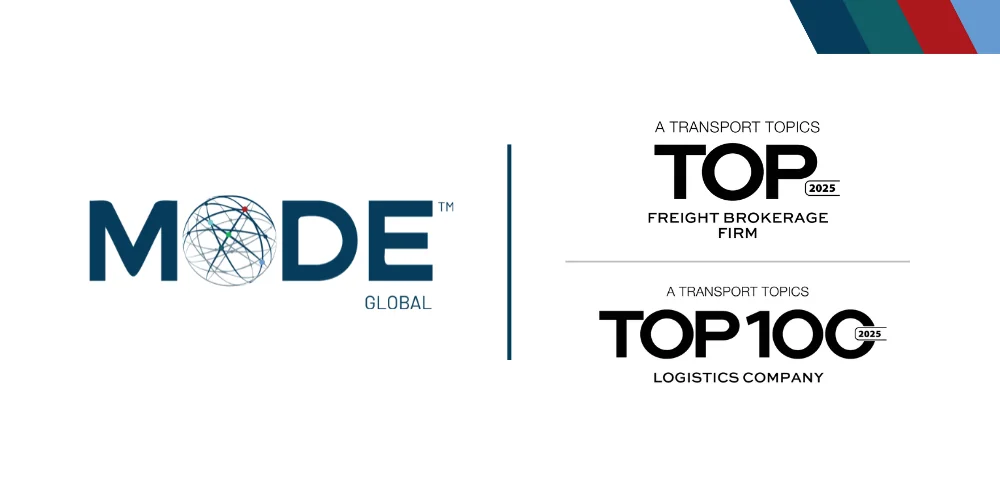
MODE Global Achieves Top Rankings in Transport Topics Industry Lists

8th Largest Freight Brokerage; 30th in Logistics Top 100

DALLAS, TEXAS (April 15, 2025) – MODE Global, a leading third-party logistics (3PL) firm, is proud to have been recognized once again as one of the top third-party logistics providers in the industry by Transport Topics.

“We’re honored to receive recognition on these lists year after year,” said Lance Malesh, president and CEO of MODE Global. “While 2024 was another tough year for the industry, MODE was able to maintain our solid standing despite the continued challenges impacting global trade due to our dedication to our customers and our trusted network partners. All of this wouldn’t be possible without our exceptional team members and agents going above and beyond to ensure MODE and our affiliated brands are always seen as reliable, innovative partners.”

MODE ranked as the eighth largest freight brokerage and placed as number 30 on the Top 100 Logistics List; this marks the sixth year in a row MODE has been listed as both a top 10 freight brokerage and a top 50 logistics provider. The lists are based on annual gross revenue and feature the industry’s top freight brokerage firms, air and ocean freight forwarders, dry storage and refrigerated warehouse operators and dedicated contract carriers.

“In addition to enduring a stubbornly slow freight market recovery, the largest third-party logistics providers in North America are now navigating supply chain uncertainty stemming from tariffs and rapidly shifting trade policies,” said Seth Clevenger, managing editor of features and multimedia at Transport Topics. “Despite these challenges, the industry’s top 3PLs have been boosting freight efficiency and building more resilient supply chains in a changing world.”

To learn who made the list and read more about the issues facing logistics companies, visit Transport Topics at https://www.ttnews.com/logistics/rankings/2025.

About Transport Topics

Since 1935, Transport Topics has been the news leader in trucking and freight transportation. When it comes to major issues, industry events, and new developments, TT journalists get the story first and get it right, keeping readers informed about all aspects of the trucking industry and helping them stay ready for what’s to come. Explore the latest at https://www.ttnews.com.

Ingest Status
Rejected
Dedupe hash
bdab3dd0c31c5578d55c1cfe5617f41d
Source Name
MODE Global
Image URL
https://www.modeglobal.com/wp-content/uploads/2025/04/Transport-Topics-Web-Header-2025.png
Source Node
Content Hash (SHA-256, erste 32 hex)
be3e20fce1f94c9b6797cbc2ced9b372