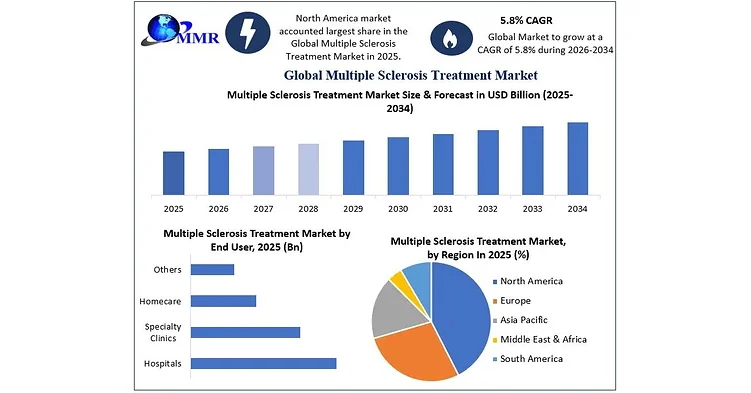
PUNE, India, Sept. 24, 2026 /PRNewswire/ -- The Global Multiple Sclerosis Treatment Market was valued at USD 26.76 Billion in 2025 and is projected to expand at a 5.8% CAGR from 2026 to 2034, reaching USD 44.45 Billion by 2034, according to a new analysis by Maximize Market Research.
Global Multiple Sclerosis Treatment Market
The Global Multiple Sclerosis Treatment Market Report 2025 provides a comprehensive analysis of market trends, multiple sclerosis prevalence, patient population, disease burden, treatment adoption, disease-modifying therapies, clinical research, treatment pipeline, therapeutic innovations, regulatory developments, competitive landscape, and market forecasts through 2034. The market covers clinically isolated syndrome (CIS), relapsing-remitting multiple sclerosis (RRMS), primary progressive multiple sclerosis (PPMS), and secondary progressive multiple sclerosis (SPMS) across medications, stem cell therapy, physical therapy, plasma exchange, and other treatment approaches.
The rising prevalence of multiple sclerosis, increasing awareness of early diagnosis, growing demand for disease-modifying therapies, and expanding access to advanced neurological care are supporting the growth of the global Multiple Sclerosis Treatment Market. Increasing adoption of immunomodulators, immunosuppressants, interferons, oral disease-modifying therapies, monoclonal antibodies, and high-efficacy treatments is transforming multiple sclerosis management. Growing investments in neurological research, clinical trials, pharmaceutical R&D, and next-generation treatment development are further expanding therapeutic opportunities for patients with relapsing and progressive forms of multiple sclerosis.
Advancements in monoclonal antibody therapies, B-cell-targeted treatments, oral disease-modifying therapies, precision medicine, biomarker-based treatment strategies, neuroprotective approaches, remyelination therapies, stem cell research, and digital health solutions are reshaping the multiple sclerosis treatment landscape. Increasing research into relapsing-remitting MS, primary progressive MS, secondary progressive MS, and early-stage disease management is creating new opportunities for pharmaceutical and biotechnology companies. Regulatory approvals, clinical trial advancements, strategic collaborations, licensing agreements, pipeline expansion, and investments in next-generation neurological therapies are expected to accelerate innovation and strengthen the global Multiple Sclerosis Treatment Market through 2034.
Get Full PDF Sample Copy of Report: (Including Full TOC, List of Tables & Figures, Chart) @ https://www.maximizemarketresearch.com/request-sample/54201/
Global Multiple Sclerosis Treatment Market gains momentum as rising disease prevalence, growing demand for disease-modifying therapies, increasing adoption of high-efficacy biologics and oral treatments, advances in monoclonal antibody therapies and precision medicine, and expanding research into next-generation neurological treatments accelerate therapeutic innovation: Maximize Market Research unveils key market insights.
Global Multiple Sclerosis Treatment Market Size & Forecast
Global Multiple Sclerosis Treatment Market Trends & Insights
- North America leads the Global Multiple Sclerosis Treatment Market, supported by high MS prevalence, advanced healthcare infrastructure, strong neurological research, established pharmaceutical companies, and widespread adoption of disease-modifying therapies.
- Asia-Pacific is a high-growth region, driven by improving healthcare infrastructure, increasing awareness of neurological disorders, rising healthcare expenditure, better diagnostic capabilities, and expanding access to advanced MS treatments.
- Disease-modifying therapies and high-efficacy biologics are gaining adoption, with growing use of monoclonal antibodies, immunomodulators, immunosuppressants, and other advanced therapies to manage relapses and slow disease progression.
- Oral therapies and personalized treatment approaches are expanding, supported by increasing patient preference for convenient treatment options, advances in biomarker-based treatment selection, precision medicine, and digital health solutions for disease monitoring.
- Next-generation MS therapies are driving treatment innovation, with increasing research into BTK inhibitors, neuroprotective therapies, remyelination therapies, stem cell approaches, and treatments targeting progressive forms of multiple sclerosis.
Rising Multiple Sclerosis Prevalence and Demand for Disease-Modifying Therapies Drive Market Growth
The increasing prevalence of multiple sclerosis, growing awareness of neurological disorders, improved diagnostic capabilities, and rising emphasis on early disease management are driving demand for effective MS treatments. Growing adoption of disease-modifying therapies (DMTs), including immunomodulators, immunosuppressants, interferons, oral therapies, monoclonal antibodies, and high-efficacy biologics, is supporting market expansion across relapsing and progressive forms of multiple sclerosis.
High Treatment Costs and Limited Access to Advanced Therapies Restrain Market Growth
The high cost of long-term multiple sclerosis treatment, advanced biologic drugs, disease-modifying therapies, continuous monitoring, and specialized neurological care can limit patient access. Expensive monoclonal antibody therapies and innovative treatments, combined with limited reimbursement coverage and affordability concerns in emerging economies, can restrict the adoption of advanced MS therapies.
Next-Generation Therapies and Precision Medicine Create Market Opportunities
Advances in next-generation multiple sclerosis therapies are creating significant opportunities for pharmaceutical and biotechnology companies. Growing research into BTK inhibitors, neuroprotective therapies, remyelination therapies, stem cell therapy, personalized medicine, biomarker-based treatment strategies, and novel immunotherapies is expanding the MS treatment pipeline. Increasing clinical research, digital health solutions, remote patient monitoring, and innovative approaches for progressive multiple sclerosis are further creating opportunities across the global market.
Limited Specialized Neurological Care and Treatment Accessibility Create Challenges
Limited access to specialized neurological care, advanced diagnostic facilities, trained healthcare professionals, and innovative disease-modifying therapies remains a challenge in several emerging markets. Differences in healthcare infrastructure, reimbursement coverage, treatment affordability, regulatory requirements, and availability of advanced MS therapies can restrict the adoption of innovative multiple sclerosis treatments. Additionally, the need for long-term treatment and continuous patient monitoring can create challenges for healthcare systems and patients.
Get Insightful Data on Regions, Market Segments, Customer Landscape, and Top Companies (Charts, Tables, Figures and More) https://www.maximizemarketresearch.com/request-sample/54201/
Global Multiple Sclerosis Treatment Market Segmentation
The Global Multiple Sclerosis Treatment Market is segmented by Type, Treatment, Drug Class, Diagnosis, Route of Administration, End User, and Region. Rising multiple sclerosis prevalence, increasing demand for disease-modifying therapies, growing adoption of advanced immunotherapies, improvements in neurological diagnosis, and expanding research into next-generation MS treatments are supporting market development across these segments.
North America Leads the Multiple Sclerosis Treatment Market While Asia Pacific Emerges as a High-Growth Region
North America held the largest share of the Global Multiple Sclerosis Treatment Market in 2025, supported by high multiple sclerosis prevalence, advanced healthcare infrastructure, strong neurological research, and high healthcare expenditure. The United States represents a major market due to the presence of leading pharmaceutical companies, advanced neurology centers, extensive clinical research, and high adoption of disease-modifying therapies (DMTs), monoclonal antibodies, oral therapies, and high-efficacy biologics. Canada and Mexico are also contributing through improving healthcare infrastructure, increasing neurological disease awareness, and expanding access to advanced multiple sclerosis treatments.
Europe represents an important market, supported by established healthcare systems, strong pharmaceutical and biotechnology industries, and increasing investments in neurological research. Germany, the United Kingdom, France, Italy, Spain, Sweden, Austria, and other European countries are witnessing growing adoption of disease-modifying therapies, immunomodulators, immunosuppressants, oral DMTs, monoclonal antibody therapies, and personalized treatment approaches. Favorable reimbursement frameworks, clinical research activities, and regulatory support for innovative neurological treatments are further supporting regional market development.
Asia Pacific is expected to witness strong growth as healthcare infrastructure, neurological disease awareness, diagnostic capabilities, and access to advanced multiple sclerosis therapies improve. China, Japan, India, South Korea, Australia, and other regional markets are contributing to market development. Rising healthcare expenditure, pharmaceutical investments, clinical trials, neurological research, and increasing availability of disease-modifying therapies are creating new opportunities for advanced MS treatment adoption. Growing awareness of early diagnosis and specialized neurology services is further supporting regional expansion.
Middle East & Africa is gradually developing as healthcare infrastructure and access to specialized neurological care improve.