Preventing churn without growing revenue is playing not to lose.
Image File
Original HTML

Quick summary: With football season here, we’re continuing our look at how customer success teams get ready for their own season: one quarter at a time. Check out what happened in the first and second quarters. The old adage says you play to win the game. And using tools not suited for customer success to grow your customer base isn’t playing to win.

A hard-fought first half has left your team locked in a scoreless tie at the half. Your defense has been great, but your offense has sputtered in the red zone. A good team may stick to the game plan and hope to pull out a close win at the end. A great team? They flip the field, create turnovers, and give the offense primo chances to run up the score.

This is how a CS platform built with AI designed exclusively for customer success separates itself from a CRM or generic AI. And while our first two quarters showed that a CS platform beats both those options at stopping churn, the real opportunity isn’t just holding the line. It’s turning defense into offense.

In the first blog in this series, we shared that our 6th annual Customer Revenue Leadership Study found that most companies’ revenue lives with customers already won. That’s exactly why a strong defense matters. But the game is shifting: Benchmarkit’s 2025 SaaS Performance Metrics report found that expansion revenue accounts for 40% of all new ARR: up five points in a single year.

That’s how you flip the field and score points nobody expected. A defense that only prevents losses isn’t championship caliber. It’s the one that turns stops into points that gets the glory.

Here’s two reasons a CRM or spreadsheet can’t flip the field for you:

A CRM’s “healthy” is a guess, not a measurement.

A green status in a CRM doesn’t show which features a customer uses or how they compare to expectations. That means renewal conversations get built around what you think you need to sell, not what they need. A CS platform should measure every engagement, qualitatively and quantitatively, so your pitches focus on goals, ROI, and their real pain points.

How it looks on the field: A customer’s license utilization increases beyond what they contracted for. Your CRM, however, doesn’t track product usage, let alone compare it to what’s in the contract. With ChurnZero, everything you need to see for an upsell gets flagged immediately. A native license utilization field tracks usage against what the customer purchased. On top of that, the health field in your CRM that was based on a “gut feeling” is now replaced by real-time, data-driven health scores. AI-driven relationship scores scan every engagement to get a qualitative read on what the customer cares about. In short, nothing slips through the cracks.

CRMs don’t create open running lanes. They hope the CSM finds one themselves.

Even all-star CSMs need someone to block for them. A CRM may have automated workflows, but they fire on schedule or with a manual trigger. You may miss opportunities for big plays while your CSM looks for running room. The opening may have been there, but the play took too long to develop. A winning platform would act like a Pro Bowl lineman: flagging the opportunity in real time, recommending an action, and clearing the way for the CSM to act in one step.

How it looks on the field: Your CSM has a meeting scheduled next month. As the meeting draws closer, they notice an expansion opportunity. They prep a message to deliver at the meeting, but by that time the moment’s gone cold. With ChurnZero, Beacon, one of our 20+ purpose-built AI agents, is constantly listening for expansion opportunities. When it finds one, the CSM gets a recommended playbook for the opportunity and a bespoke email they can review and send in one click.

Stopping churn keeps you from losing. It doesn’t win you the game. The teams pulling ahead this season aren’t just holding the other side scoreless. They’re turning every stop into points. A platform that only defends is playing not to lose. A platform built to flip the field is playing to win.

Now, the scoreboard reads HOME: 28. CHURN: ZERO. The stops are becoming points. Can you close out the victory?

Next week, Quarter 4: how to win the game efficiently while keeping your team fresh for next week.

Want the whole game plan? Register for the Playing to Win: The Customer Success Post-Game Show on September 23rd.

Class (B2B/B2C)
B2B
Ingest Status
Rewritten
Dedupe hash
d66f78a9e93418453e48f85ce2978be1
Press Eligible
Yes
Press Eligible Reason
B2B article promoting customer success software and discussing churn prevention and revenue expansion.
Source Name
ChurnZero
Original Summary

<p>SaaS companies face pressure to accelerate customer onboarding, but it’s important to balance automation with a personalized experience. Keeping AI behind the scenes and automating strategically helps teams work more efficiently while delivering value to the customer.</p>
<p>The post <a href="https://churnzero.com/blog/preventing-churn-without-growing-revenue-is-… churn without growing revenue is playing not to lose.</a> appeared first on <a href="https://churnzero.com">ChurnZero</a>.</p&gt;

Image URL
https://churnzero.com/wp-content/uploads/2026/09/third-quarter-1024x576.png
Content Hash (SHA-256, erste 32 hex)
e4ae35fa81088ec708196db0a84bdae6
What it takes to make AI agents work for your customer success team.
Image File
Original HTML

Quick summary: More agent autonomy can give your customer success team time back, or it can add noise. ChurnZero founder YouMon Tsang walks through the five conditions that decide which one you get.

The promise of AI is that if you hand agents more autonomy your customer success team gets more time back. Fewer alerts to chase and fewer tedious tasks mean more room for strategic work. While all of that is on the table, that treats AI like something that arrives ready to go. Whether it ends up making your team’s lives easier or just adds noise comes down to some conditions you set before it ever reaches a customer.

In a recent conversation on the Startup Builders and Backers podcast, YouMon Tsang, founder and CEO of ChurnZero, walked through those conditions. Here’s what he shared and what each one can do to help your customer success team as much as it can. Watch the full interview.

Pair facts with information.

The difference between a successful and unsuccessful AI implementation often comes down to data quality.

“There are really two major pieces of data: one is your facts, and then there’s information,” YouMon says. “It used to be [that] facts were the most important thing. Now you have to add the information.”

CS teams already have facts in their systems or processes. This includes contract dates, pricing, ARR, and points of contact. Information, on the other hand, gives context to the relationship, like call transcripts, email threads, and information about your products and services and how to use them. Feeding your agent both facts and information will help it deliver more strategic, sophisticated recommendations. 

Build trust in your agents the way you built trust in automation.

It’s easy to forget that CS teams have been through changes like this not so long ago. For instance, CSMs had to get acclimated to a static message being sent to a customer when they hadn’t used the product for two weeks. Automated outreach had an adoption curve and YouMon points to that time as a helpful playbook for implementing AI agents.

“There may be a time where [AI] could make better decisions than a human can in the moment, because it can absorb so much more information more quickly,” YouMon says. “But until now, I think the comfort level is really what dictates full automation… And that’s different for every organization. Every organization has its level of comfort.”

A good approach for agents could be full autonomy on some actions and an approval step on others. This balance will shift over time as your team’s confidence in the output grows. There’s no fixed timeline for that shift, and it looks different for every team. Treat this as a gradual handoff rather than the flip of a switch.

Match your AI strategy to the outcome you own.

Not every CS team is optimizing for the same result so it is important to identify which one applies to your organization.

“There’s a difference between affecting top-line outcome and impacting the profit margin, the expense line,” YouMon says. “I think both are really important. I wouldn’t say one is better than the other…Depending on what your department’s goals are, your AI has to service that goal.”

If your team isn’t expected to directly bring in revenue, your goal is to support customers. The better approach is then to focus on efficiency so that could mean automating tickets and reducing manual work. Teams measured on growth should focus on retention and expansion like catching churn risk early, spotting upsell opportunities, and strengthening relationships. Get clear on which one describes your team first. That’s what your AI strategy should be built around.

Fix timing and empathy will follow.

CS leaders worry that automated outreach loses the empathy a CSM would convey. YouMon says this can come down to timing.

“Bad timing is very obvious to see. It’s like, why are you sending me this now?” he says. “If you fix the timing problem, the empathy problem can follow pretty easily.”

AI can already customize language for a given situation. Timing is more difficult, because it depends on the system having the right information like previously mentioned. While you can’t necessarily program empathy into a system, fixing the timing of outreach can ensure that customers are treated with sensitivity.

Free your CSMs to do the job you hired them for.

Gaining more time doesn’t do much on its own, so leaders have to point their team toward what fills it. CSM job descriptions say they are looking for new hires to be consultative and curious but that rarely is what they end up being used for. The day-to-day defaults to admin work and routine follow-ups that don’t leave much time to be strategic.

“We should be hiring exactly the same way we’ve always wanted to hire, this aspirational hire,” YouMon says. “With AI handling the routine things, it’s up to the humans to do the work we hired them for to begin with.”

AI adoption doesn’t change what a CS job calls for. It finally lets team members spend their time on the work the role was supposed to be about.

What to do next.

Here are three places to look before you expand what your agents are allowed to do:

- Check what’s feeding your CS platform. If it’s contract and usage data alone, your agents are working with facts but no information. That puts the quality of their recommendations at risk.

- Figure out where your CSMs are spending too much time. This could be a tedious routine or reactive work. See if it could move to an agent with an approval step. That’s the fastest way to free up time for the relationship-building work that is more impactful.

- Determine if your CS team is geared toward servicing the customer or being growth-focused. If your AI roadmap doesn’t already reflect that, it could be optimizing for the wrong thing.

Class (B2B/B2C)
B2B
Ingest Status
Rewritten
Dedupe hash
3eedaac5dd360b75fd3fc0cc811a8448
Press Eligible
Yes
Press Eligible Reason
Business-focused guidance on implementing AI agents in customer success teams.
Source Name
ChurnZero
Original Summary

<p>More agent autonomy can give your customer success team time back, or it can add noise. ChurnZero founder YouMon Tsang walks through the five conditions that decide which one you get.</p>
<p>The post <a href="https://churnzero.com/blog/ai-agents-customer-success-team/">What it takes to make AI agents work for your customer success team.</a> appeared first on <a href="https://churnzero.com">ChurnZero</a>.</p&gt;

Image URL
https://churnzero.com/wp-content/uploads/2026/09/blog-photos-1.png
Content Hash (SHA-256, erste 32 hex)
d22e68ab4b3ba365e4f00ae1cdc5d6f0
The Fourth Quarter: In customer success, championships are won in the details.
Image File
Original HTML

Quick summary: With football season here, we’re closing out our look at how customer success teams get ready for their own season: one quarter at a time. Check out what happened in the first, second, and third quarters. The old adage says you play to win the game. Ignoring every little detail will cost you when the game is on the line.

Winning a game means you did everything right for one game. Winning a championship requires operating at peak efficiency at all times. Managing the clock, staying ahead of the chains, and avoiding game-changing mistakes. No panic, even when things get tough. 

Salesforce found that service professionals spend less than half their time (46%) with customers. They spend the rest on administrative tasks. Those tasks need to be done, of course, but running at maximum efficiency means not letting them derail days of effort that could go toward customer success.

That’s the game of inches many teams are losing: the training that took weeks, the fire drill that could have been caught early, and the upsell that required hours of prep.

Here are three ways ChurnZero helps you win the game of inches

In-App content turns a crease into a running lane.

Other CRMs deliver customer answers, resources, or reminders via email or support tickets. Good enough to run through, but is it enough to take you all the way to the end zone? ChurnZero’s in-app content widens the lane. Quickly send announcements such as webinar invites, release notes, and support notifications. Robust Success Centers provide a single, customizable hub for collaboration. Or use WalkThroughs to streamline training for new users or introduce features. All of it removes friction, making winning plays much easier to find.

How it looks on the field: A customer needs a quick answer about a feature they are setting up. Other platforms would have an email or support ticket waiting in a queue – or perhaps leave the customer to figure it out themselves. With ChurnZero, a walkthrough or Success Center gives them quick access to the answers they need, getting them down the field faster.

The playbook is built for your scheme.

If a coach invests in a great QB but later realizes he doesn’t fit with the rest of the offense, should they replace him or adjust the playbook? The situation will dictate the choice, but, like the coach above, CS teams shouldn’t be forced to choose if their platform isn’t a perfect fit out of the box. Your platform should give you the power and flexibility to customize… without the admin drag.

No two customer success teams face the same issues. They’ll run into different walls. One team needs a ChurnScore that weighs a signal nobody else cares about. Another needs a Playbook step that sends a bespoke email instead of a template because the template doesn’t apply to that account. Journeys or Surveys should be shaped to fit their lifecycle. A platform built around a single fixed model forces you to work around the wall. ChurnZero is built to bend around any wall you hit in the way that is best for your business.

How it looks on the field: A team adopts a platform that looks great out of the box. Then an account encounters a situation unique to its business that the template didn’t anticipate. Now they are waiting for someone to build that exception. With ChurnZero, that exception is the playbook, giving you enterprise-level power without enterprise-level processes and slowdown. Instead, you can adjust in the moment: a bespoke email instead of a canned one, a skipped step instead of a forced one.

Every week is business as Uusual.

The best teams in football look the same every week. The same is true in customer success. Onboarding, renewal, and QBR time should all come with the same operational vigor. In G2’s Fall 2026 Grid Report, ChurnZero holds the highest overall Satisfaction score compared to our leading competitors. That edge holds across the board with the highest Net Promoter Score (89, against a next-best of 73), Likelihood to Recommend (94%), Ease of Doing Business (96%), and Quality of Support (96%). That’s not one good game. That’s a team built for success, no matter who’s on the other side of the ball.

How it looks on the field: You pick a platform that evaluates well. But when implementation time comes, day-to-day operations become clunky. Work moves slower than expected, and you’re sweating bullets about losing resources and time you can’t get back. With ChurnZero, you don’t just get a platform; you get a partner. Your team stays on schedule, with no drop-off even when QBR season hits full speed.

ChurnZero’s CEO, YouMon Tsang, predicts, “By the end of 2026, the average CSM will have 25–50% more bandwidth” thanks to pairing smart humans with smart systems. Whatever your platform is, it should extend the bandwidth of your current players. That’s how you build a championship-caliber customer success team.  

The scoreboard reads HOME: 42. CHURN: ZERO. That’s not luck. It’s a decisive victory for a team built to win the championship.

Want the whole game plan? Register for the Playing to Win: The Customer Success Post-Game Show on September 23rd.
Class (B2B/B2C)
B2B
Ingest Status
Rewritten
Dedupe hash
2a7d434a2a178df11fb974a9737012b0
Press Eligible
Yes
Press Eligible Reason
Business-focused article promoting customer success software and discussing team efficiency.
Source Name
ChurnZero
Original Summary

<p>Championships are won in the details. See how ChurnZero helps customer success teams close out the game of inches with in-app content, a flexible playbook, and week-in, week-out consistency.</p>
<p>The post <a href="https://churnzero.com/blog/the-fourth-quarter-in-customer-success-champ… Fourth Quarter: In customer success, championships are won in the details.</a> appeared first on <a href="https://churnzero.com">ChurnZero</a>.</p&gt;

Image URL
https://churnzero.com/wp-content/uploads/2026/09/Playing-to-Win-Quarter-4-1024x576.png
Content Hash (SHA-256, erste 32 hex)
dac97eccf61535e7fd4504bcc242a7f2
ChurnZero Product Release Notes: August 2026
Image File
Original HTML

What’s new with ChurnZero’s platform this month.

Agentic Essentials

- AI starters for the Send AI Email Play Step. Define AI email outputs faster without writing prompts from scratch. The new AI Starters library gives you ready-to-use templates for common workflows. Pick one, customize if needed, and send.

- Retrospective agent for churn loss analysis. Understand why customers churn instead of guessing. ChurnZero’s new Retrospective agent analyzes activity timelines, engagement signals, and health metrics to show you what went wrong. Learn from the accounts you’ve lost so you can spot warning signs sooner in at-risk accounts.

- Run AI Agent actions on demand. Trigger agents the moment you need them. CSMs can run an AI agent from a single account before a call, or pull a read across a batch of accounts, anywhere account segments support bulk actions. Bulk runs confirm how many accounts will run, and each user only runs against the accounts in their purview.

- Knowledge Sources and scope control. Your Knowledge Sources library just got scope control, so your agents read only the ‘books’ you assign. Scope control is on by default in AI Hub, where admins can scope Echo, Consult, and Scribe to specific document sets. You select which documents each agent can reference. Existing instances keep their current setup.

Expanded REST API and ChurnZero Connect (MCP)

Build tighter integrations with your tech stack and automate workflows that span ChurnZero and your other platforms. In August, we added four new object types to REST API and MCP: Signals, Success Plans, Plays, and Custom Surveys, Products, plus EAI insights.

Notes and meetings: view mode and custom fields

Notes and meetings can now open in view mode by default, so multiple people on your team can access the same note or meeting at once. You can also add custom and formula fields to meetings to capture and segment by any attribute your team tracks.

Want a quick and easy way to find the latest news and launches from ChurnZero? Sign up for the Fighting Churn Newsletter or visit our online newsroom.

Class (B2B/B2C)
B2B
Ingest Status
Rewritten
Dedupe hash
4d10d1517f3917f703bef28fa6061255
Press Eligible
Yes
Press Eligible Reason
B2B software platform product updates and integrations.
Source Name
ChurnZero
Original Summary

<p>What's new with the ChurnZero Platform: August 2026</p>
<p>The post <a href="https://churnzero.com/blog/churnzero-product-release-notes-aug-2026/">C… Product Release Notes: August 2026</a> appeared first on <a href="https://churnzero.com">ChurnZero</a>.</p&gt;

Image URL
https://churnzero.com/wp-content/uploads/2026/04/Top-CS-EVENTS-2025.jpg
Content Hash (SHA-256, erste 32 hex)
0eb011bdb9410fe53aac0d9a021e3218
Decision boundaries: Creating guardrails that help CSMs improve customer experience.
Image File
Original HTML

This is Part 2 of 3 posts addressing how to improve your coaching skills by Marley Wagner, head of customer success programs and strategy at EverHealth. Read Part 1: How to coach CSMs who solve problems.

Quick summary: Define guardrails across four areas: goodwill gestures, cross-functional involvement, leadership input and commercial decisions, and your team will be stronger.

Your customer success managers escalate issues because they’re not sure about their authority or boundaries. They don’t know what they’re allowed to decide, so they default to asking you for guidance and decision-making support.

That can create bottlenecks and stall customer progress. It can also lead to disengaged and dissatisfied staff members.

Set clear decision boundaries.

One reason CSMs escalate so often is that they don’t know what they’re able to decide. So, remove the guesswork. Define guardrails around the decisions your CSMs can make independently and the situations that require additional support. Every organization will have different thresholds, but the goal is the same: reduce ambiguity so CSMs can move quickly without second-guessing themselves.

When CSMs can offer flexibility to customers.

Give CSMs the ability to make decisions without creating business risk. For example:

- Offer an additional training session if adoption is lagging.

- Extend an onboarding milestone by a week if it helps ensure long-term success.

- Reschedule an executive business review (EBR) or success review to accommodate a customer’s timeline.

- Adjust your standard meeting cadence during the customer’s busy season.

Best practice: Document which “goodwill gestures” CSMs can make on their own and which require approval. If every small accommodation needs manager sign-off, you’re creating unnecessary bottlenecks.

When to involve product, engineering, sales or support.

Help CSMs understand when, why and how to involve cross-functional teams. For instance, contact:

- the product team to share recurring customer feedback that points to a broader product gap.

- the engineering team about bugs, technical limitations or performance issues that cannot be resolved through support.

- the support team to fix issues, participate in troubleshooting or address questions that require technical investigation.

- the sales or account management team for expansion opportunities, contract changes, pricing discussions or commercial negotiations.

Best practice: Require CSMs to come prepared with context before looping others in. For example, instead of saying, “The customer wants this feature,” ask them to explain:

- What business problem the customer is trying to solve.

- How many customers are impacted.

- Whether there is a workaround.

- What the business impact of not addressing the issue would be.

This added context and detail can lead to more productive conversations.

When to seek leadership input behind the scenes.

Not every situation requires a manager to join the customer call, but that doesn’t mean your CSMs are on their own. For example, they can benefit from your input and counsel when:

- Preparing for a difficult renewal conversation.

- Getting advice on stakeholder dynamics.

- Validating an escalation strategy.

- Reviewing messaging before communicating a sensitive issue.

Best practice: Offer coaching before customer meetings and equip your CSM to lead the room.

When leadership should join a customer conversation.

Sometimes your involvement in a customer conversation is necessary, and that participation should be intentional. Give CSMs guidelines for when to pull you in for issues that may be related to:

- Executive-to-executive relationship building.

- Strategic renewals above your defined revenue threshold.

- High-impact escalations with executive visibility.

- Customers who have lost confidence and need reassurance from leadership.

Best practice: If you join a meeting, clearly define your role beforehand. Tell your CSM, “You’re leading this conversation. I’m here to support and answer questions if needed.” This keeps ownership with the CSM while demonstrating executive support to the customer.

Processes for discounts, credits and exceptions.

One of the fastest ways to build confidence is by removing uncertainty around commercial decisions. For example:

- The CSM can approve service credits up to a defined amount.

- Discounts over a certain percentage require sales leadership approval and documented business justification.

- Contract exceptions require legal review.

- Free professional services engagements require approval from CS leadership, but the CSM can approve a defined number of free training sessions.

- Renewal concessions should follow a documented approval workflow.

Best practice: Document what requires approval and explain why. Help CSMs understand the business rationale behind discounting, credits and exceptions so they learn to think commercially.

Finally, don’t forget to be explicit about how to follow the outlined processes. What system do requests and approvals live in? How long should your CSMs expect to wait for a decision? Will they be notified of the outcome, or do they need to check back? When you share what to expect, they’re less likely to come to you with additional questions.

Clear boundaries reduce unnecessary escalations while increasing confidence and consistency. A useful framework is to distinguish between decisions and judgment calls. For instance:

- Routine, low-risk decisions should stay with the CSM.

- Cross-functional decisions should involve the appropriate partner.

- High-risk, customer- or revenue-impacting judgment calls should involve leadership.

The more consistently your CSMs understand where the lines of authority are, the more confidently they’ll operate, and the less likely they are to escalate every unfamiliar situation.

Build the framework. Watch the impact.

Decision boundaries are permissions. When CSMs know exactly what they can approve, decide or handle on their own, they stop second-guessing and start taking responsibility to move forward independently. Escalations decrease. Customer experience improves. And your calendar gets some breathing room.

You don’t have to tackle every decision point all at once. Start small. Consider one type of decision that you could focus on this week: goodwill gestures, commercial decisions or cross-functional involvement.

Then get your team aligned around this category before layering in more. You’ll benefit from a less cluttered schedule and fewer demands on your time. Your CSMs will benefit from the ability to develop new skills. And your customers will benefit from faster information and resolutions.

Class (B2B/B2C)
B2B
Ingest Status
Need Review
Dedupe hash
56b1f63ae8259374af8fe66a6fbf1c5e
Press Eligible
Yes
Press Eligible Reason
QA FAIL (need review): Missing TARGET text: no generated news article was provided to fact-check against the SOURCE. Please provide the TARGET text for comparison.
Source Name
ChurnZero
Original Summary

<p>Define guardrails across four areas: goodwill gestures, cross-functional involvement, leadership input and commercial decisions, and your team will be stronger.</p>
<p>The post <a href="https://churnzero.com/blog/csm-decision-boundaries/">Decision boundaries: Creating guardrails that help CSMs improve customer experience.</a> appeared first on <a href="https://churnzero.com">ChurnZero</a>.</p&gt;

Image URL
https://churnzero.com/wp-content/uploads/2026/08/woman-walking-on-arrows.png
Generated Article_json
{"target_audience": "b2b", "is_medical": false, "ai_generated_title": "EverHealth's Wagner: Clear Decision Limits Cut CSM Escalations", "body_html": "<p><strong>Global -- [CURRENT_DATE] --</strong> Marley Wagner, head of customer success programs and strategy at EverHealth, says customer success managers (CSMs) escalate issues because they are unsure of their authority, creating bottlenecks that stall customer progress and leave staff disengaged.</p><p>Wagner, in Part 2 of a three-part coaching series, tells managers to set guardrails across four areas: goodwill gestures, cross-functional involvement, leadership input and commercial decisions.</p><h5>CSMs approve goodwill gestures without manager sign-off</h5><p>Wagner's examples of independent CSM decisions include adding a training session when adoption lags, extending an onboarding milestone by one week, rescheduling an executive business review, and adjusting meeting cadence during a customer's busy season. Managers should document which gestures need approval, she says, because requiring sign-off for every small accommodation creates unnecessary bottlenecks.</p><h5>CSMs bring four data points to cross-functional teams</h5><p>Before contacting product, engineering, support or sales, CSMs should state the business problem the customer is solving, the number of customers affected, whether a workaround exists, and the business impact of inaction. Product receives recurring feedback pointing to gaps, engineering handles bugs and performance limits, and sales takes expansion, pricing and contract talks.</p><h5>Tiered approvals govern credits, discounts and exceptions</h5><p>Under Wagner's model, CSMs approve service credits up to a defined amount. Discounts above a set percentage need sales leadership approval and documented justification. Contract exceptions require legal review, and free professional services need CS leadership approval, although CSMs can grant a defined number of free training sessions. Renewal concessions follow a documented workflow.</p><p>Wagner also advises specifying which system holds requests, how long decisions take, and whether CSMs are notified of outcomes.</p><h5>Leadership joins calls for four defined scenarios</h5><p>Managers should join conversations involving executive-to-executive relationship building, strategic renewals above a set revenue threshold, high-impact escalations with executive visibility, and customers who have lost confidence. For difficult renewals, stakeholder dynamics, escalation strategy and sensitive messaging, managers advise behind the scenes. When joining a call, Wagner says, the manager should tell the CSM that the CSM leads and the manager only supports.</p><p>Wagner recommends starting with one decision category this week, such as goodwill gestures, commercial decisions or cross-functional involvement, before adding others.</p>", "meta_description": "EverHealth's Marley Wagner outlines guardrails across four areas to cut CSM escalations: goodwill gestures, cross-functional input, leadership role and approvals.", "seo_keywords": "customer success, CSM coaching, escalations, decision boundaries, EverHealth, Marley Wagner, service credits, renewal approvals, cross-functional collaboration", "companies": ["EverHealth"], "industries": ["Professional & Business Services"], "markets_regions": [], "news_type": ["general_news"], "products": [], "themes": ["customer_success", "management_practices"], "events": [], "cta_text": "Follow the EverHealth customer success coaching series for further guidance on CSM decision-making", "learn_more": "", "fact_check": {"accuracy_score": 100, "legal_risk": "low", "corrections_made": [], "recommendation": "publish"}}
Content Hash (SHA-256, erste 32 hex)
c3ea5eddb5b56458bb9618c0a6d3fd1c
A roadmap to coaching your CSM team to success (Part 3 of 3).
Image File
Original HTML

This is Part 3 of 3 posts addressing how to improve your coaching skills by Marley Wagner, head of customer success programs and strategy at EverHealth. Read Part 1: How to coach CSMs who solve problems. and Part 2: Decision boundaries: Creating guardrails that help CSMs improve customer experience.

Quick summary: A coaching culture builds in stages. Start with habits in the first 30-60 days, turning customer situations into coaching moments and recognizing judgment as well as results.

Building a coaching culture doesn’t happen overnight. It requires a deliberate progression. This roadmap covers what to build first and what success should look like at six months. The first 30-60 days involve building strong coaching habits. Then your work shifts to building and sustaining a strong coaching culture.

30-60 days: Build coaching habits.

You won’t overhaul your team’s culture in this short timeframe, but you will establish some core practices that make coaching feel natural.

1. Turn customer situations into coaching opportunities.

The good news: your best coaching material already exists. Review renewal conversations, QBRs and executive business reviews (EBRs), difficult customer emails, angry customer calls and executive conversations.

Let your CSMs do the work. Ask questions and set the stage for them to learn and lead. Things like: “What message are you trying to communicate?” “What do you think the customer is looking for?” “I’ll join, but you’re leading.”

Afterward, focus on their decision-making process: specifically, what they did right and what could be improved

2. Normalize uncertainty.

Customer success is about knowing how to investigate, who to involve and how to communicate confidently while working toward a solution.

One of the most important phrases a CSM can learn is: “Let me validate that and come back with the best path forward.”

Customers expect confidence, transparency and follow-through.

3. Recognize the judgment behind the result.

Sometimes customers churn despite excellent work.

Celebrate behaviors like thoughtful problem-solving, proactive communication, strong prioritization and effective stakeholder management.

For example, imagine your dashboard shows a customer is green. Ask your CSM: “Do you agree?” If they say no and can explain what context the data doesn’t capture, that’s good judgment.

Teach your team to use dashboards as inputs that inform a decision, not a decision on their own.

What intentional coaching looks like after six months:

- CSMs come with recommendations.

- Escalations are thoughtful.

- Customers trust your team more because CSMs are more confident.

- Decisions happen faster.

- You spend more time developing people and focusing on strategic customer initiatives.

60+ days: Focus on culture.

Now that your CSMs have the foundational habits they need to work confidently, shift your focus from individual coaching to building a team-wide coaching culture. This will involve systematizing what you’ve learned, amplifying peer coaching and measuring progress in ways that matter.

1. Build confidence through repetition.

Experienced CSMs need role-playing as much as new hires do. Make it part of your team’s operating rhythm by incorporating it into team meetings, one-on-ones and peer-to-peer sessions.

Use role-playing to practice common scenarios like renewal negotiations, executive conversations, pricing objections, product roadmap discussions and stakeholder turnover.

Don’t stop after someone gives the “right” answer. Throw in curveballs. “What if procurement joins the call?” “What if the customer mentions a competitor?” “What if the executive sponsor disagrees?”

These conversations are where judgment develops.

2. Create peer coaching opportunities.

Some of your best coaches are your top CSMs. Encourage experienced CSMs to review calls, shadow meetings, share what’s worked for them and mentor newer teammates.

Peer coaching scales without relying on your time and effort as a leader, and it recognizes top performers, strengthens collaboration, brings new ideas and helps prepare the next generation of leaders.

3. Measure coaching success.

Don’t evaluate coaching based solely on how many escalations CSMs are bringing to you. Look for indicators that your team is becoming more independent: fewer avoidable escalations, increased CSM ownership, high-quality customer conversations, faster decision-making and issue resolution, and greater confidence in handling complex situations.

This roadmap is a flexible framework. Some teams will progress faster; others may need more time at each stage. What matters is approaching the process intentionally and recognizing that a strong coaching culture develops gradually through consistent, systematic effort.

To start on the path to a strong coaching culture, pick the first habit from the 30-60 day list. Commit to it for two weeks. Then add the second. Then start shifting the culture. Your team’s confidence, your calendar and your renewal rates will thank you.

Class (B2B/B2C)
B2B
Ingest Status
Rewritten
Dedupe hash
8e8372b2d3d1724b59e8ead6d05b29dc
Press Eligible
Yes
Press Eligible Reason
Professional guidance for building a coaching culture in customer success teams.
Source Name
ChurnZero
Original Summary

<p>A coaching culture builds in stages. Start with habits in the first 30-60 days, turning customer situations into coaching moments and recognizing judgment as well as results. </p>
<p>The post <a href="https://churnzero.com/blog/coaching-culture-roadmap/">A roadmap to coaching your CSM team to success (Part 3 of 3).</a> appeared first on <a href="https://churnzero.com">ChurnZero</a>.</p&gt;

Image URL
https://churnzero.com/wp-content/uploads/2026/08/target.png
Content Hash (SHA-256, erste 32 hex)
10cd0282ea4a6f7c641432e0e4b00a17
How to avoid the biggest AI mistake that CS teams make (and what you can do instead).
Image File
Original HTML

Quick summary: When CS teams evaluate AI, they often think they need to automate their entire operation, which actually puts customer relationships at risk. Instead, teams should gradually have AI take over time-consuming administrative tasks and use signal-based AI agents to flag risks and opportunities for CSM follow-up.

CS teams frequently make one major mistake when introducing AI: they try to automate everything all at once. To avoid AI overreach, teams should initially focus on manual, administrative tasks that can easily be automated – giving CSMs time back in their day to focus on the customer.

In a recent episode of the “Customer Success Talks: Real Challenges, Experts’ Advice” podcast, ChurnZero VP of Customer Success, Lukas Alexander, explained what CS teams get wrong when introducing AI, and shared some tips on how to avoid these mistakes.

Check out the full episode.

Why CS teams struggle with AI.

According to Lukas, there are two major reasons why CS teams often struggle with AI adoption:

- AI overreach: CS teams often think they need to transform their entire workflow all at once. This approach risks handing too much power and decision-making over to AI, which could damage longstanding customer relationships (not to mention presenting an overwhelming project for CS leaders).

- Balancing AI with humans: Unlike sales and marketing teams, where relationships are largely transactional, CS teams rely on long-term partnerships with the customer. Leaders frequently struggle with how to balance automation with a personalized, human experience that builds customer rapport.

Common AI mistakes that CS teams make.

Some common AI mistakes that CS teams make include:

- Overcomplicating AI implementation: CS teams may treat AI as an all-or-nothing initiative instead of slowly rolling out automations and testing them one-by-one. Lukas likens this to handing a new CSM the entire customer portfolio all at once, which could result in disaster.

- Ignoring easily automatable tasks: CSMs often spend hours on administrative tasks like building PowerPoint decks, writing similar-sounding emails, and doing account prep for meetings. With the kitchen sink approach, CS teams are missing that these tasks are simple to automate and provide immediate value by giving CSMs time back in their day. You Mon Tsang, CEO at ChurnZero, predicts the average CSM will have 25 – 50% more bandwidth in ther day by the end of 2026 using AI.

- Relying on perfect data: Many businesses hesitate to use AI for analyzing customer engagement data because they assume their data isn’t mature enough to make a meaningful impact. This is often not the case, because you’re already generating valuable data with your customer interactions.

How CS teams can tactically implement AI.

Luckily, CS teams don’t need to overhaul their entire operation to benefit from AI. Here are some methods Lukas recommends to implement AI and see an immediate impact:

Start with administrative tasks.

CS teams should pick one painful, time-consuming administrative task and automate it before focusing on complex workflows. Manual tasks AI can automate include creating meeting presentations, doing account research, or writing introduction or summary emails. Each time you successfully automate a task, you can look for the next one that takes up too much of your team’s time.

Experiment with AI prompts.

Before you start handing off workflows to automation, you should experiment with what your AI tools can do. Lukas recommends picking one task this week, writing your first AI prompt for it, and building a library of repeatable prompts over time as you pilot AI tools safely. Don’t add more automations until the existing ones are proven and you’re using them habitually.

Don’t wait for perfect data.

All you need for AI to start analyzing your customer engagement is the data your teams can already access: call records, emails, support tickets, and the other information that gets generated as you interact with your customer. While “our data isn’t good enough” is a common perception, that belief doesn’t hold up when you already have plenty of valuable information.

Use signal-based AI agents.

AI agents can analyze and interpret customer engagement data behind the scenes by reading through emails, meeting transcripts, and support tickets. This data can flag risk signals so CSMs can intervene to avoid churn, and identify buyer intent signals to assist with customer expansions.

For example, AI can capture potential value discussions on a call, such as a customer saying the product helped them grow their revenue by 10%. AI bots have the ability to flag that comment and bring it to the CSM, who can use it as proof to help justify renewals or expansions.

Match AI to your service model.

The way that CSMs use AI should reflect their service model. For example, it could make sense to use AI for generating customer success plans when customers find them valuable, but you may need a different approach when you’re serving an SMB customer segment that won’t look at them. Teams should match AI to the work that they actually do – and not go wild adding new features or services before they’ve automated core functions.

Delegate AI workflows and human tasks.

Over time, AI can take on more data processing, manual tasks, and heavy lifting behind the scenes. CSMs should still handle the relationship-building and social skills aspect of customer success, which Lukas says AI will never be able to fully replicate.

What to do if your business isn’t investing in AI.

If your business simply isn’t investing in AI at this time, Lukas recommends three follow-up actions:

- Ask yourself if the organization is a good fit for you: In three to five years, Lukas believes most companies will be expected to deliver more revenue with the same staff or a smaller workforce, with more generalist roles. Companies that aren’t exploring AI now could be left behind.

- Find the AI objections: In some cases, organizations may resist AI for valid reasons, such as data privacy concerns. Learn about the concerns surrounding AI before you start experimenting with it for your team.

- Create an AI council: You can propose the establishment of an AI council, made up of cross-functional stakeholders, and include non-leadership team members. The group can meet regularly – even just an hour a week – to share knowledge about what they’re doing with AI and bounce ideas off one another.

Avoiding AI overreach can empower your CS team.

The biggest risk isn’t that CS teams are using AI, but the pressure leaders feel to automate too much of their operations. By rushing out automated workflows everywhere without a clear plan, leaders risk breaking their processes or damaging customer relationships.

Start small with manual administrative tasks, let signal-based AI agents handle data processing behind the scenes, and consistently experiment with AI prompts to find the right places where AI can make a difference for your team. You can give your CSMs time back by letting AI handle the tasks that drag them down, so they can focus on building customer relationships and driving long-term growth.

Class (B2B/B2C)
B2B
Ingest Status
Rewritten
Dedupe hash
019a97d5a3079d8d893aa0a7ddc05406
Press Eligible
Yes
Press Eligible Reason
Business-focused guidance on adopting AI in customer success teams.
Source Name
ChurnZero
Original Summary

<p>When CS teams evaluate AI, they often think they need to automate their entire operation, which actually puts customer relationships at risk. Instead, teams should gradually have AI take over time-consuming administrative tasks and use signal-based AI agents to flag risks and opportunities for CSM follow-up. </p>
<p>The post <a href="https://churnzero.com/blog/common-cs-ai-mistakes/">How to avoid the biggest AI mistake that CS teams make (and what you can do instead).</a> appeared first on <a href="https://churnzero.com">ChurnZero</a>.</p&gt;

Image URL
https://churnzero.com/wp-content/uploads/2026/08/arrows-in-a-path-avoiding-a-block.png
Content Hash (SHA-256, erste 32 hex)
34543604a11eb4fe3681ead3b63bdd71
Playing to Win In CS: Making the right calls on AI and CRMs vs. CSPs.
Image File
Original HTML

Quick summary: Executive leadership and CS team members are pressuring CS leaders to integrate AI into their operations. Two crucial decisions to make are whether to build custom AI solutions or buy out-of-the-box tools, and whether to manage CS within a CRM or invest in a dedicated CSP.

CS leaders have important questions to answer as they begin planning for 2027. AI continues to transform the playing field, and CS teams cannot afford to remain complacent or rely on the same strategies that succeeded in years past. Some of the challenges that CS leaders face include:

- AI pressure: CS leaders face pressure from both senior management and CSMs to implement AI.

- Buying vs. building: Organizations have to decide whether it’s preferable to build their own AI solutions or buy them from a third party vendor.

- CRM vs. CSP: For CS teams without a dedicated platform, CS leaders have to decide whether to manage customer success within a sales CRM or sign up for a dedicated CSP.

Ravi Pimplaskar, Senior Director of Revenue Marketing at ChurnZero, recently hosted a webinar with a panel of CS experts to discuss these challenges, as well as their areas of focus for 2027. The panel includes:

- Emily Alexander, Chief Customer Officer at WelcomeHome Software

- Lukas Alexander, VP of Customer Success at ChurnZero

- Jeff Davison, Chief Customer Officer at Unanet

To go along with the start of football season, the webinar was broken into four quarters, with each quarter highlighting different topics. Today’s blog will cover the first two quarters (look out for a follow-up covering the next two).

Check out the full webinar here:

Quarter 1: The pressure to adopt AI and the “build vs. buy” question.

The first quarter covered the pressures for CS leaders to adopt AI, and whether it’s better to build a custom solution internally or buy an out-of-the-box tool.

CS leaders face pressure to adopt AI from both directions.

CS leaders are feeling both top-down and bottom-up pressure to adopt AI:

- Boardrooms and executive leadership are issuing mandates for CS leaders to adopt AI. Ravi noted that a Gartner survey reported 91% of customer service and support leaders feeling increased pressure to adopt AI.

- CSMs are advocating for the use of AI to claw back time spent on heavy administrative workloads, Lukas said. AI tools can give CSMs hours back in their day so they can reinvest that time in activities that drive more value.

Bringing CSMs into the decision-making process early can help teams identify the real-world scenarios where AI can help, Emily said. WelcomeHome established an AI committee that included individual, service-level team members who could evaluate their workflows and help identify where AI automations could make the most difference.

Building custom AI workflows vs. buying out-of-the-box solutions.

One important question is whether to develop AI tools and automations internally, or purchase out-of-the-box tools from a software vendor.

Building custom solutions can help businesses tailor AI to their needs, but that comes with the added cost to maintain, develop, and scale the solutions over time. There are also security hurdles, maintenance overhead, excessive token costs, development constraints, and mounting debt to consider, while out-of-the-box tools present a more sustainable and cost-effective way forward, Jeff said.

“A lot of the time what we find out is it would cost more money, more time, more maintenance for our internal teams than passing that over to a trusted vendor … having [AI] in the tool that we are working out of that houses all of our data just makes the most sense,” Emily added.

Quarter 2: CRMs vs. CSPs.

Both new and maturing CS teams often have to decide what platform they’ll use to manage their operations. There are two common choices: build out a CS module in the CRM solution that the sales team already uses, or buy a dedicated CSP that specializes in customer success.

The panel unanimously prefers using a dedicated CSP. Ravi mentioned that ChurnZero’s Customer Revenue Leadership Study found that CS teams with a dedicated CSP reported 100% NRR, vs. 94% for organizations without one.

Building CS workflows inside a CRM that isn’t built for customer success can take months of development time and require high maintenance costs, while still delivering a tool that goes underutilized, Jeff said. That’s why Unanet now uses ChurnZero to manage CS and shares churn score metrics in Salesforce to provide visibility for the sales team.

Having CSMs work in a dedicated CSP separate from the sales CRM, with bidirectional integrations to bridge connections, also helps prevent teams from getting overwhelmed with system fatigue, Emily said: “Our CSP is where our CSMs will log in, and our sales team will log into our CRM … you need to give [CSMs] as little tools as possible to log into” with integrations to bridge the gap.

CS leaders need to make important platform decisions.

CS leaders face mounting pressure from executive leadership and their own teams to adopt AI. Rather than rushing an AI rollout, leaders should first determine whether building custom AI workflows or buying an out-of-the-box solution is more effective and sustainable. At the same time, they need to decide whether to manage their operations in an established CRM or set up a new CSP. Getting these foundational decisions right can help shape a high-performing customer success program in the years ahead.

Class (B2B/B2C)
B2B
Ingest Status
Rewritten
Dedupe hash
f00585aa9136378ecd26b6aaf8d20d93
Press Eligible
Yes
Press Eligible Reason
Business-focused article on AI adoption and customer success software decisions.
Source Name
ChurnZero
Original Summary

<p>Executive leadership and CS team members are pressuring CS leaders to integrate AI into their operations. Two crucial decisions to make are whether to build custom AI solutions or buy out-of-the-box tools, and whether to manage CS within a CRM or invest in a dedicated CSP. </p>
<p>The post <a href="https://churnzero.com/blog/crm-vs-csp/">Playing to Win In CS: Making the right calls on AI and CRMs vs. CSPs.</a> appeared first on <a href="https://churnzero.com">ChurnZero</a>.</p&gt;

Image URL
https://churnzero.com/wp-content/uploads/2026/10/blog-photos-7-1024x576.png
Content Hash (SHA-256, erste 32 hex)
073ebaa922c9a19941726a7f2524ca1f
VIP Transits Highlights Luxury Car Rental Options Ahead of Dubai's Peak Winter Travel Season
Image File
Original HTML

VIP Transits Highlights Luxury Car Rental Options Ahead of Dubai's Peak Winter Travel Season

DUBAI, UAE, Oct. 12, 2026 /PRNewswire/ -- Dubai's winter travel season brings more reasons to get out and explore, from waterfront lunches to evening events and weekends with visiting family. For travellers, transport becomes part of that experience. A car needs to suit the plans, the passengers and the occasion.

Ahead of the cooler months, VIP Transits offers rental options across sports cars, convertibles, luxury cars and SUVs. Its range gives visitors and UAE residents several ways to add comfort and character to their journeys.

Cars That Suit The Occasion

VIP Transits' published fleet includes the Bentley Bentayga, BMW X7, Cadillac Escalade, Aston Martin Vantage Roadster and BMW M4 Competition Convertible. Customers should confirm availability for their preferred dates.

SUVs can suit families and shared journeys. The BMW X7 and Cadillac Escalade are listed with seven seats, although luggage capacity needs checking when every row is occupied. Families should also confirm child seat arrangements.

Luxury cars offer comfort for journeys between hotels, meetings and dinner reservations. Convertibles and sports cars can add character to coastal drives or special occasions. Before booking, customers should check seating, boot space and ground clearance.

Delivery That Fits The Schedule

VIP Transits offers delivery to hotels, homes and Dubai airport, with bookings handled through WhatsApp.

Travellers can share their preferred model, rental dates, delivery address and passenger requirements. They should arrange the vehicle around their arrival or accommodation plans by sharing rental dates, their preferred car and delivery details.

At handover, customers should inspect the vehicle, photograph existing marks and check the fuel level and mileage. Allowing time to understand the controls and review the agreement helps make the journey easier.

Booking With Clear Expectations

Customers should request a written quotation in AED covering VAT, mileage limits, fuel requirements, Salik tolls, parking charges and applicable fees.

VIP Transits promotes rentals without a security deposit and advertises mileage and insurance options. The terms for the chosen vehicle and dates should be confirmed, including insurance cover and the excess payable after a covered incident.

Every intended driver should meet the documentation, licence and age requirements before payment.

For those planning to rent a luxury car in Dubai, matching the vehicle and rental period to the itinerary remains central. With costs, eligibility and delivery settled early, the car can become an enjoyable part of a winter visit.

Share this article

Class (B2B/B2C)
B2C
Ingest Status
Rewritten
Dedupe hash
prn_302905609
Press Eligible
Yes
Press Eligible Reason
Consumer-focused luxury car rental service and booking information for Dubai travelers.
Source Name
Unknown Company
Original Summary

<p>DUBAI, UAE, Oct. 12, 2026 /PRNewswire/ -- Dubai's winter travel season brings more reasons to get out and explore, from waterfront lunches to evening events and weekends with visiting family. For travellers, transport becomes part of that experience. A car needs to suit the plans, the...</p>

Image URL
https://viptransits.com/wp-content/uploads/2026/05/hero-image.png
Content Hash (SHA-256, erste 32 hex)
9ac0bff76cf6b8706e20bed5e2f53bbf
USO at ONT celebrates 20 years of service to traveling military members and families
Image File
Original HTML

ONTARIO, Calif., Oct. 12, 2026 /PRNewswire/ -- Ontario International Airport congratulates the USO at ONT on 20 years of offering comfort, connection and support to thousands of active-duty service members and their families traveling through the Inland Empire.

Established to support service members traveling on both commercial and military flights between military installations, training exercises, deployments and homecomings, the USO at ONT has become a trusted resource for military travelers. The center provides meals, snacks, beverages, Wi-Fi, entertainment and a quiet place to rest, while staff and volunteers assist with transportation, flight connections and other travel needs.

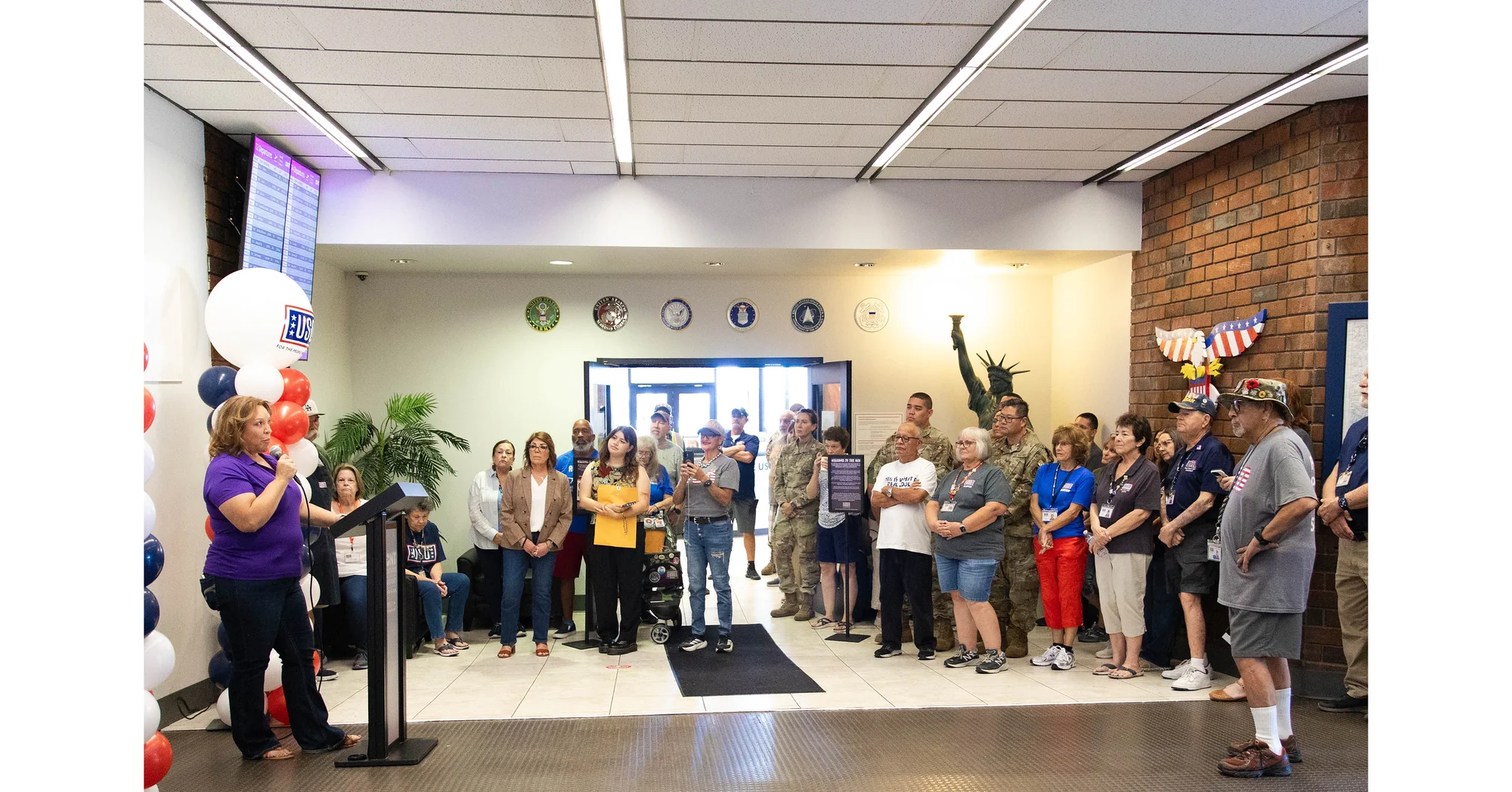
The nonprofit organization's 20th anniversary was commemorated with a public celebration on October 8th that included a ceremony, tours of the facility and hot dogs served by USO volunteers, just as they are for traveling service members and their families every day.

"For 20 years, the USO at ONT has provided meaningful support to the men and women who serve our country and their families," said Atif Elkadi, chief executive officer of the Ontario International Airport Authority. "This milestone reflects the dedication of the volunteers, staff and community partners who have created a welcoming place for service members during some of the most important transitions in their lives. Their work demonstrates that the passenger experience is about more than terminals, flights and amenities. It's also about making sure everyone who passes through our airport feels welcomed, respected and supported."

The USO at ONT served 21,879 people during its most recent year — nearly twice the number served the previous year.

"Many of the service members we welcome are traveling long distances and managing demanding schedules, so a friendly face and a comfortable place to pause can make a significant difference," said Brandi Elias, USO Inland Empire Area Operations Manager and the mother of a service member. "Our volunteers are committed to meeting each traveler where they are, whether that means providing a meal, helping them understand their orders, connecting them with transportation or simply offering a warm welcome after a long journey."

The organization's services are supported by donations, volunteers, community partnerships and fundraising events, including ONT's annual 5K at the Runway. During its first four years, the award-winning community event raised $168,771 for the USO at ONT. The fifth annual 5K at the Runway is coming February 6, 2027, with proceeds supporting the USO's day-to-day operations.

"We're grateful for the longstanding partnership between ONT and the USO, and for everyone who has helped make this center such a valuable resource over the past 20 years," Elkadi said. "On behalf of Ontario International Airport, congratulations to the USO at ONT on this important milestone. We appreciate everything the organization does for our military members and their families, and we look forward to continuing this partnership for many years to come."

About Ontario International Airport

Ranked as the second most popular mid-sized airport by J.D. Power, Ontario International Airport (ONT) serves more than 7 million passengers per year and offers nonstop service to more than two dozen major airports in the U.S., Mexico, Central America and Taiwan. ONT is owned and operated by the Ontario International Airport Authority, a Joint Powers Agreement between the City of Ontario and San Bernardino County. More information is available at flyOntario.com. Follow @flyONT on Facebook, X and Instagram.

OIAA Media Contact:

Steve Lambert

909-841-7527

[email protected]

SOURCE Ontario International Airport

Share this article

Class (B2B/B2C)
B2C
Ingest Status
Rewritten
Dedupe hash
prn_302905167
Press Eligible
Yes
Press Eligible Reason
Airport and USO service milestone with community and traveler impact.
Source Name
Unknown Company
Original Summary

<p>ONTARIO, Calif., Oct. 12, 2026 /PRNewswire/ -- Ontario International Airport congratulates the USO at ONT on 20 years of offering comfort, connection and support to thousands of active-duty service members and their families traveling through the Inland Empire. Established to support...</p>

Image URL
https://mmx.prnewswire.com/media/MS2009244/USO-1.jpg?id=OA3002636&p=facebook
Content Hash (SHA-256, erste 32 hex)
03f281a95aaf455ecd04bd041520739f