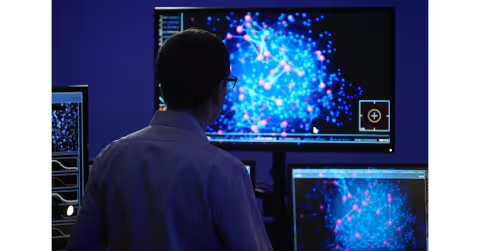
AURORA, Colo. – November 03, 2026 -- The NIH Common Fund Data Ecosystem now connects research datasets from 18 NIH programs, and University of Colorado Anschutz researchers are helping evaluate whether the shared infrastructure delivers measurable value, according to a new paper in Patterns.
The initiative spans human genetics, the microbiome and emerging technologies. It aims to make complex datasets easier to find, interpret and analyze, including for researchers without advanced programming or bioinformatics expertise.
Linked datasets target disease and drug-target research
Understanding a disease or identifying a drug target may require combining genetic information with molecular measurements, tissue data and drug-screening results. Julie A. Jurgens, associate director of scientific delivery for the Knowledge Portal Network at the Broad Institute of MIT and Harvard and the study's corresponding author, said the connections let researchers spend less time navigating fragmented systems.
CU Anschutz team tracks resource usage and citations
CU Anschutz researchers contribute to coordination and evaluation. They are testing whether connecting datasets across programs helps researchers find and use information in ways separate public repositories cannot.
The team is measuring how often scientists use the ecosystem's online resources and cite related publications. Preliminary findings show related publications may receive more citations than comparable papers, though the authors say further analysis is needed to establish the significance of the difference.
Organizers eye AI applications for connected data
Senior author Casey Greene, professor of biomedical informatics at CU Anschutz, said the priority is "making the data we already have work together." Sean Davis, professor of bioinformatics at CU Anschutz, said the long-term goal is an environment where data do not sit in separate repositories.
Well-organized, connected datasets could also help computational tools analyze scientific information more effectively. The ecosystem and the paper are the product of a collaboration across 5 centers and 18 programs, plus multiple partnerships.