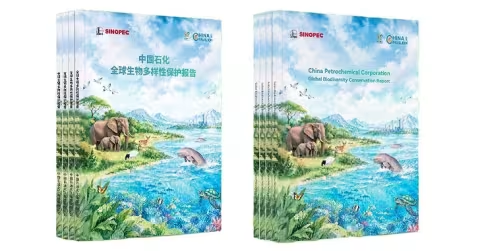
Yerevan – – November 02, 2026 -- Sinopec (HKG: 0386) has withdrawn 992 oil wells, 112 gas wells and 181 water wells from operation by the end of 2025, according to its first Global Biodiversity Conservation Report. The company released the report on October 29 at the closing ceremony of the China Pavilion during COP17 of the UN Convention on Biological Diversity.
Zhong Ren, a director with Sinopec Group, said the company is balancing energy development with environmental conservation. A representative of the Brand Department presented the biodiversity management framework.
Sinopec ties biodiversity rules to every project phase
Biodiversity is built into Sinopec's health, safety and environment (HSE) management system. Conservation requirements apply across project planning, construction, operations and decommissioning. The report describes avoidance of ecologically sensitive areas and restoration of habitats affected by industrial activity. Besides the wells, Sinopec has also retired various production and storage facilities.
Yangtze oil terminals closed, egret and wetland habitats expanded
In Hubei Province, Sinopec closed 11 riverside oil depots and 17 terminals along the Yangtze River. The Wangjiahe oil depot terminal, which operated for 63 years, is now a conservation education and observation center for the endangered Yangtze finless porpoise.
At the Zhenhai refining complex in Zhejiang Province, the protected egret habitat grew from 2,200 to 15,000 square meters and supports roughly 4,000 birds. In Beijing, the Niukouyu Wetland at Yanshan Petrochemical, formerly an industrial wastewater treatment facility, now hosts nearly 160 wild bird species.
CCUS demonstration and biodegradable plastics anchor technology push
The report cites China's first million-tonne-scale carbon capture, utilization and storage (CCUS) demonstration project. It also lists a 60,000-metric-ton-per-year facility producing fully biodegradable PBST materials, designed to address plastic pollution in agricultural environments.
Overseas projects span Uganda, Ecuador, Angola and Australia
In Uganda's Murchison Falls National Park, Sinopec built wildlife migration corridors near drilling operations to reduce disruption to elephants and lions. In Ecuador, the company has restored 2.4 million square meters of rainforest vegetation and monitored more than 800 plant and animal species.
On Angola's Atlantic coast, Sinopec has planted more than 7,000 mangroves. In Australia, a long-term marine turtle program uses acoustic tagging and satellite tracking on 47 green sea turtles to shape measures that reduce disturbance from maritime operations.